




Related: 20 Questions (and Answers) on MAP-21
FMCSA Proposes Delay on Some ELDT Provisions, Bans Drivers Convicted of Human Trafficking
The federal agency announces plans to delay certain Entry Level Driver Training rule provisions and bans drivers convicted of human trafficking from operating a commercial vehicle.

Nicole Schlosser・Former Executive Editor
3 min to read
WASHINGTON, D.C. — The federal agency that regulates commercial motor vehicles (CMVs) may delay certain provisions in its Entry Level Driver Training rule, and has moved to ban drivers convicted of human trafficking from operating a commercial vehicle.
The Federal Motor Carrier Safety Association (FMCSA) announced on Thursday that it is proposing an extension on the compliance date of two provisions in its final rule, “Minimum Training Requirements for Entry-Level Commercial Motor Vehicle Operators.”
The date for training providers to upload entry-level driver training (ELDT) certification information into the Training Provider Registry (TPR) and for state driver licensing agencies to receive driver-specific ELDT information would be extended from Feb. 7, 2020, to Feb. 7, 2022, according to the FMCSA’s Federal Register.
The extension would provide FMCSA with more time to complete development of the electronic interface that will receive and store ELDT certification information from training providers and transmit that information to the state licensing agencies. The proposed extension would also provide the agencies with enough time to modify their information technology systems and procedures as needed to receive driver-specific ELDT data from the TPR.
For information on submitting comments on the proposal, go here.
The Pupil Transportation Safety Institute (PTSI) noted in a news release that the delay does not negate the new ELDT training requirements. As of Feb. 7, 2020, new drivers will still be required to comply with the final ELDT rule’s training requirements.
“PTSI will still be ready to deliver the online course in compliance with the February 2020 mandate,” said Kathleen Furneaux, PTSI’s executive director. “Our wide range of expertise in school bus driver training and development places us in the unique position to offer high quality FMCSA compliant driver training with solid results for the school transportation industry.”
PTSI is developing online theory curriculum for school bus transportation professionals to meet the requirements of the “theory” portion of the new ELDT requirement, and will also offer ELDT trainer’s guides which design and guide the delivery of the Behind the Wheel (BTW) portions of the requirement for both BTW Range and BTW Road portions.
Meanwhile, the FMCSA also announced on Thursday a final rule that permanently bans drivers convicted of human trafficking from operating a commercial motor vehicle for which a commercial driver’s license or a commercial learner’s permit is required.
Following President Trump’s signature of the “No Human Trafficking on Our Roads Act,” the FMCSA issued the rule to prohibit an individual from operating a CMV for life if that individual uses a CMV to commit a felony involving a severe form of human trafficking, according to a news release from the FMCSA. The rule revises the list of offenses permanently disqualifying individuals from operating a CMV for which a commercial driver’s license (CDL) or a commercial learner’s permit is required.
“The commercial motor vehicle industry is uniquely positioned to help detect and report human trafficking, and thankfully professional drivers’ efforts often bring an end to these tragic situations. Sadly, however, some human trafficking activities are facilitated by the use of commercial trucks or buses,” said FMCSA Administrator Raymond P. Martinez. “By enforcing a lifetime ban on any CMV driver convicted of severe human trafficking, we aim to deliver a strong and effective deterrent to this abhorrent behavior. If a commercial driver is convicted of using their commercial motor vehicle related to human trafficking — that person will never be driving interstate commercial vehicles again.”
To report human trafficking activity, contact the National Human Trafficking Hotline by dialing toll-free (888) 373-7888 or by sending a text to 233733.
More Safety
How a Texas District Built an Award-Winning Safety Culture
Rockwall ISD's Jennifer Gardella joins The Route to share lessons learned on accident prevention, driver training, coaching, technology, and team culture.
Read More →
How Rockwall ISD Built an Award-Winning Safety Culture
How did one Texas transportation team strengthen bus and traffic safety? Jennifer Gardella shares lessons on driver training, coaching, technology, and team culture. The Route is brought to you by IC Bus.
Read More →
North Carolina Student Killed While Boarding School Bus, Two Die in Utah Bus Crash
A Southern Nash High School student died after being struck by a pickup truck while approaching her school bus. In a separate incident, two people were killed after crashing into a school bus in Utah.
Read More →
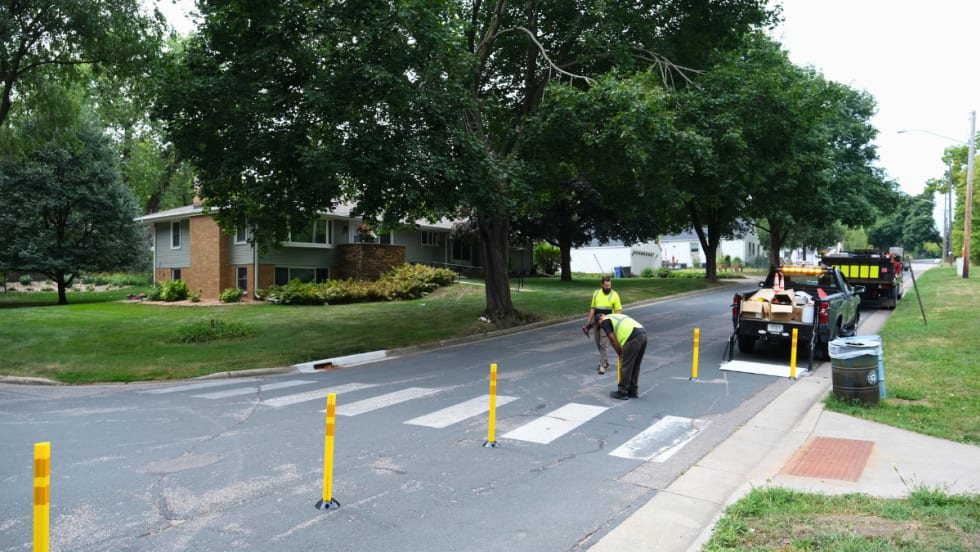
Minneapolis School Zone Pilot Cuts Speeding 41% with Low-Cost Street Design Changes
In a pilot project in Minnesota, two school-area intersections had low-cost, temporary road and traffic flow improvements made to measure the impact on roadway and student safety. Here's what they found.
Read More →
Sitestream, Safety Vision Partner with Connecticut City to Launch School Bus Stop-Arm Camera Program
The new enforcement initiative combines camera technology and violation management software to document illegal school bus passing, encourage driver compliance, and enhance student safety.
Read More →
Sponsored•November 1, 2026
From Reactive to Proactive: Making Every Ride Visible
Smart technology only delivers its full value when it works together. See how Catalyst connects proven industry platforms to move student transportation from reactive to proactive.
Read More →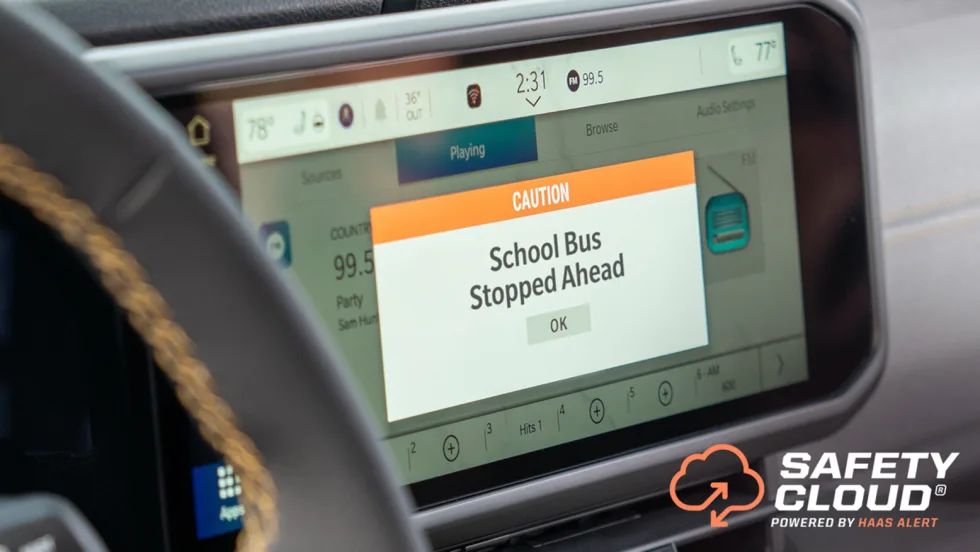
HAAS Alert’s Safety Cloud Warns Motorists of Stopped School Buses
Through a transponder or Samsara connection, the product lets school bus fleets send advance warnings to approaching drivers through in-vehicle alerts.
Read More →
HopSkipDrive Reports Progress on Safety Advisory Council
More than a year after forming the council, independent safety experts have helped shape new rider-safety features and policy progress, with a new goal to address rider behavior.
Read More →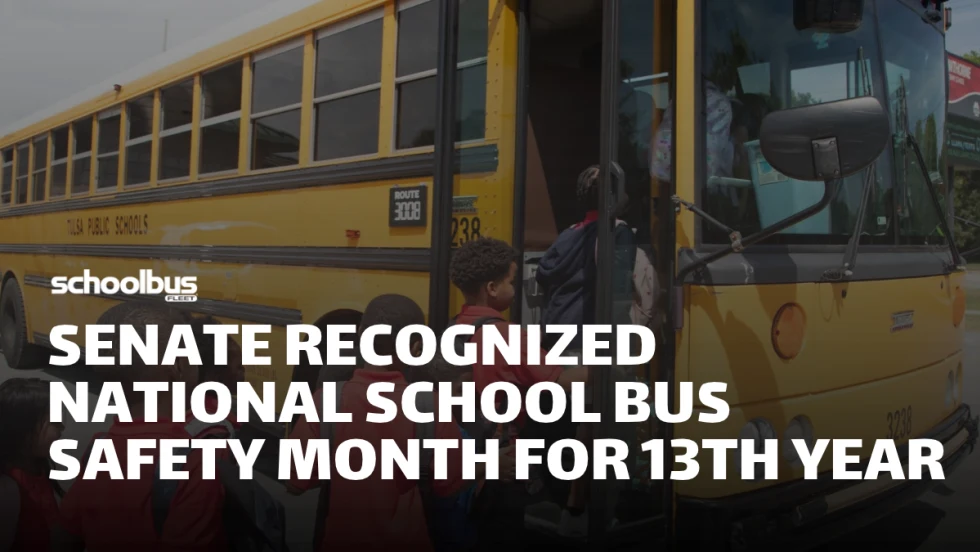
What the 2026 National School Bus Safety Month Resolution Means for Student Transportation
The bipartisan resolution highlights illegal school bus passing, student safety during loading and unloading, and the need for driver training and public education.
Read More →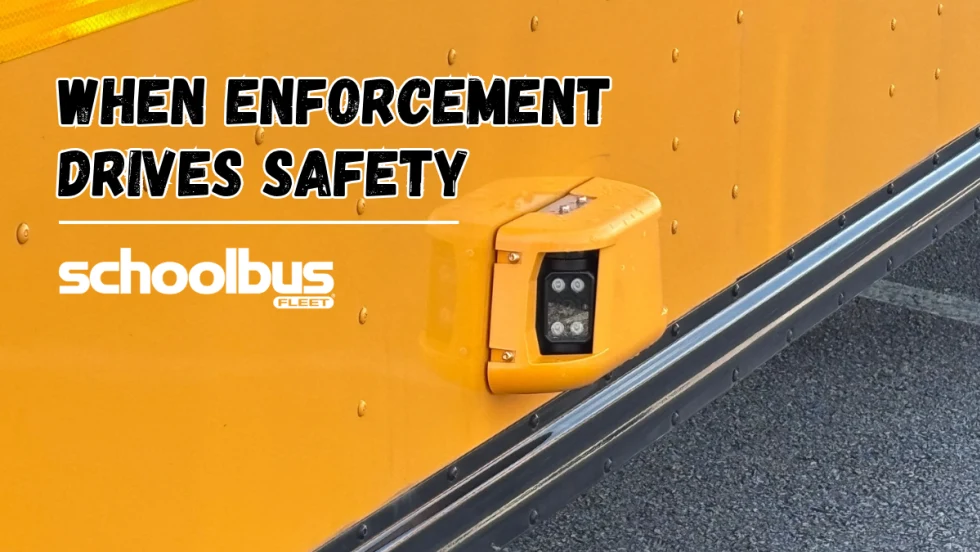
School Bus Stop-Arm Violations Decline 53% Across Verra Mobility Programs
Verra Mobility shares how school bus stop-arm cameras and school zone safety programs are changing driver behavior, reducing violations, and protecting students.
Read More →