





Miss Last Week's Report? Diesel, Gasoline Prices on the Rise This Week
Fleet Fuels Continue Upward Trend This Week
Both diesel and gasoline prices increased on average across the United States this week.
January 31, 2023
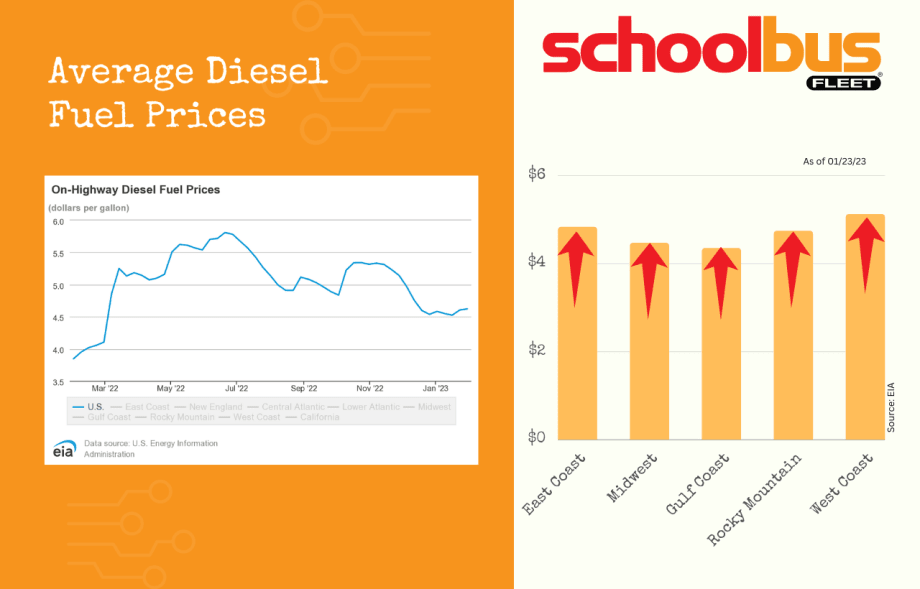
The average price of diesel climbed slightly across the United States, but actually dropped a little in the Central Atlantic area of the East Coast region.
Image: EIA/Canva
2 min to read
The nation’s school bus fleets primarily saw increases in the average cost of diesel and gasoline fuel compared to last week.
The U.S. Energy Information Administration reported that gasoline is averaging about $3.49 per gallon, up from $3.42. The average price of diesel in the United States went up just 2 cents, to $4.62. The only price decline – a little more than a 1 cent – was seen in the Central Atlantic area of the East Coast region.
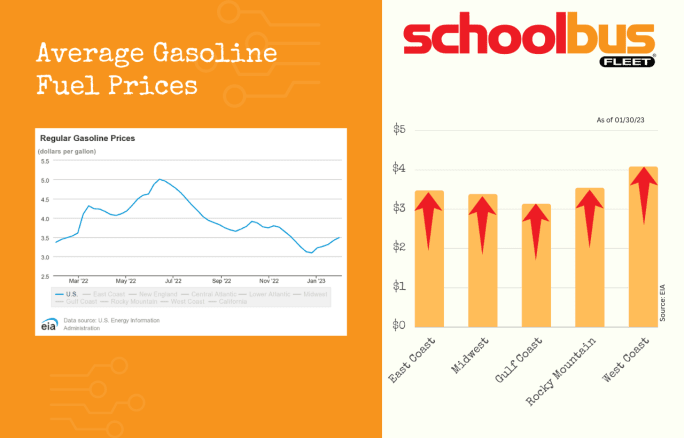
The average price of gasoline climbed about 7 cents from last week.
Image: EIA/Canva
Current average fuel prices by region (gasoline/diesel):
East Coast: $3.47/$4.83
Midwest: $3.38/$4.47
Gulf Coast: $3.13/$4.35
Rocky Mountain: $3.54/$4.74
West Coast: $4.08/$5.12
According to GasBuddy, the average price of gasoline rose again this week due to retailers passing costs along to customers due to challenges caused by refinery utilization and the upcoming maintenance season.
“There appears to be little good news on the gas price front, with prices unlikely to turn around any time soon,” wrote Patrick De Haan, GasBuddy’s head of petroleum analysis. “Because of the surge in prices last spring, many refineries that had planned maintenance deferred maintenance until 2023. With the can kicked to this year, we may have similar challenges producing enough refined products to meet demand, especially with the European Union cutting off refined products from Russia starting Feb. 5.”
Got news for School Bus Fleet? Send your information to info@schoolbusfleet.com.
More Maintenance
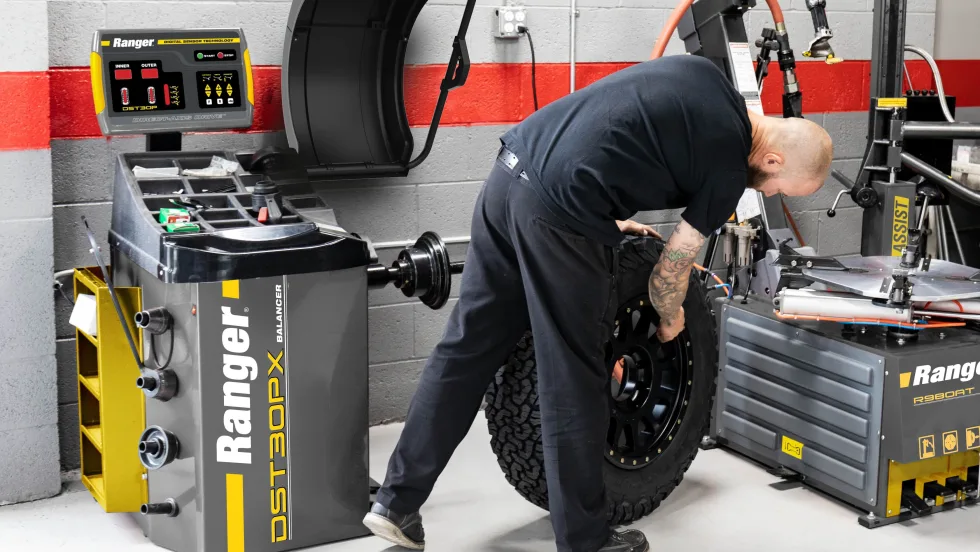
BendPak Launches Ranger DST30PX Wheel Balancer
BendPak's new wheel balancer handles tires up to 43 inches in diameter, with a reinforced design, precise weight placement, and faster service cycles.
Read More →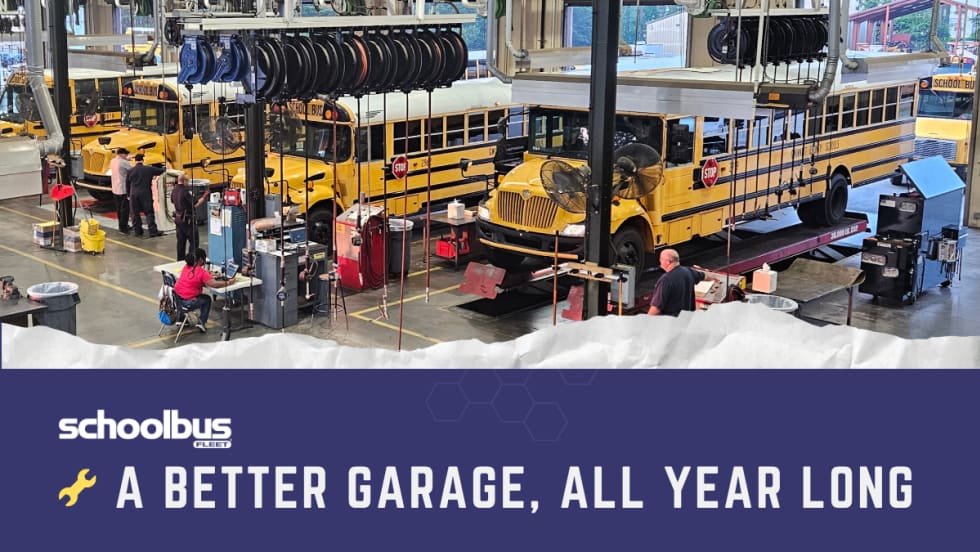
Tips for Ensuring School Bus Garages Are Safe and Warm Year-Round
Cold maintenance bays and rising heating costs? Learn how school bus garages can improve comfort with targeted heating, better airflow, and winter preparation.
Read More →
ASE Highlights School Bus Technician Certification Requirements
ASE is encouraging school bus maintenance professionals to maintain their certifications, highlighting seven specialized tests and five-year renewal requirements.
Read More →
International Adds E-Commerce Capabilities to Fleetrite.com
IC Bus customers can now browse, buy, and track shipments for more than 400,000 aftermarket parts online.
Read More →
The Most Expensive Thing You Do Before Selling a School Bus: Wait
When should you sell an aging school bus? Learn how maintenance, mileage, corrosion, specifications, and timing can affect resale value long before the auction.
Read More →
The Evolution of DEF Header Technology: What School Bus Operations Should Know at Replacement Time
See what school bus fleets should consider when replacing DEF headers to improve reliability, reduce repeat repairs, and control maintenance costs.
Read More →
Sponsored•September 8, 2026
The Essential Guide to School Bus Maintenance and Student Safety
Your district's buses carry students to school every day. This guide shows how predictive maintenance powered by fleet data helps keep buses reliable, drivers accountable and students safer from the first bell to the last stop.
Read More →
Kerry Brothers Grows Michigan School Bus Repair Network
The acquisition of Downriver Truck and Bus expands Kerry Brothers’ school bus maintenance footprint across southeast Michigan, adding repair capacity, diagnostic resources, and state inspection support.
Read More →
Noregon Introduces CAN Bus Diagnostic Tool, Expands JPRO Features
CAN Mentor and the latest JPRO update aim to simplify vehicle network diagnostics and improve repair efficiency for technicians of all experience levels.
Read More →
Cummins on Smarter, Simpler Engine Innovation
Cummins discusses its first-ever gasoline engine for school buses, EPA 2027, and why bus fleets still want durable, simpler internal combustion options.
Read More →