




Want More? The School Bus: Ensuring Student Safety, Accessibility, Community Building, and Education
FCC's E-Rate Program to Support Wi-Fi Hotspots for School Buses
Details on the vote that will allow for Wi-Fi hotspot funding for school buses. Plus, the latest on a lawsuit challenging the funding, and responses from those in favor of and opposed to the vote.

Christy Grimes・Former Senior Editor
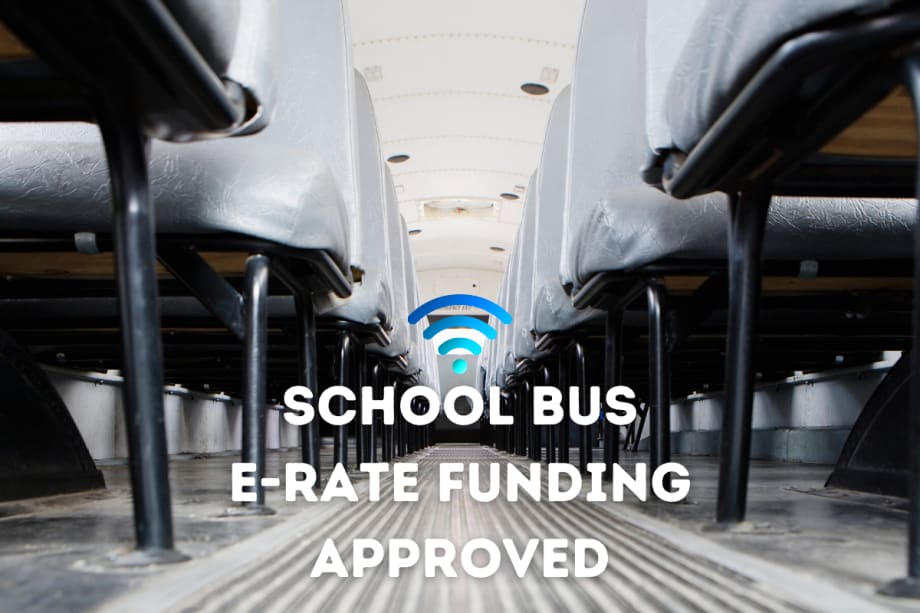
The FCC vote will schools to use E-Rate funding for Wi-Fi hotspots for use on school buses and beyond and support high-speed internet access for students, school staff, and library patrons in both rural and urban parts of the country.
Photo: School Bus Fleet
6 min to read
School districts can utilize funds from the Federal Communications Commission's E-Rate program for Wi-Fi hotspots to provide internet access on school buses, bridging the Wi-Fi gap to students who don't have internet access at home.
The FCC recently voted to approve final rules to support the funding program.
What is the E-Rate Program, and What Did this Vote Do?
The E-Rate program provides discounted Wi-Fi access to schools. It's meant to enhance access to internet for public all public and nonprofit elementary and secondary school classrooms and libraries, according to the FCC.
This latest action will help students gain access to educational resources that may have been previously out of reach and enable them to learn without limits, the agency noted in a news release.
There was a lack of clarity over whether the program could fund Wi-Fi equipment for school buses, since they are not on school property, School Bus Fleetpreviously reported.
The vote in favor of using E-Rate funding will:
Allow schools and libraries to use E-Rate funding for Wi-Fi hotspots for use on school buses and beyond and support high-speed internet access for students, school staff, and library patrons in both rural and urban parts of the country.
Adopt a budget mechanism that sets a limit on the amount of support that an applicant can request for Wi-Fi hotspots and services over a three-year period.
Adopt numerous safeguards to protect the integrity of the E-Rate program, including measures to ensure the supported Wi-Fi hotspots and services are in use, are used for educational purposes, are not funded through other sources, and are properly documented for auditing purposes.
The pandemic put the internet access gap in the national spotlight, with many students who didn't have internet access at home scrambling to find reliable access due to e-learning.
The Emergency Connectivity Fund program, which provided financial support to equip school buses with Wi-Fi connections during and after the pandemic, sunset on June 30, 2024.
Responses to the FCC's Vote
In her statement after the vote, FCC Chairwoman Jessica Rosenworcel reflected on the early days of the pandemic, saying in part, "it is hard to believe this happened in the United States. But we saw it with our own eyes. The pandemic exposed the depth of our nation’s digital divide."
Her statement continued, stating "Today we modernize E-Rate to ensure that schools and libraries nationwide can loan out Wi-Fi hotspots to support high-speed internet access in rural America, urban America, and everything in between. The time to do this is now. We do not need to go back; we can go forward and make it possible for everyone to get the connections they need."
Kajeet, which provides wireless connectivity solutions for education, applauded the vote.
"We believe connectivity should equip today's students on their educational journey," Kajeet CEO Ben Weintraub said. "The FCC's decision to expand E-Rate to include Wi-Fi hotspots and services is a monumental step towards providing equitable access to education for all students. Without connectivity, these students are left behind."
Funds for Learning, an E-Rate program consulting firm, responded to the vote saying in part "Learning extends outside the classroom or library to homes, while on the go, and in every community space. This move empowers schools and libraries to bridge the homework gap, providing students with the resources they need to succeed academically, regardless of their socioeconomic status or geographical location."
In June, an amicus brief was filed on behalf of 11 education organizations, pushing for the FCC to vote in favor of expanding E-Rate funding.
The brief reads in part, "Data show that over half of the country’s K-12 schoolchildren take the bus each day. School bus Wi-Fi can transform this ride time into an educational opportunity by enabling students to complete their schoolwork and keep up in class. For students facing long rides to and from school or after-school activities, the FCC’s decision will be a game-changer."
The organizations argue that Congress did not define 'classrooms' when establishing the E-Rate program. This, they argue, "makes clear that E-Rate is meant to fund connectivity beyond just the schoolhouse door and into areas where student learning occurs."
Pushback to E-Rate Funding
In April, a group of U.S. senators filed a separate amicus brief, urging the FCC not to expand the funding. The legislators backed Maurine and Matthew Molak, who filed a lawsuit in the 5th U.S. Circuit Court of Appeals.
The couple lost their 16-year-old son by suicide after he was cyberbullied. They argued that using E-Rate funds for Wi-Fi on school buses exceeds the FCC's authorities to provide internet access in schools and libraries.
An FCC spokesperson confirmed to SBF that the lawsuit is still active.
U.S. Senators Ted Cruz, Marsha Blackburn, Mike Braun, Ted Budd, James Lankford, Cynthia Lummis, and Pete Ricketts are backing the Molaks, pointing to the Communications Act of 1934, which states that the FCC is authorized to use E-Rate funds only “to enhance . . . access to advanced telecommunications and information services for . . . school classrooms . . . and libraries.”
The parties argued that the FCC's expansion of funding "raises concerns about child safety and a lack of accountability regarding federal spending," and criticized the agency for not conducting an analysis to determine whether the Emergency Connectivity Fund program was used to complete school work as intended.
FCC Commissioner Brendan Carr released a statement after the vote, echoing the legislators' frustrations and expressing concern that the program as it exists today does not put a limit on how much funding can be used, has no sunset date on the program, and has no protection against the program leading to increased Wi-Fi bills by consumers.
FCC Commissioner Nathan Simington also expressed disapproval of the vote, saying the FCC lacks the authority to take the action it did. He said, in part, "Tabling for one moment that off-campus Wi-Fi hotspots obviously will reduce incentives to physically show up in a classroom, the Commission is only authorized to enhance access to school classrooms and libraries."
Putting Safety Restrictions on Internet Access
School districts that use E-Rate funding, including for school buses, must comply with the Children's Internet Protection Act (CIPA), which requires them to block or filter Internet access to pictures that are: obscene; child pornography; or harmful to minors.
School districts subject to CIPA have two additional requirements:
Their Internet safety policies must include monitoring the online activities of minors.
As required by the Protecting Children in the 21st Century Act, they must provide for educating minors about appropriate online behavior, including interacting with other individuals on social networking websites and in chat rooms, and cyberbullying awareness and response.
Eligible schools, school districts, and libraries may apply for E-Rate funding individually or as part of a consortium.
More Management

How to Build a Better Driver Training Program
Ready to boost up your school bus instructor training? Here’s how to pick the right talent and improve recruitment, retention, and safety.
Read More →
CALSTART and Forth Combine to Form Catalyst Mobility
The new name represents a renewed vision for the nonprofit focused on advancing clean, equitable, and affordable transportation solutions that move people and goods.
Read More →
What Makes a Great School Bus Driver Trainer?
Choosing the right school bus driver trainer takes more than experience. Learn six keys to selecting and developing trainers and evaluating program effectiveness.
Read More →


School Bus Contractors Expand Through New Deals, Acquisitions & Partnerships
STA's Canadian division acquires Ontario-based G&L Stevenson Transport while Durham School Services adds a new district contract in California, First Student adds a New Jersey contract, and Minnesota Coaches acquires Halo Transportation.
Read More →
Logan Bus Company Rolls Out AI Phone System for NYC School Bus Families
A summer pilot found that AI agents could handle most routine calls, freeing up time for customer service staff to focus on emergencies and complex family concerns.
Read More →
From Intent to Impact: What I Learned About Leadership from TAPT
A Texas transportation supervisor shares lessons on self-awareness, accountability, managing stress and building trust — and why investing in leadership development matters at every stage of your career.
Read More →
NAPT Names 2026 Award Recipients, Hall of Fame Inductee
Who earned national recognition for their work in student transportation? This year, NAPT named five recipients of its 2026 awards for service, safety, and leadership, plus its newest Hall of Famer.
Read More →
Sponsored•September 2, 2026
2026 State of Student Transportation Report
Driver shortages. Rising costs. Growing safety expectations. More data, but not enough time to act on it. The 2026 State of Student Transportation Report reveals what transportation leaders say is putting the most pressure on their operations—and where they’re investing next. See how your priorities compare.
Read More →
How to De-Escalate an Angry Person: 5 Steps for Handling Workplace Conflict
What makes emotions run high, and how should you handle an angry colleague or parent? Follow these steps for staying calm, listening, showing empathy, and resolving conflict.
Read More →
Sponsored•September 1, 2026
What Readiness Looks Like This School Year
Learn about the challenges shaping the 2026–2027 school year, from persistent driver shortages and budget pressure to technology and readiness gaps. See how school districts are responding and adapting in Zonar’s 2026 Back-to-School Readiness Report.
Read More →