




EPA bestows funds for bus replacements, retrofits
More than $5.1 million in Diesel Emissions Reduction Act money goes to six organizations to reduce diesel emissions output by vehicles in EPA Region 7. Four of the organizations will use the money for school bus-related projects that include vehicle upgrades and the installation of pollution-control equipment.

KANSAS CITY, Kan. — More than $5.1 million in Diesel Emissions Reduction Act (DERA) funds have been granted to six organizations to reduce diesel emissions output by vehicles in EPA Region 7. Four of the organizations will use the money for school bus-related projects.
The funds are part of $64 million allocated nationwide this fiscal year through DERA’s grant program. Through the DERA, the EPA provides support for retrofits, engine upgrades, vehicle replacements, idle reduction, cleaner burning fuels, and financing for clean technologies for trucks, buses and non-road equipment.
The National School Transportation Association will receive $362,642 for vehicle replacements in Richmond and Perry County, Mo., that meet EPA 2010 emission standards. The grant will also fund the installation of 45 fuel-operated heaters to school buses, which will reduce idle time. The federal grant, along with $243,142 in mandatory cost shares brings the total amount of improvements to reduce diesel emissions to $605,784.
The Missouri Department of Natural Resources has been selected to receive more than $1.8 million with a state cost share of $382,425. This grant will aid in improvements to school buses, trash trucks and concrete mixers, as well as switch engine locomotives in Springfield, St. Louis and Kansas City. The improvements will include vehicle replacements, installing diesel oxidation catalysts on vehicles and/or the addition of anti-idling technologies to cut diesel emissions.
The Kansas Department of Health and Environment will receive $233,218 to assist with school bus upgrades and the installation of three APUs on long-haul trucks in Wichita. The grant, paired with $45,394 in state matching funds, will also allow APUs to be installed in five in-town trucks. A construction repower and upgrade project will also be completed in the Kansas City area.
Finally, $190,000 will be allocated to the Sac and Fox Tribe of the Mississippi and it will match that amount in mandatory cost shares. The grant will assist in the replacement of four school buses for the community at the Meskwaki Settlement in Tama, Iowa.
A $1 million grant will be given to the Owner-Operator Independent Drivers Association of Grain Valley, Mo., while the Passenger Vessel Association will receive almost $1.5 million to reduce maritime engine emissions in Branson, Mo.
Funding for this year’s grants is provided by the 2009 American Recovery and Reinvestment Act’s National Clean Diesel Funding Assistance Program. Since Congress first appropriated funds under this program, 279 grants totaling nearly $350 million have been awarded. A total of 119 grants were awarded with fiscal year 2008 funding ($49.2 million) and 160 have been awarded since then with Recovery Act funding ($300 million).
More Alternative Fuels
EPA Opens $180M DERA Funding Round for Diesel Upgrades
The 2026 Diesel Emissions Reduction Act program seeks applications from eligible organizations to accelerate the retirement of legacy diesel vehicles.
Read More →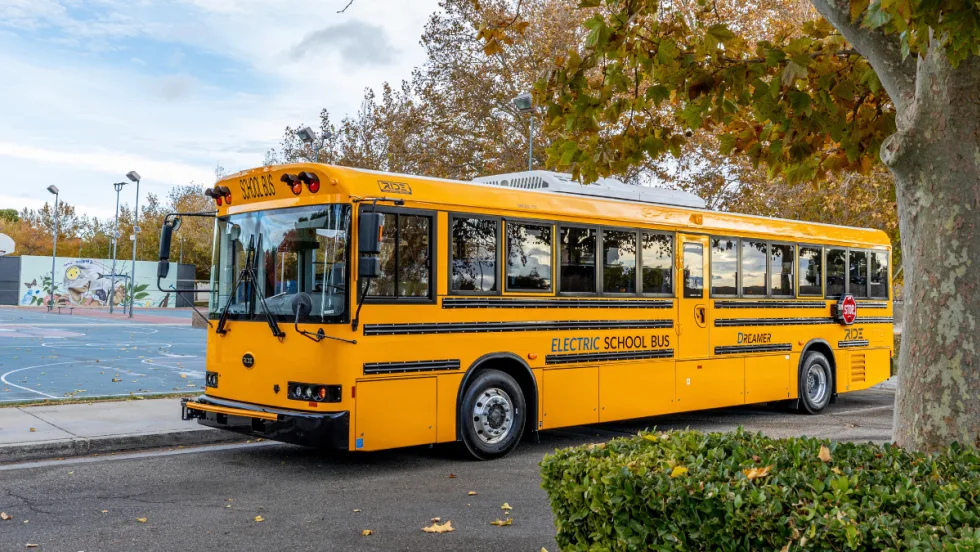
The Secret Life of an Electric School Bus Battery
Batteries change throughout years of daily routes, but degradation doesn’t necessarily mean the end. Here’s what operators should know about performance, safety, and second life.
Read More →
CALSTART and Forth Combine to Form Catalyst Mobility
The new name represents a renewed vision for the nonprofit focused on advancing clean, equitable, and affordable transportation solutions that move people and goods.
Read More →
Alt-Fuel Moves: New Buses, Charging Hubs & Real-World EV Testing
Propane and electric school bus deployments continue to grow as districts add new vehicles, expand charging infrastructure, and gather more real-world operating data.
Read More →
Fewer Electric School Bus Models Reshape the U.S. Market
WRI’s latest buyer’s guide points to a consolidating electric school bus market, but fewer options may reflect a maturing industry rather than fewer meaningful choices for school bus operators.
Read More →
The Fuel Budget You Can Actually Predict: How Propane Autogas Keeps Money in the Classroom
Learn how propane autogas helps school districts manage fuel costs with predictable pricing, lower maintenance, and reduced emissions from former transportation director Joel Stutheit.
Read More →
Hendrickson, Driventic Introduce New Electric Powertrain for School Buses
ELECTRAAX, the electrified, lightweight drive axle offers integrated ePowertrain efficiency and modular flexibility for Class 6–7 school bus use.
Read More →
The Mobility House Joins PowerFlex in Fleet Electrification Deal
The acquisition combines intelligent charging software, bidirectional charging expertise, and fleet electrification services to support the growing adoption of electric school buses across North America.
Read More →
Alt-Fuel Moves: Electric School Bus Investments Hit the Road
See which districts across the U.S. are putting electric school buses into service, expanding charging infrastructure, and planning the next phase of fleet electrification.
Read More →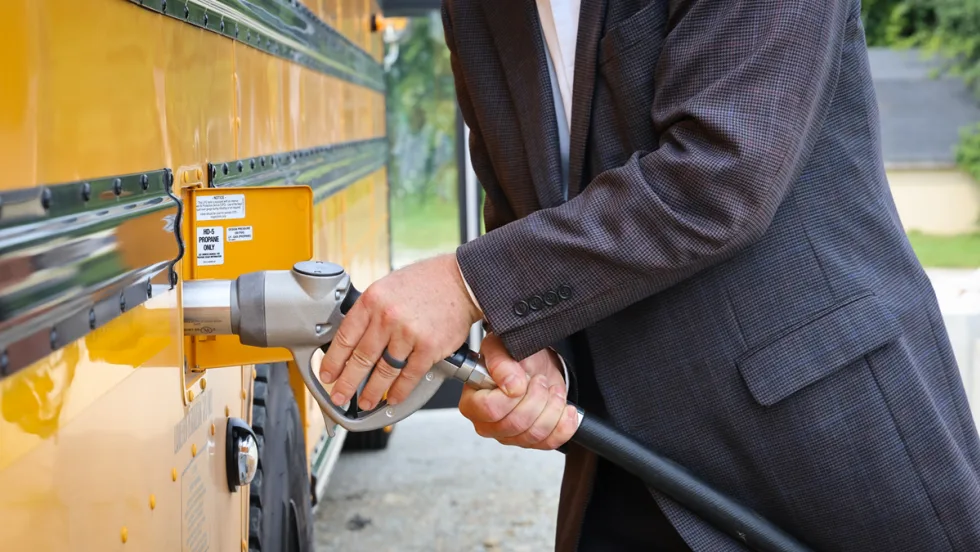
With Fuel Volatility Ahead, School Districts Turn to Propane
While diesel prices peaked above $5 this spring, districts with propane autogas-powered fleets paid under $2 per gallon, according to PERC.
Read More →