




District holds safety competitions during in-service
During its week-long training, Glendale (Ariz.) Elementary School District No. 40’s transportation department not only has outside speakers come to the facility and offers sessions on a wide range of topics, the drivers and bus monitors also participate in competitions to test their skills. Here, the manager of transportation provides the details.
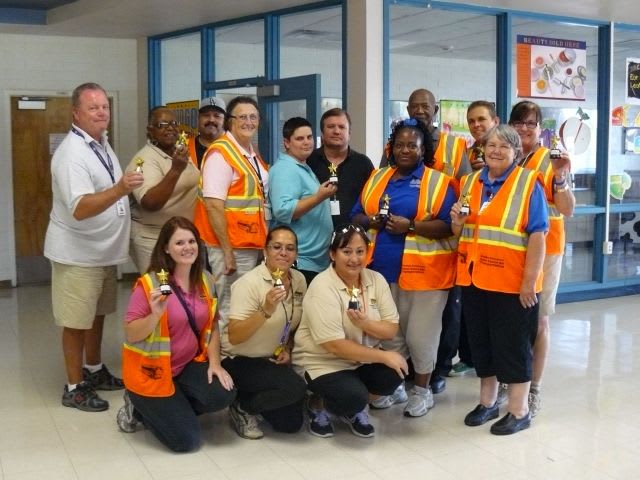
During Glendale (Ariz.) Elementary School District No. 40's in-service training, bus drivers participate in teams against one another in a pre-trip inspection competition, and the winning team receives a trophy.
At Glendale (Ariz.) Elementary School District No. 40, we have one week of in-service training prior to school start up.
Our first day of in-service always kicks off at the district office, and this year, we had speakers that came from and session topics that included Valley of the Sun Clean Cities Coalition; human resources; recognizing paraphernalia and gangs; McKinney-Vento; blood-borne pathogens; how to recognize, what to do and how to handle bullying; nutrition; risk management; and team building.
One of our in-service days includes the entire school district, and we were honored this year for our work with the Spotlight on Service and Stewardship Award. It was wonderful being recognized by our district for all the hard work our drivers, monitors and support staff do each day to keep our passengers safe.
As for the rest of the week, we cover bus pass class, radio etiquette, customer service, field trip processing, mileage reporting, office procedures, teamwork, and student teamwork and bus evacuations.
I think the most informational and fun part of the week is when our drivers compete against one another in a group effort for a pre-trip inspection competition. With identical buses, our mechanics create 10 discrepancies in the buses and then plant a simulated TNT bomb.
Each bus has different discrepancies, and the TNT is placed in a different spot. I’m proud to say that each discrepancy and each TNT bomb was located and noted by all three teams of drivers, each of which was led by one of our certified trainers. The winning team received a trophy.
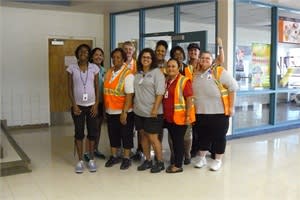
The bus monitors also participate in a competition against one another to test their skills, and the winning team receives a trophy.
Our bus monitors are also involved in a competition against one another in teams.
During the competition, each team member has to push a wheelchair, with another monitor in the chair, through a slalom course, then onto the wheelchair lift on a bus, raise the lift, take the chair on board and tie the chair securely while judges watch their every move. Then the monitors switch places, undo the wheelchair tie downs, lower the wheelchair on the lift and go back through the slalom to the finish line. The winning team received a trophy.
Although we have these competitions during in-service week, we also have continued training throughout the school year. For about five years now, we’ve done what is called a “random.” At night, we place fake TNT bombs and red magnets throughout school buses. When the drivers come in the next morning and do their pre-trip inspections, they find them and return them to the trainer or to dispatch. We give out prizes to those drivers who find them the fastest.
Doris Bean is manager of transportation at Glendale Elementary School District No. 40.
More Safety
Illegal School Bus Passing Drops 24% in New York Districts
With fewer than 5% of citations involving repeat offenders, Westchester County officials said enforcement, education, and community partnerships are helping change driver behavior.
Read More →
School's Back. Here's What Happened to Traffic, Speeding & Distraction
What happens to traffic when school resumes? New data analysis examines changes in distracted driving, congestion, and speeding around schools.
Read More →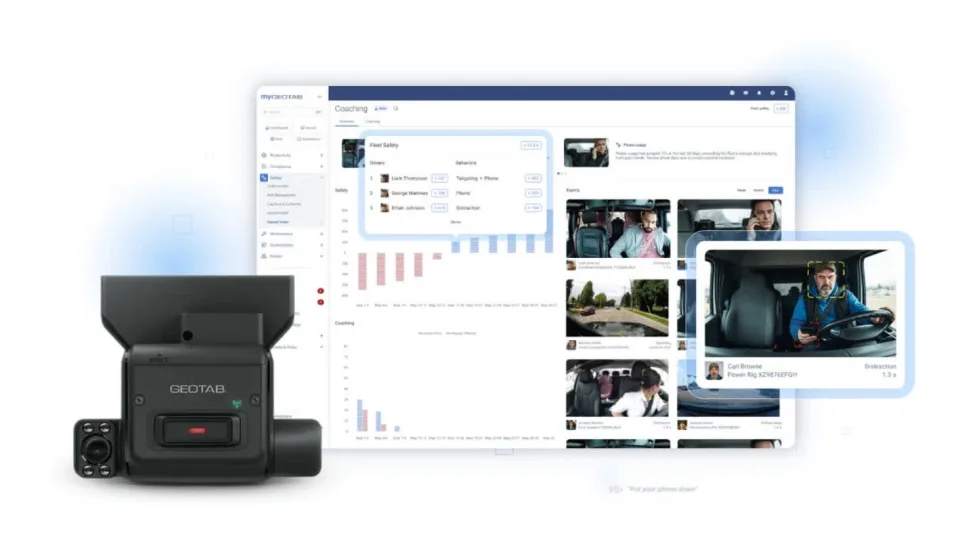
Geotab Expands Fleet Safety Tools With Video Coaching, Risk Insights
New safety and video capabilities aim to help fleet managers assess risk, support drivers, and take targeted action through video coaching, red-light violation detection, and more.
Read More →

How to Build a Better School Bus Driver Training Program
Is it time to strengthen your driver training? Here’s how to pick the right talent and improve recruitment, retention, and safety. This video is brought to you by IC Bus.
Read More →
Recent School Bus Accidents Leave 2 Dead, 2 Injured
Four school bus crashes in Florida, Illinois, and Georgia highlight risks in transportation lots, at bus stops, and during student loading and unloading.
Read More →
When Every Second Matters, Clarity Keeps Routes Moving
From routine delays to urgent incidents, strong communication practices help drivers, dispatchers, schools, and families respond with confidence.
Read More →
What Happens When a School Bus Catches Fire — and What Can Help
School bus fires are rare but can be devastating. Learn how advances in fire suppression and asset protection help fleets detect fires earlier, reduce damage, and improve safety.
Read More →
Geotab Launches Tool to Help Fleets Investigate Road Incidents
Geotab Investigations combines telematics data, video, documents, and other evidence to help fleets reconstruct incidents, resolve claims, and determine what happened.
Read More →
Texas Sixth Grader Wins 2026 National School Bus Safety Poster Contest
Sai Darshana Yekolu of Moseley Middle School in Prosper, Texas, was named the newest winner for her artwork, bringing the theme of “Safe Rides, Everyday Heroes” to life.
Read More →
Doing More With Less: How Transportation Directors Can Prioritize Safety Amid Budget Uncertainty
With diesel prices soaring and nearly one-third of transportation directors expecting budget cuts, maintaining student safety has never been more challenging. Download this guide to learn how leading districts are prioritizing risk, funding critical safety technology, and building stronger budget cases with data.
Read More →