





Check Out: Beyond the Wrench: Software in the Maintenance Tech's Toolbox
Defending School Bus Fleets Against Catalytic Converter Theft
The National School Transportation Association flash webinar explored what makes the anti-pollution devices attractive to thieves and what bus yard operators can do to protect against - or at least slow down - the criminals.
October 19, 2022
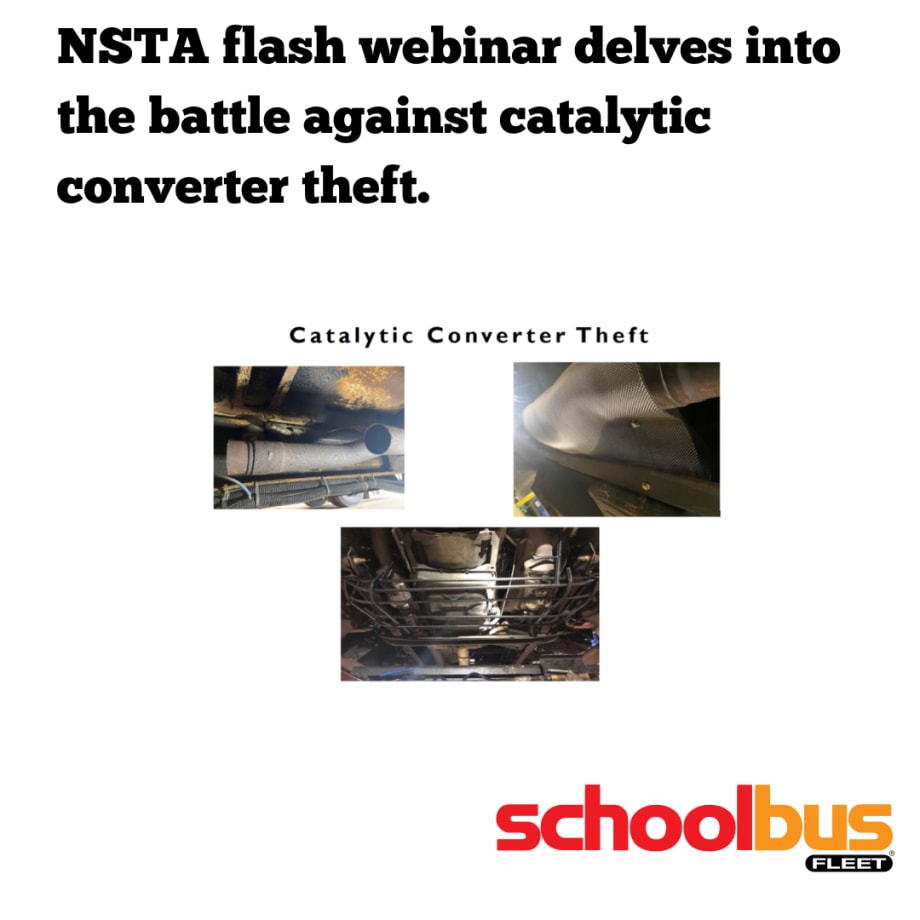
Some recommended best practices for security include signs, 8-foot-high fences, lighting, cameras, and alarms.
Image: Canva/NSTA
3 min to read
Catalytic converters are an attractive target for thieves – and school bus fleet lots have proven an especially target-rich environment.
The National School Transportation Association held a flash webinar about this chronic problem, which sees the pollution control devices cut off gasoline and propane school buses for their precious metals.
John Finn, senior vice president of fleet maintenance with school bus contractor National Express, told webinar viewers that catalytic converter thefts can lead to massive expense, as well as the inconvenience of missed routes while waiting on back-ordered parts thanks to a struggling supply chain.
“We’ve tried everything” to stop thieves, Finn said. “Started out a couple years ago painting them, then we moved to engraving them. Now we cage them.”
He’s seen different versions of caging mechanisms – some homemade rather than engineered, using rebar. Other more professional designs use stainless steel mesh with tamper-proof nuts.
“Thieves can still get through it, but it slows them down quite a bit,” Finn said.
Making Life Difficult for Thieves
Linda Neff, director of Keystone Insurers Group’s school transportation program, said school bus depots are “prime targets for this” because thieves can strike multiple vehicles at once and it can be relatively easy to get under a bus, allowing them to remove a catalytic converter in a matter of minutes.
She’s not seeing any specific trends in locations or types of buses, but claims keep on coming, she said.
Neff ran down some best practices for defending against catalytic converter thieves:
Make it harder to access the lot, using signs, 8-foot-high fences, lighting, cameras, and alarms.
Hinder thieves under the bus with anti-theft devices, paint the converter with a fluorescent stripe, etch the converter, add more studs around the part, or add plates and guards – but make sure the hindrance doesn’t run afoul of local or state bus inspectors.
Get comprehensive insurance coverage so vehicles qualify for theft claims.
While these deterrents may be effective, it’s not always practical for companies to quickly ramp up these efforts. Dan Kobussen, owner of Kobussen Buses and president-elect of the NSTA, noted that lighting installation is backlogged six months and the fence installer may not get to his bus yard until next year. He recommended hiring security as “the quickest and easiest thing to do.”
Neff agreed, but Finn cautioned that bus yard operators who use hired security should spot check during the early morning hours to make sure no one’s sleeping on the job.
Fighting Back Against Catalytic Converter Theft
The National Insurance Crime Bureau noted skyrocketing catalytic converter thefts. Between 2019 and 2020, thefts jumped 325%, from 3,389 to 14,433. The converter, which contains precious metals such as platinum (worth about $880 per ounce today), palladium (worth about $2,000 per ounce today), or rhodium (valued today at $14,200 per ounce), turns environmentally hazardous exhaust into less harmful gases.
According to the NICB, recyclers typically pay $50 to $250 for a catalytic converter.
The NICB also reported that 26 states in 2021 proposed bills to help curb theft of these devices. Of those, 10 states enacted or tightened existing legislation, including:
Arkansas
Indiana
Minnesota
Missouri
North Carolina
Oregon
South Carolina
Tennessee
Texas
West Virginia
The law in Arkansas, South Carolina, and Texas requires scrap metal buyers to maintain records when they purchase used catalytic converters.
Indiana, Missouri, and Tennessee put catalytic converters on the list of valuable metals or vehicle parts.
Minnesota kicked off a program specifically for the investigation and prosecution of this crime.
North Carolina, Oregon, and West Virginia all now presume that someone found with a detached catalytic converter who can’t prove they own it is in possession of stolen goods.
Curt Macysyn, executive director of the NSTA, said the organization would follow up on state and federal initiatives whenever possible.
More Maintenance
Sponsored•September 8, 2026
The Essential Guide to School Bus Maintenance and Student Safety
Your district's buses carry students to school every day. This guide shows how predictive maintenance powered by fleet data helps keep buses reliable, drivers accountable and students safer from the first bell to the last stop.
Read More →
Kerry Brothers Grows Michigan School Bus Repair Network
The acquisition of Downriver Truck and Bus expands Kerry Brothers’ school bus maintenance footprint across southeast Michigan, adding repair capacity, diagnostic resources, and state inspection support.
Read More →
Noregon Introduces CAN Bus Diagnostic Tool, Expands JPRO Features
CAN Mentor and the latest JPRO update aim to simplify vehicle network diagnostics and improve repair efficiency for technicians of all experience levels.
Read More →
Cummins on Smarter, Simpler Engine Innovation
Cummins discusses its first-ever gasoline engine for school buses, EPA 2027, and why bus fleets still want durable, simpler internal combustion options.
Read More →
Report: 72% of Diesel School Buses Now Use Advanced Low-Emission Engines
New data shows advanced low-emission diesel technology continues expanding across school bus fleets, even as electric bus adoption gains momentum.
Read More →
Vampire Tools' CAIMAN 7.5-Inch Multi-Purpose Screw Extractor Long-Nose Pliers with Crimper
Vampire Tools introduced the VAMPLIERS Caiman 7.5-inch multi-purpose pliers, combining screw extraction, cutting, crimping, and gripping functions into a single tool designed for fleet maintenance professionals.
Read More →
How Advanced Diagnostics Helps Bus Fleets Stay Ahead of Repairs
Chat with Noregon’s Kevin Smallhorn at ACT Expo about bus diagnostic tools, telematics integration, CNG maintenance support, and strategies to help reduce downtime and improve uptime.
Read More →
How School Bus Fleets are Getting Ahead of Breakdowns
Don’t let bus downtime wear you down. Here’s how bus operators are shifting from manual processes to AI-powered, data-driven maintenance systems for improved reliability and safety.
Read More →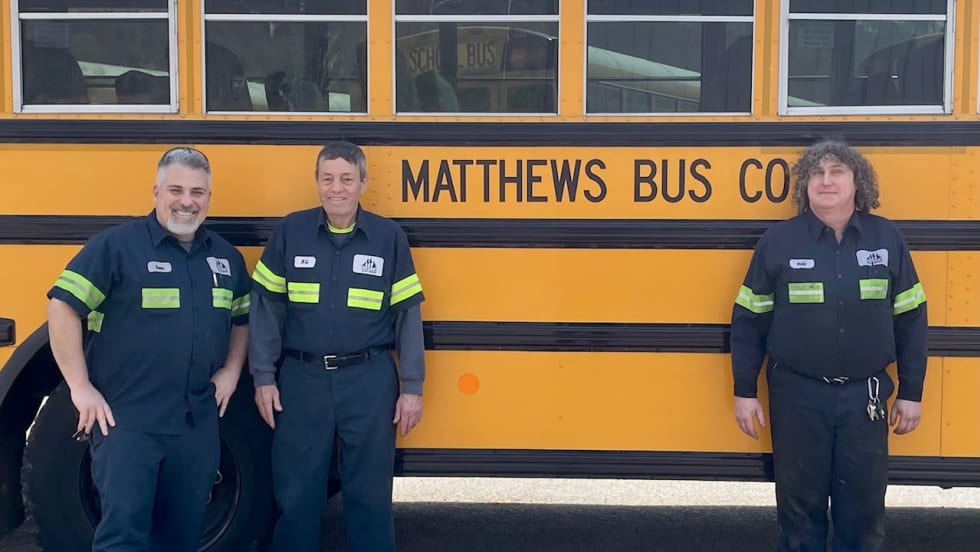
Pennsylvania School Bus Maintenance Team Praised for Dedication to Safety
Matthews Bus Company’s West Jefferson received a letter of commendation from the Pennsylvania State Police for their fleet inspections.
Read More →
Sponsored•April 16, 2026
From Chaos to Clarity: How School Districts Are Running Leaner Transportation Operations
Covering 38 routes on a Friday afternoon. Buses idling while routes overlap. Parents calling nonstop about late arrivals. Sound familiar? This whitepaper explores how district transportation leaders solved these exact problems — and what measurable results followed.
Read More →