




Canadian Officials Hold Off on Seat Belt Requirement
A report on transportation safety from a parliamentary committee is not recommending seat belts on school buses, but is backing a task force continuing to study the topic.


A report on transportation safety from a parliamentary committee is not recommending seat belts on school buses, but is backing a task force continuing to study the topic. File photo courtesy Elk Grove (Calif.) USD
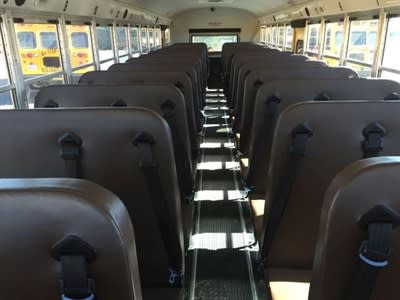
A report on transportation safety from a parliamentary committee is not recommending seat belts on school buses, but is backing a task force continuing to study the topic. File photo courtesy Elk Grove (Calif.) USD
OTTAWA — A parliamentary committee that studied transportation safety has released a report stating it will not recommend seat belts on school buses at this time, but instead backs a task force continuing to study the topic.
The House of Commons Standing Committee on Transport, Infrastructure and Communities presented to the House of Commons last week the report, “Bus Passenger Safety,” according to a news release from the Parliament of Canada House of Commons.
The report, spurred by fatal collisions in January 2019 and April 2018 — the more recent one involving a transit bus and the other involving a motorcoach — covered the details of those crashes, statistics on bus collisions in Canada, and recommendations for safety enhancement.
Regarding school buses, the report states that installing lap-shoulder belts requires the seats to be “structurally strong enough to support the belts in the event of a collision.” However, Michael DeJong, the director general of multi-modal and road safety programs with the Department of Transport, told the committee that doing so could potentially stiffen the compartmentalized seats to the point where they would no longer be able to “sufficiently absorb an impact, potentially increasing the risk of injury.”
Sergeant Trent Entwistle, the manager of the National Collision Reconstruction Program for the Royal Canadian Mounted Police, also made the point in the report that if seat belts aren’t worn properly, they won’t provide the protection they are designed to in a crash.
As a result of the uncertainty around the issue, Transport Canada is studying the potential impact that seat belt installation may have on compartmentalized seats, according to the report.
Additionally, in April, the Ontario School Bus Association (OSBA) backed the need for Transport Canada to update its data and conduct additional research. The OSBA pointed in a brief to what it referred to as conflicting messages from Transport Canada and the U.S. National Transportation Safety Board as well as the U.S. National Highway Traffic Safety Administration. The U.S. agencies, OSBA noted, published reports or statements calling for lap-shoulder seat belts on all school buses due to improved occupant protection during side impact and rollover crashes, while, since 2016, Transport Canada has stated that compartmentalization is “an adequate level of protection through the current school bus vehicle design standards.”
OSBA also called for the task force to be given enough time to adequately investigate the issue, keeping the goal of improving school bus safety in mind.
“According to several witnesses, while seat belts do prevent certain types of injuries, they are neither a panacea, nor the only possible solution, to increasing school bus safety,” the House of Commons stated in the news release on the report. “ … in order to ensure that school buses in Canada continue to provide a safe means of transport for children, the committee recommends that the Government of Canada continue to support the ongoing work of the task force on school bus safety and take steps to implement any recommendations that may be made as a result.”
More Safety
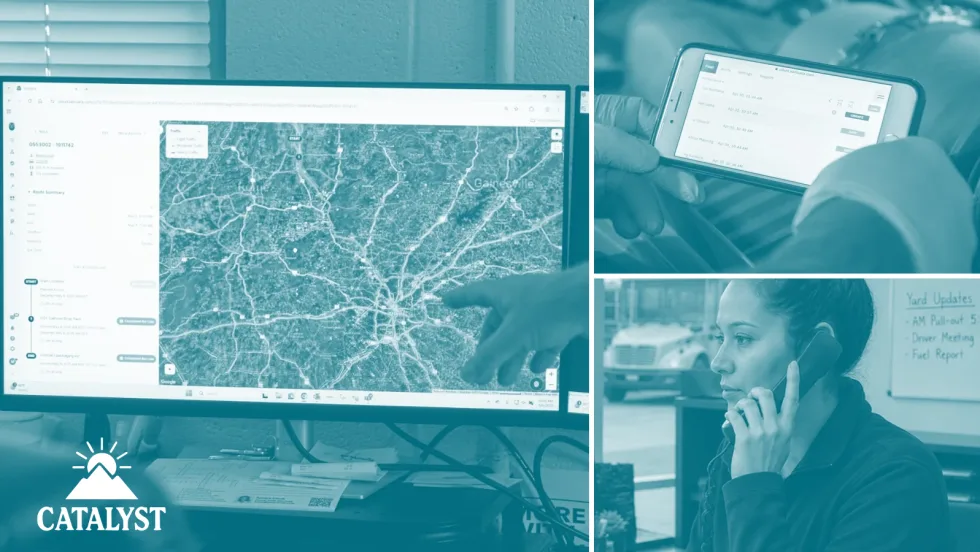
From Reactive to Proactive: Making Every Ride Visible
Smart technology only delivers its full value when it works together. See how Catalyst connects proven industry platforms to move student transportation from reactive to proactive.
Read More →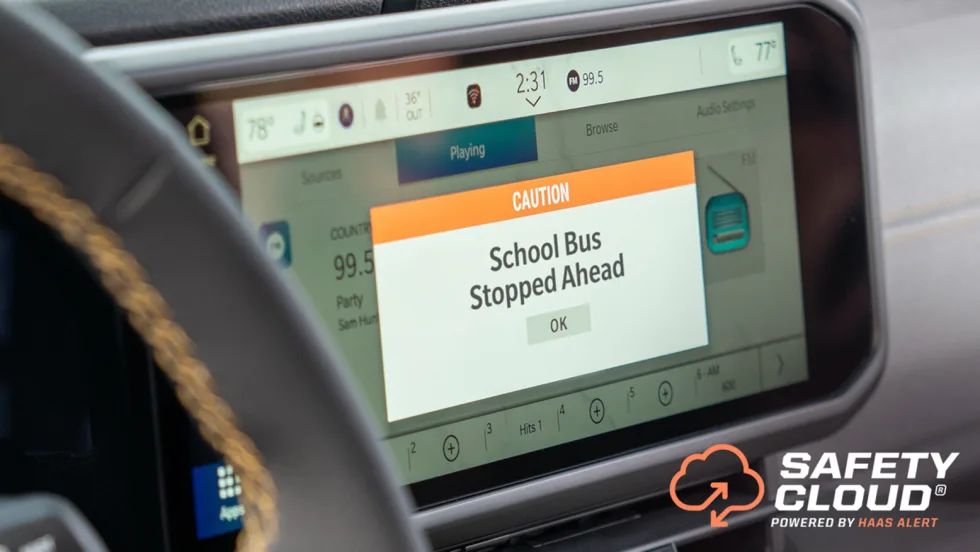
HAAS Alert’s Safety Cloud Warns Motorists of Stopped School Buses
Through a transponder or Samsara connection, the product lets school bus fleets send advance warnings to approaching drivers through in-vehicle alerts.
Read More →
HopSkipDrive Reports Progress on Safety Advisory Council
More than a year after forming the council, independent safety experts have helped shape new rider-safety features and policy progress, with a new goal to address rider behavior.
Read More →
What the 2026 National School Bus Safety Month Resolution Means for Student Transportation
The bipartisan resolution highlights illegal school bus passing, student safety during loading and unloading, and the need for driver training and public education.
Read More →
School Bus Stop-Arm Violations Decline 53% Across Verra Mobility Programs
Verra Mobility shares how school bus stop-arm cameras and school zone safety programs are changing driver behavior, reducing violations, and protecting students.
Read More →
Most Bus Crashes Aren’t Your Fault. Here’s How to Prove It.
A guide for what to do in between a school bus crash and a claim: what to preserve, who to notify, and how to keep the facts available when they matter.
Read More →
National School Bus Safety Week 2026: Tips, Toolkits & Resources to Keep Students Safe
School bus safety takes more than awareness. Explore expert tips, enforcement strategies, and free resources to help protect students on every ride.
Read More →
2 Killed, Dozens Injured in Florida School Bus Crash
A multi-vehicle collision caused a Polk County school bus carrying 37 students to overturn on its way to Winter Haven High School.
Read More →
Illegal School Bus Passing Drops 24% in New York Districts
With fewer than 5% of citations involving repeat offenders, Westchester County officials said enforcement, education, and community partnerships are helping change driver behavior.
Read More →
School's Back. Here's What Happened to Traffic, Speeding & Distraction
What happens to traffic when school resumes? New data analysis examines changes in distracted driving, congestion, and speeding around schools.
Read More →