




Cameras and enforcement can reduce stop-arm violations
Web Exclusive: In this editorial, David Poag, who created the Stop-Arm Violation Education Enforcement campaign, says many would-be stop-arm violators will think again before passing a stopped school bus if they are educated about the use of stop-arm cameras and their role in enforcing stop-arm laws. He draws parallels between these violations and the effectiveness of efforts to enforce seat belt laws in personal vehicles and reduce drunken driving.
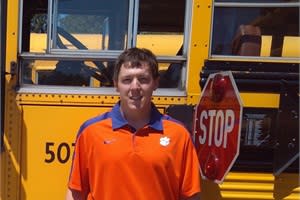
South Carolina’s David Poag says many would-be stop-arm violators will think again before passing a stopped school bus if they are educated about the use of stop-arm cameras and their role in enforcing stop-arm laws.
Will stop-arm cameras and the enforcement of stop-arm laws reduce stop-arm violations? Does enforcement of the laws make a difference? These are important questions that should be considered when thinking about school bus stop-arm cameras.
While not specific to stop-arm cameras for school buses, these articles on Homeland Security News Wire and Syracuse.com address the efficacy of surveillance cameras and their impact on crime rates.
According to the Homeland Security News Wire, a reduction in crime can be expected if surveillance cameras are in place and if the public believes that law enforcement is using the footage for prosecution.
Three groups of stop-arm violators
In general, stop-arm violators can be categorized into three groups: the impatient violator, the uneducated violator and the distracted violator. Using cameras to prosecute violators and educate the motoring public about stop-arm laws will mitigate the number of offenses from all three categories of violators, which could save a child’s life.
• The impatient violator. Using cameras to enforce stop-arm laws will reduce the number of violations from this category if and only if the impatient drivers are made aware that cameras will be used to enforce the law. A percentage of impatient drivers will think twice about passing a stopped school bus if they know there is a chance of being caught, and if they know there will be a stiff civil penalty to accompany the violation.
• The distracted violator. If a driver is distracted, he or she may not even see the bus and, therefore, would not think about the penalties for passing the stopped bus. However, the use of cameras for this group of violators does hold them accountable for their behavior. This accountability could potentially prompt them to stop being distracted while they are behind the wheel.
• The uneducated violator. Many motorists do not know when to stop for a stopped school bus. In South Carolina, motorists are not required to stop on a multi-lane road when approaching the bus from the opposite direction. Motorists are required to stop when approaching the bus from the opposite direction on a two-lane road. Motorists must always stop when approaching the stopped bus from behind. These simple laws should be taught in driver’s education courses and should also be a part of the test required to obtain a driver’s license.
Public service announcements can also help to educate motorists about the stop-arm law and the dangers of passing a stopped school bus. The motoring public must also be made aware that cameras can be used to enforce the law. The cameras would be useless if the public does not know about them and if the images are not used in prosecution.
Enforcement has an impact
In thinking about whether enforcing stop-arm laws reduces the number of violations and whether enforcement makes a difference, consider this information from the National Safety Council related to the efficacy of enforcing seat belt laws and these stats from The Century Council related to drunken driving.
According to the National Safety Council, the percentage of motorists who use their seat belt has steadily been on the rise in America. In 2009, 88% of Americans wore seat belts, as opposed to the 69% who did in 1998. To what do we attribute the increased percentage of seat belt users? Education is one factor. Many educational commercials and safety campaigns have been created over the past 15 years to advocate for the use of seat belts and to educate the public about the dangers of not wearing one.
Enforcement is also a major reason for the increased seat belt use. According to the National Safety Council, the percentage of seat belt users is 13% higher in states that have “primary” enforcement laws over those states that have “secondary” enforcement laws. Primary enforcement laws enable a law enforcement official to pull over and ticket a motorist or passenger for the sole reason of not wearing a seat belt. Secondary enforcement laws require a law enforcement official to have other cause to pull a vehicle over, and then a seat belt ticket can be issued.
Just as primary enforcement makes the seat belt law more enforceable, stop-arm cameras will make stop-arm laws more enforceable, which will mitigate the number of violations.
Drunken driving fatalities have also decreased dramatically over the years. According to the National Highway Traffic Safety Administration, drunken driving fatalities per 100,000 in population have decreased 49% from 1991 to 2011. Here again, education and enforcement have increased.
Advertisements (such as billboards and commercials) have played a major role in educating the motoring public about the dangers of drunken driving, and the penalties for getting caught behind the wheel and over the legal limit are much stiffer today than they were in 1991. Also, South Carolina, like many other states, has stepped up enforcement related to drunken driving. Enforcement campaigns such as “Sober or Slammer” and “Drive Sober or Get Pulled Over” have resulted in more motorists being arrested for drunken driving.
Likewise, a considerable number of would-be stop-arm violators will think again before passing a stopped school bus if they are educated about the use of stop-arm cameras and their role in enforcing stop-arm laws, and if they are educated about the dangers that passing a stopped bus presents.
David Poag works in pupil transportation in South Carolina. He and several colleagues in the state created the Stop-Arm Violation Education Enforcement campaign to raise awareness about the dangers of motorists illegally passing stopped school buses. Visit www.savecampaign.com for more information.
More Safety

How to Build a Better School Bus Driver Training Program
Is it time to strengthen your driver training? Here’s how to pick the right talent and improve recruitment, retention, and safety. This video is brought to you by IC Bus.
Read More →
Recent School Bus Accidents Leave 2 Dead, 2 Injured
Four school bus crashes in Florida, Illinois, and Georgia highlight risks in transportation lots, at bus stops, and during student loading and unloading.
Read More →
When Every Second Matters, Clarity Keeps Routes Moving
From routine delays to urgent incidents, strong communication practices help drivers, dispatchers, schools, and families respond with confidence.
Read More →

What Happens When a School Bus Catches Fire — and What Can Help
School bus fires are rare but can be devastating. Learn how advances in fire suppression and asset protection help fleets detect fires earlier, reduce damage, and improve safety.
Read More →
Geotab Launches Tool to Help Fleets Investigate Road Incidents
Geotab Investigations combines telematics data, video, documents, and other evidence to help fleets reconstruct incidents, resolve claims, and determine what happened.
Read More →
Texas Sixth Grader Wins 2026 National School Bus Safety Poster Contest
Sai Darshana Yekolu of Moseley Middle School in Prosper, Texas, was named the newest winner for her artwork, bringing the theme of “Safe Rides, Everyday Heroes” to life.
Read More →
Doing More With Less: How Transportation Directors Can Prioritize Safety Amid Budget Uncertainty
With diesel prices soaring and nearly one-third of transportation directors expecting budget cuts, maintaining student safety has never been more challenging. Download this guide to learn how leading districts are prioritizing risk, funding critical safety technology, and building stronger budget cases with data.
Read More →
Walton County Schools Adds Gatekeeper Stop-Arm Enforcement System
The Florida district will deploy Gatekeeper’s updated Student Protector technology, which now incorporates AI to improve video evidence.
Read More →
How To Build a More Secure School Bus Yard During and After Hours
As thefts and overnight security threats continue, school transportation leaders are combining stronger operational practices with AI-enabled surveillance to better protect buses, facilities, and staff.
Read More →
FMCSA Names New Chief Safety Officer: What School Bus Operators Should Know
Steve Dowling is set to lead the federal agency's efforts to advance commercial motor vehicle safety and reduce crashes, fatalities, and injuries on the nation's roadways.
Read More →