




Bus driver’s invention targets student crossing safety
The STEFFI Crossing Enhancer is designed to be worn on the back of a driver’s hand, and it comprises a gray reflective arrow on a bright yellow background with an orange border. Victoria DeCarlo, who developed the product, tells SBF that it can be worn on a bare hand or over a glove, and that its colors and arrow are highly visible through the windshield of a school bus, and from a distance.

The STEFFI Crossing Enhancer can be worn on a bare hand or over a glove. In New York state, bus drivers are required to use this thumb and forefinger technique when crossing students.
ANGOLA, N.Y. — A school bus driver here has invented a piece of equipment designed to assist students as they prepare to cross the street to board the bus, or after they have disembarked.
The STEFFI Crossing Enhancer, to be worn on the back of a driver’s hand, was developed and created by Victoria DeCarlo, a 19-year bus driver who works for Lake Shore Central School District. It comprises a gray reflective arrow on a bright yellow background with an orange border. It also has an elastic finger loop at the top, and there is a wrist strap.
DeCarlo told SBF in an interview that the STEFFI can be worn on a driver’s bare hand, and it will fit under a glove if the driver is wearing gloves before operating the bus. It can also be worn over a glove on either hand, and its colors and reflective arrow are highly visible through the windshield of a school bus, and from a distance. In addition, because the STEFFI is worn on the back of the hand, she said that it does not affect a driver’s ability to operate the bus.
DeCarlo’s idea for the STEFFI stemmed from concerns she had from a stop on her route at Steffi Dr., which intersects with another road.
“We pick up students on a main road,” she explained. “The students all walk to a corner, and it was complete chaos because you have cars going in three different directions and the headlights were making it difficult for all to see each other. Students were struggling to see my hand signal indicating that it was safe to cross, and my gut was telling me that something could happen in this area.”
(In New York state, school bus drivers are required to use a thumb and forefinger technique when directing students to cross the street.)
DeCarlo approached Lake Shore Transportation Supervisor Perry Oddi with her concerns, and he suggested working on a product using the reflective tape that is sewn on her safety vest. She took the idea and ran with it, ultimately creating the STEFFI.
DeCarlo has received positive feedback for her invention. She ran a three-day pilot program with the students she transports, who told her that it was more helpful than when she used her bare hand to signal them to cross the street.
Her co-workers have also benefitted from the STEFFI. “When I showed it to them after I made it, they said they wanted one because they face the same struggles in helping students cross,” DeCarlo said.
She then approached the Lake Shore Central School District board to show the STEFFI to the members and discuss the success the drivers were having in testing them. Assistant Superintendent of Schools for Administration and Finance Dan Pacos approached DeCarlo after the board meeting and committed to purchasing STEFFIs for all of the district's bus drivers.
"They are now mandated at Lake Shore," DeCarlo said. "Every school bus will also be equipped with 'STEFFI On Hand Kits,' which consist of three back-up STEFFIs in a clear vinyl bag."
In addition, starting this school year, when students receive their bus safety instruction, they will be taught to look for the STEFFI before they cross a street prior to boarding or after disembarking their bus.

Victoria DeCarlo, bus driver for Lake Shore Central School District and inventor of the STEFFI, hopes to see it in use at operations around the country.
The STEFFI was also well received by transportation supervisors during a recent New York Association for Pupil Transportation event, and DeCarlo said officials at a First Student terminal in the area have expressed interest in getting STEFFIs for their drivers because of the drivers’ positive experience in testing it.
For more information about the product, visit www.steffiproducts.com.
More Safety
How To Build a More Secure School Bus Yard During and After Hours
As thefts and overnight security threats continue, school transportation leaders are combining stronger operational practices with AI-enabled surveillance to better protect buses, facilities, and staff.
Read More →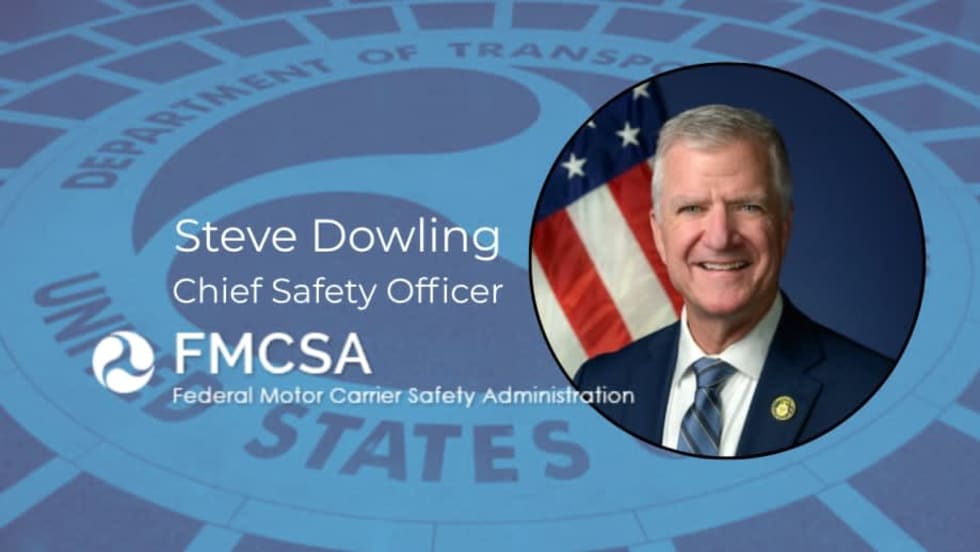
FMCSA Names New Chief Safety Officer: What School Bus Operators Should Know
Steve Dowling is set to lead the federal agency's efforts to advance commercial motor vehicle safety and reduce crashes, fatalities, and injuries on the nation's roadways.
Read More →
New Study Finds School Zone Speed Safety Cameras Cut Speeding Violations 97%
A Florida university's research demonstrates that Verra Mobility's automated enforcement changes driver behavior and significantly improves school zone safety.
Read More →
What Changed in DOT’s New National Roadway Safety Strategy?
The federal agency's new plan shifts its focus to safer people, roads and vehicles, with a new three-pronged approach instead of five. One outlined action even addresses a key industry concern around illegal school bus passing.
Read More →
Are Autonomous Vehicles Ready to Safely Navigate School Bus Stops?
NHTSA is accelerating autonomous vehicle deployment through new safety standards and commercial approvals. See why school transportation leaders are watching.
Read More →
NFL Star Lomas Brown Kicks Off New Illegal School Bus Passing PSA
Just in time for the back-to-school season, the former Detroit Lions offensive tackle took time to record a video encouraging motorists to slow down around school buses.
Read More →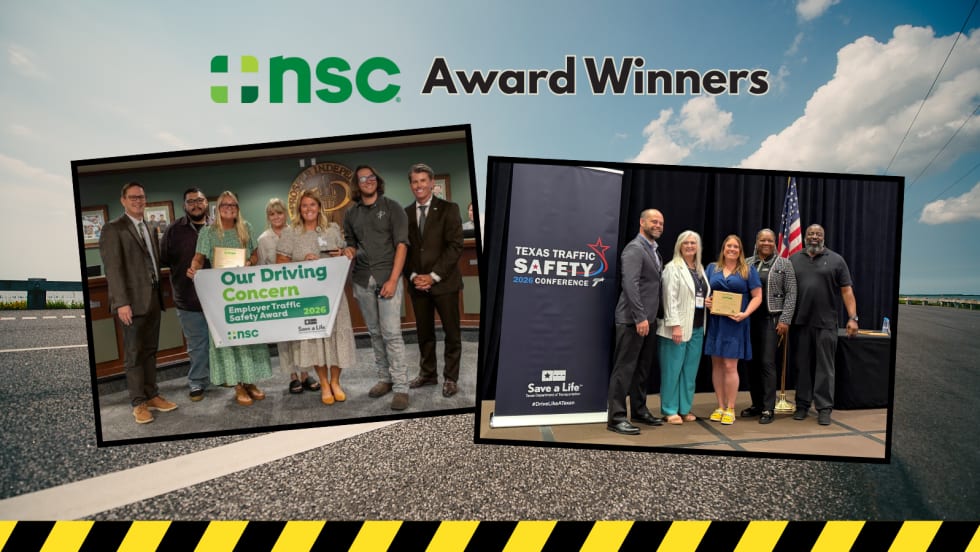
How Two Texas Districts Built Award-Winning Safety Programs
Learn how Prosper ISD and Rockwall ISD earned National Safety Council honors through hands-on training, safety culture, and strategies that reduced transportation incidents.
Read More →
NHTSA Releases 10-Year Review of Fatal School Bus Crashes
The latest federal analysis reinforces the safety of school buses while identifying where school-age pedestrians and other motorists remain most at risk.
Read More →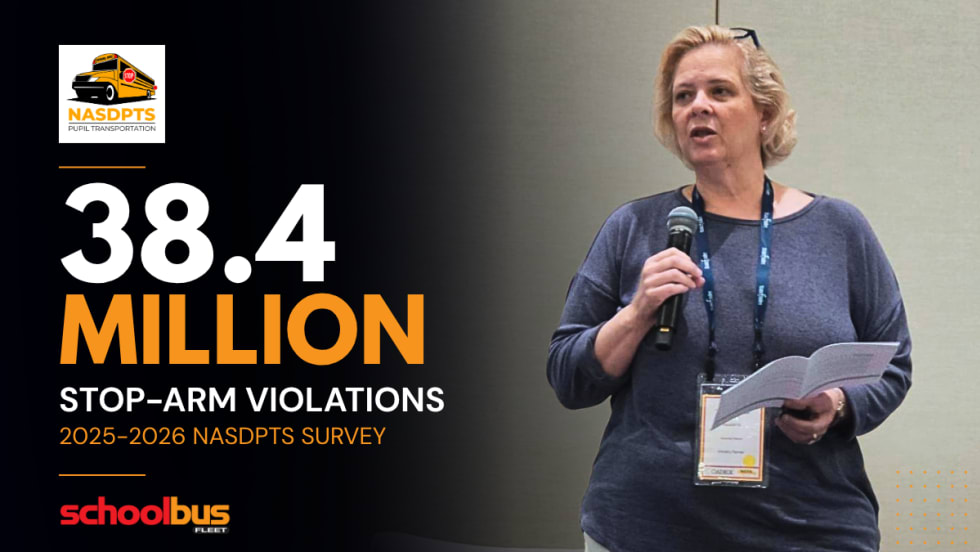
2026 NASDPTS Survey: Data Shows Further Reduction of Illegal Passing
New data is in! School bus stop-arm passings are down to 38.4 million violations per year, about a 2.3% decrease from last school year — but passings on the right side of the bus are higher than ever.
Read More →
Another School Bus Fatality Reported in Monsey, New York
A 7-year-old girl died after being struck by a school bus in Rockland County, New York while crossing the street. Here's what we know.
Read More →