





Could VMT Tax Help Fund the $3 Trillion Infrastructure Plan?
Biden Infrastructure Plan Calls For $300B For EVs, Roads, Bridges
Of Biden's $2 trillion infrastructure plan, $174 billion would be for building electric vehicle charging infrastructure and $115 billion for repairing highways and bridges.
April 1, 2021
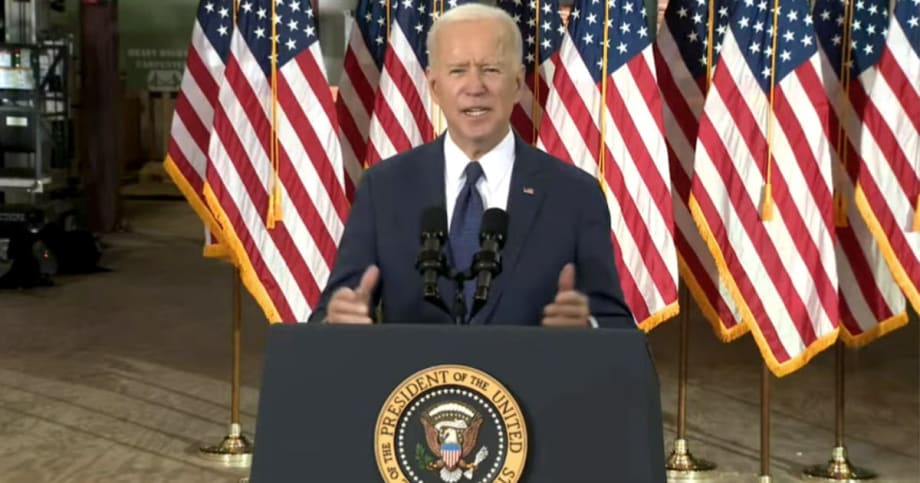
Of Biden's $2 trillion infrastructure plan, he is proposing $174 billion would be for building electric vehicle charging infrastructure and $115 billion for repairing highways and bridges.
Screenshot: YouTube
5 min to read
President Joe Biden on March 31 released details of his infrastructure plan, which includes $621 billion for transportation infrastructure.
With the American Jobs Plan, Biden is asking Congress to invest 1% of gross domestic product per year over eight years to cover $2 trillion in planned investments. Of those investments, $621 billion is related to repair and upgrades of transportation infrastructure, including $174 billion for building electric vehicle charging infrastructure, and $115 billion for highways and bridges.
“It’s a once-in-a-generation investment in America, unlike anything we’ve seen or done since we built the interstate highway system and the Space Race decades ago. In fact, it’s the largest American jobs investment since World War II,” Biden said during a speech in Pittsburgh.
Highways and Roads — $115B+
The heart of the American Jobs Plan is modernization of 20,000 miles of highways and road, repair of 10,000 bridges, and replacement of the nation’s 10 most “economically significant” bridges, Biden said in his speech.
The president is proposing a total increase of $115 billion to modernize the nation's bridges, highways, roads, and main streets, and another $20 billion to improve road safety and reduce crashes and fatalities to cyclists and pedestrians.
The Jobs Plan also aims to reduce bottlenecks at ports and airports. Biden is calling on Congress to invest an additional $17 billion in inland waterways, coastal ports, land ports of entry, and ferries, which are all essential to our nation’s freight, he said.
“It puts people to work to make repairs and upgrades that we so badly need,” Biden said. “It makes it easier and more efficient to move goods, to get to work, and makes us more competitive around the world.”
Electric Vehicle Infrastructure — $174B
Biden is proposing a $174 billion investment into electrifying cars and trucks in the United States. It would establish grant and incentive programs for state and local governments and the private sector to build a national network of 500,000 electric vehicle charging stations by 2030.
Biden says his American Jobs Plan would "tackle climate change with American jobs and ingenuity" and "lead the world in export of clean electric cars and trucks." pic.twitter.com/bkWU2cR30D
— Heavy Duty Trucking (@HDTrucking) March 31, 2021
NATSO, which represents the U.S. truckstop industry, released a statement saying the association is eager to work with the administration to build electric vehicle charging stations. NATSO is calling for the utility sector to develop and restructure the power grid to meet new demand, and says fuel retailers are in the best positions to own and operate EV charging stations.
“The competitive market dynamics that govern the retail fuel market today should be replicated to accommodate electric vehicles," said NATSO President and Chief Executive Officer Lisa Mullings in the statement. "The consumer should have multiple charging options all competing for their business on price, speed, and quality of service."
Biden’s plan also would replace 50,000 diesel transit vehicles and electrify at least 20% of the yellow school bus fleet.
Biden also proposed to transition the federal government’s fleet of vehicles to electric and hydrogen vehicles built and supplied by American manufacturers and workers.
How Will It Be Paid For?
Alongside his American Jobs Plan, Biden released a Made in America Tax Plan, which would fund the infrastructure investments by increasing the corporate tax rate to 28%. The proposal would not involve a tax increase for those making less than $400,000 a year, he said.
The administration is apparently not a fan of user fees such as raising the fuel tax, which has traditionally funded the Highway Trust Fund. And although a vehicle-miles tax has been floated as a potential method of funding infrastructure at a time when more fuel-efficient and increasing numbers of electric vehicles makes the fuel tax a less attractive funding method – including previously by Transportation Secretary Pete Buttigieg – the president's plan does not include it.
Biden is proposing a $2 trillion investment spread over eight years. It targets corporations to foot the bill – 91 Fortune 500 companies, including Amazon, pay not a single solitary penny in federal income tax, he said. pic.twitter.com/v2aE8p55UV
— Heavy Duty Trucking (@HDTrucking) March 31, 2021
However, some groups had reservations about funding the plan with corporate taxes.
“Raising the tax rate on corporate income to the highest in the industrialized world, especially at a time when many businesses are still reeling from the impact of the pandemic, will not help us to recognize continued growth, spur job creation or encourage capital investment and will, in fact, deter domestic economic activity,” the National Retail Federation’s President and CEO Matthew Shay said in a statement.
American Trucking Associations’ President and CEO Chris Spear said in a statement that ATA doesn’t believe the funding proposal is politically tenable, nor a reliable long-term solution to the shortfall facing the Highway Trust Fund.
However, Spear said the plan is an “important marker” as Congress begins work on reauthorization of the surface transportation reauthorization bill.
Still, unions came out in support of the bill. Greg Regan, president of the Transportation Trades Department, AFL-CIO, said: “President Biden’s American Jobs Plan offers the visionary leadership we need to rebalance our economy in favor of working families, help America live up to its ideals, and ensure our economy is globally competitive for generations to come. Transportation labor is committed to working with Congress to ensure President Biden’s vision becomes a reality.”
This is only the first step in the road to a new infrastructure plan. The proposal still has to get through both houses of Congress, which will have their own things to add to it (including potential trucking regulations such as speed limiters or more stringent underride guard rules), and where there will no doubt be much discussion about how to pay for it.
Originally posted on Heavy Duty Trucking
More Management

How to Build a Better Driver Training Program
Ready to boost up your school bus instructor training? Here’s how to pick the right talent and improve recruitment, retention, and safety.
Read More →
CALSTART and Forth Combine to Form Catalyst Mobility
The new name represents a renewed vision for the nonprofit focused on advancing clean, equitable, and affordable transportation solutions that move people and goods.
Read More →
What Makes a Great School Bus Driver Trainer?
Choosing the right school bus driver trainer takes more than experience. Learn six keys to selecting and developing trainers and evaluating program effectiveness.
Read More →


School Bus Contractors Expand Through New Deals, Acquisitions & Partnerships
STA's Canadian division acquires Ontario-based G&L Stevenson Transport while Durham School Services adds a new district contract in California, First Student adds a New Jersey contract, and Minnesota Coaches acquires Halo Transportation.
Read More →
Logan Bus Company Rolls Out AI Phone System for NYC School Bus Families
A summer pilot found that AI agents could handle most routine calls, freeing up time for customer service staff to focus on emergencies and complex family concerns.
Read More →
From Intent to Impact: What I Learned About Leadership from TAPT
A Texas transportation supervisor shares lessons on self-awareness, accountability, managing stress and building trust — and why investing in leadership development matters at every stage of your career.
Read More →
NAPT Names 2026 Award Recipients, Hall of Fame Inductee
Who earned national recognition for their work in student transportation? This year, NAPT named five recipients of its 2026 awards for service, safety, and leadership, plus its newest Hall of Famer.
Read More →
Sponsored•September 2, 2026
2026 State of Student Transportation Report
Driver shortages. Rising costs. Growing safety expectations. More data, but not enough time to act on it. The 2026 State of Student Transportation Report reveals what transportation leaders say is putting the most pressure on their operations—and where they’re investing next. See how your priorities compare.
Read More →
How to De-Escalate an Angry Person: 5 Steps for Handling Workplace Conflict
What makes emotions run high, and how should you handle an angry colleague or parent? Follow these steps for staying calm, listening, showing empathy, and resolving conflict.
Read More →
Sponsored•September 1, 2026
What Readiness Looks Like This School Year
Learn about the challenges shaping the 2026–2027 school year, from persistent driver shortages and budget pressure to technology and readiness gaps. See how school districts are responding and adapting in Zonar’s 2026 Back-to-School Readiness Report.
Read More →