




Report Points to Growth in School Bus Contracting
Outsourcing of school transportation service is one of the fastest-growing areas in government contracting, according to a report by Onvia.

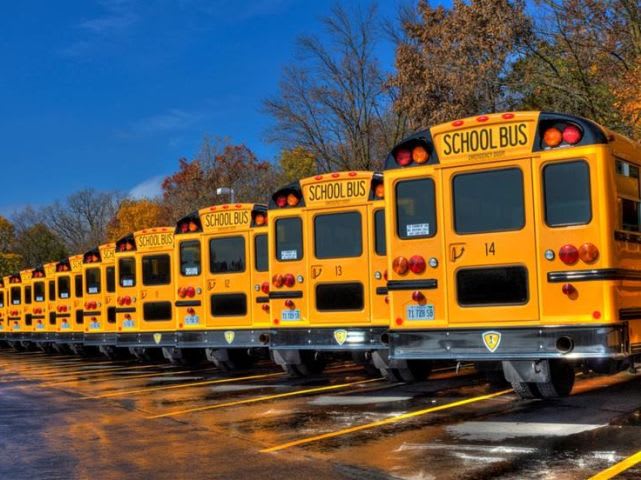
A new report by Onvia found that outsourcing of school transportation service is one of the fastest-growing areas in government contracting. Photo courtesy Fullington.
A new report by Onvia found that outsourcing of school transportation service is one of the fastest-growing areas in government contracting. Photo courtesy Fullington.
Outsourcing of school transportation service is one of the fastest-growing areas in government contracting, according to a new report by Onvia.
The finding comes in the 2017 edition of the commerce intelligence company’s annual "10 Hotspots in Government Contracting" research. The report uses current, future, and historical government transaction data from Onvia's B2G Intelligence System to show the most significant rates of growth in published solicitations.
In the area of pupil transportation, Onvia’s B2G Intelligence System found that from 2015 to 2016, there was a 10% increase in school bus service bids and requests for proposal (RFPs) issued by public districts.
The report also highlights the top 10 states for school bus service bids and RFPs, with New Jersey and New York at the front of the pack.
“While privatized educational services have their share of critics, school funding difficulties will continue and there is a more business-friendly administration at the federal level,” Onvia says in the report. “In this environment, there is a strong potential for further growth in private bus services in the coming years.”
Other government contracting hotspots identified in the Onvia report include providing clean water, serving people with disabilities, strengthening disaster services, and innovating education.
Vendors and buyers can request a free copy of the Onvia report here. The company also recently published a blog post about the increase in school bus service bids.
Meanwhile, a separate study released last year by the Mackinac Center for Public Policy shows long-term growth in outsourcing school transportation services in Michigan. The number of school districts contracting out for busing has risen from 21 districts in 2005 to 137 districts in 2016, according to the center's Michigan School Privatization Survey 2016.
That Mackinac study is available here.
More Management

NAPT Names 2026 Award Recipients
Who earned national recognition for their work in student transportation? This year, NAPT named five recipients of its 2026 awards for service, safety, and leadership.
Read More →
2026 State of Student Transportation Report
Driver shortages. Rising costs. Growing safety expectations. More data, but not enough time to act on it. The 2026 State of Student Transportation Report reveals what transportation leaders say is putting the most pressure on their operations—and where they’re investing next. See how your priorities compare.
Read More →
How to De-Escalate an Angry Person: 5 Steps for Handling Workplace Conflict
What makes emotions run high, and how should you handle an angry colleague or parent? Follow these steps for staying calm, listening, showing empathy, and resolving conflict.
Read More →


What Readiness Looks Like This School Year
Learn about the challenges shaping the 2026–2027 school year, from persistent driver shortages and budget pressure to technology and readiness gaps. See how school districts are responding and adapting in Zonar’s 2026 Back-to-School Readiness Report.
Read More →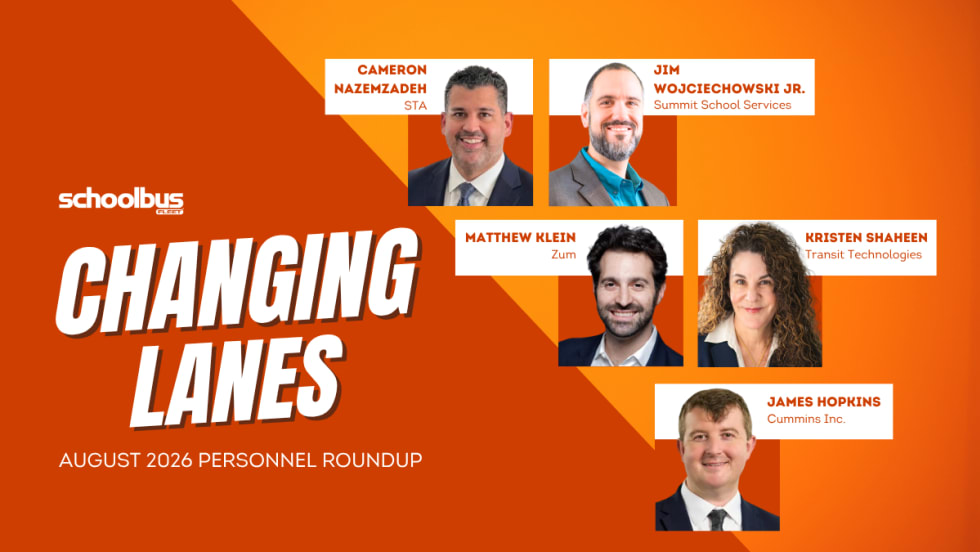
Changing Lanes: Executive Moves at Summit School Services, Zum, STA, Cummins, Transit Technologies, Driventic, & Cadex
See who's been hired, promoted, and appointed to leadership positions at various school transportation industry suppliers and private contractors.
Read More →
Texas Sixth Grader Wins 2026 National School Bus Safety Poster Contest
Sai Darshana Yekolu of Moseley Middle School in Prosper, Texas, was named the newest winner for her artwork, bringing the theme of “Safe Rides, Everyday Heroes” to life.
Read More →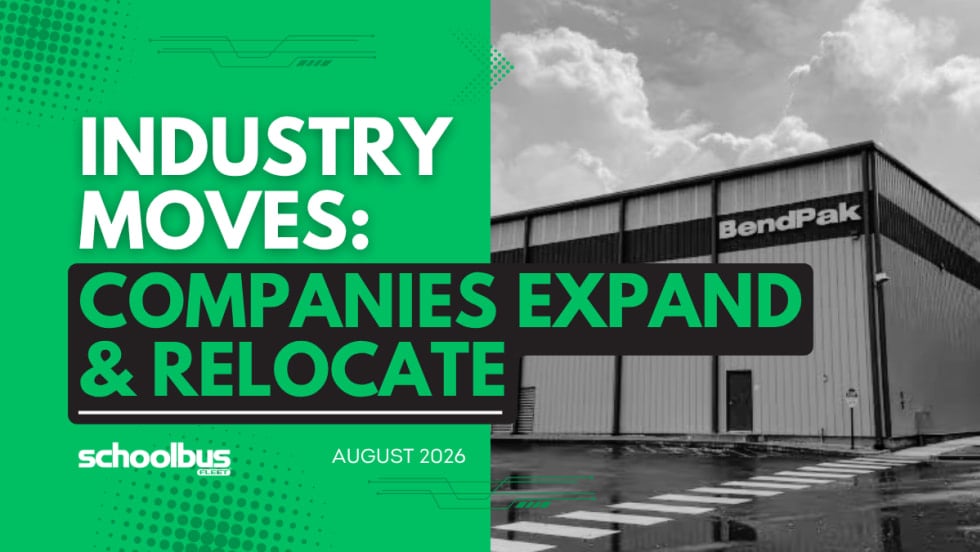
Industry Moves: Companies Expand Fleet Service & EV Infrastructure Footprints
The new facilities and regional hubs could mean faster access to shop equipment, charging support, and transportation technology for fleet operators.
Read More →
Doing More With Less: How Transportation Directors Can Prioritize Safety Amid Budget Uncertainty
With diesel prices soaring and nearly one-third of transportation directors expecting budget cuts, maintaining student safety has never been more challenging. Download this guide to learn how leading districts are prioritizing risk, funding critical safety technology, and building stronger budget cases with data.
Read More →
Walton County Schools Adds Gatekeeper Stop-Arm Enforcement System
The Florida district will deploy Gatekeeper’s updated Student Protector technology, which now incorporates AI to improve video evidence.
Read More →
Zum Reaches 19 States With New York Expansion
The addition of the Empire State to the student transportation company's roster marks a growing expansion in the Northeast as it scales its tech and school bus services.
Read More →