



6 factors to consider in leasing equipment
Web Exclusive: When you need additional equipment, there are numerous financing options out there. Here are tips for making the right leasing decisions for your operation.
When you need additional equipment for your operation, there are numerous financing options out there.
From loans to leases, the choices can sometimes seem overwhelming. Leasing may be an option you are interested in exploring but don’t know much about.
There are several lease types that you can choose from, including capital leases (or finance leases) and true leases (or tax leases). You can lease new or used equipment. You can even sell equipment that you have and lease it back.
All of the various lease types, while different, have a couple of things in common: They usually will allow you to get a piece of equipment with little money down and with a lower payment than a traditional loan.
1. Improving your cash flow
Leasing can improve your operation’s cash flow by providing lower payments than a traditional loan for the same equipment.
Most leases have a lower payment because the lessor has assumed a residual value in the equipment. So you are only paying back a portion of the value of the equipment — the portion you are using.
Also, leasing companies will often provide seasonal payment plans, so you can have some payment relief during the slow season or seasons. Generally, equipment leases provide much greater flexibility around your ability to make payments than traditional financing.
2. Keeping your equipment modern
New equipment offers lower maintenance costs and usually warranties that protect against large, unexpected repairs.
To keep your fleet modern and cost efficient, you might want to look at a comprehensive leasing program that provides for lease expiration at or near warranty expiration. Having a modern, efficient fleet could very well be more cost effective in the long run.
3. Generating cash
Leasing doesn’t just help you acquire new equipment; it can help you raise working capital or money to buy additional equipment.
A sale and leaseback transaction is one where a leasing company buys your existing equipment and leases it back to you. You get the cash that is locked up in your equipment, and you continue to use your equipment as if you owned it.
Most sale and leasebacks look a lot like a lease for new equipment; they are typically three to seven years in length, and the terms look the same as if you have acquired new equipment — it’s just your equipment providing you with much needed cash.
4. Refinancing your existing debt
Another option to improve your monthly debt payments — and in some cases to generate cash — is to refinance debt, which is secured by your equipment.
Refinancing with a capital or finance lease can lower your monthly payments by as much as 50%. The leasing company essentially stretches out your payments to reduce your monthly cost. This requires detailed knowledge of your equipment and its value over time.
Generally, banks will only finance new equipment, and for relatively short terms. A leasing company’s knowledge of your equipment allows them to more closely match the term of your lease to the life of your equipment — all resulting in a lower monthly payment.
5. Understanding the fine print
Lease contracts are usually “hell or high water” obligations to pay rentals. This simply means that the lessee has signed up to make the payments, and they cannot get out of the lease if the equipment breaks.
If you decide you don’t need it anymore, the lease can be terminated, and most leases will contain a termination value schedule that spells out the amount that will need to be paid to terminate the lease.
These leases are also called “net leases,” which means the lessee agrees to pay all taxes, insurance premiums, maintenance costs and any other expenses that would be associated with owning the equipment. Warranties associated with the equipment are transferred to the lessee, and the lessee provides the appropriate insurance coverage for the equipment.
So, while your lessor may own your equipment, you have to think of it as your equipment and be prepared to pay the same operating costs that you would have if your operation owned the equipment.
6. Assessing your situation
Understanding whether or not leasing works for your situation is relatively simple. Focus on your monthly payment and the payment structure that is being offered to you by the leasing company.
Cash flow in business is one of the most important variables that you need to control. Nothing else matters if you cannot service your debt payments from your monthly cash flow. So, if a leasing company can offer you a payment plan that can be serviced by your operation’s monthly cash flow, then it’s a transaction that probably makes sense.
You could very well be offered a traditional loan that is less expensive in total than the lease, but the cash flows don’t work, which makes the total cost irrelevant.
Since equipment lessors are willing to make residual assumptions in equipment and to provide seasonal payment structures, you should be able to find a lease financing option that will help you to profitably acquire new equipment or to turn your existing equipment into much-needed cash.
Phil Carlson is president and CEO of Nations Equipment Finance and has more than 30 years of commercial lending and leasing experience. Nations Equipment Finance is a national specialty commercial finance company providing equipment-based term loans and leases across a variety of asset types and industries. For more information, go to www.nationsequipmentfinance.com.
More Management

Zum Reaches 19 States With New York Expansion
The addition of the Empire State to the student transportation company's roster marks a growing expansion in the Northeast as it scales its tech and school bus services.
Read More →
First Student Updates Its Parent App
First View connects both yellow bus and alternative transportation, giving families one platform to track student trips for the new school year, with 15 languages supported.
Read More →
The Back-to-School Checklist Every Director Should Complete Before the First Bell
Help your transportation team start the school year strong with these tips for contingency planning, communication, fleet visibility, technology, and trip management.
Read More →
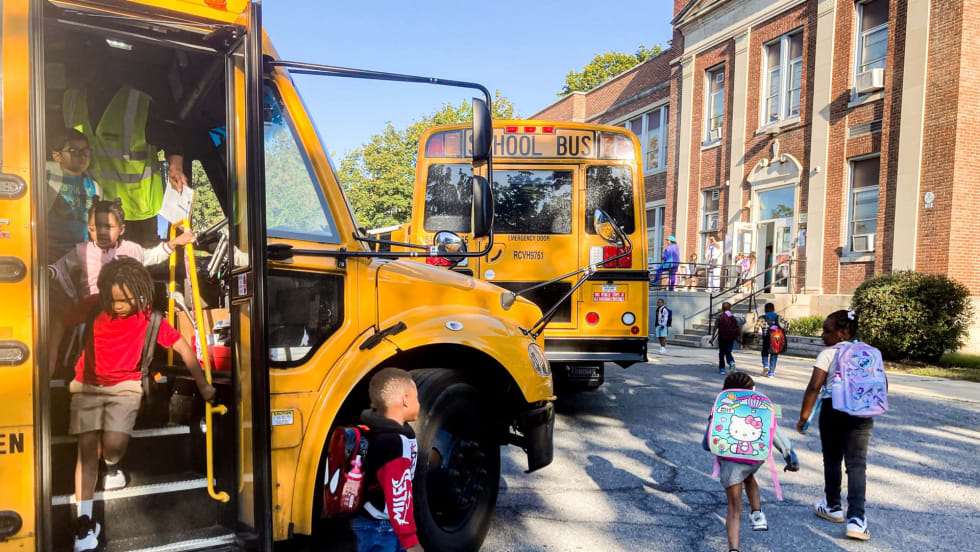
How a New York District Cut Nearly $1M in Transportation Costs While Expanding Bus Access
A data-driven overhaul with BusRight reduced Poughkeepsie City School District's planned routes from 26 to 17 while extending school bus service to about 1,200 additional students.
Read More →
Budgets Down, Enrollment Shifting: What the Data Says Districts Should Watch
School transportation departments face two converging challenges this year: tightening budgets and shifting enrollment. Most districts still address these issues separately, but the assumption that either trend will simplify operations is proving incorrect.
Read More →
These 8 School Transportation Companies Made the 2026 Inc. 5000 List
Find out which school transportation contractors, technology providers, and suppliers ranked among America’s fastest-growing private companies.
Read More →
The Link Between Emotional Intelligence and School Bus Safety
How can emotional intelligence help transportation pros navigate stress, manage change, and build stronger relationships? Listen to find out.
Read More →
What Emotional Intelligence Has to Do With School Bus Safety
In this video, discover how emotional intelligence can help transportation leaders and drivers navigate stress, manage change, and build stronger relationships. The Route is sponsored by IC Bus.
Read More →
Beyond Two-Way Radios: School Bus Communications Evolve With Push-to-Talk Over Cellular
PRYME Radio and PositionPTT join forces to advance hands-free radio use and reduce distracted driving. See how PoC compares with traditional radios on range, cost, safety, and connectivity.
Read More →
Have School Districts Adapted to Bus Driver Shortages or Simply Accepted Less Service?
According to a recent report from HopSkipDrive, many districts appear to have recalibrated what "normal" transportation service looks like.
Read More →