




Trip Sheet: Evolution of Seat Belt Laws on U.S. School Buses
The journey of school bus seat belt regulations has involved a complex interplay of safety data, public perception, cost implications, and policy decisions.

The National Transportation Safety Board in 2022 renewed its recommendation calling for states to require passenger lap and shoulder belts.
Image: Canva
EDITOR'S NOTE: This post was edited to clarify Iowa's seat belt policy. The state's rule mandates installation of seat belts, but use policy is set at the local district level.
In the early 20th century, school transportation varied widely. Children traveled to school by foot, horse, trolley, or in the case of rural areas, wagons, or basic motorized vehicles. Safety wasn't standardized, and the concept of protective measures inside vehicles was nearly non-existent.
By the 1970s, as cars began to adopt seat belts, school buses used a safety concept called "compartmentalization." This involves closely spaced, energy-absorbing padded seats that help to protect students without the need for individual seat belts. The design was considered effective at protecting children, especially in front and rear-end collisions.
The 1980s and 1990s saw increased scrutiny of school bus safety due to several high-profile bus accidents. Questions arose about the efficacy of compartmentalization in rollovers or side-impact collisions, where seat belts could potentially offer better protection.
A More Modern Approach to Seat Belt Safety
The National Highway Traffic Safety Administration (NHTSA), for a long time, held the position that school buses were safe without seat belts due to compartmentalization. However, over the years, the agency began to recognize the potential benefits of seat belts, especially three-point belts, in certain crash scenarios.
The late 20th and early 21st centuries saw individual states, influenced by advocacy groups and concerned parents, starting to explore or mandate seat belts on school buses. States like California and New York led the way, introducing requirements for seat belts on new buses.
As more data emerged about the potential life-saving impact of seat belts in specific bus accident scenarios, public perception shifted. Parents, educators, and safety advocates began to question the absence of seat belts in school buses. Grassroots campaigns, often spurred by tragic incidents, influenced policy discussions at both state and national levels.
In November 2022, after completing an investigation into a 2020 crash between a school bus and a service utility truck, the National Transportation Safety Board (NTSB) renewed its 2018 recommendation calling for states to require passenger lap and shoulder belts, as well as systems that prevent lane departure on heavy vehicles.
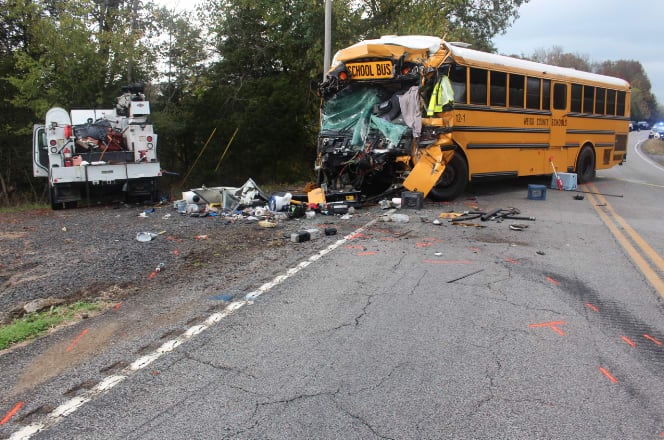
A wreck between a school bus and service utility truck in Tennessee killed the bus driver and a 7-year-old passenger. The NTSB chair warned that, despite overall school bus safety, "we've become complacent."
Image: Tennessee Highway Patrol
As the push for seat belts grew, so did concerns about costs. Retrofitting old buses or buying new ones with seat belts proved expensive. Three-point systems, for example, could range between $7,000 and $10,000 per school bus. This led some school districts and states to resist the push, citing budget constraints.
Some arguments against seat belts on buses note potential downsides. If used incorrectly, seat belts could cause injury. In emergencies, they could slow down evacuations. But with proper training and education for both bus drivers and students, it’s believed that these concerns can be minimized.
States with School Bus Seat Belt Legislation in Place
While many states have recognized the potential safety benefits of seat belts on school buses, financial considerations often play a significant role in their implementation.
Several states have introduced regulations contingent upon funding, which means that until the money’s available, the seat belt mandates don’t take effect. This results in a patchwork approach where some districts in a state might have buses with seat belts, while others might not.
Arkansas: Starting in 2018, new school buses were required to have seat belts. But there's a catch: The law would only take effect if the state provides funding.
California: The state requires all new school buses to be equipped with three-point seat belts. While the buses must have these seat belts, students aren't always legally required to wear them, though most districts have policies in place to enforce usage.
Florida: School buses purchased after Dec. 31, 2000, are required to have seat belts, preferably the three-point type. However, usage is not mandated if funding for the seat belts was not provided by the state. In other words, if a district or another entity funded the seat belts, the district is not legally required to ensure students use them.
Louisiana: The state mandates that newly purchased school buses must have seat belts. However, this requirement is contingent upon the state legislature providing funding. If the state doesn't allocate funds, seat belts aren't mandatory.
New Jersey: All school buses are required to be equipped with seat belts, and students must use them. New Jersey law specifically mandates the use of lap belts, but districts can opt for three-point belts if they choose.
New York: Seat belts are required on all school buses, and students are required to wear them. However, enforcement of this rule often lies with individual school districts, leading to varying degrees of compliance.
Nevada: As of 2019, Nevada began requiring three-point seat belts on newly purchased school buses. The legislation also mandates students to wear these belts.
Texas: The state requires three-point seat belts on school buses as of 2018. However, like Louisiana, the requirement only applies if the state provides funds. If the state does not fund seat belts, districts are not obligated to install or ensure usage. Given the size of Texas, this has resulted in a mixed landscape where some districts have seat belts, and others do not.
Other Approaches to Seat Belt Regulations
Some states, like Iowa, have avoided the struggle of trying to pass school bus seat belt legislation. Instead, absent a federal requirement, Iowa adopted a rule that calls for school districts with to equip school buses with seat belts.
“However, when we put the rule in place to require lap/shoulder belts, we also put a rule in place requiring schools to have a policy on their use,” says Max Christensen, education program consultant at the Iowa Department of Education. “We didn’t say the policy had to require their use, but simply that they had to have a policy on how the belts are to be used. Again, most have adopted a policy to require their use, but not all.”
In Ohio, citizen advocate Rudy Breglia continues his quest to get that state to require seat belts on school buses. He recently urged Lorain County Commissioners to join his movement, citing concerns about school bus safety features and the efficacy of compartmentalization.
Check Out The Route: Sitting Down? [VIDEO]
More Blog Posts
The Sound of Summer Starting [Guest Editorial]
That unmistakable school bus rumble? It carries childhood memories, community routines, and a whole lot of unseen work behind the scenes.
Read More →
The Technology Power Combo That Enables EV Charging on Difficult Sites
As the pace of fleet electrification increases and charging infrastructure continues to pose challenges, many fleets find themselves puzzling over the question: how do I install charging infrastructure faster and more cost-efficiently?
Read More →
Trip Sheet: Farewell, Faithful Readers – Keep on Rolling
Executive Editor Wes Platt offers parting thoughts as he parks the School Bus Fleet bus to focus on ultra-local community journalism, making way for someone else to take the wheel as the pupil transportation industry continues to evolve.
Read More →
Trip Sheet: School Transportation Pros Can Champion Children's Mental Health
Children's Mental Health Awareness Day underscores the significance of school bus drivers in fostering supportive environments during students' journeys. SAMHSA's initiatives, including stigma reduction and access to resources, complement the Biden-Harris administration's funding efforts to enhance youth mental health services and workforce development.
Read More →
Trip Sheet: Is It Time for Daylight Saving Time to Clock Out?
How do you think the potential shift to permanent Daylight Saving Time or standard time would impact our daily lives and routines, especially considering the divided approach across various states?
Read More →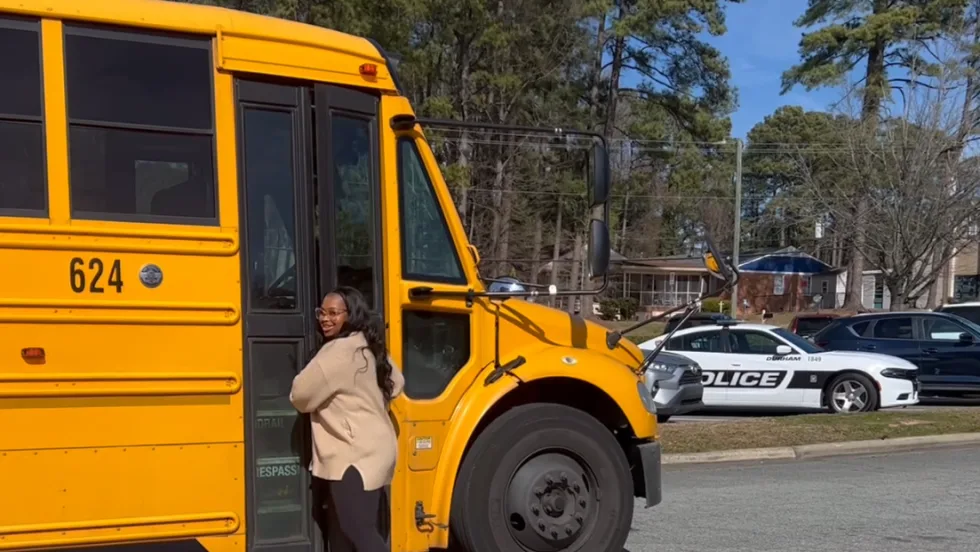
Trip Sheet: Meeting a Hero in My Own Back Yard
I remain impressed by the matter-of-fact heroism that’s often demonstrated by school bus drivers like Deona Washington who are caught in these situations where the best of us might lose our cool and panic. But, then again, bus drivers are a unique breed.
Read More →
Trip Sheet: 3 Takeaways from the EPA Clean School Bus Grant Program
Most applicants sought grant funding to acquire electric school buses, with propane coming in a distant second. No one indicated plans to purchase compressed natural gas (CNG) buses in this round. That’s not terribly surprising, I suppose, given how few school districts listed the inclusion of CNG buses in their fleets for our 2023 top district fleets survey.
Read More →
Trip Sheet: Let's Get Rolling: What's Coming in 2024?
Calendar pages keep flipping toward the mandates set in states like New York and California to transition their school bus fleets from diesel to zero-emission, but there’s plenty of reluctance and pushback.
Read More →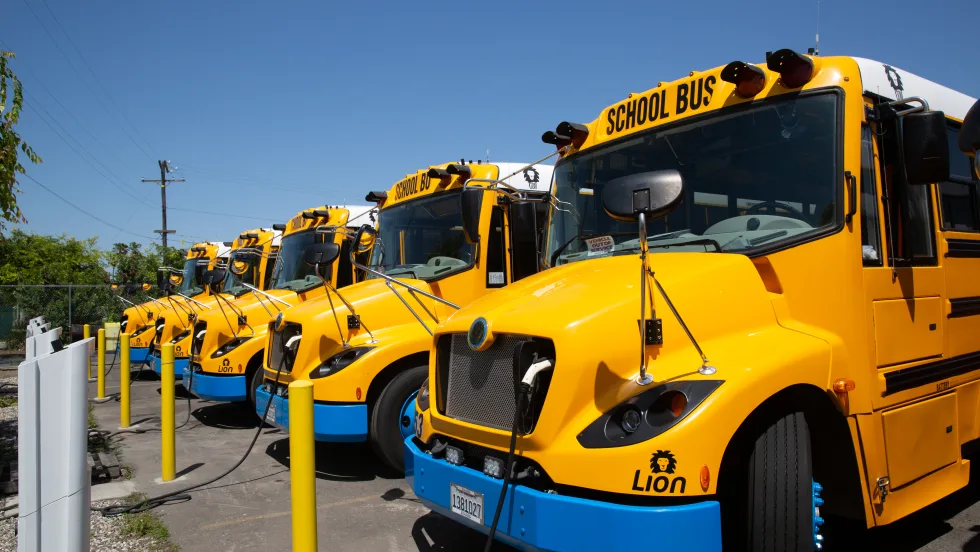
California School Children Ride in Green School Buses
Today, California prides itself on utilizing the most zero-emission (ZE) school buses in the country with over 1,689 being used by California school districts; and while the state is on a positive health trajectory thanks to a decree to eliminate gas and diesel vehicles, more work needs to be done to improve children’s well-being.
Read More →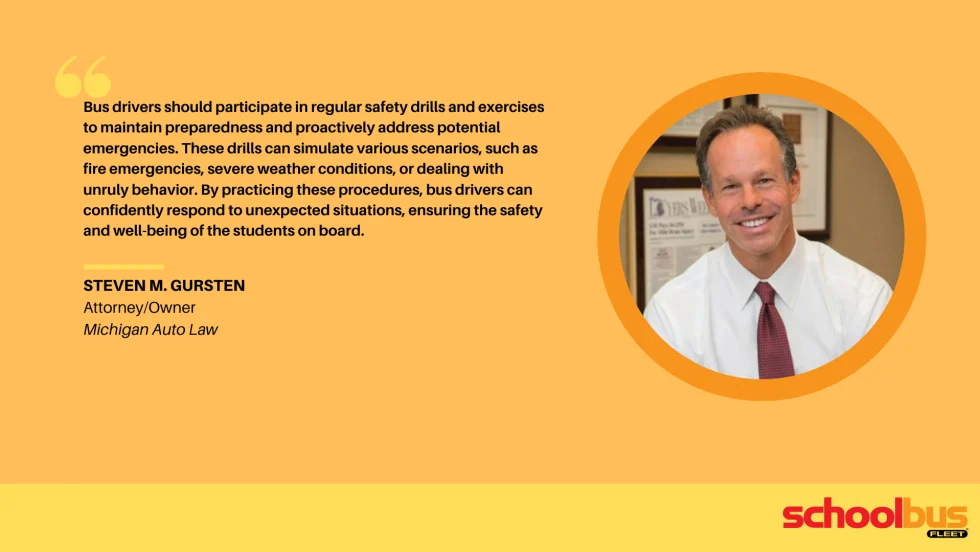
Behind The Wheel of Childrens’ Safety Aboard the School Bus
Bus drivers are the primary caretakers of children during their commute and thus bear responsibility for their safety. By prioritizing proper operating procedures, maintenance checks, and additional precautions, drivers can help avoid the loss of precious young lives under their care.
Read More →