




NSTA: Looking for Light at the End of the Tunnel
The National School Transportation Association urges school bus operators to take advantage of the FMCSA's temporary waiver of the "under-the-hood" component of the CDL test.
In my last column, I shared that the NSTA Advocacy Team enjoyed a string of victories over the past two years, as private school bus operators responded to the challenges of the COVID‐19 pandemic. As we begin 2022, I’m really pleased to say our streak continues with the Jan. 3, 2022, announcement by the Federal Motor Carrier Safety Administration (FMCSA) of a temporary waiver – designed specifically to address the school bus driver shortage.
FMCSA issued a temporary waiver covering the period from Jan. 3, 2022, through March 31, 2022. In its edict, FMCSA states:
“FMCSA permits, but does not require, States to waive the engine compartment component of the pre‐trip vehicle inspection skills testing requirement in 49 CFR § 383.113(a)(1)(i), also known informally as the ‘under‐the‐hood’ component, for commercial driver’s license (CDL) applicants seeking the School bus (S) and Passenger (P) endorsements and the Intrastate only (K) restriction. Drivers issued a CDL pursuant to this waiver are restricted to the intrastate operation of school buses only. Additionally, FMCSA waives the requirement in 49 CFR § 383.133(c)(1) that States administer this portion of the pre‐trip vehicle inspection test in accordance with an FMCSA pre‐approved examiner information manual. FMCSA issues this waiver in response to multiple requests that the Agency provide regulatory relief to address the growing shortage of school bus drivers, which has been exacerbated by the coronavirus 2019 (COVID‐19) public health emergency.”
In 2020, NSTA asked FMCSA for a review of the Commercial Drivers’ License (CDL) process, specifically referencing the “under‐the‐hood” provision, as we sensed the effects of the pandemic would severely affect our bus driver pool. Anecdotally, our members have seen school bus driver candidates not complete the CDL process due to the existence of the “under‐the‐hood” testing requirement. Upon further scrutiny, as an organization, we carefully considered the direct alignment of this requirement with responsibilities of the school bus driver position. We believed that there would be no net loss of safety to students, drivers, and the general motoring public by removing this requirement.
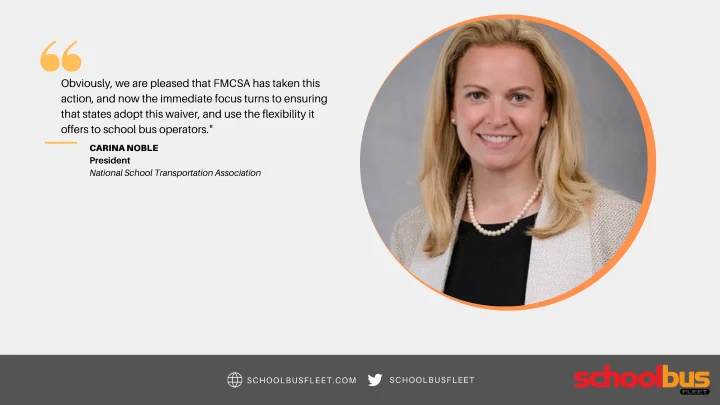
Obviously, we are pleased that FMCSA has taken this action, and now the immediate focus turns to ensuring that states adopt this waiver, and use the flexibility it offers to school bus operators. Unfortunately, we have already heard from several states that, due to the compressed three‐month window for which this waiver applies, they will not be adopting and implementing it. This is unfortunate for two reasons: 1. FMCSA will review the usage analytics of the waiver to determine whether to extend the temporary waiver, or in the best‐case scenario, make it permanent; and 2. States that do not adopt the waiver cannot provide school bus operators a potential solution to help address their driver shortage.
I urge everyone who agrees with this waiver to contact his or her respective State Drivers’ License Agency (SDLA) or Motor Vehicle Agency, as well as state policy‐makers to discuss the importance of it being adopted.
In terms of some background, keep in mind that states issuing CDLs pursuant to this waiver must abide by some conditions including:
States must individually adopt this waiver in order for it to become effective;
Applicants licensed under to provisions of the temporary waiver will maintain a “K” restricted (school bus license) until that license expires;
This waiver applies only to the intrastate operation of school buses used to transport students from home to school, from school to home, or to and from school‐sponsored events.
NSTA will continue to engage on this important issue, and we would like to publicly thank FMCSA for hearing our concerns and acting upon them in a tangible way.
More Blog Posts
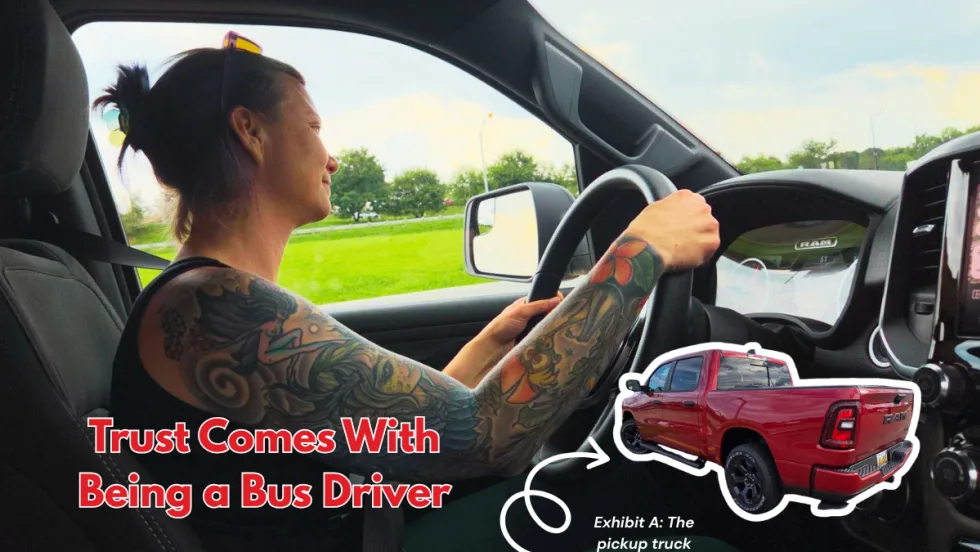
'I’m a School Bus Driver, You Can Trust Me'
A crowded Cleveland parking lot, a full-size pickup, and five unexpected words turned a stressful moment into a reminder of just how much trust we place in school bus drivers every day.
Read More →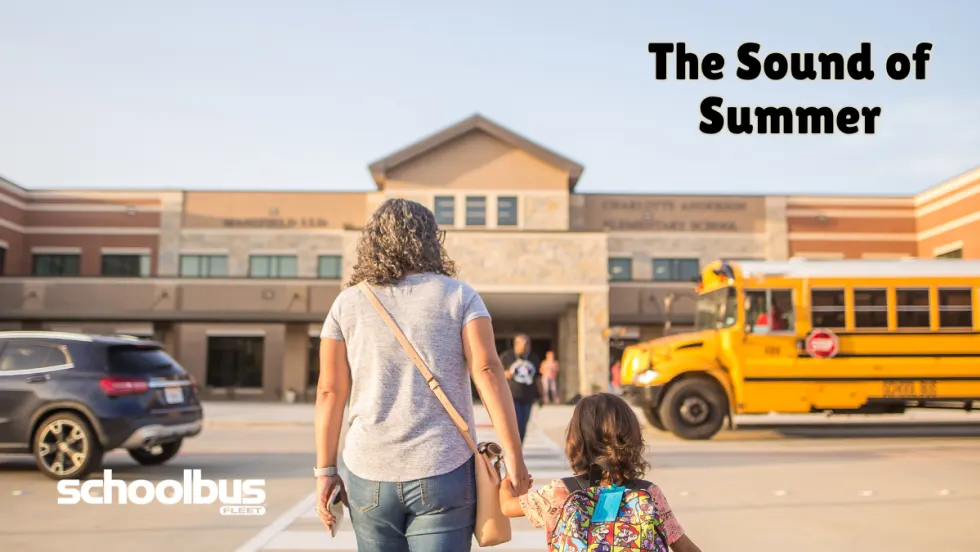
The Sound of Summer Starting [Guest Editorial]
That unmistakable school bus rumble? It carries childhood memories, community routines, and a whole lot of unseen work behind the scenes.
Read More →
The Technology Power Combo That Enables EV Charging on Difficult Sites
As the pace of fleet electrification increases and charging infrastructure continues to pose challenges, many fleets find themselves puzzling over the question: how do I install charging infrastructure faster and more cost-efficiently?
Read More →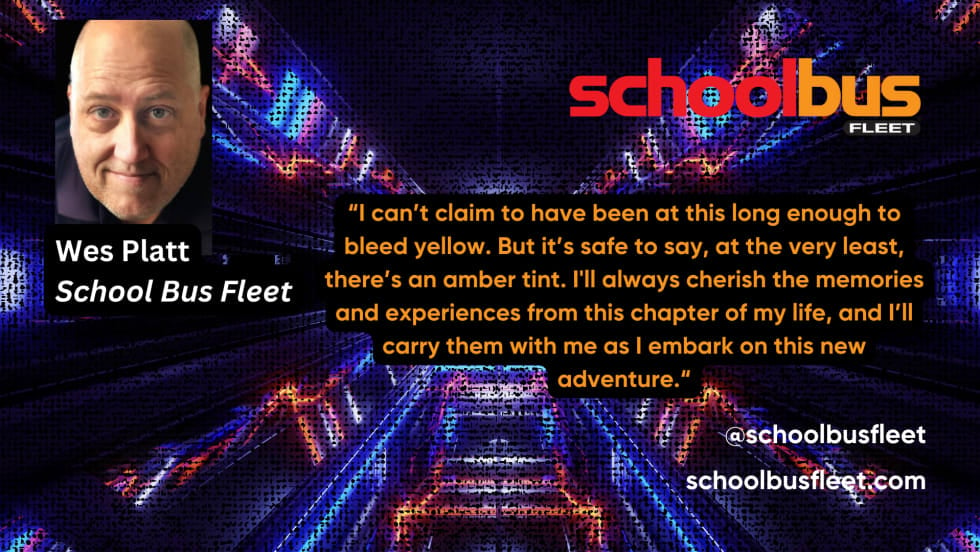
Trip Sheet: Farewell, Faithful Readers – Keep on Rolling
Executive Editor Wes Platt offers parting thoughts as he parks the School Bus Fleet bus to focus on ultra-local community journalism, making way for someone else to take the wheel as the pupil transportation industry continues to evolve.
Read More →
Trip Sheet: School Transportation Pros Can Champion Children's Mental Health
Children's Mental Health Awareness Day underscores the significance of school bus drivers in fostering supportive environments during students' journeys. SAMHSA's initiatives, including stigma reduction and access to resources, complement the Biden-Harris administration's funding efforts to enhance youth mental health services and workforce development.
Read More →
Trip Sheet: Is It Time for Daylight Saving Time to Clock Out?
How do you think the potential shift to permanent Daylight Saving Time or standard time would impact our daily lives and routines, especially considering the divided approach across various states?
Read More →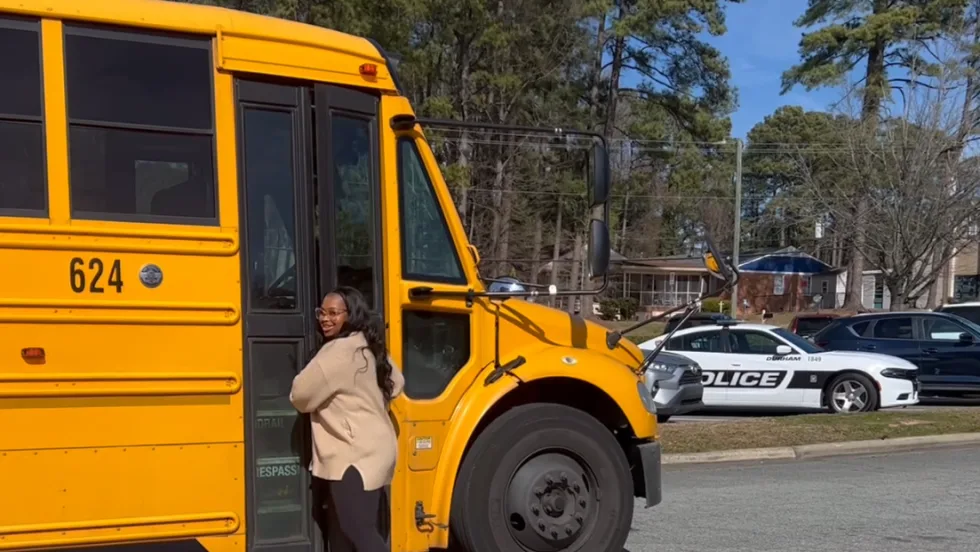
Trip Sheet: Meeting a Hero in My Own Back Yard
I remain impressed by the matter-of-fact heroism that’s often demonstrated by school bus drivers like Deona Washington who are caught in these situations where the best of us might lose our cool and panic. But, then again, bus drivers are a unique breed.
Read More →
Trip Sheet: 3 Takeaways from the EPA Clean School Bus Grant Program
Most applicants sought grant funding to acquire electric school buses, with propane coming in a distant second. No one indicated plans to purchase compressed natural gas (CNG) buses in this round. That’s not terribly surprising, I suppose, given how few school districts listed the inclusion of CNG buses in their fleets for our 2023 top district fleets survey.
Read More →
Trip Sheet: Let's Get Rolling: What's Coming in 2024?
Calendar pages keep flipping toward the mandates set in states like New York and California to transition their school bus fleets from diesel to zero-emission, but there’s plenty of reluctance and pushback.
Read More →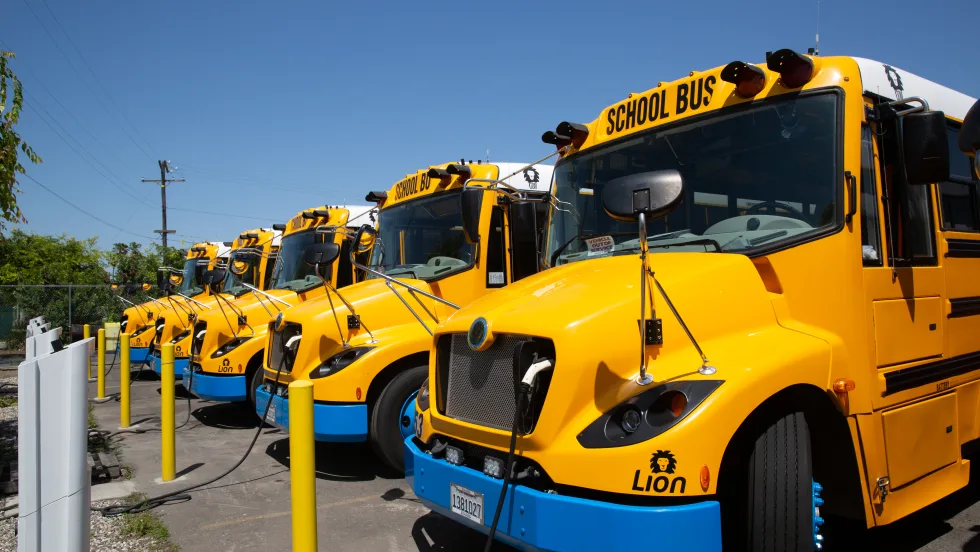
California School Children Ride in Green School Buses
Today, California prides itself on utilizing the most zero-emission (ZE) school buses in the country with over 1,689 being used by California school districts; and while the state is on a positive health trajectory thanks to a decree to eliminate gas and diesel vehicles, more work needs to be done to improve children’s well-being.
Read More →