




How Will the VW Settlement Funds Impact School Buses? Check With Your State
As state agencies work out plans for their share of the Volkswagen diesel mitigation funding, it has become clear that allocations for school buses will vary widely from state to state.

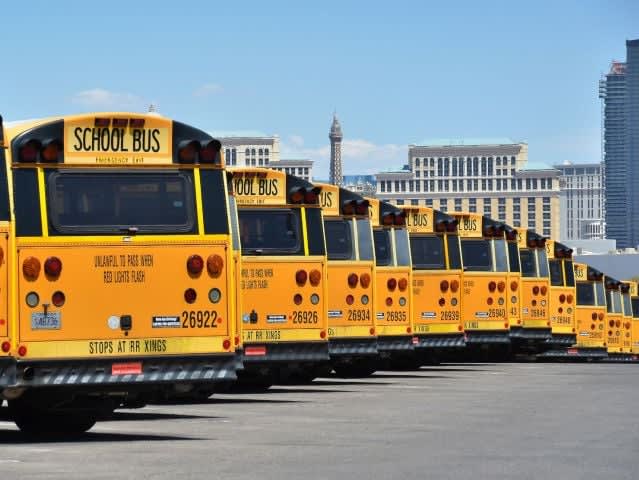
The VW Environmental Mitigation Trust will provide states with a total of $2.9 billion for projects to cut nitrogen oxide from large vehicles, including school buses. File photo courtesy Clark County (Nev.) School District
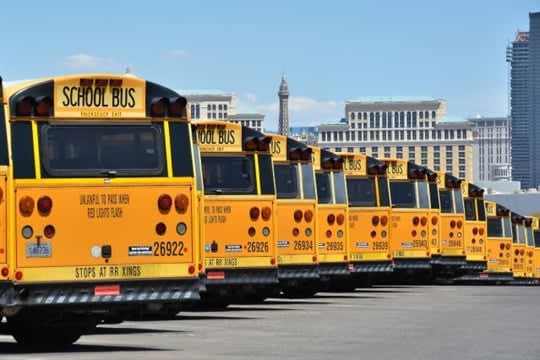
The VW Environmental Mitigation Trust will provide states with a total of $2.9 billion for projects to cut nitrogen oxide from large vehicles, including school buses. File photo courtesy Clark County (Nev.) School District
As state agencies work out plans for their share of the Volkswagen (VW) diesel mitigation funding, it has become clear that the impact on school buses will vary widely from state to state.
If you’re still wondering what all this talk of the VW settlement has to do with you, here’s a quick answer: The VW Environmental Mitigation Trust will provide states with a total of $2.9 billion for projects to cut nitrogen oxide from large vehicles, including school buses. The funding is part of multiple settlements for the German automaker, which was accused of cheating emissions tests with its diesel cars.
The mitigation funds can be used to repower or replace engines or vehicles in 10 categories. Among them: large trucks, buses (school, shuttle, or transit), freight switchers, ferries/tugs, medium trucks, airport ground support equipment, and forklifts and port cargo handling equipment.
Before states can spend their share of the funding, they have to develop beneficiary mitigation plans and submit them to the trustee, Wilmington Trust N.A. Those plans are due 90 days after a state becomes a beneficiary.
At this point, many states have released either draft or final versions of their beneficiary mitigation plans. It appears that school bus replacement projects will be included in most — but not all — states’ plans. Some states are focusing their funding on electric vehicles, while others are leaving it open to other alternative fuels or clean diesel.
Here are the latest details from a sampling of states:
Ohio
School buses should account for a sizable chunk of Ohio’s VW mitigation funding. In the state’s initial round of public comments, school bus replacements were the most-requested use of the funds. The Ohio Environmental Protection Agency said that it “continues to emphasize the replacement of aging diesel school buses as a major focus for expenditure because school-age children are among the most vulnerable populations to the harmful pollutants in diesel exhaust.” Accordingly, the agency has proposed to spend up to $15 million of its $75.3 million share for school bus replacements. No more than $3 million of that amount could be allocated for electric school bus pilot projects.
New York
New York hasn’t yet released its beneficiary mitigation plan, but the state has indicated that it will include the replacement of old, high-emitting school buses, among other vehicles. In all categories, New York will prioritize replacement of diesel vehicles with electric vehicles. The state’s share of the VW settlement mitigation funding is $127.7 million.
Georgia
School transportation advocates are bound to be disappointed by Georgia’s final mitigation plan for its VW funding. The state announced that it intends to allocate 100% of its $63.6 million share to replace older, higher-polluting transit buses in the Atlanta metropolitan area.
California
California is doubling down on electric vehicles with its VW funds. The state’s proposed beneficiary mitigation plan, released on Friday, would earmark $130 million to replace eligible school, transit, and shuttle buses with new “zero-emission technologies” (in other words, electric vehicles). The California Air Resources Board is proposing to provide an incentive of up to $400,000 for each battery-electric school bus, along with supporting infrastructure.
Illinois
Illinois’ plans for its VW mitigation funds favor off-road projects (including freight switcher locomotives, ferries/tugs, and passenger locomotives), which would account for up to 65% of the state’s initial allocation of $108 million. However, up to 10% (about $10.9 million) would be tabbed to replace diesel school buses with all-electric school buses and charging infrastructure.
Colorado
Colorado’s plan provides about $18 million — 26% of the state’s initial allocation of trust funds — to replace around 400 to 450 medium- and heavy-duty trucks, school and shuttle buses, railroad freight switchers, airport ground support equipment units, and heavy forklifts with alternative-fuel vehicles (e.g., compressed natural gas, propane, or hybrid) or electric vehicles.
Louisiana
Louisiana hasn’t yet released a mitigation plan for its roughly $18 million share of the VW funds, but the state is proposing to target the replacement of eligible diesel school buses with “electric, alternative fuel or high-efficiency diesel vehicles.”
Stay Up to Date With Your State
The VW settlement was a topic of discussion during an alternative-fuel roundtable at the 2018 School Bus eXchange last week. Randy Ray of IC Bus summed up the VW funding picture neatly: “Some states are doing an excellent job of including school transportation; some are not,” he said.
Ray, along with Rusty Mitchell of Blue Bird and Jim Crowcroft of Thomas Built Buses, encouraged SBX attendees to connect with their states’ lead agencies that are overseeing the VW mitigation funding.
To that end, a great resource for state contacts and other information is the VW Settlement Clearinghouse, launched by the National Association of Clean Air Agencies and the National Association of State Energy Officials.
With most states including school buses to some extent in their VW mitigation funding plans, pupil transportation officials should stay up to date with their state agencies so they don’t miss out on this opportunity, which is shaping up to help get many newer, cleaner school buses on the road.
More Blog Posts
The Sound of Summer Starting [Guest Editorial]
That unmistakable school bus rumble? It carries childhood memories, community routines, and a whole lot of unseen work behind the scenes.
Read More →
The Technology Power Combo That Enables EV Charging on Difficult Sites
As the pace of fleet electrification increases and charging infrastructure continues to pose challenges, many fleets find themselves puzzling over the question: how do I install charging infrastructure faster and more cost-efficiently?
Read More →
Trip Sheet: Farewell, Faithful Readers – Keep on Rolling
Executive Editor Wes Platt offers parting thoughts as he parks the School Bus Fleet bus to focus on ultra-local community journalism, making way for someone else to take the wheel as the pupil transportation industry continues to evolve.
Read More →
Trip Sheet: School Transportation Pros Can Champion Children's Mental Health
Children's Mental Health Awareness Day underscores the significance of school bus drivers in fostering supportive environments during students' journeys. SAMHSA's initiatives, including stigma reduction and access to resources, complement the Biden-Harris administration's funding efforts to enhance youth mental health services and workforce development.
Read More →
Trip Sheet: Is It Time for Daylight Saving Time to Clock Out?
How do you think the potential shift to permanent Daylight Saving Time or standard time would impact our daily lives and routines, especially considering the divided approach across various states?
Read More →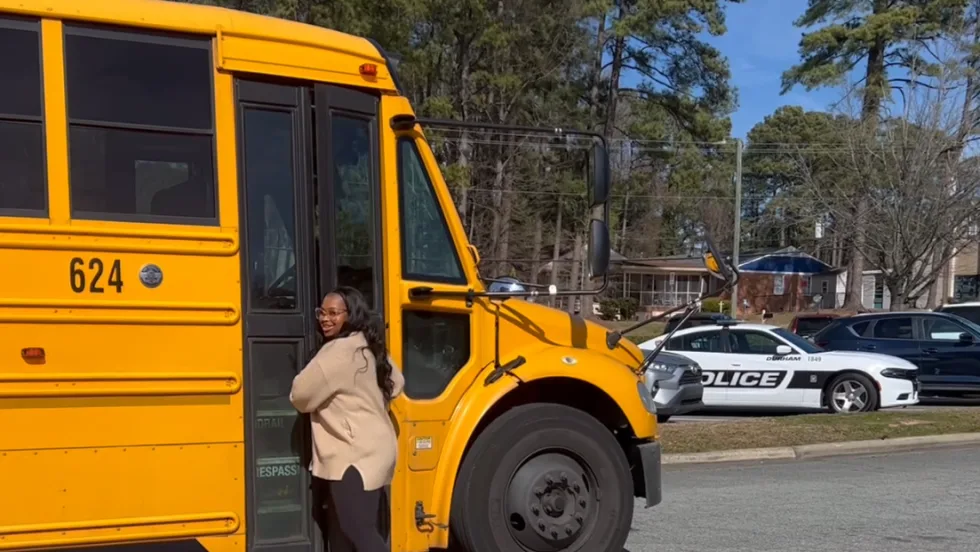
Trip Sheet: Meeting a Hero in My Own Back Yard
I remain impressed by the matter-of-fact heroism that’s often demonstrated by school bus drivers like Deona Washington who are caught in these situations where the best of us might lose our cool and panic. But, then again, bus drivers are a unique breed.
Read More →
Trip Sheet: 3 Takeaways from the EPA Clean School Bus Grant Program
Most applicants sought grant funding to acquire electric school buses, with propane coming in a distant second. No one indicated plans to purchase compressed natural gas (CNG) buses in this round. That’s not terribly surprising, I suppose, given how few school districts listed the inclusion of CNG buses in their fleets for our 2023 top district fleets survey.
Read More →
Trip Sheet: Let's Get Rolling: What's Coming in 2024?
Calendar pages keep flipping toward the mandates set in states like New York and California to transition their school bus fleets from diesel to zero-emission, but there’s plenty of reluctance and pushback.
Read More →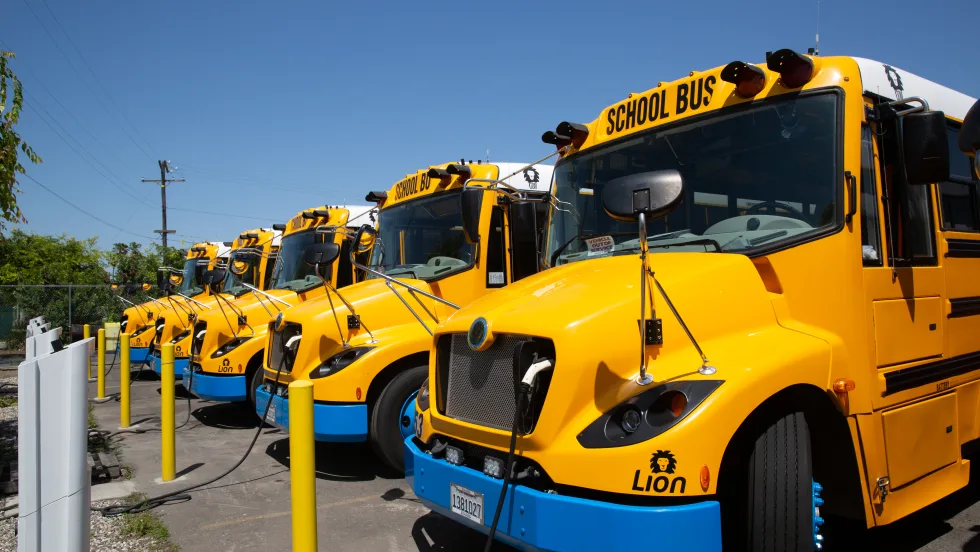
California School Children Ride in Green School Buses
Today, California prides itself on utilizing the most zero-emission (ZE) school buses in the country with over 1,689 being used by California school districts; and while the state is on a positive health trajectory thanks to a decree to eliminate gas and diesel vehicles, more work needs to be done to improve children’s well-being.
Read More →
Behind The Wheel of Childrens’ Safety Aboard the School Bus
Bus drivers are the primary caretakers of children during their commute and thus bear responsibility for their safety. By prioritizing proper operating procedures, maintenance checks, and additional precautions, drivers can help avoid the loss of precious young lives under their care.
Read More →