




Traffic Control & School Bus Stops: 9 Keys to Keeping Students Safe
Crossing guards at school bus stops?
We have crossing guards to help students safely cross the street around schools. Why not have a built-in crossing guard on every school bus?
by Frank Di Giacomo
October 14, 2013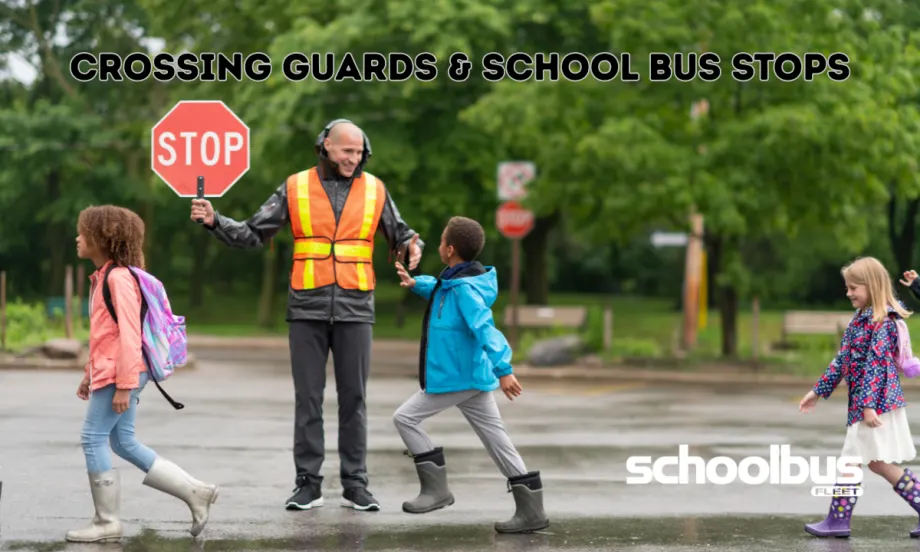
California requires school bus drivers serve as crossing guards for K-8 students.
Photo: School Bus Fleet
3 min to read
What if you could have a crossing guard at every school bus stop where young students cross the street?
And what if you didn’t have to pay anything extra for this crossing guard service, other than maybe $20 apiece for hand-held stop signs?
With an adult guiding them across the street, the youngsters would certainly stand a much better chance of not getting hit by vehicles illegally passing the bus.
Right about now, you’re probably thinking either, “Sign me up!” or, “Sounds too good to be true.” Well, it’s not too good to be true, because it’s been happening in California for 60 years.
These crossing guards are the school bus drivers themselves. The state requires it at stops where pre-K through eighth-grade students cross the street.
California statute spells out the process clearly: The driver stops the bus, sets the parking brake, shuts off the engine, removes the key and checks for traffic. When it’s safe, the driver activates the red lights and stop arm, opens the door, exits the bus and escorts the children to or from the bus across the street — again, when it’s safe to do so.
Right about now, you’re probably thinking, “The driver leaves the bus? What about the students on board?” We’ll get to that.
Decades of safe crossing
California adopted its school bus driver escort requirement in 1953. Consultant and former state pupil transportation director Ron Kinney says that a requirement for the driver to hold a stop sign while crossing students was added in the early 1990s.
State officials say that since 1953, when the original mandate was put in place, there has not been a documented case of a student being killed during the escort process.
Despite that remarkable safety record, other states haven’t jumped on board with the practice. When California folks talk about the driver escort procedure at national conferences, one of the common concerns they hear from people in other states is that it entails leaving students unattended on the bus.
It is easy to imagine chaos erupting when the driver leaves the bus, but current state director Anna Borges says that that’s just not happening. Students are instructed on how they are to behave while the driver leaves to escort students. There may be occasional instances of mischief, “but that percentage is not an issue,” Borges says.
Also, since the driver sets the parking brake and takes the key out of the ignition, the kids can’t take off in the bus.
“We’ve being doing this 60 years, and we haven’t lost a kid on the bus yet” during the escort process, Kinney adds.
Stop-arm running danger
In the latest school year on record, 2011-12, the majority of school bus loading and unloading fatalities — six of the nine total — were caused by a vehicle illegally passing the bus.
With that in mind, consider the safety benefits of stationing an adult — the bus driver — in the street to protect the students from traffic (and other dangers, as this recent incident showed).
We have crossing guards to help students safely cross the street around schools. Why not have a built-in crossing guard on every school bus?
— Frank Di Giacomo, VP, Bus and Rail/Publisher
Subscribe to Our Newsletter
More Blog Posts
The Sound of Summer Starting [Guest Editorial]
That unmistakable school bus rumble? It carries childhood memories, community routines, and a whole lot of unseen work behind the scenes.
Read More →
The Technology Power Combo That Enables EV Charging on Difficult Sites
As the pace of fleet electrification increases and charging infrastructure continues to pose challenges, many fleets find themselves puzzling over the question: how do I install charging infrastructure faster and more cost-efficiently?
Read More →
Trip Sheet: Farewell, Faithful Readers – Keep on Rolling
Executive Editor Wes Platt offers parting thoughts as he parks the School Bus Fleet bus to focus on ultra-local community journalism, making way for someone else to take the wheel as the pupil transportation industry continues to evolve.
Read More →
Trip Sheet: School Transportation Pros Can Champion Children's Mental Health
Children's Mental Health Awareness Day underscores the significance of school bus drivers in fostering supportive environments during students' journeys. SAMHSA's initiatives, including stigma reduction and access to resources, complement the Biden-Harris administration's funding efforts to enhance youth mental health services and workforce development.
Read More →
Trip Sheet: Is It Time for Daylight Saving Time to Clock Out?
How do you think the potential shift to permanent Daylight Saving Time or standard time would impact our daily lives and routines, especially considering the divided approach across various states?
Read More →
Trip Sheet: Meeting a Hero in My Own Back Yard
I remain impressed by the matter-of-fact heroism that’s often demonstrated by school bus drivers like Deona Washington who are caught in these situations where the best of us might lose our cool and panic. But, then again, bus drivers are a unique breed.
Read More →
Trip Sheet: 3 Takeaways from the EPA Clean School Bus Grant Program
Most applicants sought grant funding to acquire electric school buses, with propane coming in a distant second. No one indicated plans to purchase compressed natural gas (CNG) buses in this round. That’s not terribly surprising, I suppose, given how few school districts listed the inclusion of CNG buses in their fleets for our 2023 top district fleets survey.
Read More →
Trip Sheet: Let's Get Rolling: What's Coming in 2024?
Calendar pages keep flipping toward the mandates set in states like New York and California to transition their school bus fleets from diesel to zero-emission, but there’s plenty of reluctance and pushback.
Read More →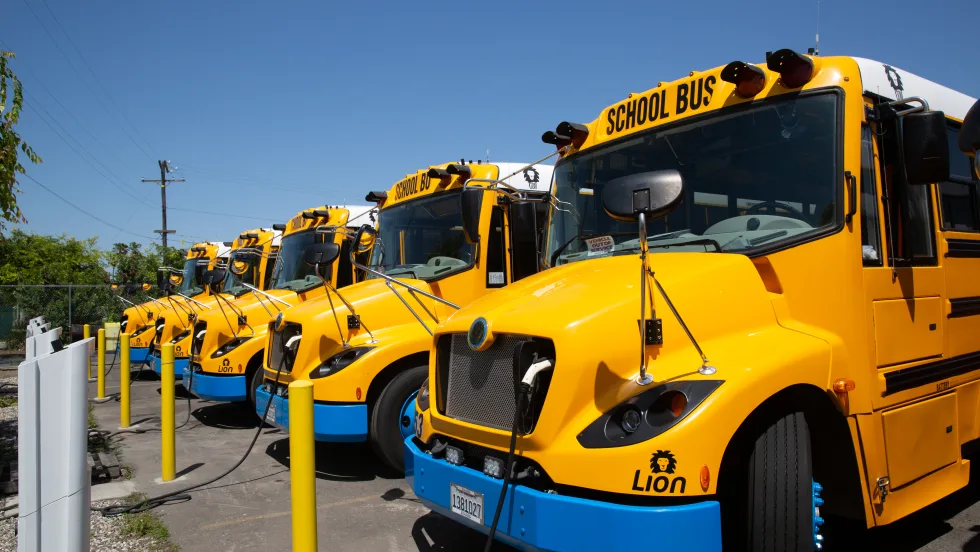
California School Children Ride in Green School Buses
Today, California prides itself on utilizing the most zero-emission (ZE) school buses in the country with over 1,689 being used by California school districts; and while the state is on a positive health trajectory thanks to a decree to eliminate gas and diesel vehicles, more work needs to be done to improve children’s well-being.
Read More →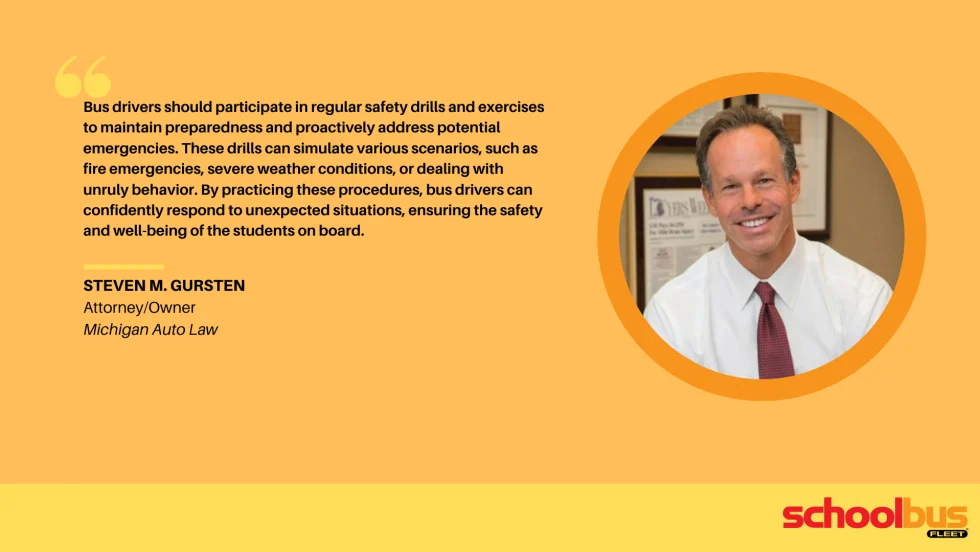
Behind The Wheel of Childrens’ Safety Aboard the School Bus
Bus drivers are the primary caretakers of children during their commute and thus bear responsibility for their safety. By prioritizing proper operating procedures, maintenance checks, and additional precautions, drivers can help avoid the loss of precious young lives under their care.
Read More →