




8 Keys to Getting Your Buses Prepared for Winter
Regardless of your location, it is important to perform periodic seasonal maintenance. When doing so, consider the operation of specific systems rather than individual components.
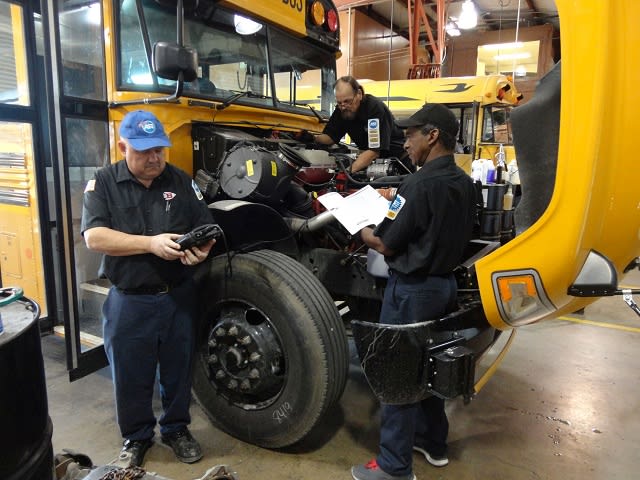
File photo courtesy Biloxi (Miss.) Public Schools
File photo courtesy Biloxi (Miss.) Public Schools
This blog post was initially published on Sept. 4, 2019.
Winter is coming again. So how do we prepare? This depends greatly on your geographical location. Those of you who operate in dry areas may put less emphasis on preparation for this season. For those of you who operate in a wet or cold climate, some checklist items that come to mind may be tires and wiper blades.
Regardless of your location, it is important to perform periodic seasonal maintenance. When doing so, I prefer to consider the operation of specific systems rather than individual components.
1. For example, although testing coolant is important by itself, I prefer looking at the cooling system as a whole. That includes the hose condition, clamp torque, pressure testing the system and radiator cap, checking thermostat operation, radiator condition, and cooling fan operation. The fan drive system needs to be checked thoroughly, too.
Whenever I perform cooling system repairs, I put the system through its paces afterward to ensure the cooling fan activates at its designated temperature and shuts off again at the designated temperature. Utilizing a laptop computer or diagnostic tool to monitor coolant temperatures during operation as well as fan on/off operation may be a part of that test.
2. The same applies to compressed air system maintenance in which air dryer service takes place. Check for air leaks in the system as well as accumulation of oil in the air reservoirs, both of which may be indicative of air compressor failure. Moisture or oil in the system will cause frozen or improperly operating air valves and frozen air lines. Having a bus unable to move because it cannot build air pressure is frustrating, to say the least.
Air dryer maintenance should be performed annually in wet climates. Follow the manufacturer recommendation at a minimum. Due to your geographic location, you may need a stricter maintenance program.
3. Other systems to review in your winter preparation include the heating and defrosting system. Ensuring all heaters operate at both high and low speeds, as well as cleaning or replacing heater filters, and cleaning the lint and dirt off of heater cores, will increase the efficiency of this system and create a more comfortable and reliable ride.

Brad Barker is a veteran shop manager and technician.
4. With fewer hours of daylight during the winter months, emphasis should be placed on lighting systems, including the instrument cluster, switch panel lights, and dome lights. Use of the proper candle power bulbs when replacing bulbs will greatly improve the interior light.
5. If you are operating in cold climates and use an auxiliary heating system, such as Webasto or Espar, now is the time to make sure it is operating at peak capacity and OEM maintenance guidelines are followed. Remember to open all the heater system shut-off valves.
6.Fuel system maintenance is especially important during cold weather. If you have not started adding fuel system treatment, now is the time. Fuel filters and water separators should be serviced and fuel bowls cleaned of sediment. Keeping fuel tanks above the half-full level will reduce condensation accumulating in the tank. Talk to your fuel supplier about pre-treating fuel for the winter months. Test fuel system heaters as needed.
7. How about starting and charging systems? If you use battery maintainers, are they all working? Are block heaters and receptacles working and in good condition? Do you have a good supply of extension cords to power these units?
8. Last but not least, ensure all emergency equipment is in good working condition and fully stocked. Keeping on top of seasonal maintenance can only help our buses stay safe and reliable.
Brad Barker has more than 40 years of experience in school bus maintenance as a shop manager and technician. He has written numerous articles for SBF. He can be reached at schoolbuspm@outlook.com.
More Blog Posts

The Sound of Summer Starting [Guest Editorial]
That unmistakable school bus rumble? It carries childhood memories, community routines, and a whole lot of unseen work behind the scenes.
Read More →
The Technology Power Combo That Enables EV Charging on Difficult Sites
As the pace of fleet electrification increases and charging infrastructure continues to pose challenges, many fleets find themselves puzzling over the question: how do I install charging infrastructure faster and more cost-efficiently?
Read More →
Trip Sheet: Farewell, Faithful Readers – Keep on Rolling
Executive Editor Wes Platt offers parting thoughts as he parks the School Bus Fleet bus to focus on ultra-local community journalism, making way for someone else to take the wheel as the pupil transportation industry continues to evolve.
Read More →
Trip Sheet: School Transportation Pros Can Champion Children's Mental Health
Children's Mental Health Awareness Day underscores the significance of school bus drivers in fostering supportive environments during students' journeys. SAMHSA's initiatives, including stigma reduction and access to resources, complement the Biden-Harris administration's funding efforts to enhance youth mental health services and workforce development.
Read More →
Trip Sheet: Is It Time for Daylight Saving Time to Clock Out?
How do you think the potential shift to permanent Daylight Saving Time or standard time would impact our daily lives and routines, especially considering the divided approach across various states?
Read More →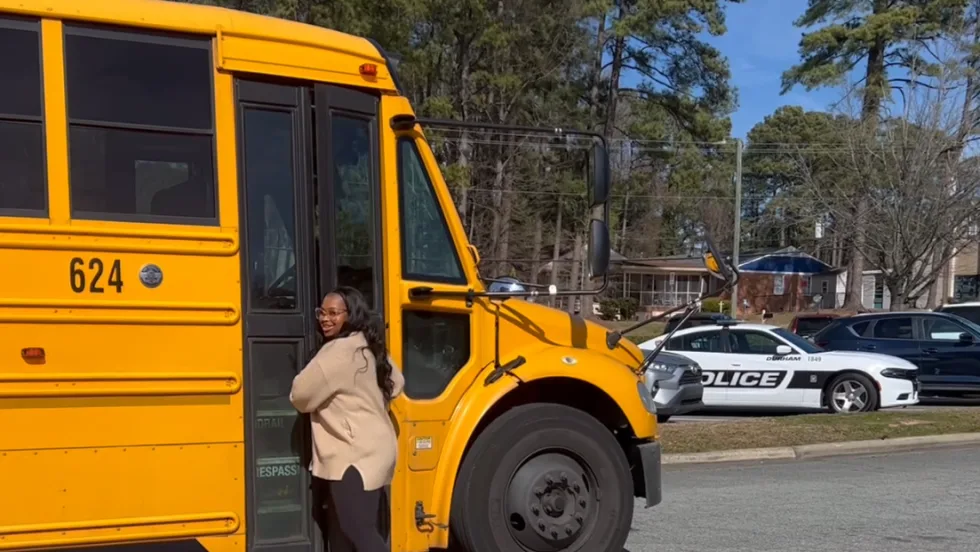
Trip Sheet: Meeting a Hero in My Own Back Yard
I remain impressed by the matter-of-fact heroism that’s often demonstrated by school bus drivers like Deona Washington who are caught in these situations where the best of us might lose our cool and panic. But, then again, bus drivers are a unique breed.
Read More →
Trip Sheet: 3 Takeaways from the EPA Clean School Bus Grant Program
Most applicants sought grant funding to acquire electric school buses, with propane coming in a distant second. No one indicated plans to purchase compressed natural gas (CNG) buses in this round. That’s not terribly surprising, I suppose, given how few school districts listed the inclusion of CNG buses in their fleets for our 2023 top district fleets survey.
Read More →
Trip Sheet: Let's Get Rolling: What's Coming in 2024?
Calendar pages keep flipping toward the mandates set in states like New York and California to transition their school bus fleets from diesel to zero-emission, but there’s plenty of reluctance and pushback.
Read More →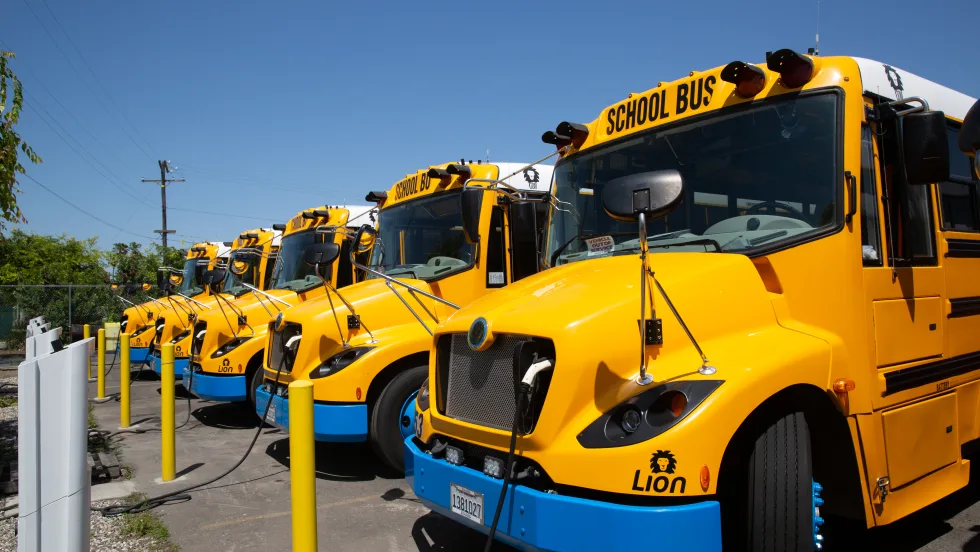
California School Children Ride in Green School Buses
Today, California prides itself on utilizing the most zero-emission (ZE) school buses in the country with over 1,689 being used by California school districts; and while the state is on a positive health trajectory thanks to a decree to eliminate gas and diesel vehicles, more work needs to be done to improve children’s well-being.
Read More →
Behind The Wheel of Childrens’ Safety Aboard the School Bus
Bus drivers are the primary caretakers of children during their commute and thus bear responsibility for their safety. By prioritizing proper operating procedures, maintenance checks, and additional precautions, drivers can help avoid the loss of precious young lives under their care.
Read More →