




Bevy of Bills Aim to Assist With School Bus Safety
A slew of bills are currently being proposed in multiple states to address school bus safety. Most involve toughening penalties on stop-arm running and allowing or even requiring stop-arm cameras on buses.

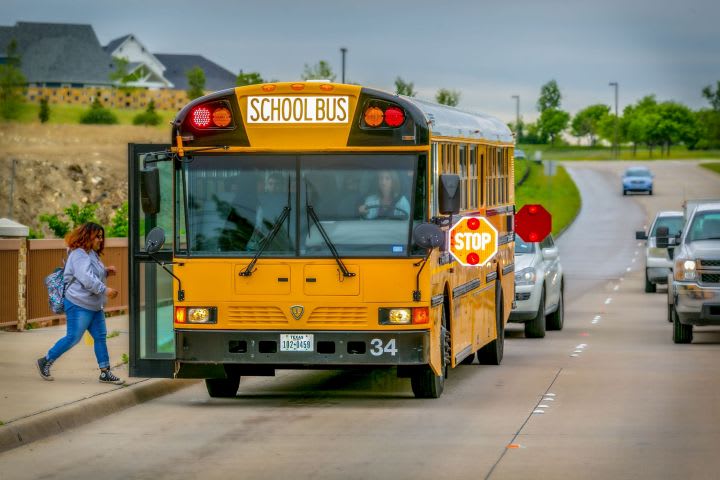
Photo courtesy Mitzi Bowers
Photo courtesy Mitzi Bowers
As you likely have noticed, a slew of bills are currently being proposed in multiple states to address school bus safety, apparently in response to a handful of prominent fatal school bus crashes over the last year. Most are looking to toughen penalties on stop-arm running and allow or even require stop-arm and exterior cameras on school buses. Some aim to require seat belts.
Here’s a roundup of some of the bills at press time, the topics they address, and the states they are based in:
• Authorizing or requiring cameras:California introduced one bill that would require internal and video camera systems and another that authorizes stop-arm cameras on school buses. Florida, Oklahoma, and Tennessee bills would also allow them, and an Ohio piece of legislation appropriates $1 million in grants for stop-arm cameras.
• Raising bus passing penalties: The Indiana legislature advanced a bill that would increase the penalty from an infraction to a misdemeanor for any motorist found to have run a stop arm, and cracks down further with felony charges on motorists involved in passing incidents in which an injury or death results. Ohio seeks to double the fines and amount of time a driver’s license is suspended, as does West Virginia. Maine is working on a bill that may include an increase in fines, demerit points, and imprisonment.
• Requiring seat belts: Utah, Minnesota, and New Mexico all introduced bills that would require new school buses purchased to be equipped with seat belts starting in 2020. (The Utah bill actually failed in the House on Feb. 28, due to having an unfunded mandate, according to Deseret News.) The New Mexico legislation would also require electronic stability control and collision mitigation technology on those buses.
This is the highest number of school bus safety-related bills that I can recall in my entire time writing about student transportation over the last six years. That got me wondering: Has there been another time when legislators acted to this degree to strengthen student safety on the bus?
To get some more perspective, I spoke with Mike Martin, the executive director of the National Association for Pupil Transportation (NAPT) about the issue. Although this isn’t the first time he has seen such a proliferation of student transportation-related bills — he pointed to the aftermath of the fiery Carrolton, Kentucky, crash in 1988, and the tragic school bus-train crash in Fox River Grove, Illinois, in 1995 — he did note that this time around the proposed legislation is on a wider variety of topics.
He added that it should come as no surprise that so much legislation is being proposed at a time when “As a community whose paramount responsibility is the safety of children who are entrusted to us, we haven’t done very well lately.”
He points to fatal crashes in Baltimore, Maryland; Chattanooga, Tennessee; and Mount Olive, New Jersey, as well as the Rochester, Indiana, crash in which three siblings were fatally hit by a car that ran a stop arm while they were trying to cross the street.
“[We say to parents,] give us your children, the people who mean the most to you in the entire world, and we promise to take them to school and bring them back to you at the end of the day safe and sound,” Martin explains. “Our margin of error is zero. It’s the highest of any job. And that’s not just what parents expect, it’s what everybody expects of us.”
He adds that the way to recreate that trust with parents, who are these lawmakers’ constituents, is to adopt a new and improved approach.
NAPT’s new campaign “Zero. Zip. Nada. None.” aims to do just that, through collaborative work with members of other student transportation associations as well as with NAPT members.
That work will include identifying leading indicators (predictive measurements that can help prevent crashes) in addition to lagging indicators (measurements that explain why crashes happened). The goal is to develop a more focused analysis of the potential risk of another serious incident or fatality.
It’s encouraging to see lawmakers engaged on the topic of student safety. However, it might be better in some cases to work on getting student transportation professionals the funding and resources they need for an even more effective approach, Martin adds.
Whether through tougher laws, more in-depth analysis, or boosting resources for student transportation, it’s important to remember that all parties involved are ultimately on the same team, and want no less than for all students to have a safe ride to and from school every day.
More Blog Posts
The Sound of Summer Starting [Guest Editorial]
That unmistakable school bus rumble? It carries childhood memories, community routines, and a whole lot of unseen work behind the scenes.
Read More →
The Technology Power Combo That Enables EV Charging on Difficult Sites
As the pace of fleet electrification increases and charging infrastructure continues to pose challenges, many fleets find themselves puzzling over the question: how do I install charging infrastructure faster and more cost-efficiently?
Read More →
Trip Sheet: Farewell, Faithful Readers – Keep on Rolling
Executive Editor Wes Platt offers parting thoughts as he parks the School Bus Fleet bus to focus on ultra-local community journalism, making way for someone else to take the wheel as the pupil transportation industry continues to evolve.
Read More →
Trip Sheet: School Transportation Pros Can Champion Children's Mental Health
Children's Mental Health Awareness Day underscores the significance of school bus drivers in fostering supportive environments during students' journeys. SAMHSA's initiatives, including stigma reduction and access to resources, complement the Biden-Harris administration's funding efforts to enhance youth mental health services and workforce development.
Read More →
Trip Sheet: Is It Time for Daylight Saving Time to Clock Out?
How do you think the potential shift to permanent Daylight Saving Time or standard time would impact our daily lives and routines, especially considering the divided approach across various states?
Read More →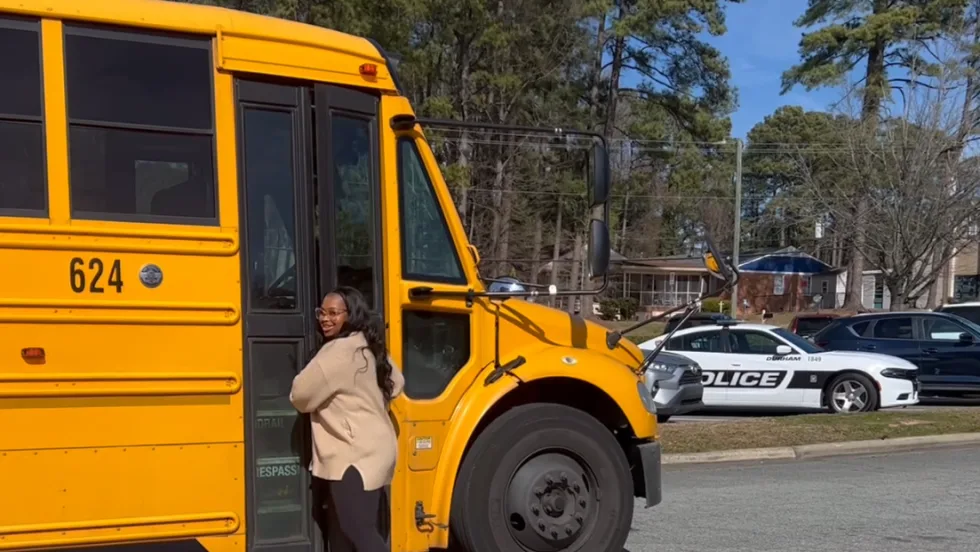
Trip Sheet: Meeting a Hero in My Own Back Yard
I remain impressed by the matter-of-fact heroism that’s often demonstrated by school bus drivers like Deona Washington who are caught in these situations where the best of us might lose our cool and panic. But, then again, bus drivers are a unique breed.
Read More →
Trip Sheet: 3 Takeaways from the EPA Clean School Bus Grant Program
Most applicants sought grant funding to acquire electric school buses, with propane coming in a distant second. No one indicated plans to purchase compressed natural gas (CNG) buses in this round. That’s not terribly surprising, I suppose, given how few school districts listed the inclusion of CNG buses in their fleets for our 2023 top district fleets survey.
Read More →
Trip Sheet: Let's Get Rolling: What's Coming in 2024?
Calendar pages keep flipping toward the mandates set in states like New York and California to transition their school bus fleets from diesel to zero-emission, but there’s plenty of reluctance and pushback.
Read More →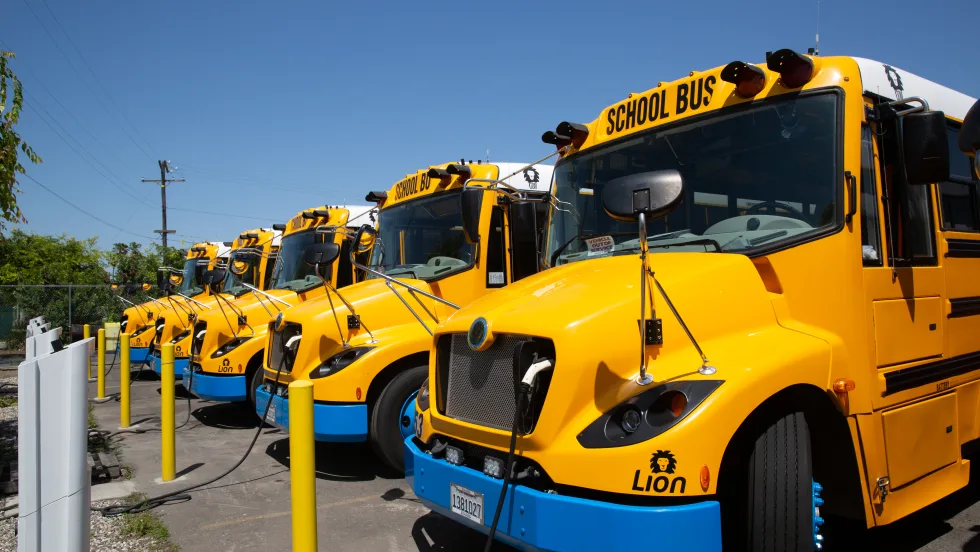
California School Children Ride in Green School Buses
Today, California prides itself on utilizing the most zero-emission (ZE) school buses in the country with over 1,689 being used by California school districts; and while the state is on a positive health trajectory thanks to a decree to eliminate gas and diesel vehicles, more work needs to be done to improve children’s well-being.
Read More →
Behind The Wheel of Childrens’ Safety Aboard the School Bus
Bus drivers are the primary caretakers of children during their commute and thus bear responsibility for their safety. By prioritizing proper operating procedures, maintenance checks, and additional precautions, drivers can help avoid the loss of precious young lives under their care.
Read More →