




You can’t always get what you want
At the New York Association for Pupil Transportation (NYAPT), we decided to invest time, energy and expertise in ensuring that good school bus safety laws are enacted in our state.
The Rolling Stones invoked those lyrics in the 1960s, and they had different meanings for different people. The fact is, you can never get what you want if you don’t try. To put it in basketball jargon, "You miss 100 percent of the shots you don’t take." At the New York Association for Pupil Transportation (NYAPT), we decided to invest time, energy and expertise in ensuring that good school bus safety laws are enacted in our state. To that end, we retained the services of an executive director who comes to us through Carr Public Affairs, an Albany-based firm. Peter Mannella, our executive director, works on a model of grass-roots advocacy, manages our overall legislative efforts, keeps us current with happenings in the legislature and offers counsel on strategies to ensure attainment of our goals.
Local issues are key
The focus, however, is on grass-roots activity, which builds on the axiom that "all politics is local." Legislators want and need to hear from their constituents about issues of local concern. State legislators are charged with carrying out the people’s business, but are armed only with the information they have available to them. We have come to believe and adopt as our operating principle that it is our job to inform and educate them on the issues relating to school transportation and school bus safety. No one can do this as effectively as we can. Our efforts have resulted in (first and foremost) visibility and credibility with legislators and policy makers, who contact us for our ideas as well as for reactions to their ideas. We have worked hard to make ourselves known, and we have done this not by insisting that we must be heard, but by convincing the state’s leadership that we are worth hearing from and can be counted on when information and ideas are needed. Our legislative advocacy includes steps such as issue development, research and position preparation, state-level advocacy and grass-roots advocacy. Our NYAPT legislative committee is co-chaired by two of our members, but is steered in large part by our executive director, whose duties include advocacy and direct lobbying on our behalf. With a professional to assist us, the association can spend less time learning the political and legislative process and more time contributing information and expertise that have an impact on the outcomes.
Choose your battles carefully
What does an advocacy program involve? It starts with understanding just what your issues are — and aren’t. We can’t take on everything at one time, so we identify long-range and shorter-term priorities and focus on them in that order. Sure, if lawmakers accelerate a "low-priority" issue, we will get involved and spend time on that issue. But the work of our association focuses on the priorities established by our board. Once the priorities are set, two things come into play: (1) informing and educating our membership and our industry partners so that we are all on the same page, and (2) informing the Legislature and the governor of our interests and cultivating their support. This must be done early in the process in order to have any impact on decisions. We try to prepare our basic principles in the late fall, while program and budget ideas are in final stages of development for the January opening of the legislative session. Once this basic information is available, several other pieces fall into place. As legislation and budget proposals are introduced, we are able to review them and provide public and private reaction to them based on the principles we already established. This is done through meetings and through issuance of position statements and support or opposition memoranda on specific bills. These materials are shared with legislators, committee chairs, key staff, other policy makers and partners/collaborators. When necessary, we also provide the media with copies of statements and have done so on issues such as mandatory seat belt usage and prohibiting advertising and standees on school buses.These positions are also shared with our members, who are encouraged to contact their local representatives to indicate their support for our position and to encourage them to vote in our favor on the issue.
Learn to press the flesh
This legislative contact takes several forms. We encourage members to invite legislators to their transportation facilities or to present them with awards when they introduce or support important legislation. We also encourage our members to contact legislators frequently with information about budget issues, regulations or just plain news from the world of the yellow bus. We also annually conduct a Legislative Contact Day (or Lobby Day) during which our members come to the state capital in Albany and meet with as many legislators as possible to share our concerns and positions on legislation. In 1999, we provided information to all 211 Senate and Assembly members in our state Legislature and met personally with more than 60 of these women and men. The process is educational for all, including the lawmakers, who are eager to learn more about school transportation issues that they only read about in their local media or hear about through parent concerns and phone calls. Our efforts have yielded great results with even greater potential in the current year. Our state Legislature is attuned to the many issues that are confronting the industry. While not all the proposals that surface are to our liking, the important fact is that our state leaders are paying significant attention to the issues and are reaching out to us as professionals in school transportation to help find the right answers.
Leonard Bernstein is transportation director for the Haverstraw-Stony Point (N.Y.) Central School District and president of the New York Association for Pupil Transportation.
More Safety
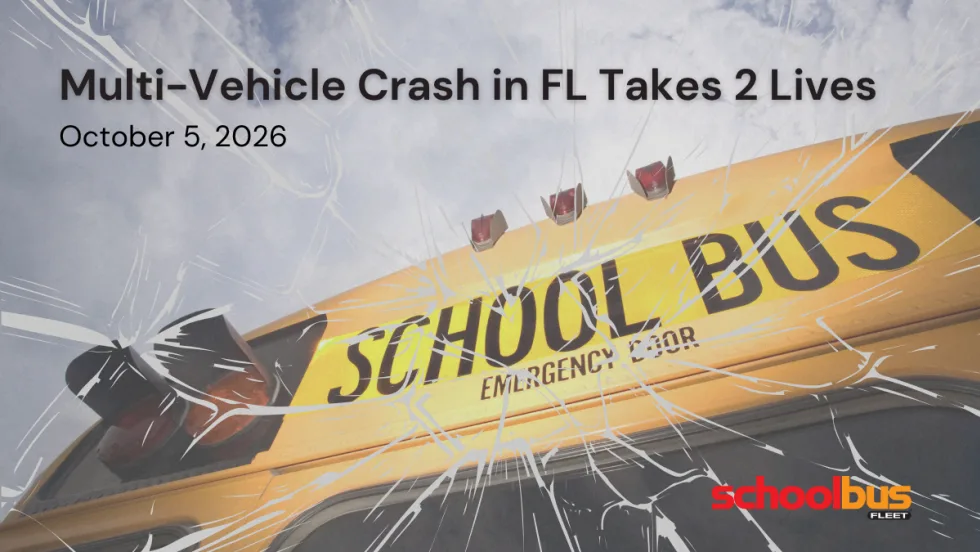
2 Killed, Dozens Injured in Florida School Bus Crash
A multi-vehicle collision caused a Polk County school bus carrying 37 students to overturn on its way to Winter Haven High School.
Read More →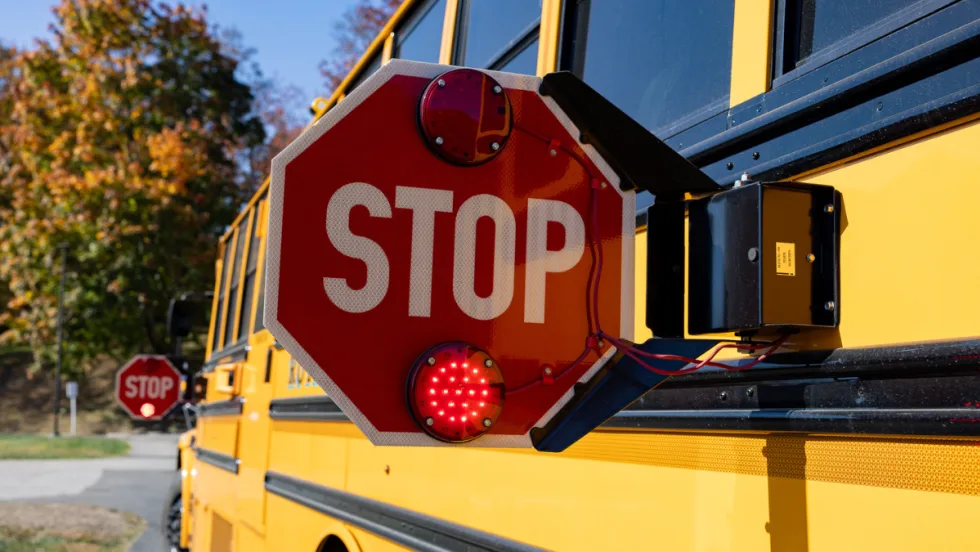
Illegal School Bus Passing Drops 24% in New York Districts
With fewer than 5% of citations involving repeat offenders, Westchester County officials said enforcement, education, and community partnerships are helping change driver behavior.
Read More →
School's Back. Here's What Happened to Traffic, Speeding & Distraction
What happens to traffic when school resumes? New data analysis examines changes in distracted driving, congestion, and speeding around schools.
Read More →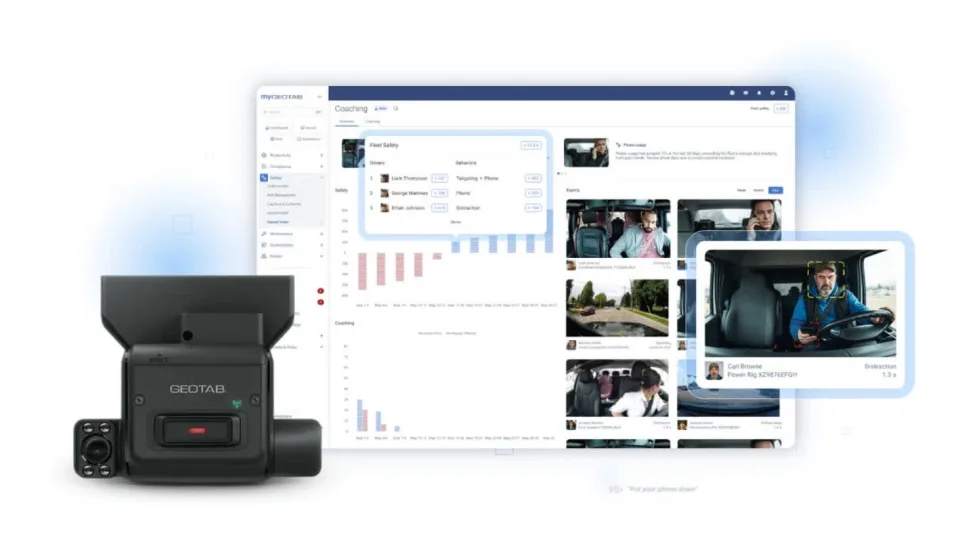
Geotab Expands Fleet Safety Tools With Video Coaching, Risk Insights
New safety and video capabilities aim to help fleet managers assess risk, support drivers, and take targeted action through video coaching, red-light violation detection, and more.
Read More →
How to Build a Better School Bus Driver Training Program
Is it time to strengthen your driver training? Here’s how to pick the right talent and improve recruitment, retention, and safety. This video is brought to you by IC Bus.
Read More →
Recent School Bus Accidents Leave 2 Dead, 2 Injured
Four school bus crashes in Florida, Illinois, and Georgia highlight risks in transportation lots, at bus stops, and during student loading and unloading.
Read More →
When Every Second Matters, Clarity Keeps Routes Moving
From routine delays to urgent incidents, strong communication practices help drivers, dispatchers, schools, and families respond with confidence.
Read More →
What Happens When a School Bus Catches Fire — and What Can Help
School bus fires are rare but can be devastating. Learn how advances in fire suppression and asset protection help fleets detect fires earlier, reduce damage, and improve safety.
Read More →
Geotab Launches Tool to Help Fleets Investigate Road Incidents
Geotab Investigations combines telematics data, video, documents, and other evidence to help fleets reconstruct incidents, resolve claims, and determine what happened.
Read More →
Texas Sixth Grader Wins 2026 National School Bus Safety Poster Contest
Sai Darshana Yekolu of Moseley Middle School in Prosper, Texas, was named the newest winner for her artwork, bringing the theme of “Safe Rides, Everyday Heroes” to life.
Read More →