



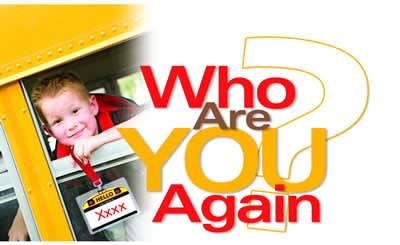
Who Are You Again?
Learning students’ names is essential to establishing a safe bus environment, and it will enhance their ride to and from school. Creating a seating chart and a student roster are just two ways that bus drivers and aides can accomplish this task.
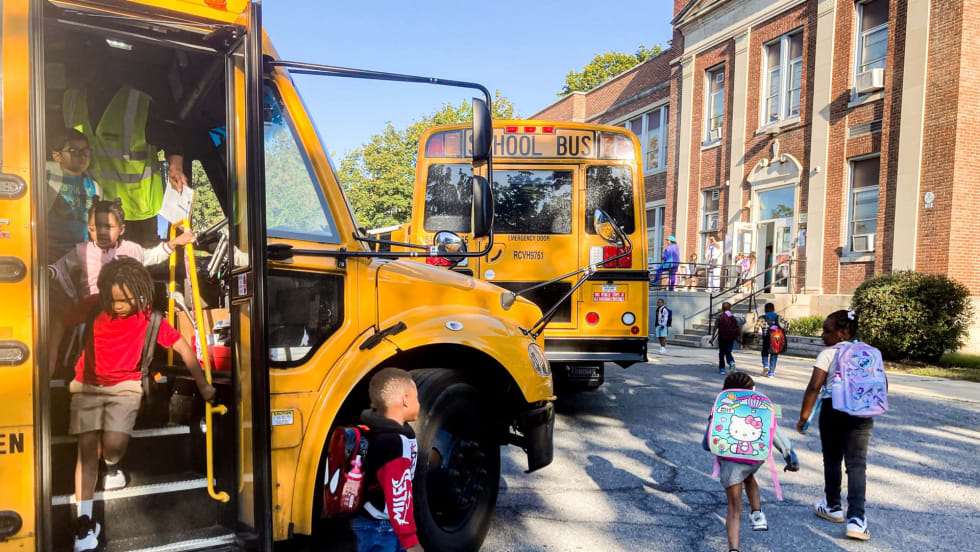
©iStockphoto.com/sjlocke
Have you ever heard a conversation at your transportation department similar to this one?
Dispatcher at 3:10 p.m.: Base to bus 239.
Driver: 239. Go ahead.
Dispatcher: Do you have Madeline Dallessandro on your bus?
Driver: No, I don’t.
Dispatcher: Her mom is on the phone, and she says she was in school today.
Driver: Well, she is not on my bus.
Dispatcher: Base to all elementary buses, we are looking for a student named Madeline Dallessandro; she may have boarded one of your buses accidentally.
Another driver: Base, this is bus 241. I don’t have her.
Another driver: Base, this is bus 56. I also do not have her.
Driver: Base, this is bus 239 — I actually do have her. She was sitting behind me, but I did not know who she was.
I heard this at my own operation. What is unfortunate about this scenario is that it always seems to involve the same drivers.
In my professional opinion, about 95 percent of the school bus drivers in any pupil transportation operation care enough about their kids to learn their names, and they take great pride in knowing them. It is the remaining 5 percent, who seem too lazy to make an effort to get to know their passengers, that force us to go through the kind of two-way radio exchange at dismissal that I described.
In addition to sounding disorganized, these drivers risk causing a catastrophic incident, such as dropping off a child at the incorrect stop or not knowing which students are on a bus if it is involved in an accident. This could have tragic consequences, not only for the students and the driver, but for the transportation department as a whole.
To prevent these types of occurrences, I will provide you with some points to share with your drivers that explain why it is important to know the names of their students, as well as tips that will help them learn and remember students’ names.
Learning names improves student behavior, safety
If you compared two buses that transport students of the same age from the same elementary school, one having very few disciplinary issues and the other having rampant issues, I am sure you will find that the driver with fewer disciplinary problems knows the names of his or her students. Of course, this is probably tied into the other good habits that driver has, such as remaining on the same route instead of constantly bidding around, being fair to all parties involved in an issue, having a good attitude and establishing clear rules with consequences for his or her bus.
Overall, however, learning students’ names is a primary component of a driver’s success. Kids know when a driver doesn’t know who they are, and they feel they can get away with more because of that.
By extension, learning students’ names enhances safety on the bus. Simply barking “Look out!” might get everyone’s attention, but “Get back on the bus, Eddie!” could save a life or prevent a student from getting seriously injured.
Knowing names signifies respect, bolsters parents’ confidence
Names are also important to the individuals who have them. Think about how you would feel if your boss knew everyone’s name in the district except yours.
Names connect individuals to their families — many people are named after a parent, grandparent or a person of great importance to their parents — or they may have historical significance or be tied to a certain era. For example, from 1880 to 1950, Mary was the No. 1 choice for a girl’s name. Others listed in the top five during that period were James, Linda, Michael and Barbara.
Today’s top names are Jacob, Emily, Isabella, Daniel and Abigail, with a few more-unusual names, such as Honor and Sunday, mixed in.
Taking these factors into consideration, knowing a person’s name is a sign of respect. While most of my drivers don’t mind being called “Mr. or Mrs. Bus Driver” when a child is trying to get his or her attention, most of them will admit that they like it when the students call them by their names. The students will feel the same way if drivers give them the same courtesy.
In the television show “Cheers,” the underlying theme was that the bar was a place “where everybody knows your name,” and that meant it felt like home. When I walk into my favorite restaurant and the host says, “Hello, Mr. Dallessandro, I’ll be with you in one minute,” I have to admit that I feel a bit like a VIP. Your district’s students will feel the same way and experience a sense of comfort if they board their buses and their drivers greet them by their names.
Lastly, knowing students’ names will make you and your staff appear more professional to principals and parents. When a parent approaches a driver with a concern about a student sitting in the back of the bus wearing a red T-shirt and your driver doesn’t know who the student is, the parent’s confidence in your driver or operation will go down the tubes.
{+PAGEBREAK+} Create a seating chart for each bus route
School bus drivers and monitors already have a considerable amount of information to store in their memory, so to many of them the thought of learning the names of, say, 100 students can be daunting.
The most important thing we can do for our drivers is make sure they understand that we do not expect them to sit home every night and study their rosters. While I am sure there are some who put that much effort into learning about every aspect of their routes, that amount of preparation is not needed.
One of the easiest ways to learn a group of students’ names and maintain good bus behavior is to create and use a seating chart for each of your school routes. This takes effort, and it may not make your drivers popular in the eyes of the students in the beginning, but you must remember that kids like structure.
Do not interpret the chaos they create while boarding the bus, pushing and shoving with the freedom to roam and pick their own seats, as something that is fun for them. It might appear that way because the kids sound spirited, but there are many who silently dread this daily activity. That unruly environment is especially difficult for kids who have a hard time finding a seat every day because they are not “cool,” are not in the right clique, or are timid or shy.
No one wants to be told by another student where he or she can or cannot sit. Seating charts eliminate this indirect form of bullying and help your drivers learn students’ names quickly. Also, bus damage or student squabbles are much easier to deal with when drivers know who is assigned to a particular seat.
Keep a roster of students, engage in name games
All drivers should keep an up-to-date route sheet or roster and use it daily to help them learn the names of their students; substitute drivers will find this information essential to their success as well when they are assigned to cover a route.
A route sheet or roster will also help drivers in the event of an accident or emergency. They need to know who is on their bus, so as students board, they must ask them who they are or check their name tags if they are very young students. They should check off their names on the roster or route sheet while simultaneously saying the names aloud. If a student has a particular item that he or she carries or wears regularly, such as a Buffalo Bills jacket or a Hannah Montana backpack, make that connection to his or her name.
Drivers can also spend time when parked at school sites playing a name-guessing game with the students. Just remind them to keep it simple, fun and positive. They should avoid getting the kids fired up to the point where they start chanting names of other students in a rowdy or sarcastic tone, as parents may call and complain.
Your drivers will most likely have to spend time learning the names of the well-behaved or quiet children. Drivers almost always know the names of students who regularly stir things up on their bus!
An industry-wide effort
With custody disputes being commonplace and child predators residing in many communities, today’s children live in dangerous and unsettling times. School bus drivers can provide an important safety net for the children they transport by taking time to get to know them.
Would one of your drivers know if Bethany failed to board the bus one day? Would the driver even know who Bethany is? If not, I certainly hope he or she will after you finish discussing with your drivers why it is essential to learn their students’ names and have relayed these tips to assist them in this mission.
We are in this business to help one another safely transport students to and from school. Have your drivers established creative ways to get to know their students and their names? Let me know. Send an e-mail to MPDBUS1@aol.com.
Michael Dallessandro is transportation supervisor at Lake Shore Central School District in Angola, N.Y., and a frequent contributor to SBF. His Website iswww.respondsmart.com.
More Management
How a New York District Cut Nearly $1M in Transportation Costs While Expanding Bus Access
A data-driven overhaul with BusRight reduced Poughkeepsie City School District's planned routes from 26 to 17 while extending school bus service to about 1,200 additional students.
Read More →
Budgets Down, Enrollment Shifting: What the Data Says Districts Should Watch
School transportation departments face two converging challenges this year: tightening budgets and shifting enrollment. Most districts still address these issues separately, but the assumption that either trend will simplify operations is proving incorrect.
Read More →
These 8 School Transportation Companies Made the 2026 Inc. 5000 List
Find out which school transportation contractors, technology providers, and suppliers ranked among America’s fastest-growing private companies.
Read More →
The Link Between Emotional Intelligence and School Bus Safety
How can emotional intelligence help transportation pros navigate stress, manage change, and build stronger relationships? Listen to find out.
Read More →
What Emotional Intelligence Has to Do With School Bus Safety
In this video, discover how emotional intelligence can help transportation leaders and drivers navigate stress, manage change, and build stronger relationships. The Route is sponsored by IC Bus.
Read More →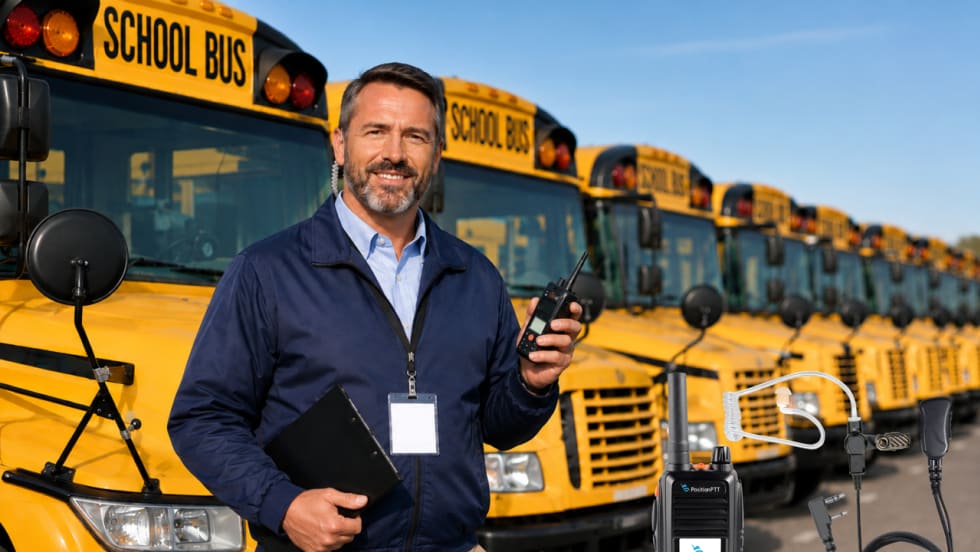
Beyond Two-Way Radios: School Bus Communications Evolve With Push-to-Talk Over Cellular
PRYME Radio and PositionPTT join forces to advance hands-free radio use and reduce distracted driving. See how PoC compares with traditional radios on range, cost, safety, and connectivity.
Read More →
Have School Districts Adapted to Bus Driver Shortages or Simply Accepted Less Service?
According to a recent report from HopSkipDrive, many districts appear to have recalibrated what "normal" transportation service looks like.
Read More →
Reliable Transportation Linked to Better Student Outcomes, New EverDriven Study Finds
See why new research suggests transportation consistency improves student outcomes while influencing attendance, funding, IEP compliance, and family trust.
Read More →
Switzer-CARTY Enters the U.S. with New Acquisition
The Canadian contractor’s acquisition of Minnesota-based Agnes Corporation marks its first cross-border expansion into the United States and adds 350 vehicles.
Read More →
BusRight Adds New Rider Tracking Technology
Safety Pass is an NFC-based student ridership tracking solution that provides real-time boarding and drop-off data to improve school bus safety and family communication.
Read More →