




What's our secret?
Have you ever stopped to wonder why the yellow bus is so unique in our country? Why the school bus is an icon that is recognized worldwide? Why parent...
Have you ever stopped to wonder why the yellow bus is so unique in our country? Why the school bus is an icon that is recognized worldwide? Why parents gladly entrust their children to get on the school bus day after day? And why more than 600,000 of us continue to demonstrate great passion about our unique industry?
Even the most cursory review of accident reports and safety studies quickly shows that a child is safer on a school bus than any other mode of surface transportation. This is not an accident. We have exceptionally well-designed vehicles, drivers with outstanding training, managers with incredible passion for doing things the “right way” and policy makers constantly on the lookout for better ways to support the rest of the team.
But notwithstanding these assets, the management consultant in me still asks: Why? . . . and how? . . . and what is the key to our continued success? I believe that in addition to all the positives already mentioned, our industry has adopted an extremely effective management model that can have only one result — success!
Study, learn, plan
What is that model? Every time something occurs that threatens the safety (and now security) of our children, we have taken a definitive set of steps: We study the problem, we learn all we can about it and we plan to mitigate the threats to our children. Study, Learn and Plan. Simple enough in its telling — but incredibly thorough and effective in its doing.
Look back at the notable events in our history — on a regular basis we have followed this same model. As an example, one of the more tragic occurrences was the 1995 train/school bus crash in Fox River Grove, Ill. Collectively, we studied the accident and asked: What were the contributing factors? What went wrong? What could have been different? We participated as the National Transportation Safety Board studied the crash. Afterward, we applied the facts learned. As an industry, we did not focus on problems that were outside of our purview, but rather on what we could do to effect change. In summary, it was Study, Learn and Plan.
Was this unique? Absolutely not. Every time a significant accident involving a school bus has occurred, we have taken the same actions. We have studied all the minute details Ñ sometimes with external resources, sometimes with our own Ñ but in each case, we learned all we could about how to do things better and implemented those changes to make the process complete.
A real success story
The beauty of this process is that it works well in application to past, present and future issues. One of the most recent successes in the industry has been the efforts of the three national associations working together with the U.S. Department of Homeland Security and the American Trucking Associations to bring terrorism awareness programs to the table. Here again, we studied a problem, learned as much as possible and developed a plan to manage the risks. The results of the process again were specific — and called School Bus Watch.
In closing, it is easy to see why we are successful. We have incredible people in our profession, amazing cooperation among all stakeholders and a significant common goal of serving and protecting our children. In this union of strengths, we also have learned to follow a successful and portable doctrine that involves a regular pattern of studying ourselves and our environment, learning everything possible and planning and implementing processes and actions that keep us moving forward. It often results in change, and we know sometimes change is hard, but for us it has also been rewarding and the key to our continued success!
Pete Japikse is president of the National Association of State Directors of Pupil Transportation Services.
More Management

EverDriven Launches Route Consolidation Calculator to Estimate Diesel Savings
As diesel prices hit record highs, the largest alternative transportation provider says a 10% route consolidation could save a 120-route district more than $78,000 a year in fuel alone.
Read More →
Zum Secures Continued Financing Support for School Bus Expansion
Generate Private Credit has financed approximately $75 million in school bus deployments across three states, supporting more than 500 buses as Zum expands across the county.
Read More →
Beyond Discipline: A Different Approach to Student Behavior on the Bus
After implementing a dean of students program in Oregon, North Clackamas is seeing positive improvements. Here’s how it worked. The Route is brought to you by IC Bus.
Read More →
A Dean of Transportation's Different Approach to Student Behavior on the School Bus
After implementing a dean of students program in Oregon, North Clackamas is seeing positive improvements on the bus. Here’s how it worked.
Read More →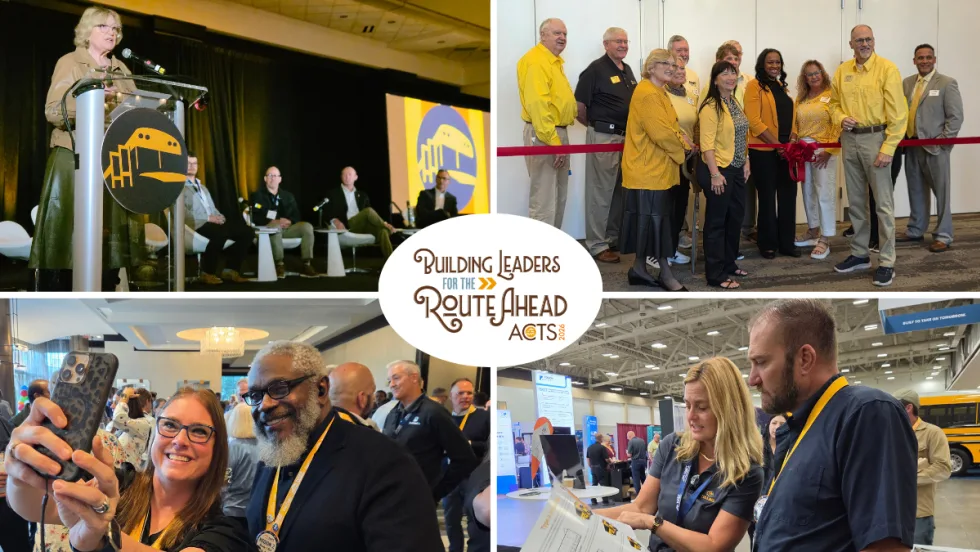
Inside NAPT ACTS 2026: Highlights from Louisville
From federal updates and student behavior strategies to new school bus technology and industry awards, see highlights from NAPT ACTS 2026 in Louisville.
Read More →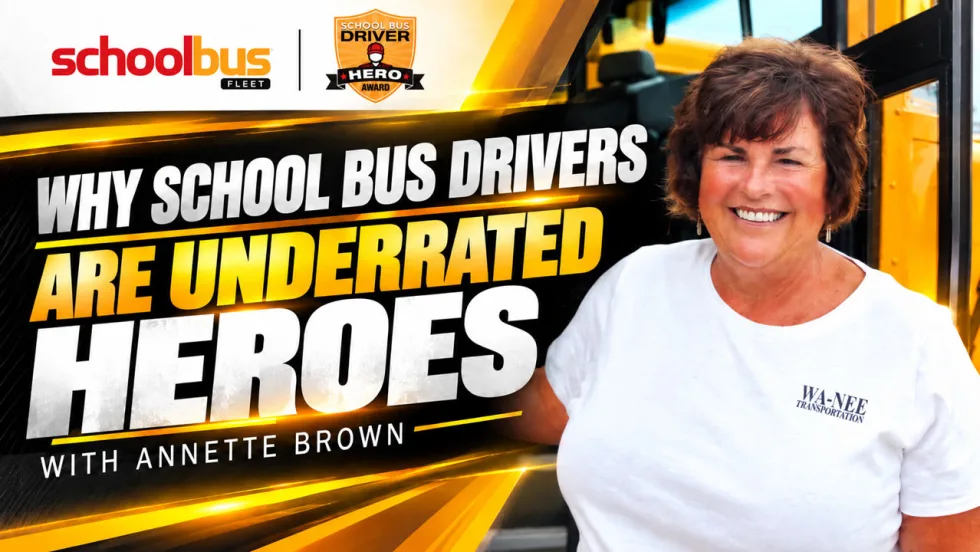
Meet the 2025 School Bus Driver Hero Winner: Annette Brown
We caught up with Wa-Nee Community Schools' Annette Brown on site at SBFX, where she was named the 2026 School Bus Driver Hero Award winner. Hear about her reaction, what she loves most about being a school bus driver, and more!
Read More →
Predictability Is Like Ketchup (According to 6-Year-Olds)
To students, a different school bus can feel like a full-blown crisis. One driver reflects on why familiar routines, showing up on time, and being reliably boring matter more than we think.
Read More →
Samsara Launches Free Driver Rewards Program
The new Driver Perks program gives eligible professional drivers access to discounts and offers without adding a cost for participating fleets.
Read More →
How Tax-Exempt Municipal Leases Can Help Finance School Buses
Let’s explore school bus financing options, including municipal leases, vendor payable accounts, and balloon payments, and how they can help stretch fleet budgets.
Read More →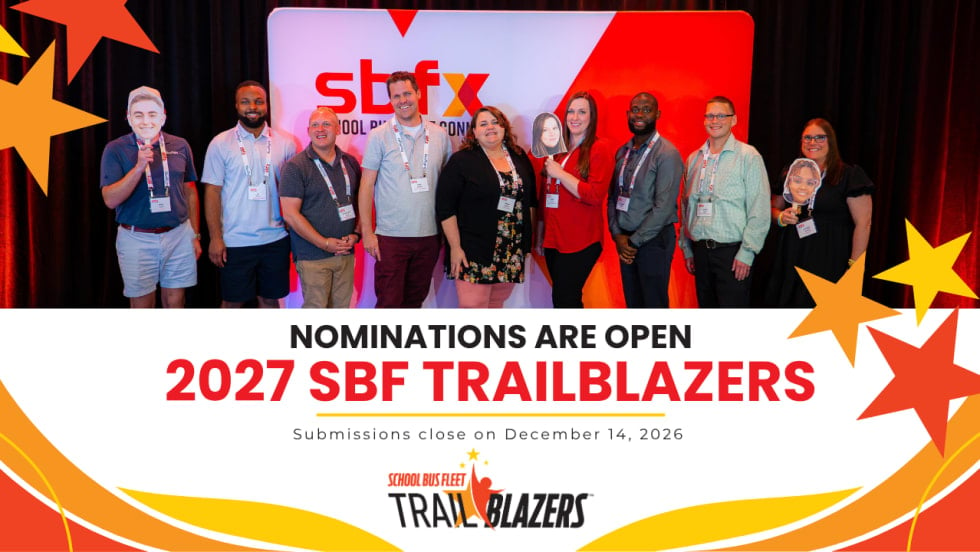
Nominate Rising School Transportation Pros Under 40!
We’re searching for the next generation of leaders making an impact across the K-12 student transportation industry to recognize as SBF’s 2027 Trailblazers. Nominations are open now!
Read More →