




Walking Down the Aisle: Keys to Choosing a Bus Floor
With the winter months bringing rain clouds and snowstorms, parents will be worrying about flu shots and bundling up the little ones for the cold. But...
With the winter months bringing rain clouds and snowstorms, parents will be worrying about flu shots and bundling up the little ones for the cold. But as the weather turns bad and the rain covers everything in a sheet of water, most parents probably aren’t concerned with what their children are stepping on inside the school bus.
In actuality, the flooring of a school bus should not be much of a parent’s concern if the material has been properly installed and is constructed from good material. So much goes into a school bus to make sure it operates correctly and safely, and because of the precious passengers it carries, no detail should be left to chance — not even the flooring.
Tread safely
Bus flooring provides more than an adequate walking surface. With advances in floor technology and design, the amount of safety a stretch of flooring can give is tremendous. Bus flooring manufacturers have guidelines and standards when it comes to creating a floor surface, as set by the Americans with Disabilities Act (ADA) and the Occupational Safety and Health Administration.
“Our APEX Step Tread was introduced late last year to the industry,” explains Don Bullock, director of sales administration for RCA Rubber Company in Akron, Ohio. “It’s directed more towards the school bus industry because it gives a good grab from the tennis shoes that all the kids are wearing nowadays.” The conical design covers the steps of the bus entrance, ensuring a high level of slip resistance.
Rubber Solutions USA has been focusing on the potentially problematic steps of the school bus as well. The company offers a pebble-top rubber step tread that is effective even if it’s cold or wet outside. “It’s a very grippy design,” says Douglas Campbell, the company’s program director in Charlotte, N.C. “One of the primary aspects of our program is that our product is made of a very high quality and high content of rubber, so it makes for a very slip-resistant flooring.”
Koroseal Products also produces a step tread for entering and exiting a school bus. Jack Woodyard, business manager of the transit matting products division in Fairlawn, Ohio, says the main concern voiced by school bus drivers was about the bus steps. Koroseal came up with the Pebble Tread, which features traction-enhancing pebbles with “an aggressive, square-edged bite.”
Woodyard says that preventing falls is key in avoiding potential liabilities. “Otherwise, you’ll find yourself in either a situation of worker’s compensation, which is most often the case, or students injuring themselves,” he says.
RCA Rubber designed a premium-grade rubber flooring system called Transit-Flor PGF. The material has a ribbed and textured surface that can prevent falls.
Composed of natural and/or synthetic rubber, Transit-Flor PGF is also reinforced with hard clay fillers for strength and fibers to ensure skid resistance. “We meet the original equipment manufacturer specifications, plus the ADA guidelines for slip resistance,” explains Bullock.
{+PAGEBREAK+} Only the strong survive
Choosing the type of flooring for a school bus fleet is a big decision. It’s not enough to just to have something that the kids can walk on. Flooring should be durable, safe and long lasting. Many companies guarantee a floor will last for the life of the vehicle.
“Our products are warranted for 15 years. Generally, they last twice that,” says Dan Lee, U.S. Transflor manager for Altro Transflor in Long Beach, Calif.
The American Society for Testing and Materials (ASTM) is a non-profit organization that establishes test standards that ensure accuracy in comparing materials.
“The ASTM puts out a method for people to use so that if I as a manufacturer test a product one way and someone else tests it a different way, the ASTM provides a means for us to be on the same page so that you have an apples-to-apples comparison of test data,” says Koroseal’s Woodyard.
Some of these tests include weathering, moisture absorption, tensile strength, fire resistance and abrasion resistance. On top of a company’s own set of tests, it would be useful to ask manufacturers if they’ve tested their products according to the ASTM methods as well. As Woodyard explains, the ASTM provides the values to meet. It’s up to the manufacturer to do the testing to confirm compliance with them. Here are some of the tests, as defined by the ASTM:
Tensile strength is the strength of flooring expressed as the greatest longitudinal stress it can bear without tearing apart.
Weathering consists of the chemical or physical alteration of flooring over time.
Erosion by friction, or the wearing away of a flooring material, is defined as abrasion.
The Federal Motor Vehicle Safety Standard 302 specifies a minimum flame resistance for materials used in the interior of a motor vehicle, including school buses.
Whether you’re a bus manufacturer or a transportation director, it’s always important to ask questions about bus flooring and the rigorous tests that each product has been through. Products may vary, and research is key when determining the type of flooring to install in a school bus.
Ride in style
Bus flooring doesn’t have to be bland. Style can be one of the determining factors in choosing the right kind of flooring. Color, number of pieces and texture should be factored in when searching for a school bus floor.“We now have 38 colors in our line,” Bullock says. “We have a wide array of colors to offer the manufacturers. The biggest uses in the school bus industry are marbleized colors — gray marbleized or tan marbleized. But we can supply it in solid black.”
Lee agrees. “There are generally only two or three colors used in school buses. Although, we offer over a hundred colors.” {+PAGEBREAK+} Rubber Solutions USA hopes to break the trend of traditional floor colors for school buses by ushering in brighter, more modern styles and shades. “What we’re trying to do is move people out of the old-fashioned colors by coming up with some new patterns to create the next generation of colors and looks,” Campbell says.
Style can also be functional. Koroseal provides floors with textured surfaces, one-piece flooring and three-piece flooring. “We offer a product that doesn’t have any seams, so it can be installed and cover the entire width of the bus as one piece as a further means to prevent moisture from penetrating and attacking the sub floor,” explains Woodyard.
Rubber versus vinyl
With so many flooring manufacturers putting out so many different products, there is bound to be a discussion as to what product provides a better service over another. Like the great Coke and Pepsi debate, rubber flooring manufacturers and vinyl flooring manufacturers continue to make their cases heard.“Rubber is very susceptible to degrading when exposed to ozone and ultraviolet (UV) light. The thing about our products is that they are inherently resistant to ozone and UV, and these are things that products are exposed to 24 hours a day, seven days a week,” says Woodyard. “When you talk about wear, that is one area where the chemical composition of the product really does matter.”
In support of rubber, Campbell explains that the material is stable and offers a higher slip resistance than vinyl, while it doesn’t shrink or expand like vinyl. Additionally, Campbell sees a shift going on in the bus manufacturing industry. “If you have large distributors and large manufacturers that are now going away from vinyl and going back to rubber, that to me is concrete as far as where the trend is going.”
In the end, what looks like a bewildering choice may come down to a personal preference or a budget, especially if a bus manufacturer is limited on a monetary level. The expense associated with looks, cost and design can dictate a decision rather than an industry debate.
Keep it clean
When it comes to upkeep for a bus floor, there is actually very little maintenance involved.“You clean [our flooring] with a non-ionic detergent and mopping,” says Bullock. “You don’t need any sealers, you don’t wax it. Anytime you apply something like that on there, you’re taking away the benefits of the floor covering itself.”
Bullock adds, “Some products you need to put a sealer on, and you’re no longer walking on that product itself. You’re walking on the sealer or the wax.”
Campbell, Woodyard and Lee concur that the best way to clean a bus floor is with some soapy water and a mop. That’s all the maintenance a properly installed floor will ever need.
More Safety
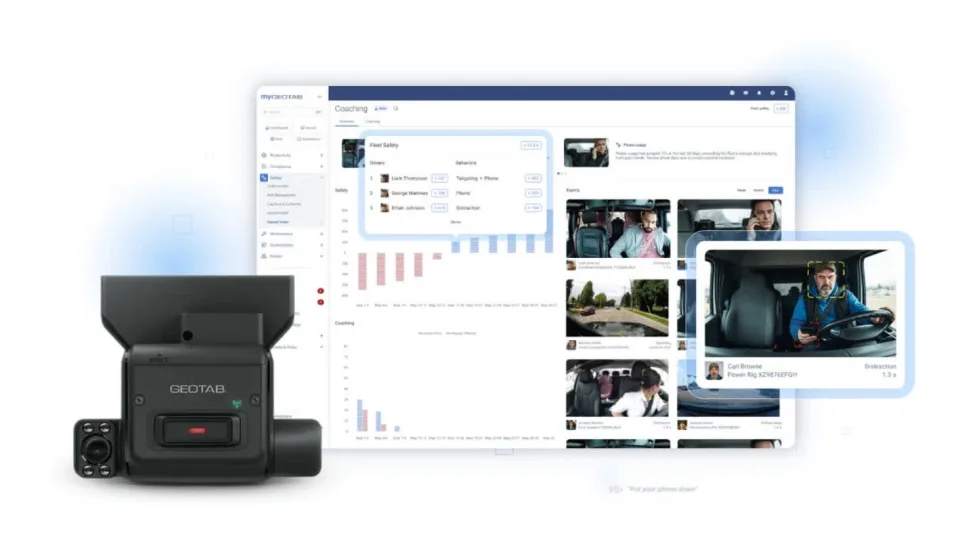
Geotab Expands Fleet Safety Tools With Video Coaching, Risk Insights
New safety and video capabilities aim to help fleet managers assess risk, support drivers, and take targeted action through video coaching, red-light violation detection, and more.
Read More →
How to Build a Better School Bus Driver Training Program
Is it time to strengthen your driver training? Here’s how to pick the right talent and improve recruitment, retention, and safety. This video is brought to you by IC Bus.
Read More →
Recent School Bus Accidents Leave 2 Dead, 2 Injured
Four school bus crashes in Florida, Illinois, and Georgia highlight risks in transportation lots, at bus stops, and during student loading and unloading.
Read More →

When Every Second Matters, Clarity Keeps Routes Moving
From routine delays to urgent incidents, strong communication practices help drivers, dispatchers, schools, and families respond with confidence.
Read More →
What Happens When a School Bus Catches Fire — and What Can Help
School bus fires are rare but can be devastating. Learn how advances in fire suppression and asset protection help fleets detect fires earlier, reduce damage, and improve safety.
Read More →
Geotab Launches Tool to Help Fleets Investigate Road Incidents
Geotab Investigations combines telematics data, video, documents, and other evidence to help fleets reconstruct incidents, resolve claims, and determine what happened.
Read More →
Texas Sixth Grader Wins 2026 National School Bus Safety Poster Contest
Sai Darshana Yekolu of Moseley Middle School in Prosper, Texas, was named the newest winner for her artwork, bringing the theme of “Safe Rides, Everyday Heroes” to life.
Read More →
Doing More With Less: How Transportation Directors Can Prioritize Safety Amid Budget Uncertainty
With diesel prices soaring and nearly one-third of transportation directors expecting budget cuts, maintaining student safety has never been more challenging. Download this guide to learn how leading districts are prioritizing risk, funding critical safety technology, and building stronger budget cases with data.
Read More →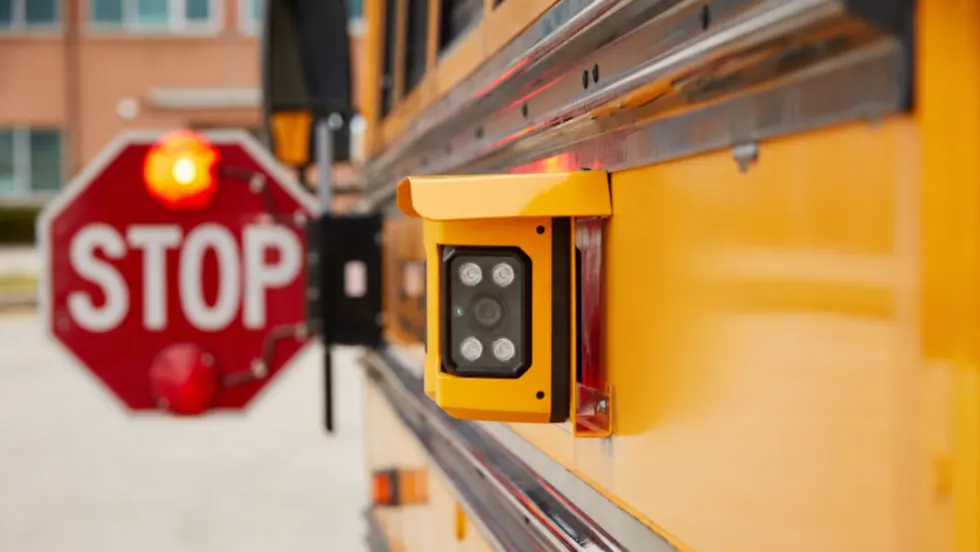
Walton County Schools Adds Gatekeeper Stop-Arm Enforcement System
The Florida district will deploy Gatekeeper’s updated Student Protector technology, which now incorporates AI to improve video evidence.
Read More →
How To Build a More Secure School Bus Yard During and After Hours
As thefts and overnight security threats continue, school transportation leaders are combining stronger operational practices with AI-enabled surveillance to better protect buses, facilities, and staff.
Read More →