




Using GPS to Do More Than Just Track Buses
Although still in its infancy in school transportation applications, GPS (global positioning system) technology can be used to do more than just track...
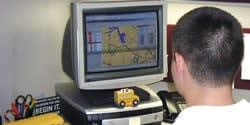
Although still in its infancy in school transportation applications, GPS (global positioning system) technology can be used to do more than just track buses.
Imagine the possibilities
Norm Foust, director of transportation and security services at Metropolitan School District of Washington Township in Indianapolis, had several reasons for investing in a GPS system. Locating buses in an emergency was primary, but he also wanted to know if drivers were conducting pre-trip inspections.
Foust expressed his interests to Indiana-based Synovia Corp., which delivered a system with these capabilities.
“The bottom line with any GPS program is it’s only limited by your imagination,” Foust says.
Synovia’s StreetSmart system, which includes all hardware, software and communications components, integrates with software providers such as VersaTrans, Edulog and Trapeze.
“After you put a system into a school district, a month or two later they’ve got all kinds of ideas for ways to get value out of it,” says Brad Bishop, COO for Synovia. “Following that, we start to look at some of the return-on-investment potential with maintenance and idling and things like driver time management.”
Foust operates a fleet of 124 buses. When he pilot-tested Synovia’s GPS system on five of his buses, he asked that the black boxes be portable to allow testing on different vehicles. Now the entire fleet is equipped with GPS.
Soon Foust will replace 10 older buses with newer models. The black boxes from these buses will be transferred to his security vehicles. Eventually, all 13 patrol cars will have GPS, allowing every vehicle in the district’s fleet to be tracked.
A check-in feature will be added to the system in the fall. Buses are currently housed in three locations throughout the district. StreetSmart zones these locations and provides a visual track when buses go on route. Software turns the bus images green when they leave the garage on time, yellow if they’re five minutes late and red if they’re 10 minutes late.
Integrate technologies
Five years ago, Everyday Wireless was founded to serve the tracking needs of the pupil transportation industry. What began with school bus rider-notification services quickly evolved into fully integrated GPS-based vehicle-location systems and student-tracking technologies.
The company saw that certain pupil transportation needs weren’t being met. Cost feasibility was an issue, especially with cellular systems, as districts didn’t want to pay high monthly fees. Everyday Wireless responded with the TX-3, a radio-based GPS transceiver that operates using UHF frequencies.
“The unit is about the size of a small brick, so it can fit in several locations on the bus,” says Bres Longstreth, CFO/COO of the company, which is in Reading, Pa. “And, there are no monthly fees.”
The TX-3 links to sensors throughout a vehicle, such as the ignition, the door, an emergency button and the eight-way lights.
“Pretty much anything we can grab a signal from, we can send that information into our box and construct a message that is sent every 10 seconds,” Longstreth says.
{+PAGEBREAK+} The proprietary Everyday Wireless infrastructure is exclusive of existing voice-communication systems. Also, the district owns the receiving infrastructure, which is fully networked and can be modified to provide complete coverage.
Everyday Wireless can provide standalone end-user software for vehicle tracking only, or it can provide a combined routing and tracking package with one of its routing software partners — Edulog, Trapeze or Transfinder.
Enhance security
Orange County Public Schools (OCPS) in Orlando, Fla., uses MapNet routing software manufactured by Arizona-based Trapeze Corp. Arby Creach, senior administrator of scheduling, training and development, was particularly drawn to Everyday Wireless’ GPS system because it integrated with MapNet and could show planned route stops versus any unauthorized stops drivers make.
“Oftentimes drivers make their own decisions about stops, and we know that’s not always a good thing,” Creach says. “This is a good way to monitor that.”
Initially, OCPS drivers expressed concern about the “big brother” aspect of GPS, but by demonstrating how the system works, Creach was able to quell many fears. Drivers now understand how the system may protect them and their jobs.
The TX-3 also has what Creach calls a panic button, a feature that OCPS drivers have expressed great satisfaction with. The button is strategically placed so drivers can push it discreetly. An emergency-alert signal is sent without touching the radio.
Soon OCPS will switch from analog to digital video cameras. The TX-3 has a feature that grabs a live frame from surveillance cameras and transmits that single frame to base, effectively allowing an instantaneous image for positive identification in situations such as fights or hijackings.
Increase efficiency
Howard County Public Schools of Ellicott City, Md., uses a 100-percent-contracted fleet to transport its 40,000 traditional students and 1,600 special-needs students. More than 50 contractors carry the students to 69 public, 15 non-public and five parochial schools.
With so many carriers, delivering quality customer service often proved challenging for David Ramsay, assistant supervisor of special-needs transportation. Equally challenging were regulatory changes with Medicaid reporting.
Previously, the district generated mounds of paperwork to meet federal regulations and receive reimbursement for services provided to special-needs students. Daily logs from morning and afternoon runs for about 100 buses generated more than 200 logs per day.
“Multiply that by 180 school days,” Ramsay says, “and you get an idea of the tremendous amount of paperwork.”
Eventually, GPS will allow the district to manage the reports electronically.
Create crumb trails
Mobile resource management is about managing mobile workers, says Joyce Tam, senior manager of product marketing at @Road Inc. in Fremont, Calif.
A special feature of @Road’s GPS system is the proximity landmark. This item allows operations to set up a perimeter within a determined radius that alerts school officials when a school bus passes or enters the area.
@Road offers a complete GPS system, including the option of a transmitter receiver, which allows information to be sent out or received by operations. There’s also browser-based software that allows a snapshot of bus locations at any given time.
“You can see sort of a breadcrumb trail of where the buses have gone,” Tam says. “Or you can ping them or zoom in exactly where on route that bus is at that time.”
Tam says the system is very flexible and expandable, allowing room for next-generation upgrades and enhancements.
Chicago-based American International Radio’s SafeMobile division develops the Mobile Asset Management System, a GPS-based automatic vehicle location (AVL) solution that allows monitoring and controlling of fleets from anywhere in the world. SafeMobile operates over any wireless communication network and interfaces with any routing software.
{+PAGEBREAK+} Student tracking options
In the fall, OCPS, which generates its revenue based on ridership figures, will pilot a student-counting system.
Deliberations are still ongoing regarding options such as passive or active RFID (radio frequency identification) tags. The district will start with special-needs students using a bar-code scanning system. In the past, Creach experimented with fingerprint-recognition technology, but this proved unfavorable with parents and too time-consuming for operations.
“It took too much time,” Creach says. Each bus had to carry an entire database with every student in the district on board. We have 178,000 students.”
Metropolitan School District of Washington Township is working with a Washington D.C.-based company called Maximus to deploy a student-tracking program using smart cards. Smart cards are read when students pass within a few inches of the reader.
A second phase of the project is what Foust describes as an itinerant program. The program is for students who ride buses late in the evening or after athletic trips. Tweaking the system to allow students to access a bus on the day of a particular event or without general approval has been a problem for the district.
Technology enhancement
The following are companies that offer products and services that enhance the capability and functionality of GPS:
DPAC Technologies
DPAC Technologies in Garden Grove, Calif., develops and builds 802.11 integration modules and connectivity products for machine-to-machine communication applications. DPAC’s embedded 802.11 wireless modules and packaged subsystems are used by major OEMs in transportation, homeland security, medical diagnostics and a wide variety of other mobile markets to enable remote data communications, collection and control. Its modules enable OEM designers to incorporate wireless LAN connectivity into devices, instruments or equipment.
Edulog
BusLocator is Edulog’s software component in a total GPS package. The BusLocator system can integrate with routing software to increase efficiency, produce reports and passively maintain fleets.
Edulog is vendor neutral and works with any hardware provider. It also consults and acts as the first point of contact for a district’s GPS needs.
Icom America Inc.
Icom America’s portable radio series B.I.I.S. (Binary Interchange of Information and Signaling) enables digital communications, signaling and messaging with analog radios. With B.I.I.S., GPS data is exchanged between the mobile and base units in standard NMEA0183 format. An external GPS receiver, connected via the OPC-822 makes it AVL ready.
Zonar Systems
Zonar Systems’ GPS system will soon be available for school bus fleets. The Zonar-developed GPS system uses a 900 MHz radio with the option of a GSM cellular modem. The Zonar GPS system is integrated with the company’s EVIR safety, security and productivity service, which is widely in use by trucking and pupil transportation fleets. Because Zonar is using next-generation GPS technology, the system will provide enhanced accuracy at a significantly reduced cost.
More Safety
FMCSA Names New Chief Safety Officer: What School Bus Operators Should Know
Steve Dowling is set to lead the federal agency's efforts to advance commercial motor vehicle safety and reduce crashes, fatalities, and injuries on the nation's roadways.
Read More →
New Study Finds School Zone Speed Safety Cameras Cut Speeding Violations 97%
A Florida university's research demonstrates that Verra Mobility's automated enforcement changes driver behavior and significantly improves school zone safety.
Read More →
What Changed in DOT’s New National Roadway Safety Strategy?
The federal agency's new plan shifts its focus to safer people, roads and vehicles, with a new three-pronged approach instead of five. One outlined action even addresses a key industry concern around illegal school bus passing.
Read More →
Are Autonomous Vehicles Ready to Safely Navigate School Bus Stops?
NHTSA is accelerating autonomous vehicle deployment through new safety standards and commercial approvals. See why school transportation leaders are watching.
Read More →
NFL Star Lomas Brown Kicks Off New Illegal School Bus Passing PSA
Just in time for the back-to-school season, the former Detroit Lions offensive tackle took time to record a video encouraging motorists to slow down around school buses.
Read More →
How Two Texas Districts Built Award-Winning Safety Programs
Learn how Prosper ISD and Rockwall ISD earned National Safety Council honors through hands-on training, safety culture, and strategies that reduced transportation incidents.
Read More →
NHTSA Releases 10-Year Review of Fatal School Bus Crashes
The latest federal analysis reinforces the safety of school buses while identifying where school-age pedestrians and other motorists remain most at risk.
Read More →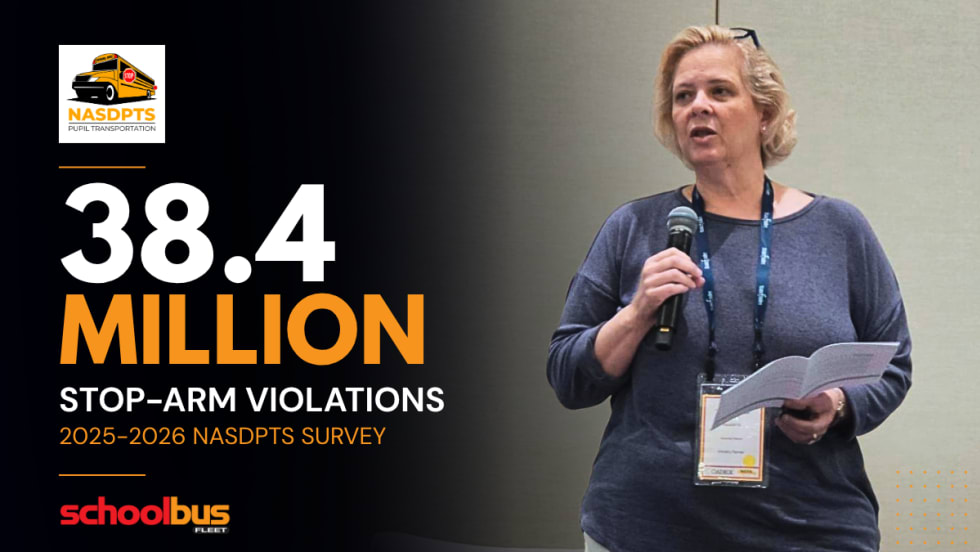
2026 NASDPTS Survey: Data Shows Further Reduction of Illegal Passing
New data is in! School bus stop-arm passings are down to 38.4 million violations per year, about a 2.3% decrease from last school year — but passings on the right side of the bus are higher than ever.
Read More →
Another School Bus Fatality Reported in Monsey, New York
A 7-year-old girl died after being struck by a school bus in Rockland County, New York while crossing the street. Here's what we know.
Read More →
NSTA Announces 2026 School Bus Driver International Safety Competition Winners
Drivers from across the U.S. and Canada showcased their safety and driving skills, with two defending champions successfully retaining their titles.
Read More →