




Updating Aging School Bus Fleets a Critical Challenge
Districts need more financial support not only to ensure they have enough drivers, but safe, reliable buses for them to drive as well.

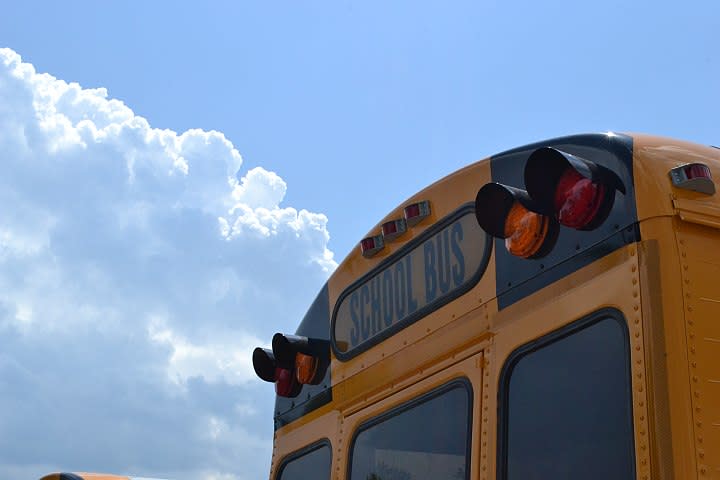
File photo

File photo
Time and again, we have discussed, traded solutions — and commiserated over — the school bus driver shortage. But what about a bus shortage?
A recent survey reveals that a wide swath of student transportation operations nationwide are struggling with keeping their fleets in safe and reliable shape, mainly due to lack of funds.
The “2019 School Bus Fleet Management Survey,” conducted by fleet management services company Transportation Services Co. (TSC), indicate that budget cuts and lack of access to capital prevents some student transportation providers from acquiring new buses, which can impede efforts to provide high-quality school transportation.
Responses came from over 300 superintendents, transportation directors, and other school administrators. Nearly all respondents reported that the age of their fleet was “essential” or “important” to their ability to provide safe, reliable student transportation.
And yet, more than one-third of the school bus fleets represented in the survey were 8 to 10 years old. Close to another third were 5 to 7 years old, and almost 20% were 11 to 14 years old. Ten percent have fleets that are 15 to 19 years old. The oldest fleet was reported by one district as 20-plus years old. Less than 10% of districts have fleets that are 4 years old or newer.
Another noteworthy finding: Although the second and third most popular barriers to providing top-notch transportation cited by survey participants were bus fleet age and inadequate budget to buy newer vehicles, every participant who reported having poor or fair transportation services pointed to driver shortage as the main factor preventing them from providing outstanding service.
Most survey respondents said that their districts purchase school buses through local dealers. Cash is the main form of payment for more than three-quarters of them. Other payment methods included financing and leasing; less than one-third reported using these options because they didn’t know they were available with favorable terms.
Tod Eskra, TSC’s president, said of the survey: “[districts] are often limited by budget constraints largely because they pay cash for new buses.” He added that financing and leasing are viable options that more school transportation providers should consider.
Beyond that is the issue of maintenance. Our Shop Talk columnist, Brad Barker, notes in his SBF July issue column that as many technicians struggle to keep buses in aged fleets road-worthy, they are performing what he refers to as “corrective maintenance” instead of preventive maintenance to improve reliability. The result is buses that break down because components that should have already been repaired or replaced are beyond useful life, he points out.
And we see the consequences of not operating quality buses that are safe to drive, whether due to age or maintenance.
In recent news, a Massachusetts school bus driver had to quickly evacuate the students aboard his bus after he felt the floor heat up, pulled over to take a look, and spotted a fire in the engine area. He got all the students off the bus before it was consumed by flames.
Meanwhile, in Missouri, a driver’s bus broke down and caught fire in an electrical box under the hood. Thankfully, that driver also safely evacuated all the students. However, the owner of the school bus company told FOX 4 that the bus was recently inspected, and no issues were found.
That apparently wasn’t the case in March, FOX 4 reported, when the Missouri State Highway Patrol’s annual school bus inspection results reportedly revealed that nearly half of the company’s buses failed state inspections due to safety issues. The company later fixed the problems on the buses that were taken out of service, the news source reported, but just two weeks before the fire, inspectors took three of the company’s buses off the road.
It is unclear whether these fires were caused by aging buses or maintenance problems. Still, it’s worth noting that in addition to presenting risk, operating buses that aren’t perceived as safe and reliable can hurt districts’ reputations and undermine driver confidence, which can potentially exacerbate the shortage even further.
What is clear is that more financial support is needed to not only ensure districts have enough drivers, but safe, reliable buses for them to drive as well.
More Safety

How to Build a Better School Bus Driver Training Program
Is it time to strengthen your driver training? Here’s how to pick the right talent and improve recruitment, retention, and safety. This video is brought to you by IC Bus.
Read More →
Recent School Bus Accidents Leave 2 Dead, 2 Injured
Four school bus crashes in Florida, Illinois, and Georgia highlight risks in transportation lots, at bus stops, and during student loading and unloading.
Read More →
When Every Second Matters, Clarity Keeps Routes Moving
From routine delays to urgent incidents, strong communication practices help drivers, dispatchers, schools, and families respond with confidence.
Read More →

What Happens When a School Bus Catches Fire — and What Can Help
School bus fires are rare but can be devastating. Learn how advances in fire suppression and asset protection help fleets detect fires earlier, reduce damage, and improve safety.
Read More →
Geotab Launches Tool to Help Fleets Investigate Road Incidents
Geotab Investigations combines telematics data, video, documents, and other evidence to help fleets reconstruct incidents, resolve claims, and determine what happened.
Read More →
Texas Sixth Grader Wins 2026 National School Bus Safety Poster Contest
Sai Darshana Yekolu of Moseley Middle School in Prosper, Texas, was named the newest winner for her artwork, bringing the theme of “Safe Rides, Everyday Heroes” to life.
Read More →
Doing More With Less: How Transportation Directors Can Prioritize Safety Amid Budget Uncertainty
With diesel prices soaring and nearly one-third of transportation directors expecting budget cuts, maintaining student safety has never been more challenging. Download this guide to learn how leading districts are prioritizing risk, funding critical safety technology, and building stronger budget cases with data.
Read More →
Walton County Schools Adds Gatekeeper Stop-Arm Enforcement System
The Florida district will deploy Gatekeeper’s updated Student Protector technology, which now incorporates AI to improve video evidence.
Read More →
How To Build a More Secure School Bus Yard During and After Hours
As thefts and overnight security threats continue, school transportation leaders are combining stronger operational practices with AI-enabled surveillance to better protect buses, facilities, and staff.
Read More →
FMCSA Names New Chief Safety Officer: What School Bus Operators Should Know
Steve Dowling is set to lead the federal agency's efforts to advance commercial motor vehicle safety and reduce crashes, fatalities, and injuries on the nation's roadways.
Read More →