




'Typecasting' administrators can help to resolve conflicts
It takes a village to improve discipline on school buses. By that I mean that transportation managers, building administrators, parents and drivers ne...
It takes a village to improve discipline on school buses. By that I mean that transportation managers, building administrators, parents and drivers need to work together to solve discipline problems. Bus-related difficulties can be particularly thorny because of the following: They often take a lot of time to investigate; They can turn ugly; Parents may be unsupportive; and building administrators have other problems and don't need another "bus problem." Drivers and students are nearly always the active participants in disciplinary situations on the school bus, but site administrators, such as principals and assistant principals, can be critically important to the resolution of these problems. That's why it's imperative that transportation managers understand the "types" of building administrators who may present difficulties in settling conflicts involving student misbehavior. The 3 'problem' administrators
These "difficult" building administrators range from the "touchy-feely" to the "no-nonsense" to the "that's-a-bus-problem, not-a-school-problem" types. When dealing with any of these "types," it behooves the transportation administrator to become involved in support of the drivers. Touchy-feely administrators may respond to bus problems with reactions such as "Susie is so good in school that I can't believe she would do that on the bus." They need help in understanding that children do sometimes behave differently in the classroom than they do on the bus. In some cases it is probably best if the transportation manager works directly with the driver to handle this problem. The building administrator is notified after the fact. No-nonsense administrators tend to blame the drivers and often claim "they just don't know how to handle kids." They may respond to a relatively minor infraction by suspending a student from riding the bus for a long period. They need to understand that disciplinary action needs to be consistent throughout the district. Often these administrators will be taking other actions into consideration, such as how the student behaves in the classroom. In other words, the child may be a problem for teachers and drivers. If the building administrator believed that his/her action was appropriate, I usually concurred with that judgment. The "that's-not-a-school-problem" administrator obviously does not want to be bothered with bus problems. I tried to get them to accept the fact that the bus is an extension of the classroom. What happens on the bus can affect what happens at school; what happens at school can affect what happens on the bus. Documentation is critical
Unfortunately, in a few of these cases, the transportation supervisor must go over the head of "that's not a school problem" to gain support for drivers. If this has to happen, it's imperative that the facts of each situation be well documented, especially attempts that have been made to try to gain the cooperation of the building administrator. Obviously, these three examples illustrate extremes rather than the norm. Depending on the circumstances, an administrator may react differently to misbehavior on buses. I know I did, and so do bus drivers. My experience showed that, by far, most administrators are supportive of bus drivers. Many of them even become friends with the drivers, treating them as part of the school staff. They realize that "what goes around, comes around." And when they need the driver's help and support, they will get it.
More Management

EverDriven Launches Route Consolidation Calculator to Estimate Diesel Savings
As diesel prices hit record highs, the largest alternative transportation provider says a 10% route consolidation could save a 120-route district more than $78,000 a year in fuel alone.
Read More →
Zum Secures Continued Financing Support for School Bus Expansion
Generate Private Credit has financed approximately $75 million in school bus deployments across three states, supporting more than 500 buses as Zum expands across the county.
Read More →
Beyond Discipline: A Different Approach to Student Behavior on the Bus
After implementing a dean of students program in Oregon, North Clackamas is seeing positive improvements. Here’s how it worked. The Route is brought to you by IC Bus.
Read More →
A Dean of Transportation's Different Approach to Student Behavior on the School Bus
After implementing a dean of students program in Oregon, North Clackamas is seeing positive improvements on the bus. Here’s how it worked.
Read More →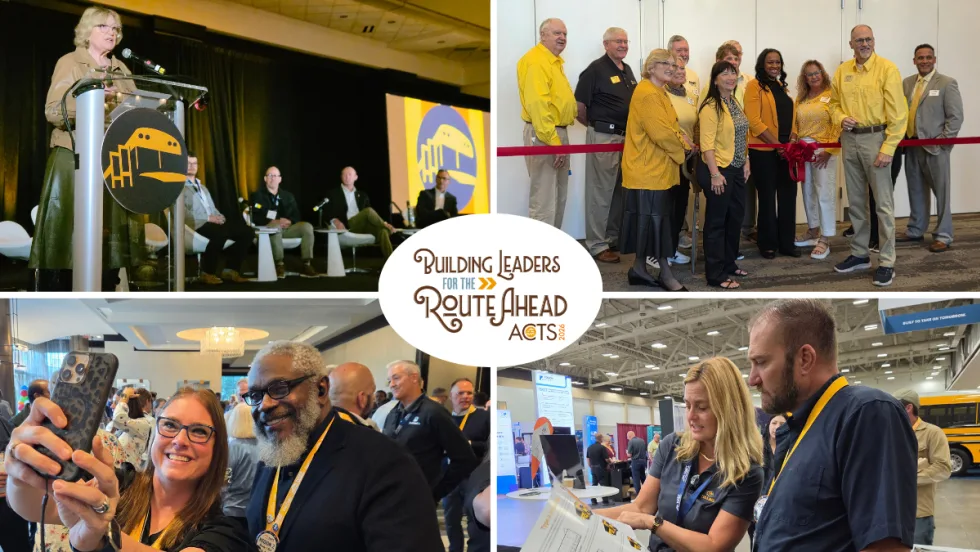
Inside NAPT ACTS 2026: Highlights from Louisville
From federal updates and student behavior strategies to new school bus technology and industry awards, see highlights from NAPT ACTS 2026 in Louisville.
Read More →
Meet the 2025 School Bus Driver Hero Winner: Annette Brown
We caught up with Wa-Nee Community Schools' Annette Brown on site at SBFX, where she was named the 2026 School Bus Driver Hero Award winner. Hear about her reaction, what she loves most about being a school bus driver, and more!
Read More →
Predictability Is Like Ketchup (According to 6-Year-Olds)
To students, a different school bus can feel like a full-blown crisis. One driver reflects on why familiar routines, showing up on time, and being reliably boring matter more than we think.
Read More →
Samsara Launches Free Driver Rewards Program
The new Driver Perks program gives eligible professional drivers access to discounts and offers without adding a cost for participating fleets.
Read More →
How Tax-Exempt Municipal Leases Can Help Finance School Buses
Let’s explore school bus financing options, including municipal leases, vendor payable accounts, and balloon payments, and how they can help stretch fleet budgets.
Read More →
Nominate Rising School Transportation Pros Under 40!
We’re searching for the next generation of leaders making an impact across the K-12 student transportation industry to recognize as SBF’s 2027 Trailblazers. Nominations are open now!
Read More →