




Turner's special-needs manual
“Special-Needs Transportation Best Practice” is designed to educate the transportation professional, but the underlying message that permeates its 794 pages is the need for transportation professionals to educate others as well.
“Special-Needs Transportation Best Practice” is designed to educate the transportation professional, but the underlying message that permeates its 794 pages is the need for transportation professionals to educate others as well — the non-disabled children who might be quick to stigmatize children with disabilities (CWD) or the school building personnel who don’t understand safety before schedule. The text includes best practice for the IEP committee that doesn’t understand the impact of distance on program success or the simple logic that least restrictive environment applies to the bus as well as the classroom.
This manual is an encyclopedia of Dr. Ray Turner’s experience as a special educator that started 40 years ago and has included professional roles of special-education teacher, administrator, professor and transportation administrator.
Decades of knowledge on display
Building on “Transporting Handicapped Students: A Reference Manual” in 1980, “Special-Needs Transportation Handbook” in 1998 and “Transporting Medically Fragile or Technology-Assisted Students” in 2000, this reference work incorporates Dr. Turner’s writing and experience of the past four decades in special education: Where else can you find 19 strategies for transporting children with autism or consider 27 types of school bus accidents that should be considered for crutch users?
Turner’s text starts with a Special-Needs Transportation Student’s Bill of Rights that makes explicit that transportation as a related service must be provided professionally, sensitively, expeditiously, reliably and appropriately.
The manual has the feel of WebMD, only without the handy search features. [Editor’s note: A searchable CD version of the text is now available for purchase (without shipping or handling charges) at www.whitebuffalopress.com.]
This voluminous text includes a table of contents that runs 37 pages and includes 41 tables of specific best-practice information for everyone involved in the transportation of CWD. Different sections of this text will be most useful depending on whether you’re a driver, attendant, special-education administrator or teacher, or transportation manager.
Turner starts with a disclaimer, as does every book in our litigious society, and it is important to take this one seriously. The author writes very definitively: “The driver will do this” or “Best practice policy must include this.” In fact, very little regarding the transportation of CWD is established in civil or statutory law. The reader is offered the author’s perspective of best practice even when professional opinions may differ widely.
This book is a useful starting place to understand transportation issues, and it outlines scenarios you should well consider, but your policy decisions should be made from a wide variety of sources to assure that they are current and appropriate for your situation.
Plenty of good ideas
Spending a few days immersed in “Special-Needs Transportation Best Practice” will surely give you good ideas for tweaking your transportation of CWD. After reading the Bill of Rights, I called Ray and suggested that he add one more right, that “All students have a right to be transported together.” The manual refers to inclusive transportation as the prediction of “futurists,” but the future is now and this book will give you many tools to better understand your “special” students as simply students and your “special-needs” buses simply as buses.
Ted Finlayson-Schueler is the president of Safety Rules! — a nonprofit organization dedicated to the safe travel of students to and from school. For more information, visit www.safetyrules.net.
More Special Needs Transportation
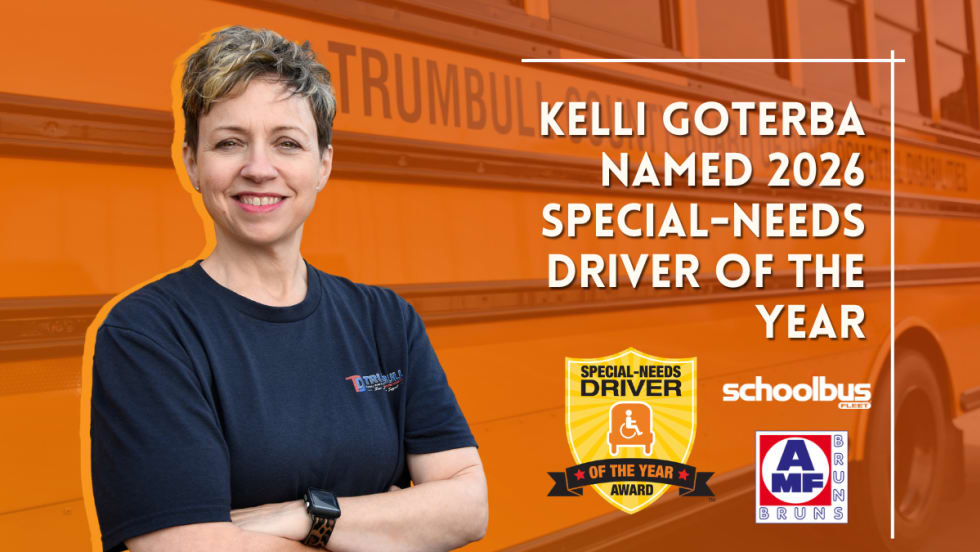
Kelli Goterba Named 2026 Special-Needs School Bus Driver of the Year
Through building trust with students and strengthening her transportation team, Goterba exemplifies the impact special-needs drivers can make.
Read More →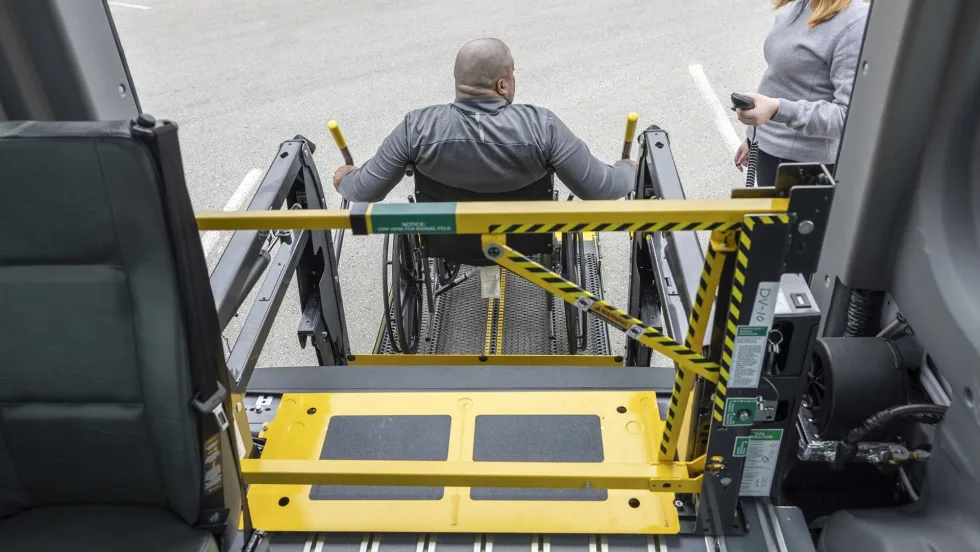
BraunAbility Introduces New Safety Barrier for Wheelchair Lifts
LiftSentinel is designed to add another layer of protection during wheelchair loading and unloading and can be retrofitted to many existing commercial lift installations.
Read More →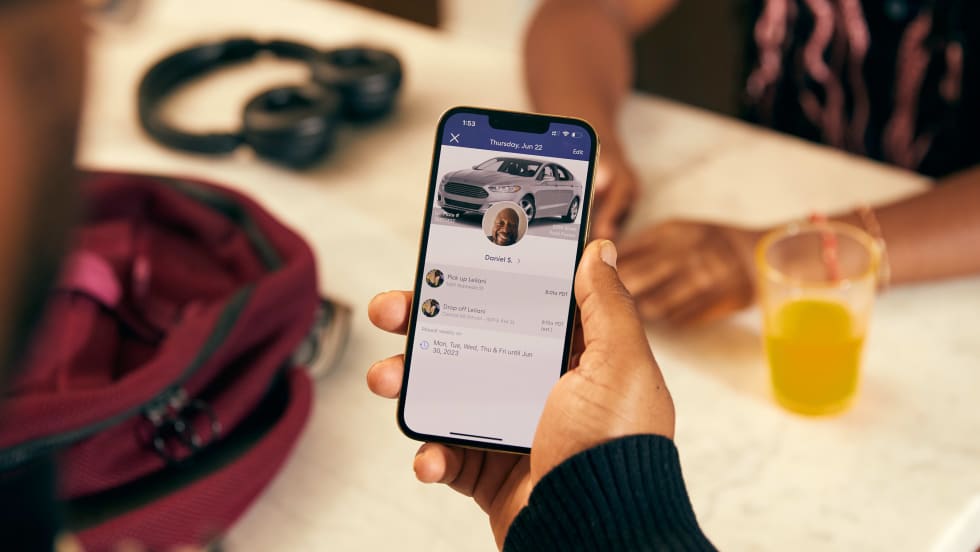
HopSkipDrive Launches New Safety, Driver Consistency Features for 2026-27 School Year
The company’s free ride recording, live ride tracking, and consistent driver assignments aim to improve safety and continuity for diverse student transportation needs.
Read More →
The Most Common Wheelchair Securement Mistakes on School Buses (and How to Fix Them)
Small missteps in wheelchair securement can have serious consequences. Here are 32 tips from experts to reduce risk and increase student safety on the bus.
Read More →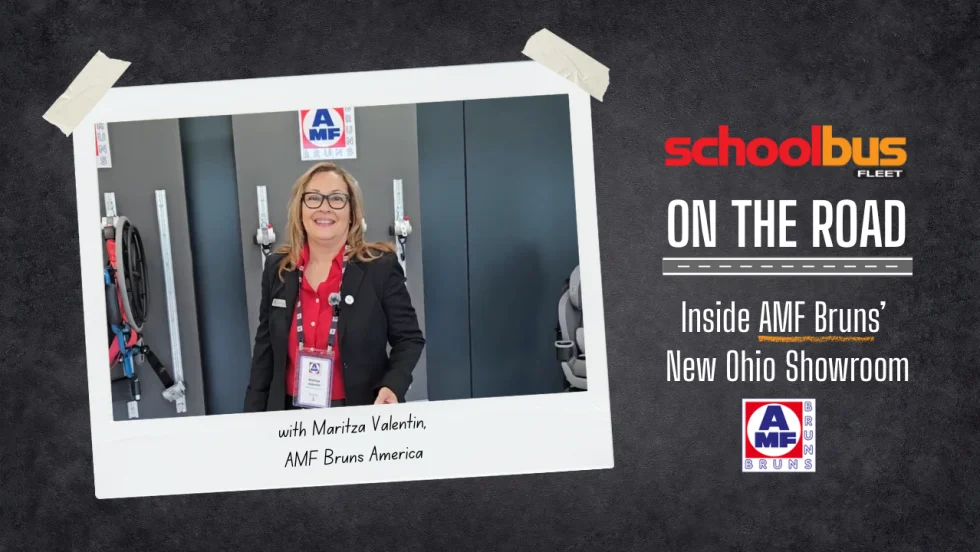
Inside AMF Bruns’ New Showroom: School Bus Securement Solutions Explained
Go inside AMF Bruns America’s new Ohio showroom with Maritza Valentin to see its FutureSafe technology, driver training tools, securement systems, and seating innovations.
Read More →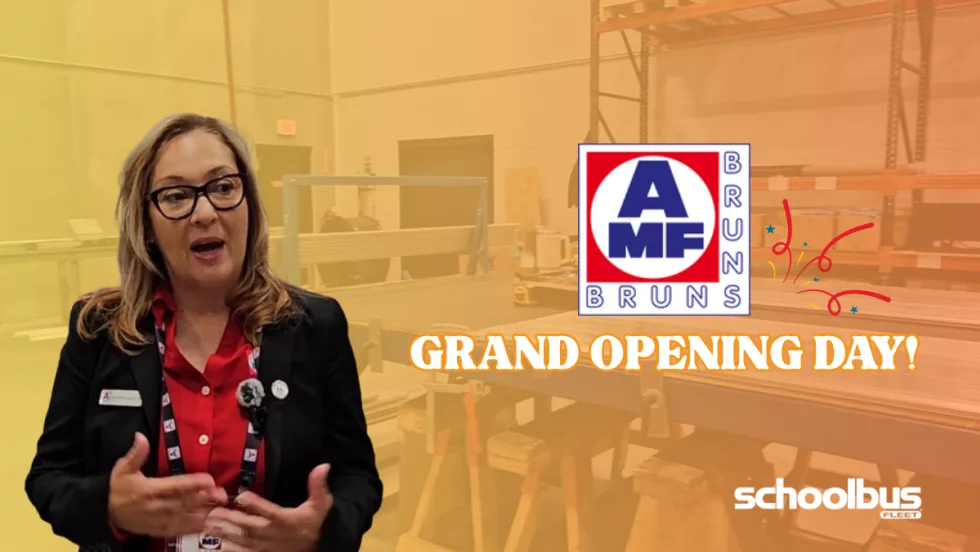
What AMF Bruns’ New Facility Means for Customers [Video]
Inside AMF Bruns’ new Stow, Ohio, operations: See how expanded space and innovation will enhance customer support and operations.
Read More →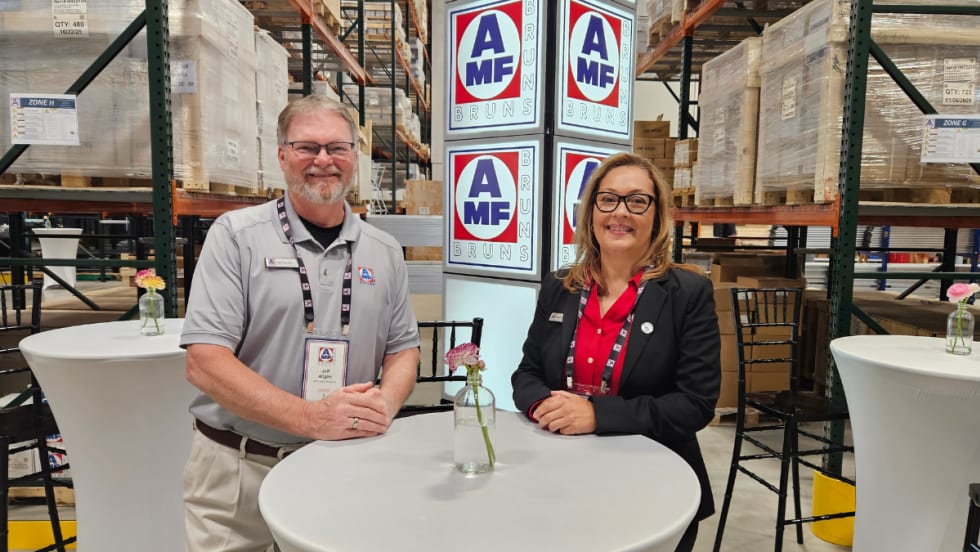
AMF Bruns Expands in Ohio, Investing in Growth and Community
With expanded production space, local investment, and a growing workforce, AMF Bruns is scaling its U.S. presence. Here’s an exclusive first look inside the new Stow, Ohio, HQ.
Read More →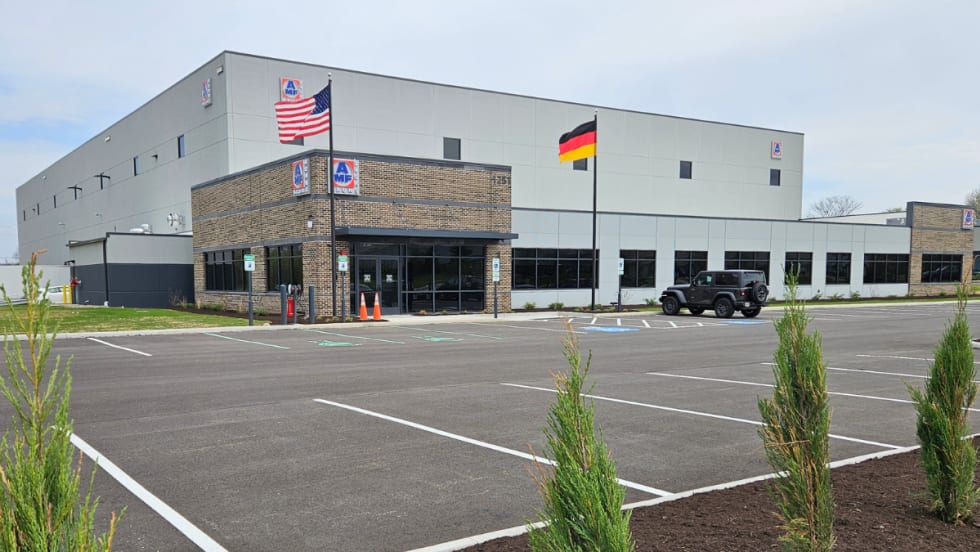
Inside AMF Bruns of America’s New Ohio Manufacturing Facility [Photos]
Take a behind-the-scenes look at AMF Bruns of America’s new 41,000-square-foot Stow, Ohio, headquarters, featuring advanced manufacturing, expanded space, and future-ready mobility solutions.
Read More →
First Student Boosts Student Support in Wichita & Texas
First Student and Wichita Public Schools are using behavioral support strategies to improve student ride experiences, while a separate initiative expands access to after-school programs through a bus donation.
Read More →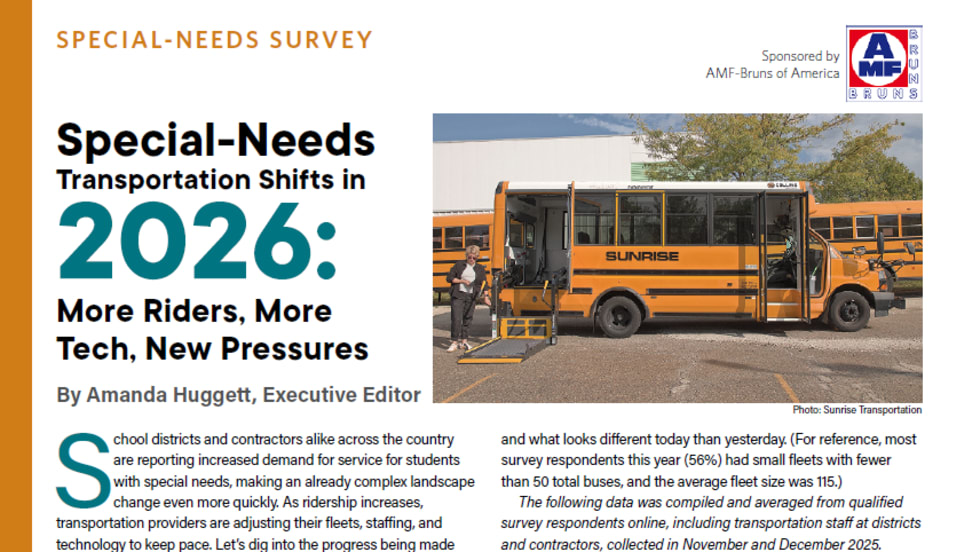
2026 Special-Needs Transportation Survey
What’s changing in special-needs transportation? This year, student transportation operators report a rising need, easing driver shortages, growing tech adoption, and evolving challenges. Sponsored by AMF Bruns of America.
Read More →