




Top 10 Ways to Extend Tire Life
Today’s tires are tough — almost too tough. They can survive through an enormous amount of abuse. But according to experts, neglecting tires can be qu...
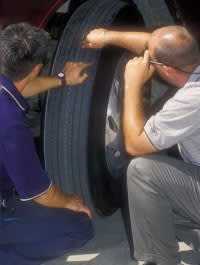
Today’s tires are tough — almost too tough. They can survive through an enormous amount of abuse. But according to experts, neglecting tires can be quite costly.
“Paying attention to tires in 10 key areas can add thousands of dollars annually to a fleet operator’s bottom line,” says Terry Waibel, manager of truck/farm customer engineering for Goodyear’s Commercial Tire division in Akron, Ohio. “This isn’t rocket science. It’s just a set of basic tire maintenance procedures that are easy to follow with organization and discipline.
“Following these procedures will lower your per-mile tire costs through extended tread life, fewer premature removals and better retreadability.”
1. Determine proper inflation levels
The biggest influence on tire life is inflation pressure. At normal speeds, running tires at 20 percent under recommended pressure reduces tire mileage by 16 percent and fuel mileage by 2 percent. Tires are designed to run at specific pressures based on the total load. To determine the correct air pressure for your tires, gather information on your actual axle loads and refer to tire load charts. Standard load charts are available online at most major tire manufacturers’ Websites. If you operate at higher or lower speeds, use the listed formulas to make the adjustments. In general, pressures need to be higher if the vehicle is operated at a higher speed.
2. Establish a good inflation maintenance program
Tire pressure is difficult to maintain because tires naturally lose air. The leakage can occur through valve caps or through small punctures. To stay on top of “normal” leakage and watch for any rapid leaks, tires should ideally be checked once a week by drivers or mechanics. That can be tough if your vehicles aren’t in the shop at least once a week or if your drivers are reluctant to comply. But there are ways to promote frequent checks.
A growing number of fleets are using flow-through valve caps that make it easier to check pressure and add air without removing the valve cap. Other fleets give drivers an incentive to check pressures by conducting random checks on vehicles and rewarding drivers if the pressures are correct. Note that changes in ambient temperature will affect tire pressures. For every 10-degree Fahrenheit decrease in temperature, the pressure will drop 2 psi (pounds per square inch). So, during the colder months of the year, tires will need to be checked and inflated more often.
3. Reduce your top speeds
High speeds generate more heat and accelerate tire wear. Goodyear data shows that increasing highway speeds from 55 mph to 75 mph can reduce total tread mileage by 20 percent or more. So a tire that would have provided 250,000 miles in tread life at 55 mph will only net 200,000 miles per tread at 75 mph. The drop is consistent as speed increases. That 250,000-mile tread drops to 237,500 miles at 60 mph; 225,000 miles at 65 mph; and 212,500 miles at 70 mph. There’s an added bonus for slowing down — fuel economy tests have shown fuel usage increases 0.1 mpg for every mph over 55 mph.
4. Keep vehicles properly aligned
Irregular wear is most commonly caused by poor vehicle alignment. It’s simple physics. If tires are not running straight ahead, accelerated tread wear occurs on parts of the tire. To stay on top of irregular wear, the vehicle should be aligned regularly. Starting a serious alignment program after having none can increase tire mileage by as much as 30 percent.
The Technology and Maintenance Council offers information on effective alignment schedules and the causes of irregular wear in publications available online at www.truckline.com/store.
5. Mount tires correctly
The rounder or more concentric the tire, the better it will wear. To keep tire run out to a minimum, they should always be mounted on the wheel correctly. Ideally, the tires should be match-mounted to the wheel. Wheels are usually marked to show the low spot and tires are marked to show their high spot. How the high spot is marked will vary from one tire to another. Check with tire manufacturers to see how they mark their tires.
“The idea is to take the high spot of the tire and match it to the low spot of the wheel,” says Goodyear’s Waibel. “If you mount properly you don’t really need to balance the tire.”
6. Learn to “read” tires
Drivers typically don’t check tread wear unless they are having ride problems or the vehicle is pulling one way or another. By then, it’s often too late to prevent premature wear. Regular inspections of tires can provide a lot of useful information and catch wear trends before they have done too much damage. Problems can be diagnosed by visual inspection or by running a hand over the tread and feeling for abnormalities. Conditions to check for include distortion in the tread, feathering or cupping. If corrected early enough, bad wear patterns can be countered, and tire life can be extended.
While a person is feeling the tread, the entire tire should also be inspected for safety-related damage such as cuts, cracks, blisters or bulges. If the damage is severe enough, the tire will need to be removed.
7. Rotate tires
Moving tires around takes time and effort. The temptation is to leave them in one position for the life of the tread. But intelligent tire rotation promotes even tread wear and can net a lot of extra miles in tread life. Some fleets will run new steer tires in the drive position and take off 1/32- to 2/32-inch in tread depth to establish a good wear pattern. Drive tires should be rotated between forward and back positions at least once to even out wear. Rear tires of a tandem typically will wear quicker than the forward positions. Some drive tires will also develop heel and toe wear. This can be evened out by reversing their direction.
8. Replace tires with matching ones
For optimum tread wear, tires should be as alike as possible across the same positions. If a tire must be pulled due to irregular wear or a road hazard, it should be replaced with a tire that matches the existing one.
“The more you can do to eliminate variation, the better your tread wear will be,” says Waibel. “On dual assemblies, the outside diameters and tread depths should be as close as possible. A good rule of thumb is no more than 2/32-inch tread depth difference between duals. It’s also wise to have the same tread design on both positions of an axle.”
9. Check and replace worn wheel and suspension components
These can be the hidden enemies of tire life. A wheel bearing that is not properly torqued can cause irregular tire wear. Worn shock absorbers can create depression wear on treads and an early trip to the retreader or scrap pile. Fleets will often wait until suspension components are obviously broken or are leaking before they replace them. By then, the tire damage has already occurred. Replace shock absorbers and other suspension components on a set schedule rather than waiting until they fail.
10. Keep good tire records and use the data wisely
Because every fleet is different, there are no hard and fast formulas for tire management. In fact, copying another fleet’s practices may do more harm than good. To manage most efficiently, regular collection of data on your tires is critical. You should be recording information including tire inflation pressures, wear trends and tire mileage at removal. Using computer software, you can analyze tire performance and make comparisons with different vehicle configurations and tire types. By changing specifications, you may be able to realize significant gains in total tire mileage and other performance goals.
“The more consistent and accurate you are with data gathering, the better the information generated,” Waibel says.
Drew Ryder has more than 20 years of experience in the commercial transportation industry.
More Maintenance
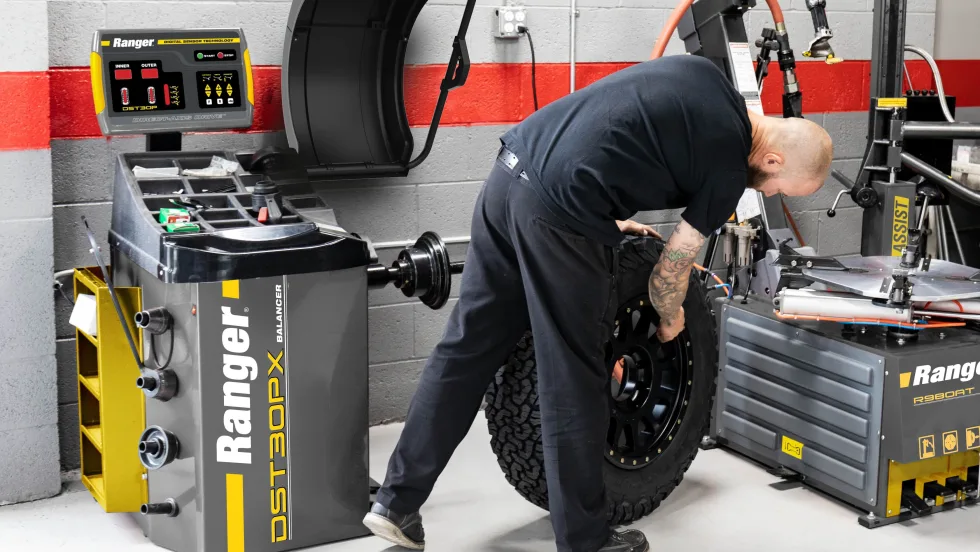
BendPak Launches Ranger DST30PX Wheel Balancer
BendPak's new wheel balancer handles tires up to 43 inches in diameter, with a reinforced design, precise weight placement, and faster service cycles.
Read More →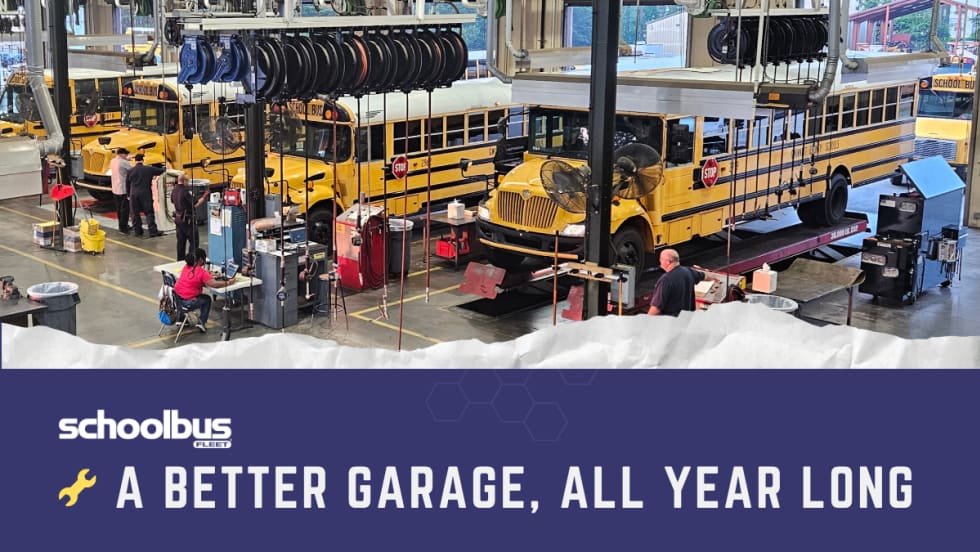
Tips for Ensuring School Bus Garages Are Safe and Warm Year-Round
Cold maintenance bays and rising heating costs? Learn how school bus garages can improve comfort with targeted heating, better airflow, and winter preparation.
Read More →
ASE Highlights School Bus Technician Certification Requirements
ASE is encouraging school bus maintenance professionals to maintain their certifications, highlighting seven specialized tests and five-year renewal requirements.
Read More →
International Adds E-Commerce Capabilities to Fleetrite.com
IC Bus customers can now browse, buy, and track shipments for more than 400,000 aftermarket parts online.
Read More →
The Most Expensive Thing You Do Before Selling a School Bus: Wait
When should you sell an aging school bus? Learn how maintenance, mileage, corrosion, specifications, and timing can affect resale value long before the auction.
Read More →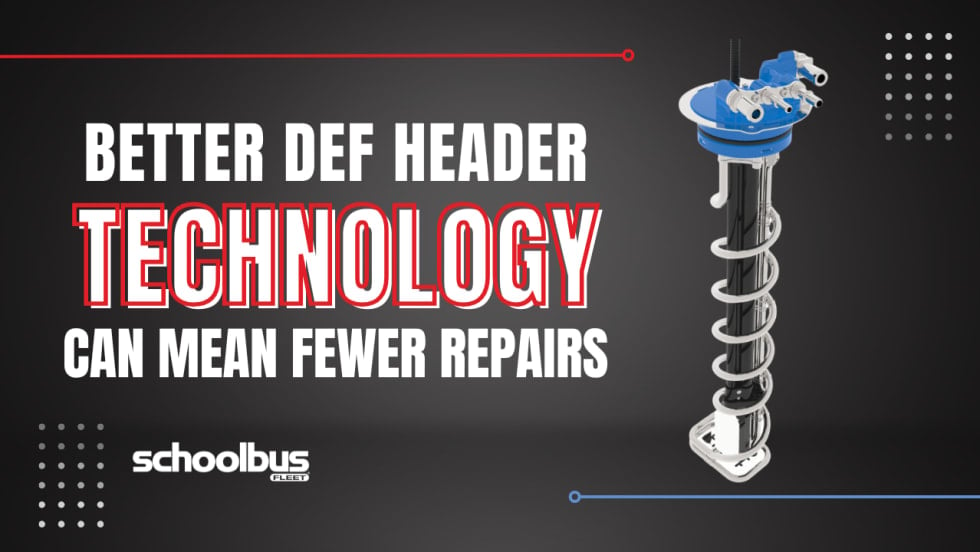
The Evolution of DEF Header Technology: What School Bus Operations Should Know at Replacement Time
See what school bus fleets should consider when replacing DEF headers to improve reliability, reduce repeat repairs, and control maintenance costs.
Read More →
The Essential Guide to School Bus Maintenance and Student Safety
Your district's buses carry students to school every day. This guide shows how predictive maintenance powered by fleet data helps keep buses reliable, drivers accountable and students safer from the first bell to the last stop.
Read More →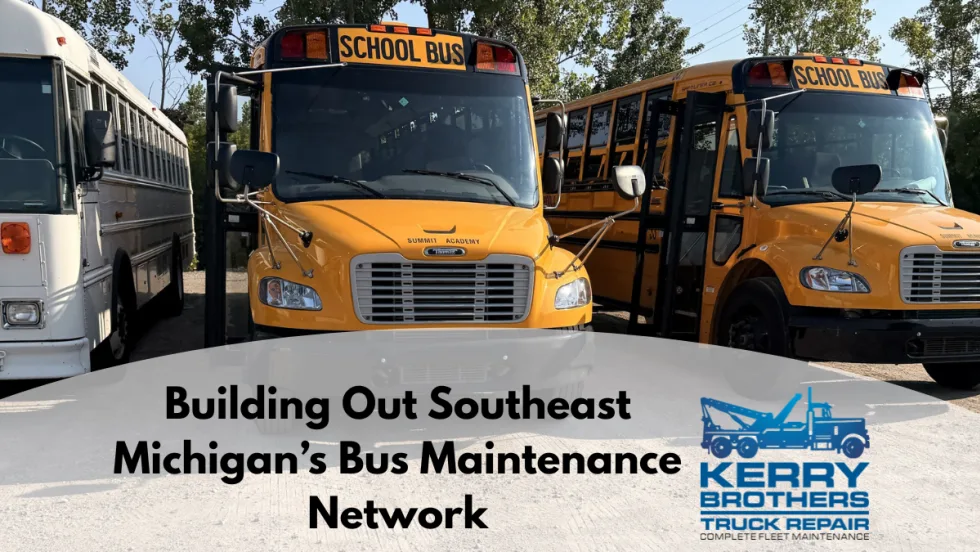
Kerry Brothers Grows Michigan School Bus Repair Network
The acquisition of Downriver Truck and Bus expands Kerry Brothers’ school bus maintenance footprint across southeast Michigan, adding repair capacity, diagnostic resources, and state inspection support.
Read More →
Noregon Introduces CAN Bus Diagnostic Tool, Expands JPRO Features
CAN Mentor and the latest JPRO update aim to simplify vehicle network diagnostics and improve repair efficiency for technicians of all experience levels.
Read More →
Cummins on Smarter, Simpler Engine Innovation
Cummins discusses its first-ever gasoline engine for school buses, EPA 2027, and why bus fleets still want durable, simpler internal combustion options.
Read More →