




The Many Options of Bus Wash Systems
School bus wash options range from easy-to-use manual to fully automatic systems and can save time and costs.
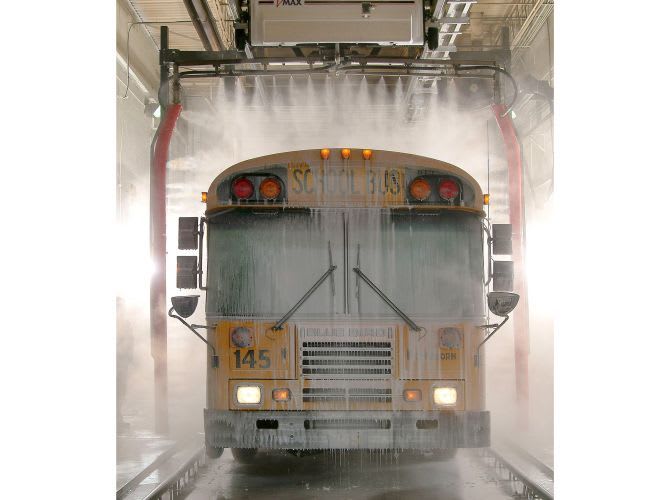
Belanger's V-Max touchless wash system uses high-pressure water rather than brushes to clean vehicles.
From a better public image to better vehicle maintenance, keeping a clean school bus fleet has advantages. Whether an agency’s fleet comprises two vehicles or 200, looking into bus wash system options can help determine whether the time and resource savings they help to generate outweigh the initial cost investment.
Ed Evans, sales manager for Westmatic Corp., says that while many agencies are concerned about the initial investment, operational costs such as chemicals, electricity, water and maintenance should play a larger role in their decision.
Ross & White Co. President Jeff Ross says that some districts that make the investment charge neighboring districts for washes to recover their costs quicker. And Thomas Ennis, CEO and founder of NS Wash Systems, explains that a clean bus can change a driver’s perception of it, leading him or her to take better care of it.
Wash options include a manual single brush system or automatic drive-through and gantry systems. Cleaning options include brush wash, a touchless, high-pressure wash, or a hybrid of the two.
[IMAGE]532[/IMAGE]
A single brush keeps it simple
ACC International Inc., based in Beamsville, Ontario, manufactures the Eco-Power Brush, a spinning, upright brush that an operator walks around the vehicle once to wash and again to rinse. The bus nose needs to be cleaned manually with a separate brush or pressure washer.
According to ACC owner Jack Jackson, washing a school bus only takes five minutes and because only five gallons of water are used per minute, a total bus wash should only use 25 gallons, a much lower water usage rate than automatic systems and hand washing.
“It’ll leave [staff] with more time to clean the inside of the bus and detail it. Or you can just have fewer people doing the work,” Jackson says.
One of the system’s main strengths is its versatility. Installation only requires a 220-volt power source, water supply and an operation surface that can be shared. It takes up little storage room, as all the hoses and cords hang from the ceiling and don’t take up floor space. Even a mechanic’s bay can double as a wash bay at night if it has a drain — tarps and curtains can be installed to protect walls and equipment. Outside installations can be done — especially in warmer climates — by attaching brackets to the building and having a hose that runs outside.
Jackson says clients range from large fleets of hundreds of vehicles that have multiple systems to operations with just one or two vehicles. The complete system is estimated to cost less than $20,000.
[IMAGE]533[/IMAGE]
Drive-through automatic washes
NS Wash Systems in Inglewood, Calif., offers its 3100 drive-through wash system, which Ennis says can be controlled depending on wash needs. The system consists of a scrubber curtain that cleans the hood and top, and two vertical brushes for the sides and back.
Ennis explains that “by being able to adjust the speed of the bus going through, you can adjust it for the quality of cleaning that you need.” For example, a muddy bus can be driven through slowly, whereas a dusty bus can go through faster. He adds that this control allows for savings in utilities, chemicals and power.
Although NS Wash offers regular plastic brushes, the 3100 is available with Lammscloth brushes which, according to the company, are proven to be safer on paint finishes and also polish the bus.
Improvements to the 3100 system include a 50-percent decrease in horsepower, now lowered to a one-horsepower motor to save electricity. The basic system washes any vehicle up to 12 feet high and washes a bus every three minutes or faster. The system costs about $70,000.
Other options from NS Wash include a high-pressure blast-off system, which uses reclaimed water and a 20 horsepower motor pump to take off almost 90 percent of dirt and mud before the wash. It is recommended for areas with a lot of mud or bad weather. An end-step option is the reverse osmosis final rinse, where clean city water is purified so that the vehicle dries spot-free — this is recommended for districts with hard water.
[IMAGE]534[/IMAGE]
Another drive-through wash system available for school buses is the Hybrid System from Cary, Ill.-based Ross & White. The Hybrid System consists of two vertical brushes that clean the sides and rear of the vehicle. Touchless water pressure cleans the more fragile hood and mirror areas.
“We’re seeing that [the Hybrid System] is really where they want to go, and that’s generally the system we’re going to recommend,” Ross says. He adds that the benefits of a drive-through system are that it is faster and, because the equipment is stationary, there’s less maintenance that needs to be done.
Ross says drive-through systems can wash buses as fast as they can be scheduled through — at one foot per second, approximately 160 60-foot buses could get cleaned in an eight-hour period, even allowing for headway. The Hybrid System from Ross & White starts at approximately $150,000.
[PAGEBREAK]
[IMAGE]535[/IMAGE]
Gantry systems eliminate driver judgment
According to Evans of Buffalo, N.Y.-based Westmatic, gantry-style wash units, where the vehicle remains stationary and the brushes move around the vehicle, are a good option for school bus fleets. “With the mirror configuration on buses, you have a more reliable and consistent wash result with a gantry style system,” Evans says. “No judgment is left up to the driver.”
Westmatic’s Multiwash system has two vertical brushes and one horizontal brush for cleaning all bus sections. Programmable logic controller technology constantly monitors and adjusts brush pressures to provide a consistent wash, and a Westmatic-standard Mirror Protection Program washes around mirrors to prevent damage.
What makes Westmatic’s gantry system different is its low maintenance factor despite the wet environment, Evans says. “We use belts instead of chains and wagons instead of air cylinders, which greatly reduces the maintenance on the system.”
Each wash with the system takes about five minutes. Its cost is approximately $100,000.
Touchless, brushless systems
Northville, Mich.-based Belanger Inc. offers its V-Max touchless wash system, which “gives operators the ability to safely and effectively wash a variety of vehicle shapes and sizes while easily accommodating vehicle attachments,” says Marcus McLaughlin of the company’s marketing team.
The V-Max (also available in a drive-through option) is built on an overhead gantry platform that keeps wash gear off the floor, leading to greater system reliability, lower maintenance costs and longer working life than floor-mounted rollover washes, McLaughlin says.
Touchless wash systems are available in drive-through styles for agencies with limited wash bay space. Belanger also manufactures friction washes with retractable side brushes to protect mirrors and hybrid systems.
Basic systems start at $60,000, and Belanger works with each fleet to design the wash system that meets the agency’s needs.
[IMAGE]536[/IMAGE]
All that water
What happens to the dirty water that accumulates from washing so many buses? Many companies offer water recycling systems, and water can be purified before it drains to sewers.
OilTrap Environmental Products' Water Treatment System recycles water for reuse by diverting drain water from the wash cycle and electrifying it, which separates water from contaminants and makes contaminants non-hazardous. Clean water is recycled to the holding tank for use in both wash and rinse cycles. This treatment system recycles 95 percent of water, and a 24/7 monitoring system allows the manufacturer’s technicians to dial into the treatment system to handle issues for no extra charge.
Westmatic offers the Renaren water purification system. Europe’s strict environmental regulations mandate purification, and although American laws don’t, “It’s just the environmentally right thing to do,” Evans says. The system removes all the heavy metals, oils, carbons and harmful contaminants from water so that it goes to the sewer uncontaminated. Although many agencies recycle water for the wash process, Evans estimates that 20 percent of water eventually heads to the sewer.
NS Wash also offers an above-ground water clarifier that separates water from contaminants before it goes to the sewer. An above-ground system eliminates the need to install a more labor-intensive and expensive underground system for new facilities.
More Maintenance
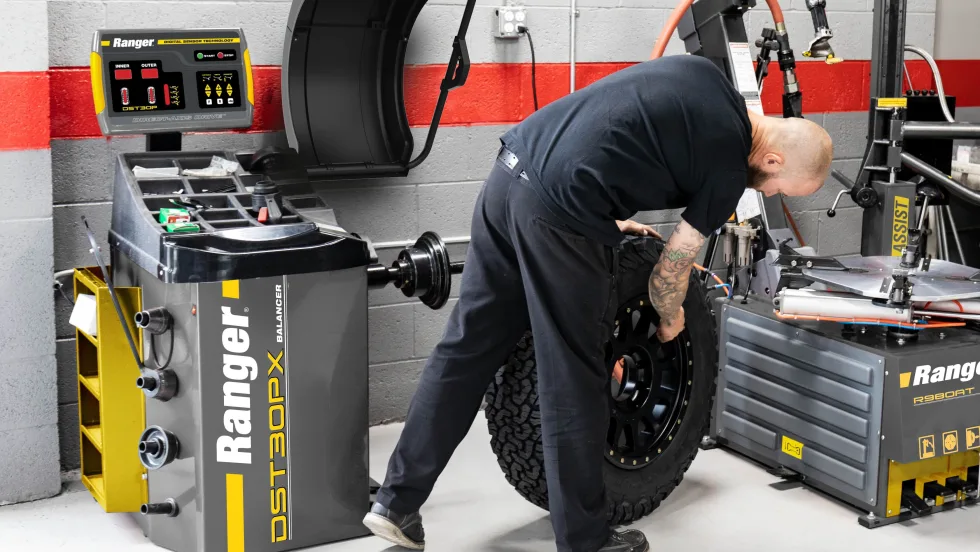
BendPak Launches Ranger DST30PX Wheel Balancer
BendPak's new wheel balancer handles tires up to 43 inches in diameter, with a reinforced design, precise weight placement, and faster service cycles.
Read More →
Tips for Ensuring School Bus Garages Are Safe and Warm Year-Round
Cold maintenance bays and rising heating costs? Learn how school bus garages can improve comfort with targeted heating, better airflow, and winter preparation.
Read More →
ASE Highlights School Bus Technician Certification Requirements
ASE is encouraging school bus maintenance professionals to maintain their certifications, highlighting seven specialized tests and five-year renewal requirements.
Read More →
International Adds E-Commerce Capabilities to Fleetrite.com
IC Bus customers can now browse, buy, and track shipments for more than 400,000 aftermarket parts online.
Read More →
The Most Expensive Thing You Do Before Selling a School Bus: Wait
When should you sell an aging school bus? Learn how maintenance, mileage, corrosion, specifications, and timing can affect resale value long before the auction.
Read More →
The Evolution of DEF Header Technology: What School Bus Operations Should Know at Replacement Time
See what school bus fleets should consider when replacing DEF headers to improve reliability, reduce repeat repairs, and control maintenance costs.
Read More →
The Essential Guide to School Bus Maintenance and Student Safety
Your district's buses carry students to school every day. This guide shows how predictive maintenance powered by fleet data helps keep buses reliable, drivers accountable and students safer from the first bell to the last stop.
Read More →
Kerry Brothers Grows Michigan School Bus Repair Network
The acquisition of Downriver Truck and Bus expands Kerry Brothers’ school bus maintenance footprint across southeast Michigan, adding repair capacity, diagnostic resources, and state inspection support.
Read More →
Noregon Introduces CAN Bus Diagnostic Tool, Expands JPRO Features
CAN Mentor and the latest JPRO update aim to simplify vehicle network diagnostics and improve repair efficiency for technicians of all experience levels.
Read More →
Cummins on Smarter, Simpler Engine Innovation
Cummins discusses its first-ever gasoline engine for school buses, EPA 2027, and why bus fleets still want durable, simpler internal combustion options.
Read More →