




The Future of School Bus Lighting Systems
A few years ago, brave (or well-funded) school bus operators began transitioning from incandescent lighting systems to LEDs (light-emitting diodes). N...
A few years ago, brave (or well-funded) school bus operators began transitioning from incandescent lighting systems to LEDs (light-emitting diodes). Noting their greater longevity, efficiency and safety features, those operators said that the LEDs’ higher initial expense would be more than recouped in the long run through improved performance and reduced maintenance costs. Today, those groundbreakers have ample company. “LEDs are definitely starting to take off,” says Sherry White, marketing communications and services manager at Truck-Lite in Falconer, N.Y. Though there are people still ordering bulb-replaceable lights, she says that LEDs are where the company is focusing much of its technology efforts, due to increased demand. Her sentiments are echoed industry-wide by fellow lighting manufacturers. “Over the past 24 months, our LED sales have upped 215 percent,” says Tricia Epstein, marketing coordinator for Weldon Technologies in Columbus, Ohio. “Right now, we’ve released seven LED products, with more to follow.” Faster, brighter lights
Paul Cochran, fleet supervisor at Kyrene School District in Tempe, Ariz., got in on LEDs rather early in the game. “Three years ago, we piloted an LED program on our buses with the cooperation of the Arizona Department of Public Safety,” he says. The program included a total LED lighting package — all clearance and marker lights, all 7-inch amber turn signals, all brake and tail lights, all flashing 7-inch red school lights and LED lettered stop signs. “We found that this package was not available through the manufacturers as of yet, so we had to retrofit the buses here,” he says. But times have changed, and an increasing number of bus manufacturers are starting to offer LED packages as an option. “We now order all new purchases with available LED lighting,” says Cochran. LEDs boast several notable benefits over incandescent lights, not the least of which is enhanced safety through quicker illumination. LEDs illuminate 200 milliseconds faster than incandescent bulbs, which is key in brake light applications. This equates to a reduction in braking distance response time by approximately one full car length at 65 miles per hour. Combining quicker illumination with increased brightness, LED technology produces an eye-catching effect that operators find particularly useful in brake lights and overhead warning lights. Incandescent warning lights remained virtually unchanged over the past 40 years, says Scott Reisebosch, president of CRS Electronics in Welland, Ontario. “They didn’t take into account back then that people would have cell phones, pagers, in-car CD players and tons of other distractions,” he says. Quicker and brighter, LEDs keep pace with a faster world. Durable, long-lasting
Despite what many consider to be superior performance, LEDs consume only one-tenth of the power of incandescent bulbs, reducing electrical power consumption and wear on the battery and alternator. This, says Cochran, was the main reason he started researching LEDs. In the past 10 years, says Cochran, we’ve taxed our buses’ electrical systems with electronic equipment such as stereos, PA systems, two-way radios, video surveillance cameras, heaters, crossing gates and stop arms, heated mirrors, lighted wheelchair lifts and more. An incandescent lighting system is just one more draw on the already strained power supply. LEDs also last longer than incandescent bulbs. LEDs are rated to last 100,000 operating hours, which should equal the life of most buses. For this reason, most manufacturers offer LED warranties ranging from five to 10 years. Incandescent lights are generally warrantied for two to three years and require replacement during a vehicle’s lifetime. “With the extended life of LEDs, I don’t have mechanics on ladders every day replacing bulbs. This reduces the number of shop injuries from slipping off ladder steps,” notes Cochran. LEDs are not just more technologically advanced, they are also generally more physically durable. “LED lamps are completely sealed units. Unless one is damaged, causing a lens to crack, no water or dirt will ever enter inside,” says Brad Barker, shop foreman at Park City (Utah) School District. Incandescents, on the other hand, corrode over time as diesel soot and other grime accumulates in the lamp assembly. This dirties the lenses and diminishes the brightness of the light. At the School District of Palm Beach County in West Palm Beach, Fla., Joe Reed, assistant director of transportation and maintenance, says that the reliability of LEDs is head and shoulders above that of its incandescent counterparts. “In the old days of incandescent bulbs, we would have to replace some bulbs prior to putting new buses in service. Nowadays, it’s really rare to find a light out,” he says. In Florida, LEDs are standard for rear stop/tail lights, amber rear turn signals and four-way hazard lights. “Obviously, LEDs are significantly more reliable, or we would not have been able to justify the extra cost,” says Charlie Hood, state director of pupil transportation. Pricing, of course, is a downside. The price of LEDs has come down over the years, but they still cost significantly more than incandescent lights. That’s why it’s especially important to weigh the costs and benefits of the two lighting systems, taking into consideration maintenance expenses over the life of the vehicle. Barker determined that his district’s LEDs pay for themselves in five years. Advanced LED systems
As the industry has been opening its arms to the LED market, LED technology has been advancing quickly. “LEDs are getting so much more intense. The brightness levels are just skyrocketing,” says Reisebosch. CRS has developed a strobing LED that produces a rapid-flash pattern without burdensome add-on strobe tubes. “It combines the attention-grabbing benefits of strobe lights with the long-life expectancy of LEDs,” he says. It also eliminates the maintenance concerns attached to xenon strobe tubes, such as the need to replace tubes and power packs and work with high-voltage equipment. The strobing LED lights are simple to install, come with a seven-year warranty and cost less than the standard incandescent-strobe light package many operators use, says Reisebosch. In a pilot test at Spring Branch (Texas) Independent School District, stop-arm violations were reduced by 75 percent using the strobing LED warning lights versus a standard incandescent lighting system. Though CRS is the only company currently manufacturing a strobing LED system, White says that Truck Lite will be coming out with its own version soon. As light technology advances, so too do light monitoring systems. Many operators outfit their buses with exterior light monitoring systems that notify the driver of any malfunctioning lights, poor wiring connections or bad fuses. About a dozen states mandate the use of light monitoring systems in school buses, while most others include monitoring systems as an option. Scott Comisar, senior sales engineer for Cincinnati-based Doran Mfg., which manufactures 80 percent of the industry’s light monitoring systems, says that the trend toward LEDs has had a ripple effect on his company’s monitors. “The monitors that we sold for years will not work with LEDs because you need a more sophisticated circuit,” Comisar says. Many operators upgrading to LEDs don’t realize that their exterior light monitors will not function properly. To address the needs of the LED market, Doran has released its first-generation LED monitor, with the second generation slated for release in the fall. Upgrading from an incandescent monitoring system to an LED monitoring system is usually a very simple switch, says Comisar. A different type of light monitoring is taking place at Weldon, where a multiplex wiring system provides greater control over the entire range of bus systems — engine, lights and more. Through V-MUX multiplexing, operators can pinpoint the location of electronic problems throughout the bus by plugging in and running diagnostics on the entire vehicle. Out with the old?
Though the LED market is booming, not everyone is fleeing from the tried-and-true incandescent. And some operators are looking to new uses for familiar systems, such as roof-mounted strobe lights. “Originally intended to be used as warning signals for use during inclement weather, they also proved to be effective in reducing drive-bys,” says Cari Murray, president of Chicago-based lighting manufacturer Aeroflash Signal. “Now you’re seeing roof-mounted strobes installed for use in the loading/unloading zone.” One thing is sure, the price of lighting systems will drop as interest grows. You will get better systems for less money. “As the cost of LEDs is coming down, the light output of individual LEDs is going up,” says CRS Electronics’ Reisebosch. “And in a fast-paced world, you need fast-paced lighting to attract attention.”
More Safety
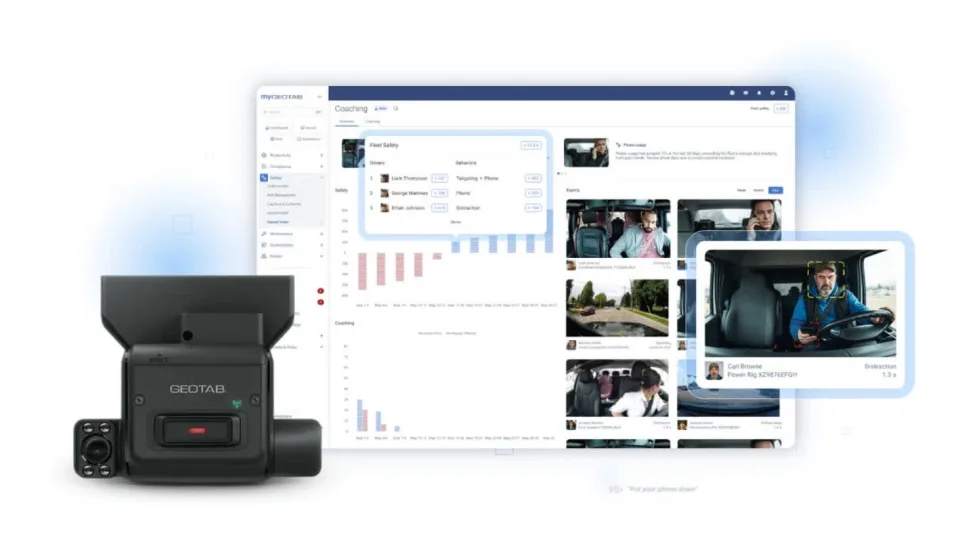
Geotab Expands Fleet Safety Tools With Video Coaching, Risk Insights
New safety and video capabilities aim to help fleet managers assess risk, support drivers, and take targeted action through video coaching, red-light violation detection, and more.
Read More →
How to Build a Better School Bus Driver Training Program
Is it time to strengthen your driver training? Here’s how to pick the right talent and improve recruitment, retention, and safety. This video is brought to you by IC Bus.
Read More →
Recent School Bus Accidents Leave 2 Dead, 2 Injured
Four school bus crashes in Florida, Illinois, and Georgia highlight risks in transportation lots, at bus stops, and during student loading and unloading.
Read More →

When Every Second Matters, Clarity Keeps Routes Moving
From routine delays to urgent incidents, strong communication practices help drivers, dispatchers, schools, and families respond with confidence.
Read More →
What Happens When a School Bus Catches Fire — and What Can Help
School bus fires are rare but can be devastating. Learn how advances in fire suppression and asset protection help fleets detect fires earlier, reduce damage, and improve safety.
Read More →
Geotab Launches Tool to Help Fleets Investigate Road Incidents
Geotab Investigations combines telematics data, video, documents, and other evidence to help fleets reconstruct incidents, resolve claims, and determine what happened.
Read More →
Texas Sixth Grader Wins 2026 National School Bus Safety Poster Contest
Sai Darshana Yekolu of Moseley Middle School in Prosper, Texas, was named the newest winner for her artwork, bringing the theme of “Safe Rides, Everyday Heroes” to life.
Read More →
Doing More With Less: How Transportation Directors Can Prioritize Safety Amid Budget Uncertainty
With diesel prices soaring and nearly one-third of transportation directors expecting budget cuts, maintaining student safety has never been more challenging. Download this guide to learn how leading districts are prioritizing risk, funding critical safety technology, and building stronger budget cases with data.
Read More →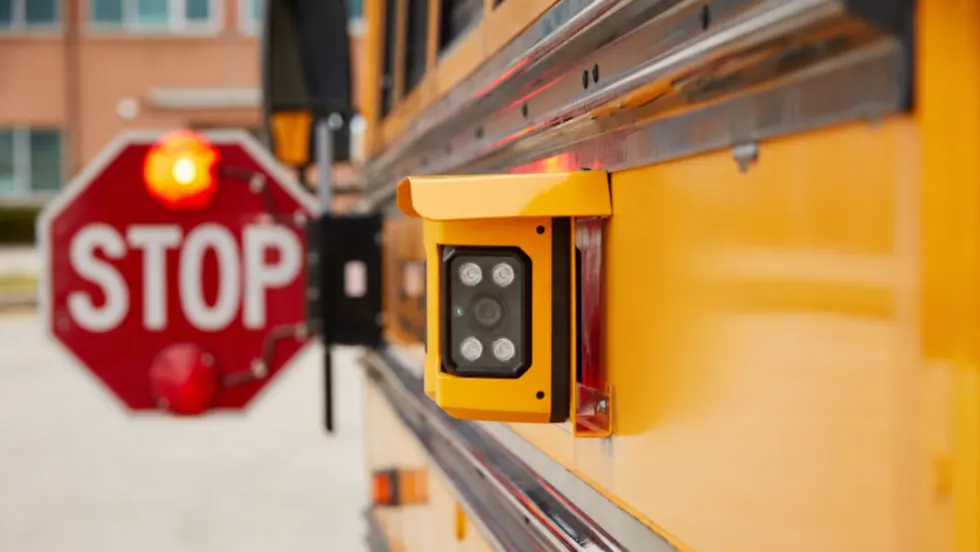
Walton County Schools Adds Gatekeeper Stop-Arm Enforcement System
The Florida district will deploy Gatekeeper’s updated Student Protector technology, which now incorporates AI to improve video evidence.
Read More →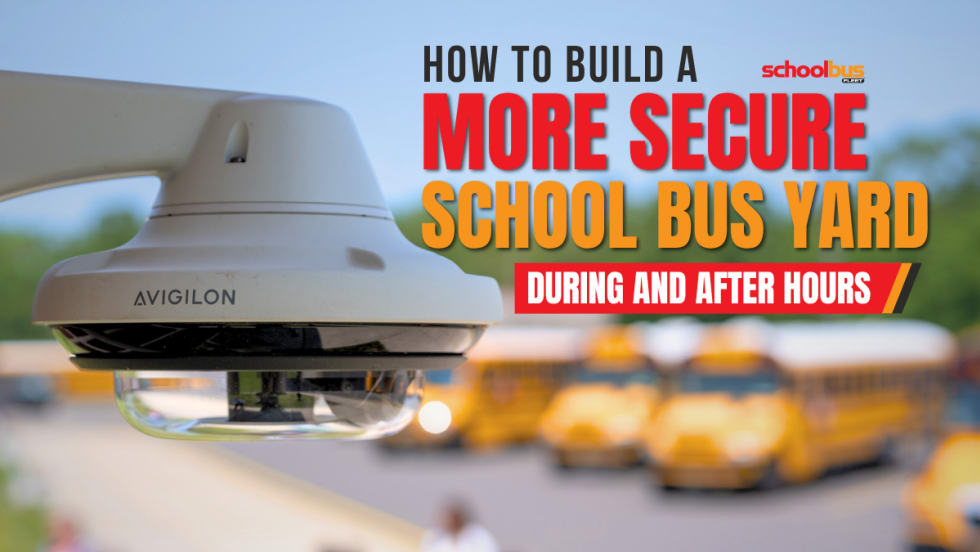
How To Build a More Secure School Bus Yard During and After Hours
As thefts and overnight security threats continue, school transportation leaders are combining stronger operational practices with AI-enabled surveillance to better protect buses, facilities, and staff.
Read More →