




Teaching Bus Safety With Grade-Specific Programs
Every year, school districts and bus contractors try to generate new ideas to promote and teach school bus safety to riders. It’s harder than it sound...
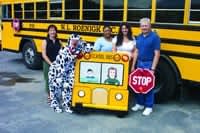
Every year, school districts and bus contractors try to generate new ideas to promote and teach school bus safety to riders. It’s harder than it sounds, especially with children in a range of grade levels.
But W.L. Roenigk Inc., a school bus contractor in Sarver, Pa., has concocted a formula for success: different programs for different grade levels that combine instruction, participation and fun.
The programs are the product of years of work. Valerie Baker, safety manager at Roenigk's Melwood facility in Allegheny County, helped to get the ball rolling. "When I first started at Roenigk in 1995, they didn't have any safety programs," says Baker. "Later, we developed a contract with the Burrell School District, and that's when we started the safety programs."
Buster the Dog?
For kindergartners, Roenigk has developed a program that starts in late August, as parents and students attend an orientation session. After the children meet their teachers, Melwood's safety team presents "Safety Street," a mocked-up neighborhood complete with homes, bus stops, a wooden school bus with functional light systems and a town troublemaker named Buster the Dog (a Roenigk driver dressed in a Dalmatian costume).
First, the children are given a run-through of the different bus lights and what the colors mean. Then kindergarten volunteers from the audience are brought onto the stage and pretend to wait for the bus. Eventually, Buster (a name conceived by the staff without knowledge of the existence of Robotronics' Buster the Bus) comes around the corner and creates havoc. One dangerous behavior that is emphasized is when Buster reaches under the front of the bus to retrieve an object he dropped.
"Buster will do all the things the students shouldn't do," says Baker. "He'll start shoving the kids and playing around when he really should be paying attention to the bus. We are constantly scolding him and telling him that what he’s doing is unsafe."
October means safety
While August may be busy in terms of preparing soon-to-be kindergartners, October seems to be even busier. It’s the month when the nation celebrates School Bus Safety Week, but one week is not enough time, according to Baker. "For us, especially when dealing with the different grades, it takes an entire month to visit all the schools, not one week," Baker explains, adding that the safety team at Roengik's Melwood facility provides child safety training for the entire company, which contracts with 18 school districts and operates more than 500 buses.
In October, the kindergartners are visited again, but this time by Happy, a radio-controlled school bus. After a Winnie the Pooh safety video is shown, Happy helps the safety instructor conduct a Q&A session. When a child answers a question correctly, Happy drives around in circles, singing and playing music, much to the delight of the youngsters. After the classroom presentation, parting gifts, including handouts, coloring pages and candy, are passed out.
With first graders, Buster also makes an appearance. Safety Street is revisited, but this time without the neighborhood scenery. The same school bus model, equipped with lights and a crossing gate, joins Buster, but this time the children have more involvement with Buster. They are the ones instructing him about the rules and proper behavior. The slightly modified Safety Street also has the instructor discussing referral slips and the onboard video camera.
Cooperation emphasized
Every program conducted by Roenigk's safety team involves audience participation. For the fourth-grade program, the entire audience participates in the presentation. The children partake in a bus-stop game in which the goal is to pick up students in a safe yet expedient manner.
To start, the class is split into two groups. Then two students from each group are assigned the job of a bus driver or a judge. Many children eagerly raise their hands wanting to play the bus driver. The safety team, however, is quick to point out what that job requires.
"We tell the kids the qualifications of the job just to make them see the importance of what our drivers do," says Baker. "They learn that it's real hard and involves a lot of responsibility."
The remaining students are assigned designated bus stops that are marked on the ground. Before the student drivers are allowed to pick up their classmates, they must first answer a safety question. Twenty questions are asked in this manner, and as more students board the human bus (the children hold on to each other’s waist), the bus groups begin to work together in answering the questions to keep the bus moving.
All the while, the student judges are watching for infractions by the opposing team. If a classmate is not holding on properly or if someone is not paying attention, that team loses a turn. The process not only keeps the children alert and involved, but teaches them that bus safety is a cooperative effort.
Don’t bore them
Keeping things fresh and interesting for elementary school children is not easy. When coming up with new ideas, safety team members like to make sure the programs keep the children’s attention as well as their own.
Other ideas are already being developed. One involves the ever-present Buster in "Buster's Clues," a spin-off of the "Blue's Clues" TV program. Buster will leave clues, which the first graders will use to figure out what safety rule Buster is talking about.
Using different safety programs for each grade level means the lessons stick with the children better. Doing the same thing every year, particularly if all age groups are seeing the same program, will eventually get boring.
More Safety
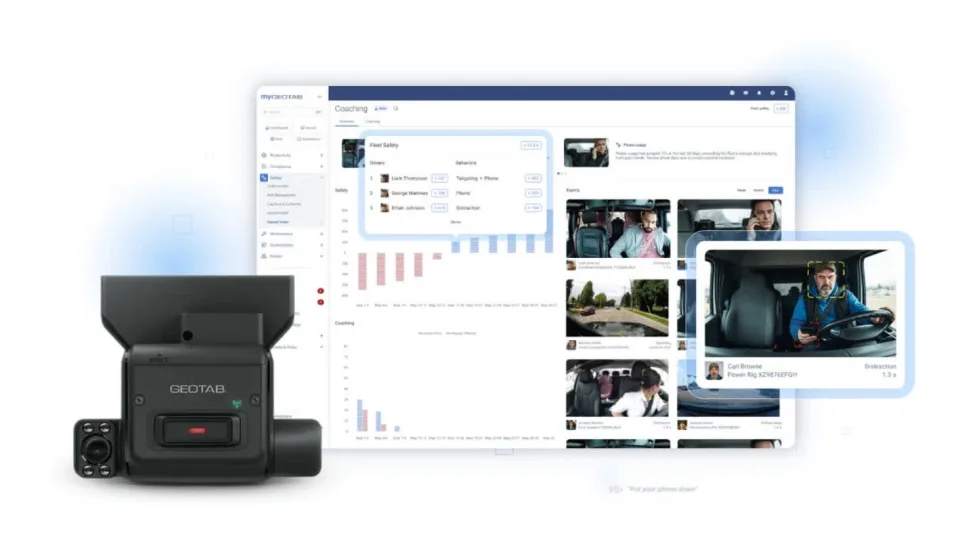
Geotab Expands Fleet Safety Tools With Video Coaching, Risk Insights
New safety and video capabilities aim to help fleet managers assess risk, support drivers, and take targeted action through video coaching, red-light violation detection, and more.
Read More →
How to Build a Better School Bus Driver Training Program
Is it time to strengthen your driver training? Here’s how to pick the right talent and improve recruitment, retention, and safety. This video is brought to you by IC Bus.
Read More →
Recent School Bus Accidents Leave 2 Dead, 2 Injured
Four school bus crashes in Florida, Illinois, and Georgia highlight risks in transportation lots, at bus stops, and during student loading and unloading.
Read More →

When Every Second Matters, Clarity Keeps Routes Moving
From routine delays to urgent incidents, strong communication practices help drivers, dispatchers, schools, and families respond with confidence.
Read More →
What Happens When a School Bus Catches Fire — and What Can Help
School bus fires are rare but can be devastating. Learn how advances in fire suppression and asset protection help fleets detect fires earlier, reduce damage, and improve safety.
Read More →
Geotab Launches Tool to Help Fleets Investigate Road Incidents
Geotab Investigations combines telematics data, video, documents, and other evidence to help fleets reconstruct incidents, resolve claims, and determine what happened.
Read More →
Texas Sixth Grader Wins 2026 National School Bus Safety Poster Contest
Sai Darshana Yekolu of Moseley Middle School in Prosper, Texas, was named the newest winner for her artwork, bringing the theme of “Safe Rides, Everyday Heroes” to life.
Read More →
Doing More With Less: How Transportation Directors Can Prioritize Safety Amid Budget Uncertainty
With diesel prices soaring and nearly one-third of transportation directors expecting budget cuts, maintaining student safety has never been more challenging. Download this guide to learn how leading districts are prioritizing risk, funding critical safety technology, and building stronger budget cases with data.
Read More →
Walton County Schools Adds Gatekeeper Stop-Arm Enforcement System
The Florida district will deploy Gatekeeper’s updated Student Protector technology, which now incorporates AI to improve video evidence.
Read More →
How To Build a More Secure School Bus Yard During and After Hours
As thefts and overnight security threats continue, school transportation leaders are combining stronger operational practices with AI-enabled surveillance to better protect buses, facilities, and staff.
Read More →