




Staying afloat when the ship seems to be sinking
Like you, I read trade publications to stay informed. They help keep me aware of trends across the nation. Also, like many of you, I like to attend...
Like you, I read trade publications to stay informed. They help keep me aware of trends across the nation. Also, like many of you, I like to attend trade conferences — as many as a thin budget can afford.
These activities are greatly beneficial to our school transportation agencies and businesses. Through the process of reading, listening and participating during these informational time periods, I always come away with a new sense of direction, which helps me plan ahead and improve what I do.
During the most recent National Association for Pupil Transportation (NAPT) conference, I heard more than once about the need for us to better serve our customers. I also realized what the term “our customers” really means.
Trade tips
In addition to SCHOOL BUS FLEET, one of the trade publications I read is a wonderfully informative magazine called MOTOR. Although it deals strictly with the automotive market, I always seem to be able to apply some of it to the school transportation operation I work for.
The magazine has a column written by Bob O’Connor called “Business Sense.” In the November 2008 edition, there was more discussion of customer service. O’Connor wrote the article for independent automotive repair shop owners, but it is not difficult to convert some of his inspired thoughts to school transportation agencies, both public and private.
In the school transportation operation, who are our customers? That may depend on your exact position within your agency, but the list can be summed up as: 1) the students we transport, 2) the parents of the students we transport or the general public around us, and 3) the people who drive our buses.
From the technical side of the operation, the customer I am most concerned about is the driver that is behind the wheel of any bus in my district’s fleet. My goal should be to do what it takes, within reason, to make him or her happy.
Now, this statement may put a burr in your craw, but a happy driver is worth his or her weight in gold, and the benefits your agency will reap will be worth the effort.
Denny Coughlin of Minneapolis Public Schools stated at NAPT that our customer is the driver. He said that all communication between drivers and technicians must be kept respectful in both directions. That is probably the best start of a good customer relationship, but it doesn’t end there. Respect, honesty and common courtesy are natural “pay it forward” actions that trickle through the entire operation.
Tough times
Presently, we are all experiencing lean times. Jobs are being lost, budgets are being reduced and costs of goods are going through the roof. If we maintain mutual respect with our customers, speak and act honestly, and show courtesy, we are more apt to obtain a greater understanding from them when administrators want us to cut our operational costs.
We will be more likely to gain voluntary assistance from our customers in reducing operating costs when they understand that it will benefit them as well. This may be as simple as turning lights off in an area of the building when no one is there, or asking drivers to follow more fuel-conserving driving methods like zero idling or the “reduce by five” action suggested in some states.
O’Conner, in the November article, cites improved customer satisfaction as one method for staying in business in lean times. Isn’t a part of customer satisfaction in our business showing that we can operate in an affordable fashion? Doesn’t this make the public less reluctant to pay education taxes if they feel they are receiving a valuable service? If they see well-maintained buses that are driven efficiently and safely, won’t they think better of us?
Rather than a transportation system service declining, demand for service should be increasing — especially in lean times — if the system is operated properly. Building and maintaining good relationships with all our customers is necessary to increase customer satisfaction. It has been said that a bus takes 20 (some say more) cars off the road. If I have a good relationship with my public customers, wouldn’t they be more willing to place their child on a bus rather than drive them to school in the family car?
This relationship includes keeping buses in good mechanical condition, keeping them clean, being courteous to other drivers, driving safely and being on time at bus stops. Another part is exemplifying respectful, honest and courteous communication between drivers and students, drivers and parents, drivers and school officials and teachers, etc.
O’Connor says that increasing and improving marketing efforts will help your business. Shouldn’t our marketing efforts include the previously mentioned items? Economic downturns, O’Connor says, are excellent times to create additional demand for your services.
Improve while reducing
It is indeed important to make our customers happy. This can be accomplished through courteous, respectful and honest communication. Also, let drivers know when they are doing a good job. A “thank you” once in a while goes a very long way.
Improving an operation in lean times starts with the question “Where can operational costs be cut without sacrificing jobs?” Look closely at your operation and develop a list of items, in steps, that can be trimmed if needed. This will be your plan when administration informs you that budgets need to be cut by 5, 7, 10 or more percent.
Closely scrutinizing budgets is critical to accomplishing this. You may find that by simply incorporating more efficient operating techniques into your operation, a budget reduction can take place automatically. Ask yourself what you can do to reduce fuel costs, tire costs, maintenance costs, utility costs and overtime.
If drivers know that reducing costs may allow them to stay employed, I’ll wager that they will volunteer to help. Your operation will continue to function and become more efficient in the process.
Brad Barker is shop manager at Park City (Utah) School District and a member of SBF's editorial advisory board.
More Maintenance
The essential guide to school bus maintenance and student safety
Reactive maintenance puts students at risk of breakdowns, delays and roadside emergencies. This guide gives transportation directors a data-driven framework to predict failures, extend bus lifespans and improve fleet reliability across every route.
Read More →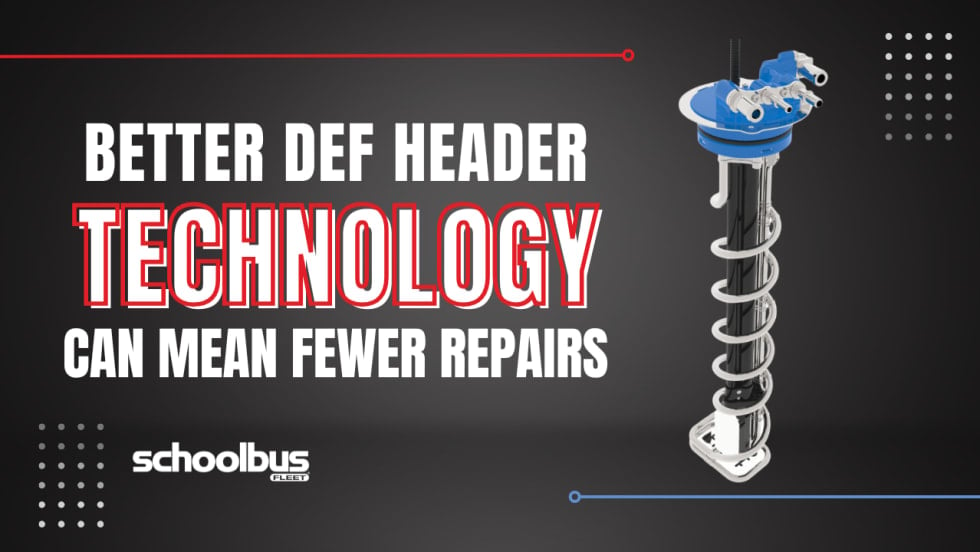
The Evolution of DEF Header Technology: What School Bus Operations Should Know at Replacement Time
See what school bus fleets should consider when replacing DEF headers to improve reliability, reduce repeat repairs, and control maintenance costs.
Read More →
Kerry Brothers Grows Michigan School Bus Repair Network
The acquisition of Downriver Truck and Bus expands Kerry Brothers’ school bus maintenance footprint across southeast Michigan, adding repair capacity, diagnostic resources, and state inspection support.
Read More →
Noregon Introduces CAN Bus Diagnostic Tool, Expands JPRO Features
CAN Mentor and the latest JPRO update aim to simplify vehicle network diagnostics and improve repair efficiency for technicians of all experience levels.
Read More →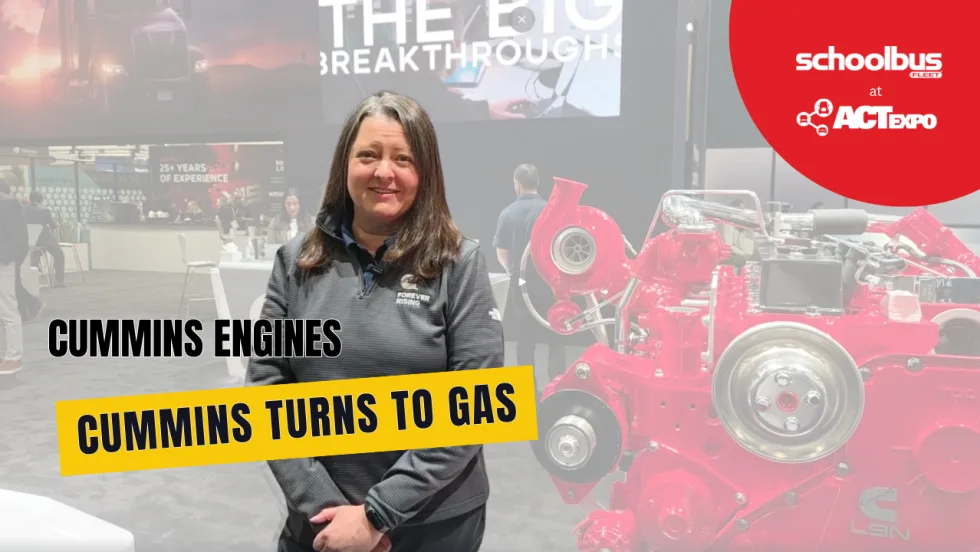
Cummins on Smarter, Simpler Engine Innovation
Cummins discusses its first-ever gasoline engine for school buses, EPA 2027, and why bus fleets still want durable, simpler internal combustion options.
Read More →
Report: 72% of Diesel School Buses Now Use Advanced Low-Emission Engines
New data shows advanced low-emission diesel technology continues expanding across school bus fleets, even as electric bus adoption gains momentum.
Read More →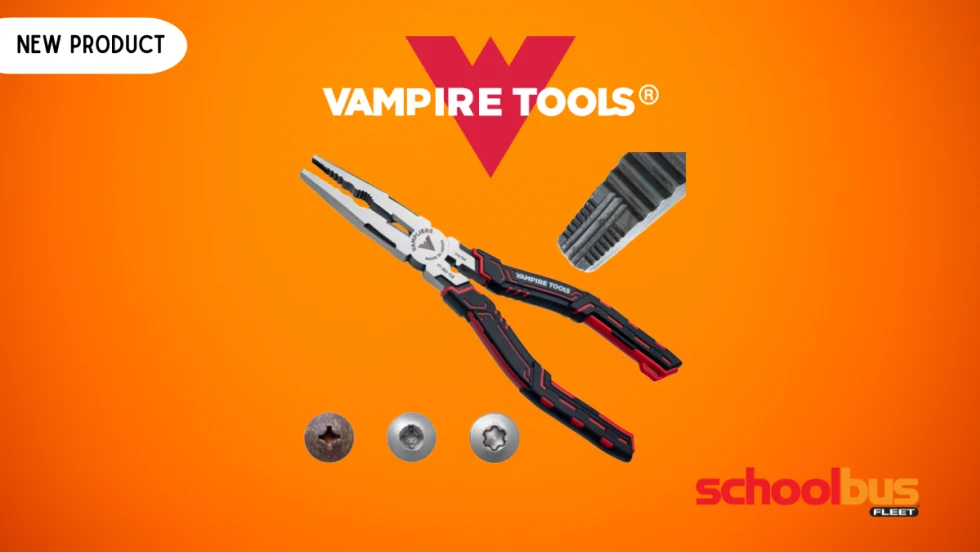
Vampire Tools' CAIMAN 7.5-Inch Multi-Purpose Screw Extractor Long-Nose Pliers with Crimper
Vampire Tools introduced the VAMPLIERS Caiman 7.5-inch multi-purpose pliers, combining screw extraction, cutting, crimping, and gripping functions into a single tool designed for fleet maintenance professionals.
Read More →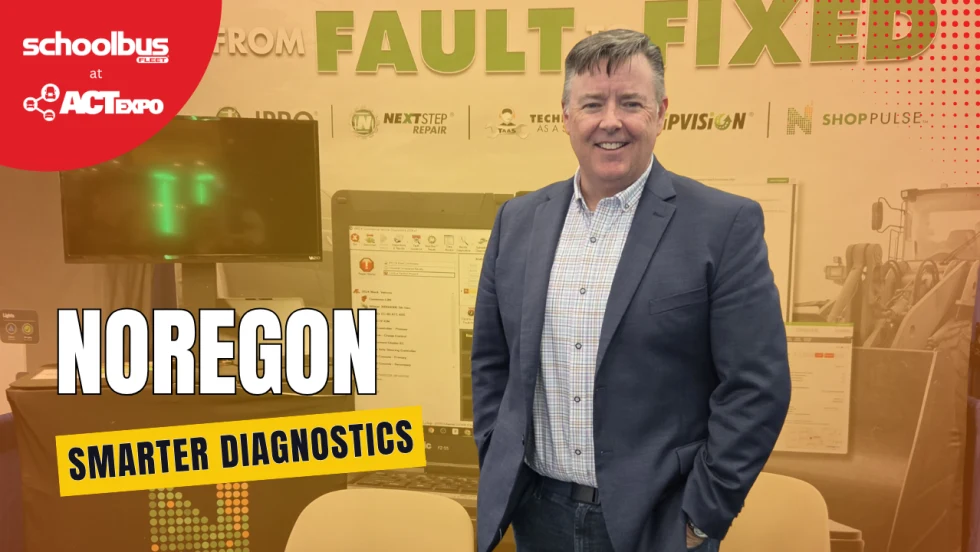
How Advanced Diagnostics Helps Bus Fleets Stay Ahead of Repairs
Chat with Noregon’s Kevin Smallhorn at ACT Expo about bus diagnostic tools, telematics integration, CNG maintenance support, and strategies to help reduce downtime and improve uptime.
Read More →
How School Bus Fleets are Getting Ahead of Breakdowns
Don’t let bus downtime wear you down. Here’s how bus operators are shifting from manual processes to AI-powered, data-driven maintenance systems for improved reliability and safety.
Read More →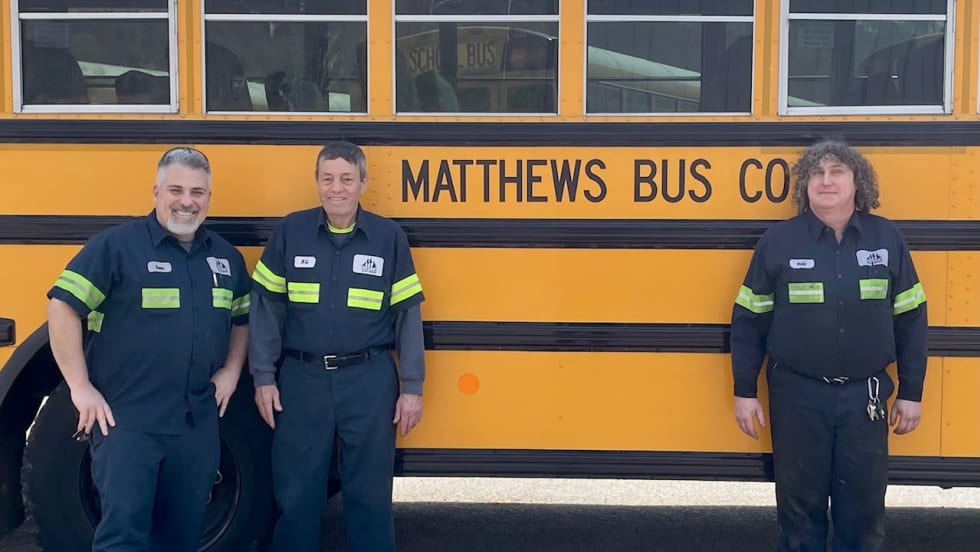
Pennsylvania School Bus Maintenance Team Praised for Dedication to Safety
Matthews Bus Company’s West Jefferson received a letter of commendation from the Pennsylvania State Police for their fleet inspections.
Read More →