




Special-needs institute paves new ground for Texas operators.
The inaugural two-day Summer Institute on Transporting Students with Disabilities was held June 7 and 8 at the Region IV Education Service Center (ESC...

The inaugural two-day Summer Institute on Transporting Students with Disabilities was held June 7 and 8 at the Region IV Education Service Center (ESC) in Houston. Kathryn Cook, lead consultant for Related Services at the Region IV Education Service Center, spearheaded the drive to develop the institute. SBF Senior Editor Sandra Matke spoke to Cook about her planning process and asked her to reflect on the success of this event, a first in her state.
SBF: What did you hope to accomplish via this inaugural special-needs institute?
Kathryn Cook: In order for one to learn about transporting students with disabilities, some of the best resources seem to be teaming with transportation professionals, attending conferences and reading professional journals, such as SBF magazine. While Special Education Services at Region IV ESC offers a wide array of staff development events for our districts, I noticed we were not currently offering training on transporting students with disabilities. After discussions with our department director, Jackie Townsend, a survey was sent to Transportation and Special Education Directors in our region. The response was very positive, so Region IV ESC proceeded with plans for a two-day summer institute.
SBF: Do you feel the event was a success?
Cook: Yes! We had 178 participants in attendance, representing 58 Texas school districts. The evaluations were very positive, and participants had many favorable comments during our two days together. Participants shared what they liked and also what they would like to see at a future event. They found the content valuable and appreciated the focus of national perspectives. Our presenters encouraged interactive dialog, which created opportunities for participants to exchange information.
SBF: What were the main topics addressed at the institute?
Cook: The content was comprised of major topics common to both transporters and special educators. The format included keynote speeches, panel discussions and break-out sessions. Topics covered bus safety issues, the development of guidelines that support special-needs student transportation practices, preschooler issues (including safety seats and vests), wheelchair securement, driver-attendant teamwork and the importance of developing positive student-driver re-lationships.
SBF: After hatching the idea for the institute, how did you go about planning for it?
Cook: We received a 49 percent response rate to the survey, which was very helpful to our planning process. Analysis of the responses from both special education and transportation directors varied by three points or less in terms of those topics they felt were important. The agenda was developed from the survey information. Using professional contacts and national conference information, a select group of presenters was invited to come to the event.
SBF: Was the coordination process difficult? How many people were involved in putting the event together?
Cook: There were 40 to 50 people involved in the actual implementation of the institute. My role was to plan and coordinate the content as well as the event details and also to anticipate the needs of presenters and participants. Because the business of the Region IV ESC is to provide staff development and technical assistance to local education agencies, there is a highly skilled group of tal-ented professionals available to provide assistance, so the event went very smoothly. It was also helpful that Region IV ESC has taken a leadership role in providing school bus driver training, and that we are equipped with state-of-the-art technology. These factors, combined with much time and effort, contrib-uted to an efficient and successful coordination process.
SBF: Do you plan to reprise the institute next year?
Cook: A repeat event is under consideration. The evaluations indicated sufficient interest for another event, so we plan to propose another two-day institute for next summer. We also plan to offer statewide participation.
SBF: What will you do differently next time around?
Cook: We are planning single-day events that are more content-specific in the form of a Transporting Students with Disabilities Series. Three sessions will be offered for the 2001-2002 school year - IEP Team Building, Behavior and Safety Issues and an OT/PT Transporter Forum, for therapists and transporters to work on boarding and securing students in wheelchairs, preschoolers and medically fragile students. The sessions will take place in the fall, winter and early spring and will be marketed statewide to administrators of both transportation and special education. We anticipate the year to conclude with another two-day summer institute, once again covering broader topics with a national focus.
More Special Needs Transportation
Kelli Goterba Named 2026 Special-Needs School Bus Driver of the Year
Through building trust with students and strengthening her transportation team, Goterba exemplifies the impact special-needs drivers can make.
Read More →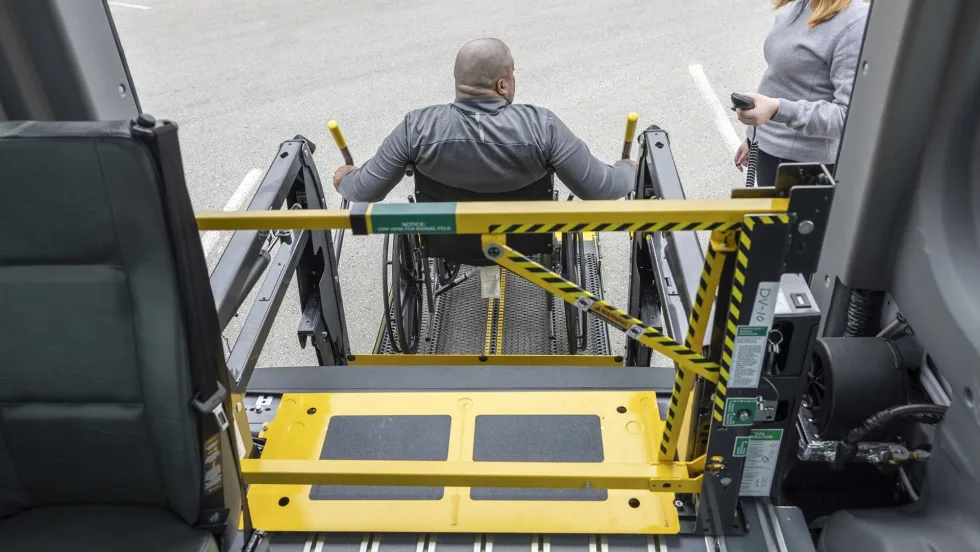
BraunAbility Introduces New Safety Barrier for Wheelchair Lifts
LiftSentinel is designed to add another layer of protection during wheelchair loading and unloading and can be retrofitted to many existing commercial lift installations.
Read More →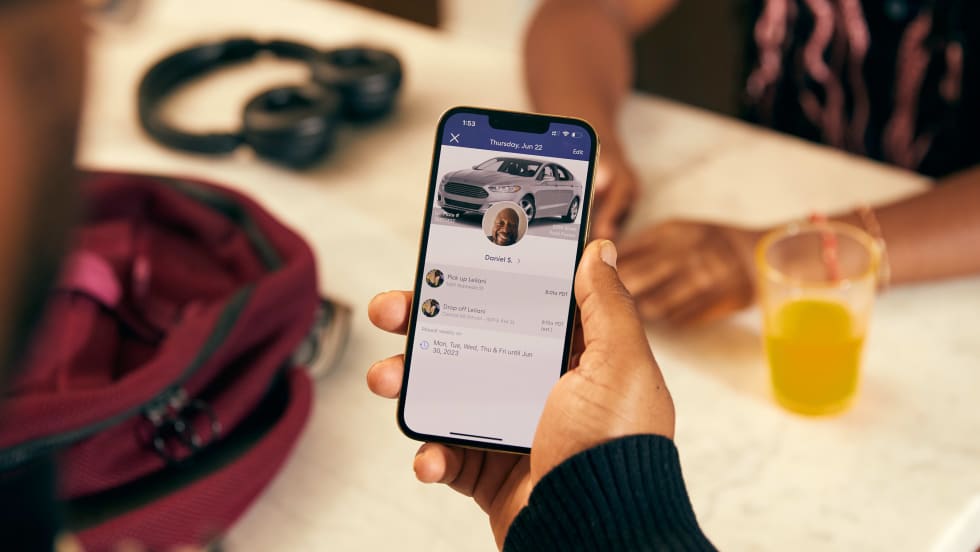
HopSkipDrive Launches New Safety, Driver Consistency Features for 2026-27 School Year
The company’s free ride recording, live ride tracking, and consistent driver assignments aim to improve safety and continuity for diverse student transportation needs.
Read More →
The Most Common Wheelchair Securement Mistakes on School Buses (and How to Fix Them)
Small missteps in wheelchair securement can have serious consequences. Here are 32 tips from experts to reduce risk and increase student safety on the bus.
Read More →
Inside AMF Bruns’ New Showroom: School Bus Securement Solutions Explained
Go inside AMF Bruns America’s new Ohio showroom with Maritza Valentin to see its FutureSafe technology, driver training tools, securement systems, and seating innovations.
Read More →
What AMF Bruns’ New Facility Means for Customers [Video]
Inside AMF Bruns’ new Stow, Ohio, operations: See how expanded space and innovation will enhance customer support and operations.
Read More →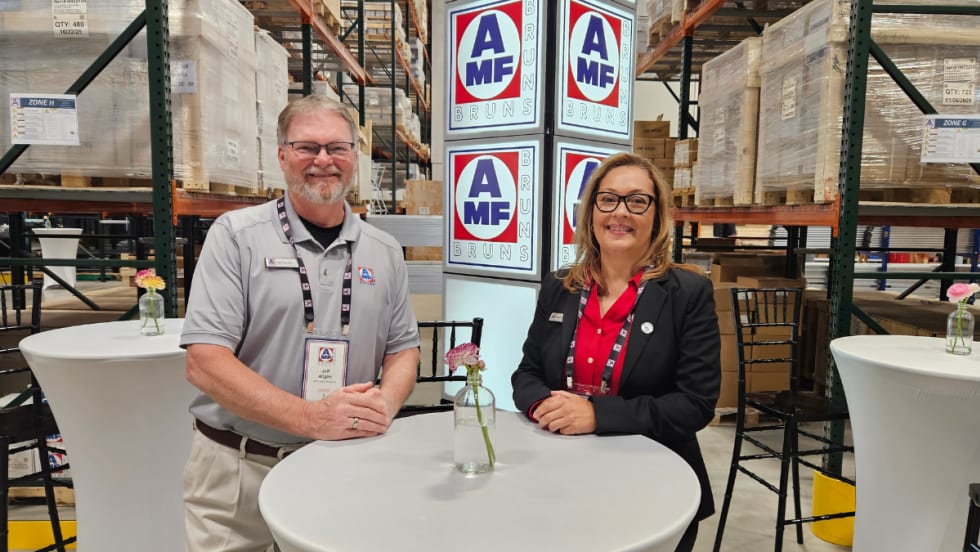
AMF Bruns Expands in Ohio, Investing in Growth and Community
With expanded production space, local investment, and a growing workforce, AMF Bruns is scaling its U.S. presence. Here’s an exclusive first look inside the new Stow, Ohio, HQ.
Read More →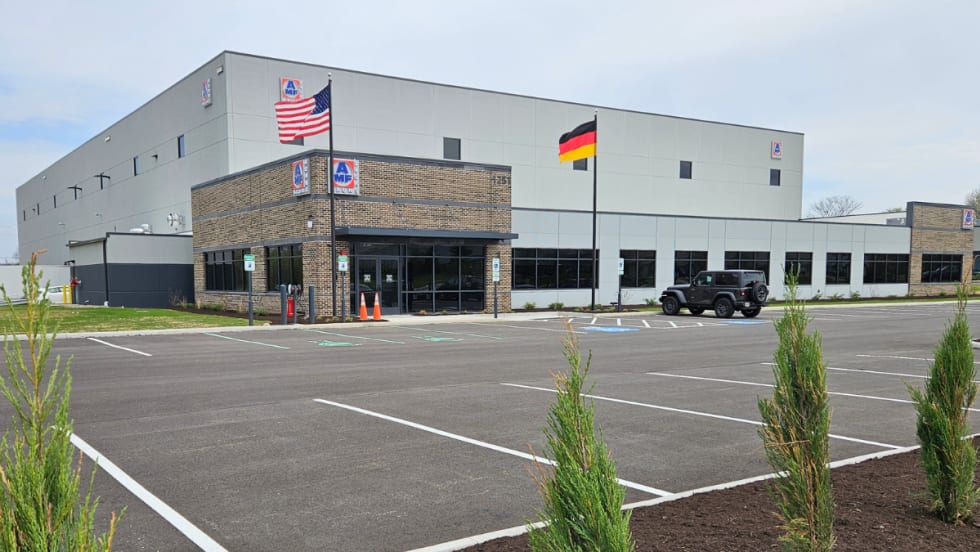
Inside AMF Bruns of America’s New Ohio Manufacturing Facility [Photos]
Take a behind-the-scenes look at AMF Bruns of America’s new 41,000-square-foot Stow, Ohio, headquarters, featuring advanced manufacturing, expanded space, and future-ready mobility solutions.
Read More →
First Student Boosts Student Support in Wichita & Texas
First Student and Wichita Public Schools are using behavioral support strategies to improve student ride experiences, while a separate initiative expands access to after-school programs through a bus donation.
Read More →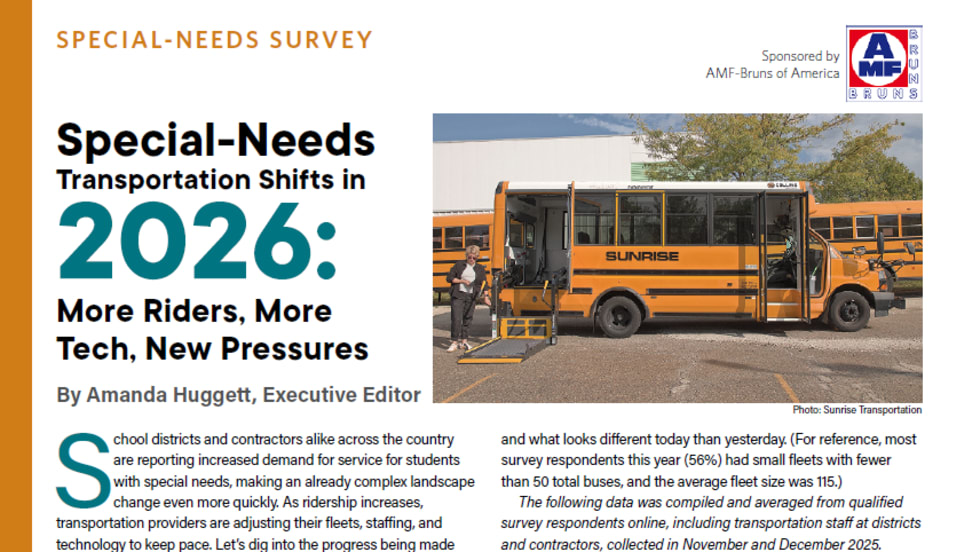
2026 Special-Needs Transportation Survey
What’s changing in special-needs transportation? This year, student transportation operators report a rising need, easing driver shortages, growing tech adoption, and evolving challenges. Sponsored by AMF Bruns of America.
Read More →