




Small Contractors Embrace Growing Challenges
The business of transporting schoolchildren has gotten a little tougher over the past few years, with rising costs of fuel, insurance and equipment co...

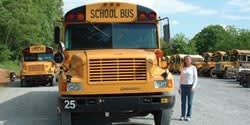
The business of transporting schoolchildren has gotten a little tougher over the past few years, with rising costs of fuel, insurance and equipment coupled with slimmed-down school district budgets.
Smaller private operators, in particular, are challenged because they don’t enjoy the economies of scale of their larger counterparts. In addition, they’re dependent on a small number of customers and can see their livelihoods drastically impacted by the loss of a single contract.
To get a glimpse into the business lives of small-fleet contractors, SBF Editor Steve Hirano held a roundtable discussion with Michael Bondarenko of Naples, Fla.; Tammy Doane of Blaine, Tenn.; and Michael Montgomery of Seattle (see profiles at end of article).
SBF: How have increases in fuel prices affected your companies?
MICHAEL MONTGOMERY: For our main contract, which is 85 percent of our business, the school district provides the fuel, so we’re not impacted too much by that. However, we do a good amount of summer activity trips, in which we do provide the fuel, so we’ll see some impact there.
TAMMY DOANE: My fuel costs have doubled since this time last year. We pay for our own fuel. The additional costs are taking away from working capital and that in turn is slowing down purchases of new buses and other assets.
Do you need to replace some of your buses?
DOANE: Absolutely. We’re replacing five for the 2005-06 school year.
Anything you can do about the rising fuel costs?
DOANE: No, but our county board of education has recently implemented a fuel index to help offset the fuel cost. Each five-cent increase in fuel will compensate the contractor one cent per contracted mile. That program has been a very generous help to our fuel cost.
MICHAEL BONDARENKO: We buy our fuel weekly and pay the spot price. It’s about $2.80 a gallon here in Naples. We implemented a 10 percent temporary fuel surcharge on all our invoices to try to recoup some of the money that we’ve spent on fuel. It’s definitely put a crimp into our purchasing as well. Now, hopefully, we’ll see it settle down. In addition, we were hit with three hurricanes last year, so our insurance went ballistic when we renewed.
What’s happened with your insurance costs?
DOANE: Our insurance liability costs are paid by the county school system. But we’re still paying worker’s compensation, and I saw an increase there.
MONTGOMERY: Auto liability insurance premiums have leveled off the last few years. In fact, I’ve been very pleased with where the market is right now. But I am seeing some significant increase in worker’s compensation. There are some things going on in our state legislature, and I’m very much concerned about it. There’s been a 25 to 30 percent increase in worker’s comp costs over the last two to three years. Each year we’re seeing incremental increases, but as you grow your business, it becomes a big cost factor.
What are some of the other cost-related challenges?
BONDARENKO: The cost of the new vehicles is going up, and parts, in this area at least, have gone up by 20 percent over the past year and a half to two years — everything from filters to tires to oil. We live in a unique community here in Collier County, so we’re pretty much a captive audience. There’s not a lot of vendors down here for places to shop.
{+PAGEBREAK+} DOANE: I’ve seen an increase in the cost of parts and repairs to aging buses. This relates back to the impact of higher fuel prices. When you’re spending more on fuel, you’re not able to replace things as quickly as you would want to.
MONTGOMERY: We’re replacing most of our Seattle fleet. We’re kind of blessed in that we lease our buses from First Student, so we’re able to lock in good prices for buses. We’re able to take advantage of that. The other cost concern is medical insurance benefits. It’s probably the biggest challenge that we presently face. We’ve seen those costs grow over 100 percent. Our drivers are paying more to get less. We’re on the threshold of not being able to offer medical insurance benefits to our drivers.
Have you had any problems recruiting and retaining drivers?
DOANE: We retain drivers quite well. However, finding new drivers and substitute drivers has become a challenge. Most people do not see driving a bus as a career, so we are looking at stay-at-home moms, teachers and retirees.
MONTGOMERY: This has probably been one of our best years ever with recruiting and retaining drivers. I don’t know what our staff has done. I know we recently have had drivers coming out of our ears. It’s been good for business because we’ve been able to assist our prime contractors with covering routes. I think it’s the economic environment we’re in. Our salaries are extremely competitive. We try to offer the best compensation we can.
BONDARENKO: Most of the drivers that I started the company with are still with me, about nine or 10 years now down the line. We have about 10 percent turnover. Drivers are pretty tough to find. We’re always looking for them. It’s tough to find qualified applicants. We’ve even gone so far as becoming state-certified CDL examiners because our insurance companies would otherwise require us to hire drivers with at least two years of commercial driving experience.
What accounts for the turnover?
BONDARENKO: Some of them can’t handle the pressure. Some of it is student behavior, but it’s also the traffic. We’re in a resort town that is becoming more of a year-round community. During the busy season, traffic quadruples on the road. What normally is a 30-minute run in September becomes a two-hour run in November or December. That can put a lot of pressure on the driver; they become frazzled.
Do you have problems with absenteeism?
BONDARENKO: No, we’re more of a family here. In 10 years, we’ve never had someone call in sick on the day of the run. It’s just not something you can do. You have to drag yourself in here. If you give us a day’s notice, then we’re OK. We fill it. Believe me, everyone in the office drives. Everybody has to chip in.
DOANE: It’s not a huge problem here. We offer incentives to curb absenteeism, and my husband and I are on duty daily to fill in for an absent driver. We also have several other substitute drivers.
MONTGOMERY: It’s not a tremendous problem here. Our absenteeism is greater than I’d like it to be, but it’s only about 5 percent. We’re generally able to cover our bases even if we have several drivers out with the flu. We’ve got a tremendous group of folks. And we all drive here, too.
How has the issue of security affected your operations?
BONDARENKO: We’ve had regular meetings about it with drivers. We get their opinion about what’s going on. Basically, the gist is that everybody’s aware that there could be a potential problem out there. We tell the drivers to call the sheriff’s department if they see anything unusual. Everyone’s got cell phones on the buses. If there’s any kind of problem at all, they’re not going to address it themselves; they’re going to call the sheriff’s department immediately. We’ve also gotten conscientious about security at the bus yard. The buses are always secured at night, and the yard is gated with barbed-wire fences around it.
{+PAGEBREAK+} DOANE: Our state does require training annually for drivers. Security has been incorporated more and more each year since 9/11. The incident with the bus driver shooting [Joyce Gregory’s slaying in Dover, Tenn., on March 2, allegedly by one of her passengers] has created more awareness.
MONTGOMERY: Our district hasn’t formally implemented anything. However, as part of the Washington Superintendent of Public Instruction’s in-service program, it is one of the topics that we will be discussing with all of our drivers.
What type of relationship do you have with your school districts?
BONDARENKO: I have a great relationship with my county school district. We keep an open line of communication. If there’s a problem, we just address it immediately. I initiated the private school bus business here in Collier County in 1996. It was tough going at first because they weren’t used to dealing with a private operator, but we stuck it out and now we’re all getting along.
DOANE: We have a great working relationship. I think contractors, drivers, schools and principals should work together to accomplish educational goals.
MONTGOMERY: I think it’s the most important asset you can have in the business, to be liked and well thought of by your customer. If you don’t have that relationship, that’s when they’re going to look for someone else to do that business.
What keeps you in this business?
MONTGOMERY: My sincere love for this business. I’ve done a lot of things in life, and I could do a lot of other things that could provide greater financial reward. But this is one of the most important things that I’ve done in my life. The tremendous reward comes in the difference we make in people’s lives. At the end of the day, there are deep personal rewards. The paycheck isn’t what drives me.
BONDARENKO: We implemented private school bus service in Collier County in 1996. I’m just going to stick with it. It is rewarding. Lots of kids depend on us. That’s why we’re going to stay in the business. The potential is unlimited.
DOANE: I was a driver for 10 years prior to becoming a contractor. It’s a job that I thoroughly enjoy. Being a contractor is not a chosen career based on financial rewards, but the rewards of making a difference to so many students.
Michael Bondarenko is president of A&S Transportation in Naples, Fla. He operates 25 buses for Collier County Schools, transporting 1,900 students each day.
Tammy Doane is the owner of Doane and Co. in Blaine, Tenn. She operates 11 buses and transports 700 students for Grainger County School District.
Michael Montgomery is president and chief executive of Curtis Transportation Services in Seattle. His company operates 30 buses and transports approximately 2,000 students for school districts in Seattle and Tacoma.
More Management
How to Build a Better Driver Training Program
Ready to boost up your school bus instructor training? Here’s how to pick the right talent and improve recruitment, retention, and safety.
Read More →
CALSTART and Forth Combine to Form Catalyst Mobility
The new name represents a renewed vision for the nonprofit focused on advancing clean, equitable, and affordable transportation solutions that move people and goods.
Read More →
What Makes a Great School Bus Driver Trainer?
Choosing the right school bus driver trainer takes more than experience. Learn six keys to selecting and developing trainers and evaluating program effectiveness.
Read More →

School Bus Contractors Expand Through New Deals, Acquisitions & Partnerships
STA's Canadian division acquires Ontario-based G&L Stevenson Transport while Durham School Services adds a new district contract in California, First Student adds a New Jersey contract, and Minnesota Coaches acquires Halo Transportation.
Read More →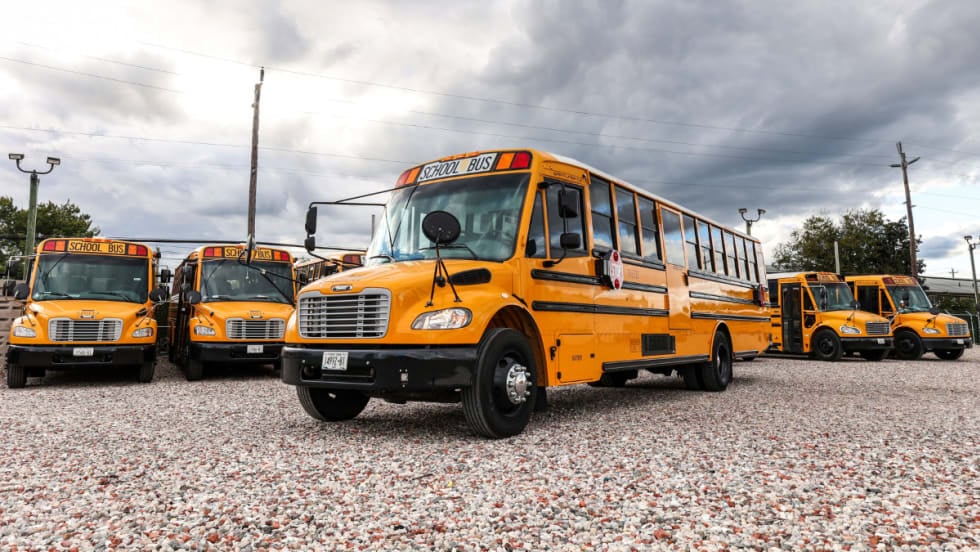
Logan Bus Company Rolls Out AI Phone System for NYC School Bus Families
A summer pilot found that AI agents could handle most routine calls, freeing up time for customer service staff to focus on emergencies and complex family concerns.
Read More →
From Intent to Impact: What I Learned About Leadership from TAPT
A Texas transportation supervisor shares lessons on self-awareness, accountability, managing stress and building trust — and why investing in leadership development matters at every stage of your career.
Read More →
NAPT Names 2026 Award Recipients, Hall of Fame Inductee
Who earned national recognition for their work in student transportation? This year, NAPT named five recipients of its 2026 awards for service, safety, and leadership, plus its newest Hall of Famer.
Read More →
2026 State of Student Transportation Report
Driver shortages. Rising costs. Growing safety expectations. More data, but not enough time to act on it. The 2026 State of Student Transportation Report reveals what transportation leaders say is putting the most pressure on their operations—and where they’re investing next. See how your priorities compare.
Read More →
How to De-Escalate an Angry Person: 5 Steps for Handling Workplace Conflict
What makes emotions run high, and how should you handle an angry colleague or parent? Follow these steps for staying calm, listening, showing empathy, and resolving conflict.
Read More →
What Readiness Looks Like This School Year
Learn about the challenges shaping the 2026–2027 school year, from persistent driver shortages and budget pressure to technology and readiness gaps. See how school districts are responding and adapting in Zonar’s 2026 Back-to-School Readiness Report.
Read More →