




Setting a Course for Safe Use of Mobile Data Terminals
Driver tablets, GPS units, and similar devices present potential benefits as well as safety concerns. Here are the emerging issues and the guidance thus far.
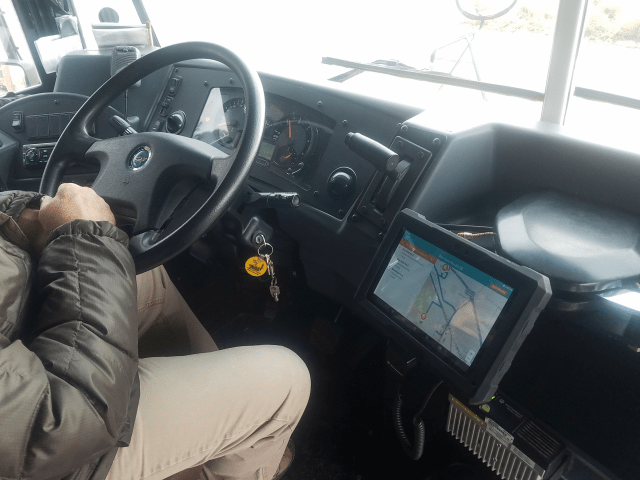
New technology, safety, and regulation/policy. How do the three interact, and who decides? Here’s a story that highlights the complexities.
Last year, I spent a few days in Anaheim attending the California Association of School Transportation Officials conference. As I took the opportunity to explore Southern California a bit, I was glad that I brought along the Garmin GPS from my personal car.
As I navigated one spaghetti junction after another, it was amazing how the GPS device was spot-on, and a quick glance at the screen helped me to determine which of the multiple entrance and exit ramps that I needed to take.
What this experience also highlighted is the difference — for me, at least — in following visual, rather than audio, driving directions. “Turn right in 300 feet” or “Turn left in 1,000 feet” has little meaning — it just doesn’t provide me nearly as much context as a map does.
Aid or Distraction?
When first considering the subject of mobile data terminals (MDTs) on school buses, my initial reaction (perhaps like yours) was, “OK, there seems to be some benefits, but the screen must be off while the bus is moving.” We don’t want anything distracting the driver, right?
I’m not saying that this is a wrong perspective, but my experience around Anaheim caused me to rethink the pros and cons. It’s not as simple as it seems.
In using an MDT for driving directions, perhaps I would get used to audio commands and would learn to properly interpret the “Turn right in 300 feet” instruction. But it will likely never be as good for me as seeing the map — visualizing that my turn is the second street on my right.
What I do know is this: For a sub driver on an unfamiliar route, assistance from the MDT is going to be better than driving with a route sheet in one hand, while holding the steering wheel, and trying to read it in the darkness of early morning.
And it turns out there are many, many issues surrounding this technology — not just how to transmit driving directions. So where do we turn for guidance, rules, or regulations?
Regulations and Policies
MDTs are a recent example of a technology that has appeared in school buses ahead of the rules addressing it.
The school transportation industry is all about safety, and many of the laws and policies governing school bus equipment and operations were requested by the industry itself.
The National Congress on School Transportation (NCST) is a prime example. The industry first came together in 1939 to establish common standards for school buses to ensure the safety of students. NCST continues to be held every five years to update specifications and procedures.
At the writing of the latest NCST document in 2015, there was not enough experience with MDTs for nationally recommended procedures to be included. Most school districts are left to work with equipment providers to establish local policies for the use of MDTs — unless they are in one of a handful of states that have established state policies.
At the recent National Association of State Directors of Pupil Transportation Services conference in Columbus, Ohio, Iowa state director Max Christensen moderated a discussion panel about state MDT policies. Even some of those states with regulations in place are having to consider possible revisions as the applications and issues emerge quickly.
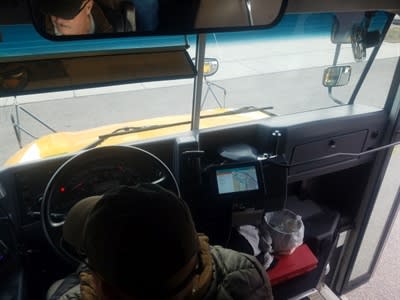
There is unanimous agreement that any mobile data terminal must be mounted in a location that does not obstruct the school bus driver’s vision.
Apps and Issues
As school districts and states grapple with best practice and regulation for MDTs, what are the key issues to be addressed in operational policy and procedures?
MDTs provide an opportunity to use technology in many ways, some of which have never been possible before. Applications include:
• Turn-by-turn driver directions (audio and/or video).
• Pre-trip and post-trip inspections.
• Driver attendance (clock-in, clock-out).
• Student ridership and tracking.
• Messaging.
• Vehicle health notifications.
In the safety business, it’s tempting to focus on the negatives of new technology right away. The “cons” associated with using an MDT for each of these purposes — with the exception of inspections — include driver distraction. The “pros” include operational efficiency, safety, and security (depending on the app).
Districts and states must evaluate the pros and cons as the various applications are rolled out and resist the temptation to “just say no” in the name of reducing driver distractions.
Questions and Answers
Thus far, policy and guidance for MDT implementation focuses on structural as well as operational issues. But it is certainly not yet widespread.
However, common themes have emerged, providing a good framework for school bus operations starting down this road. Here are insights on key questions:
• Where can the MDT be mounted? There is unanimous agreement that any MDT must be mounted in a location that does not obstruct the school bus driver’s vision. The same criteria have long been applied to window stickers or school bus identification placards (e.g., “purple monkey route”).
• How must the MDT be mounted? It is also universally accepted that the mounting of MDTs, just like the mounting of anything in the bus (brooms, trash cans, handrails, etc.), cannot be such that a child’s clothing or backpack might become entangled when getting on or off the bus. Further, an MDT should be secured where it cannot become dislodged and act as a projectile during a crash or hard-braking event. Another mounting issue that crosses over to operational issues relates to the degree of driver interaction. Very simply: Is the driver allowed to touch, reach for, or access the tablet while driving the bus or while seated in the driver’s seat?
• When can the video be active? When can the audio be active? School bus operations — and states establishing rules — should carefully examine these questions, recognizing that valid reasons exist on both sides of each issue. As mentioned earlier, it’s not as simple as “that could cause a distraction, so … no!”
There are many operational and equipment issues that become increasingly complex the more the applications and their objectives are understood. Until MDTs become more widespread, the issues will continue to evolve.
It will likely take some time before there is enough experience for a best practice to emerge. My guess is that it will emerge as a menu of best practices. One size will not fit all as this exciting technology develops.
We’ll further explore MDT practices and policies in an upcoming issue of School Bus Fleet.
Derek Graham is an industry consultant with clients that include Education Logistics (Edulog), a provider of schoolbus routing software solutions, school bus GPS tracking, and other related systems. He previously served as state pupiltransportation director in North Carolina for 21 years.
More Management
STA Acquires Sunrise Transportation
Student Transportation of America expands in Illinois and Connecticut through Sunrise's fleet of nearly 1,000 vehicles.
Read More →
EPA Opens $180M DERA Funding Round for Diesel Upgrades
The 2026 Diesel Emissions Reduction Act program seeks applications from eligible organizations to accelerate the retirement of legacy diesel vehicles.
Read More →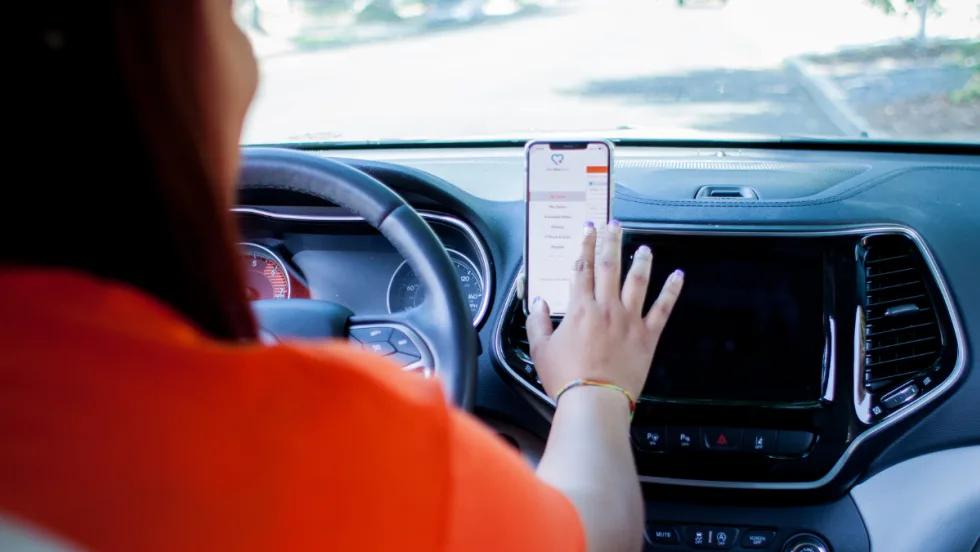
HopSkipDrive’s CareEngine Targets the ‘Exceptions’ in Student Transportation
The new platform works alongside districts’ existing transportation management systems to coordinate specialized rides, automate last-minute changes, and turn ride data into operational improvements.
Read More →


The Right Ride for Every Student: Navigating the New Student Transportation Ecosystem
How should districts blend school buses with small-vehicle transportation and other options? EverDriven CEO Mitch Bowling discusses safety, costs, partnerships, and strategy.
Read More →
Annette Brown Always Takes the Extra Time: Meet Our 2026 School Bus Driver Hero
For more than 30 years, the Wa-Nee Community Schools driver has treated students like family, combining safety, compassion, and servant leadership to make a lasting difference on and beyond the school bus.
Read More →
How to Build a Better Driver Training Program
Ready to boost up your school bus instructor training? Here’s how to pick the right talent and improve recruitment, retention, and safety.
Read More →
CALSTART and Forth Combine to Form Catalyst Mobility
The new name represents a renewed vision for the nonprofit focused on advancing clean, equitable, and affordable transportation solutions that move people and goods.
Read More →
What Makes a Great School Bus Driver Trainer?
Choosing the right school bus driver trainer takes more than experience. Learn six keys to selecting and developing trainers and evaluating program effectiveness.
Read More →
School Bus Contractors Expand Through New Deals, Acquisitions & Partnerships
STA's Canadian division acquires Ontario-based G&L Stevenson Transport; Durham School Services adds a new district in California; First Student expands in New Jersey; and Minnesota Coaches rebrands and acquires Halo Transportation.
Read More →
Logan Bus Company Rolls Out AI Phone System for NYC School Bus Families
A summer pilot found that AI agents could handle most routine calls, freeing up time for customer service staff to focus on emergencies and complex family concerns.
Read More →