




Schools Choose Ridesharing for Greater Efficiency, Savings
Children’s ridesharing companies are offering more than just home-to-school transportation. The service also proves helpful for a variety of school trips, tackling bus driver shortage, and helping schools save on transportation costs.

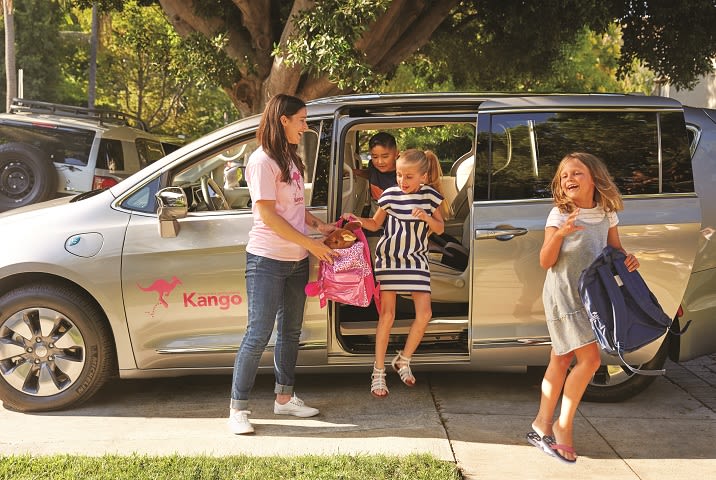
Children’s ridesharing company Kango offers a shuttle service option that schools can use to transport up to six students for carpool rides and/or after-school and field trips. Photo courtesy Kango
Children’s ridesharing company Kango offers a shuttle service option that schools can use to transport up to six students for carpool rides and/or after-school and field trips. Photo courtesy Kango
School transportation providers often spend copious amounts of time improving operational efficiency, ensuring that all buses are up and running properly and on time while also meeting the demand for safe and reliable student transportation. But what happens when a district or school needs to cut back on its transportation costs — perhaps placing a limit on its school choice routes and/or extracurricular trips? For some pupil transporters, that’s where student ridesharing steps in.
With children’s ridesharing companies like HopSkipDrive, Kango, and Zum, school districts are seeking to maximize the efficiency of their operations well beyond home-to-school transportation. Here, School Bus Fleet spoke with the leaders of the three children’s ridesharing companies and some of the operations they’ve partnered with about how the service can help accommodate a variety of trip options, combat bus driver shortage, and ultimately help schools save on transportation costs.
Flexible Routes
While most of the children’s ridesharing companies agree that home-to-school transportation is one of the more popular uses of their services, rides for extracurricular and field trip activities are a close second.
Joanna McFarland, the cofounder and CEO of HopSkipDrive, says that these types of rides are usually completed via a carpool request.
“Schools will request to use our carpooling feature for athletic or field trip purposes, and then we’ll consult with the district to see what works best as far as routing goes,” she says.
Individual families can also use the carpooling feature outside of the district’s partnership and set up a carpool request for their children who may attend schools at different locations, McFarland adds.
The same goes for Kango, which has a shuttle service operated by several hybrid seven-passenger minivans, thanks to the company’s partnership with automotive manufacturer Chrysler, says Sara Schaer, cofounder and CEO of the ride-hailing platform.
“Since the students are all ending their school activities at the same time, it makes sense to maximize vehicle capacity with minivans,” she explains. “In other cases where there are fewer kids and they’re going home to different places, it’s less efficient to have a longer ride with everyone in the same vehicle.”
For example, Lycée Français de San Francisco, a small international French school located in San Francisco, Calif., has been using Kango’s shuttle service for about four years to transport students between its two campuses for after-school activities.
The school’s Kango shuttle runs four days a week, transporting up to 10 children per day, says Andrew Sobol, Lycée’s director of activities, programs, and camps.
“We’ve also used the service to shuttle our athletes to practices or tournaments across the city,” he adds.
Tackling Driver Shortage
Besides carpooling options, having a consistent pool of safe and reliable drivers to choose from has been a significant benefit for pupil transportation operations, especially when it comes to the nation’s ongoing bus driver shortage.
McFarland says that more than 90% of the 160 school districts that HopSkipDrive has partnered with have reported driver shortage as one of the key reasons for turning to student ridesharing.
“With student ridesharing, districts can use their bus drivers for high-capacity, more utilized routes and stop trying to find drivers that they don’t have to drive long, low-capacity routes,” she explains. “Districts can then redirect those bus drivers where they are needed most.”
Despite the growing momentum and use of the service among schools, Kango’s Schaer says there’s still some pushback in the industry from current bus drivers who consider children’s ridesharing as school bus replacement.
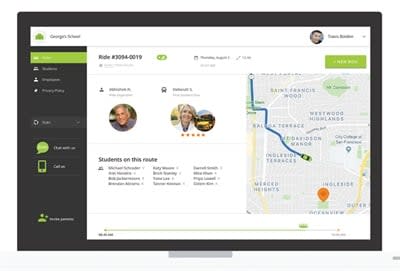
Shown here is the Zum ride dashboard, which allows school administrators and parents to monitor the progress of a ride after it has been requested. Photo courtesy Zum
“We don’t necessarily see ourselves taking over the industry,” Schaer explains. “We consider the service as complementary to the role of the bus driver — to help optimize district’s overall transportation operations for their more specialized routes.”
In June, school transportation provider National Express led a $3.6 million Series A funding round to help Kango, which is currently serving more than 600 school districts nationwide, expand its operation to provide more students and their families with transportation and childcare services.
While the partnership is still in the early stages, Schaer says she hopes it will help Kango better understand the needs of school transportation, highlight the distinct roles of bus drivers and children’s rideshare drivers, and emphasize the fact that not all routes warrant the use of an entire school bus.
Cutting Costs, Boosting Savings
The number-one benefit of using children’s ridesharing, says Ritu Narayan, founder and CEO of Zum, is the savings on scheduling and staffing costs that districts can realize on these types of rides.
Of the 200 California school districts that Zum has partnered with, Narayan says she’s seen some of them save up to 40% of their school budget in making the switch to student ridesharing.
In San Francisco, Sobol says that Lycée Français has saved almost $5,000 a month since implementing Kango for its after-school program’s transportation.
The school previously contracted with a local school bus company for its school transportation, and to this day, Lycée Français holds a contract for one school bus to use for trips outside of the after-school program, he says.
“It was too expensive to buy our own fleet, so that’s why we still contract the one 62-passenger bus,” Sobol explains. “However, that school bus is too big to use for our after-school program, so we’ve found it more affordable to use two of [Kango’s] shuttle vans.”
Bolstering Safety
In Colorado, Laura Conti, the program director for Boys Hope Girls Hope — an educational organization that helps students in need — says that the benefits of using student ridesharing extend far beyond the organization’s financial savings.
“Not only is [the service] dependable, but it brings a sense of ease knowing our scholars are getting home safely,” she says. “We also love the app feature that allows our parents to follow their child’s ride until they make it home.”
Trust and safety, Zum’s Narayan says, are the foundation of children’s ridesharing, which is why the company stresses the importance of school administrators providing instructions to Zum drivers when scheduling their unique case rides.
Schaer says these instructions are particularly critical for transporting students for after-school activities.
“If students go from campus A to campus B for their activities, the driver may need to check them out and sign them in upon their arrival,” she explains. “The driver will have to park and take them all in and sign them in to the daycare at the second campus. In those cases, we provide both locations with a day-by-day roster of the students using Kango, so not only are they signed in and out, but they are expected to be dropped off by a Kango driver.”
Most of all, Sobol says, this type of catered, curbside service helps improve safety for students.
“We have very busy parents in the San Francisco Bay Area, so they appreciate the convenience of being able to have someone they can trust to pick up and drop off their kids,” he says. “As the school had a set period of time during which we couldn’t use the school bus, the value of Kango was that it filled a need that couldn’t be filled otherwise.”
More Management

How to Build a Better Driver Training Program
Ready to boost up your school bus instructor training? Here’s how to pick the right talent and improve recruitment, retention, and safety.
Read More →
CALSTART and Forth Combine to Form Catalyst Mobility
The new name represents a renewed vision for the nonprofit focused on advancing clean, equitable, and affordable transportation solutions that move people and goods.
Read More →
What Makes a Great School Bus Driver Trainer?
Choosing the right school bus driver trainer takes more than experience. Learn six keys to selecting and developing trainers and evaluating program effectiveness.
Read More →

School Bus Contractors Expand Through New Deals, Acquisitions & Partnerships
STA's Canadian division acquires Ontario-based G&L Stevenson Transport while Durham School Services adds a new district contract in California, First Student adds a New Jersey contract, and Minnesota Coaches acquires Halo Transportation.
Read More →
Logan Bus Company Rolls Out AI Phone System for NYC School Bus Families
A summer pilot found that AI agents could handle most routine calls, freeing up time for customer service staff to focus on emergencies and complex family concerns.
Read More →
From Intent to Impact: What I Learned About Leadership from TAPT
A Texas transportation supervisor shares lessons on self-awareness, accountability, managing stress and building trust — and why investing in leadership development matters at every stage of your career.
Read More →
NAPT Names 2026 Award Recipients, Hall of Fame Inductee
Who earned national recognition for their work in student transportation? This year, NAPT named five recipients of its 2026 awards for service, safety, and leadership, plus its newest Hall of Famer.
Read More →
2026 State of Student Transportation Report
Driver shortages. Rising costs. Growing safety expectations. More data, but not enough time to act on it. The 2026 State of Student Transportation Report reveals what transportation leaders say is putting the most pressure on their operations—and where they’re investing next. See how your priorities compare.
Read More →
How to De-Escalate an Angry Person: 5 Steps for Handling Workplace Conflict
What makes emotions run high, and how should you handle an angry colleague or parent? Follow these steps for staying calm, listening, showing empathy, and resolving conflict.
Read More →
What Readiness Looks Like This School Year
Learn about the challenges shaping the 2026–2027 school year, from persistent driver shortages and budget pressure to technology and readiness gaps. See how school districts are responding and adapting in Zonar’s 2026 Back-to-School Readiness Report.
Read More →