




The Illegal Passing Problem: Reducing School Bus Stop-Arm Violations
School Bus Safety Starts with a Community-Wide Commitment [Op-Ed]
School bus safety starts long before students reach the classroom. How can communities, parents, and drivers work together to protect every child? Here's one take from an exec at STA.
by Shelly Hall, Student Transportation of America
October 22, 2025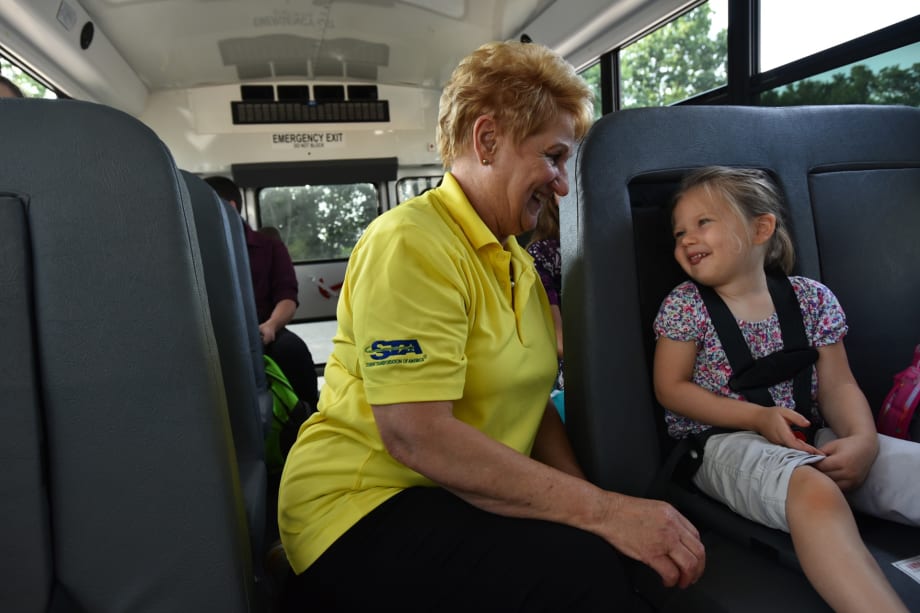
School bus safety is a shared responsibility — from drivers and parents to motorists and students — and true protection starts when everyone commits to doing their part.
Photo: Student Transportation of America
4 min to read
Now that school is back in session and students are settled into their routines, much of the focus is on what happens inside the classroom. But National School Bus Safety Week is a reminder that the most critical part of the school day begins before the first bell: at the bus stop.
I’ve spent my career working to ensure students are not just safe on the bus, but also around it. What I’ve found is that creating a safe school commute is a shared effort.
It begins when motorists commit to slowing down, staying alert, and understanding just how critical stop-arm laws are to protecting students. It continues at the dinner table, where parents and guardians have meaningful conversations with their children about staying visible and cautious at the curb. It extends into school parking lots, where teachers and staff remind students to avoid danger zones and stay aware of moving vehicles. And it all comes together with the professionalism of our bus drivers—trained to follow safety protocols, activate flashing lights and stop arms, and wave students across only when it’s safe.
Every one of these actions is a vital link in a shared chain of protection. It’s not just a protocol, it’s a promise we make to our children, every single school day.
According to the National Association of State Directors of Pupil Transportation Services’ 2025 survey, more than 66,000 drivers illegally passed stopped school buses in just one day. That staggering figure is just a snapshot, not the full picture. It’s a sobering reminder that far too many motorists are still putting children at risk, and we need to do better.
We all can contribute to making the roads safer for children.
Fellow motorists, now is the time to recommit to safe driving. That starts with a quick refresher on school bus signals: flashing yellow lights mean the bus is preparing to stop, so slow down and be patient. Flashing red lights and an extended stop arm, means children are boarding or exiting a bus, and you must stop completely and wait until the arm retracts.
Laws may vary by state, but the rule of thumb is when a bus stops, so should you. It’s also not just about following signals and lights, but staying alert in school zones, near crosswalks, and around bus stops, even if you don’t see children. School buses make frequent, sometimes unexpected stops. And children can be unpredictable.
If you’re behind the wheel, safety isn’t optional; it’s your responsibility.
Parents and guardians, don’t assume your children instinctively know how to stay safe around the bus. Take the time to talk about it. Children pick up on habits quickly, and we want those habits to be the right ones. Whether your child is riding the bus for the first time or an older student who is a self-proclaimed seasoned pro, having an open conversation about safety can make a difference.
Remind children to put away their phones, remove headphones, and stay alert around the bus. Even small distractions can have serious consequences. Join them on their first day at the bus stop and point out the danger zones around the front, sides, and back of the bus. Instruct them on where to stand and how to cross. Safety starts at home, but can last all year long.
Students, arrive five minutes early to the bus stop and stand at least five giant steps away from the curb. Wait for the bus to come to a complete stop and look to your bus driver for guidance. Always look both ways — even if the stop arm is out — and be aware of incoming traffic. This also applies when crossing a driveway or parking lot. And never chase a school bus.
At the 2025 National School Transportation Association conference, safety wasn’t just one of many topics explored; it was the driving force behind every discussion. I’m happy to see that echoed throughout the industry.
From adopting new technologies to advancing driver training, the industry is continually evolving to protect the students it serves. But of course, safety isn’t something the industry can shoulder alone. Motorists, parents and guardians, students, and every bus driver on the road play a role.
Together, with continued vigilance, we can ensure every child gets to and from school safely.
Subscribe to Our Newsletter
More Safety

How to Build a Better School Bus Driver Training Program
Is it time to strengthen your driver training? Here’s how to pick the right talent and improve recruitment, retention, and safety. This video is brought to you by IC Bus.
Read More →
Recent School Bus Accidents Leave 2 Dead, 2 Injured
Four school bus crashes in Florida, Illinois, and Georgia highlight risks in transportation lots, at bus stops, and during student loading and unloading.
Read More →
Sponsored•September 8, 2026
When Every Second Matters, Clarity Keeps Routes Moving
From routine delays to urgent incidents, strong communication practices help drivers, dispatchers, schools, and families respond with confidence.
Read More →

What Happens When a School Bus Catches Fire — and What Can Help
School bus fires are rare but can be devastating. Learn how advances in fire suppression and asset protection help fleets detect fires earlier, reduce damage, and improve safety.
Read More →
Geotab Launches Tool to Help Fleets Investigate Road Incidents
Geotab Investigations combines telematics data, video, documents, and other evidence to help fleets reconstruct incidents, resolve claims, and determine what happened.
Read More →
Texas Sixth Grader Wins 2026 National School Bus Safety Poster Contest
Sai Darshana Yekolu of Moseley Middle School in Prosper, Texas, was named the newest winner for her artwork, bringing the theme of “Safe Rides, Everyday Heroes” to life.
Read More →
Sponsored•August 27, 2026
Doing More With Less: How Transportation Directors Can Prioritize Safety Amid Budget Uncertainty
With diesel prices soaring and nearly one-third of transportation directors expecting budget cuts, maintaining student safety has never been more challenging. Download this guide to learn how leading districts are prioritizing risk, funding critical safety technology, and building stronger budget cases with data.
Read More →
Walton County Schools Adds Gatekeeper Stop-Arm Enforcement System
The Florida district will deploy Gatekeeper’s updated Student Protector technology, which now incorporates AI to improve video evidence.
Read More →
How To Build a More Secure School Bus Yard During and After Hours
As thefts and overnight security threats continue, school transportation leaders are combining stronger operational practices with AI-enabled surveillance to better protect buses, facilities, and staff.
Read More →
FMCSA Names New Chief Safety Officer: What School Bus Operators Should Know
Steve Dowling is set to lead the federal agency's efforts to advance commercial motor vehicle safety and reduce crashes, fatalities, and injuries on the nation's roadways.
Read More →