




Related: Making the School Bus Ride Easier for Students With Autism in 7 Steps
School Bus Alternatives Meet a Range of Standards, Student Needs
Some pupil transporters increasingly look beyond the big yellow bus to transport students with special needs and those who are homeless or in foster care, choosing minivans, taxicabs, and other smaller-capacity vehicles.

Sadiah Thompson・Assistant Editor
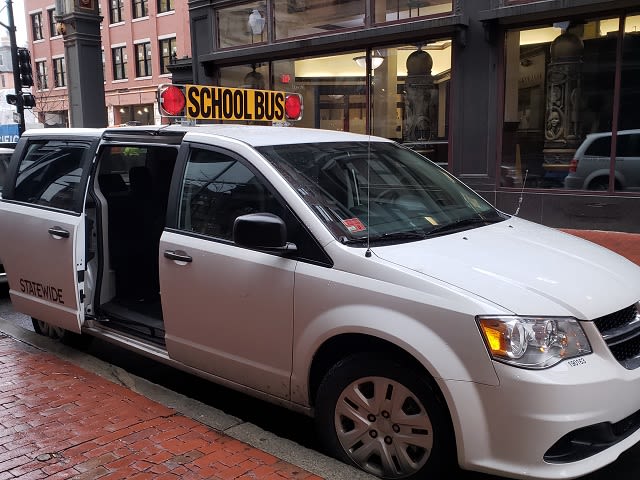
The Rhode Island Department of Education uses eight-passenger minivans to transport its special-needs and out-of-district student populations. Photo courtesy Nicole Martin
6 min to read
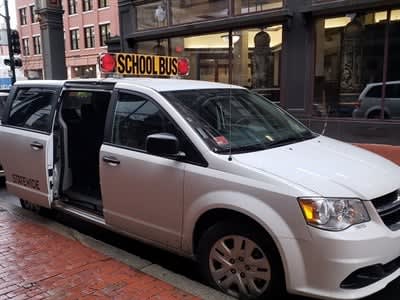
The Rhode Island Department of Education uses eight-passenger minivans to transport its special-needs and out-of-district student populations. Photo courtesy Nicole Martin
Minivans, taxicabs, and other smaller-capacity vehicles are commonly being used by school districts to supplement traditional school bus service. Besides reducing load count, these vehicles offer the potential of cutting ride times and costs for districts, especially when transporting passengers with a variety of special needs.
In addition to providing those benefits, supplemental transportation providers work to ensure that the same standards apply when it comes to the safety and compliance of these vehicles and the training required for those who drive them.
“When we talk about transporting one to five students in a smaller-capacity vehicle, you’re taking these students out of a bus where you mostly have the same driver every day,” says Megan Carey, the chief revenue officer for ALC Schools, an alternative vehicle transportation provider. “In alternative student transportation, not one day is the same, but the key is providing flexibility when transporting some of our more vulnerable student populations.”
Carey says that this flexibility can mean making sure a student who may have special needs has the same driver every day when being transported in an alternative vehicle and/or ensuring that the vehicle is outfitted with the proper safety equipment, such as a wheelchair securement system.
By doing so, school districts can reduce the chance of dealing with additional challenges associated with transporting students under special circumstances, while also adhering to various state and federal standards, such as those established by their respective state Departments of Education.
Servicing Special Populations
One of the most common misconceptions, Carey says, about alternative vehicle usage for pupil transportation is that the vehicles don’t require the same safety and compliance standards as a school bus.
ALC Schools currently partners with about 400 school districts in a total of 19 states. While every state has different requirements for alternative vehicle usage, Carey says that federal laws like the Every Student Succeeds Act (ESSA) have encouraged more pupil transporters to think twice about incorporating supplemental services into their fleet’s operations.
In 2017, the U.S. Department of Education amended part of the ESSA to require that all local education agencies that receive funding under Title I, Part A of the act coordinate transportation with state or local child welfare agencies for students in foster care. The amendment also included changes to the McKinney-Vento Homeless Assistance Act, which allows homeless students free transportation to their school of origin, even if they live in a different school district.
“ESSA and McKinney-Vento really changed the landscape of alternative vehicle transportation,” Carey says. “Within the 20 years of ALC Schools’ operation, we’ve mostly helped school districts transport special-needs students, but a large number of those students have also come from the homeless and foster care populations.”
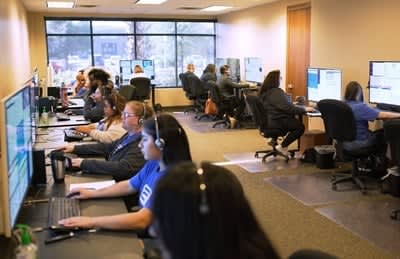
In several of the states it operates in, ALC Schools has created a series of teams to oversee routing and dispatch services, field operations, and driver compliance for its alternative-vehicle service. Photo courtesy ALC Schools
In Rhode Island, the change in the ESSA and McKinney-Vento had a significant impact on the state’s school transportation system, which is currently managed by TransPar, a national provider of pupil transportation consulting and fleet management services.
“As the program changed and the laws changed to encompass transportation for McKinney-Vento and foster care students, we really had to take a look at finding cost-efficient ways to transport our low numbers of out-of-district students,” says Nicole Martin, the systems manager for the Rhode Island Department of Education’s (RIDE) transportation service. “In some districts, we may only have two students attending public school that are in foster care, and so that’s where our eight-passenger minivans have helped.”
Currently, Rhode Island requires all 36 of its public school districts, as well as charter schools, to use its statewide program for their out-of-district transportation services. Additionally, RIDE provides service to about 1,000 special-education students, 300 foster care students, and 250 McKinney-Vento students.
“Alternative vehicles have become a more cost-effective option for carrying these students because the rate that we bill each district for these vehicles is much cheaper than using a large school bus,” Martin explains.
Meeting State, District Requirements
From consulting with transportation directors and special-education coordinators to school counselors and parents, the key is making sure that the alternative-vehicle service caters to the needs of the district and its students, says Gregg Prettyman, the chief operating officer for ALC Schools.
Over the years, ALC Schools has created in several of the states that it operates in a series of teams to oversee routing and dispatch services, field operations, and driver compliance.
For example, in states like Colorado that have more stringent pupil transportation standards, the company has added compliance officers to manage operations teams.
“Sometimes school districts will want us to put our drivers through their own in-house training,” he explains. “In some cases, we’ve had districts transporting deaf-education students, so the district might inform us that they’d like ALC’s drivers to complete a special deaf-education program that is required of its teachers and bus drivers.”
Just because the vehicle is changing, Prettyman adds, doesn’t mean there should be fewer regulations or less oversight. Having drivers fulfill the basic requirements, such as having a valid driver’s license, completing a background check and drug/alcohol screenings, is all part of the process.
Meanwhile, in Rhode Island, all of the driver training and requirements are established by the state, and any additional standards are made by the contractors that RIDE partners with — which Martin says is First Student Transportation Inc. and Ocean State Transit.
Additionally, she says the RIDE program works with TransPar to run a contract performance management program to review its contractors and hold them accountable for any safety and compliance standards required by the state and corresponding school district.
Understanding Vehicle Types, Equipment
Sedans, SUVs, minivans, and wheelchair-accessible vans are all considered safe alternatives to the school bus under the ALC model, says Dave Saunders, the company’s vice president of field operations.
Depending on the vehicle and the students being transported, he says there are key differences in the types of safety equipment required on board.
“Car seats, booster chairs, buckle guards, safety vests, wheelchairs provided by the student or family are usually the main equipment needs,” he points out. For students in wheelchairs, all ALC wheelchair-accessible vans need to be equipped with a Q’Straint wheelchair securement system, Saunders adds.
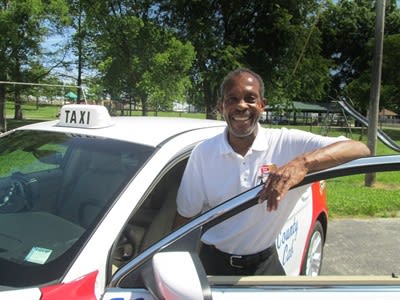
Voluntary Interdistrict Choice Corp. (VICC) in St. Louis, Mo., currently runs about 150 taxicabs to provide school transportation for some of its out-of-district students. Photo courtesy Tami Webb
In St. Louis, Mo., Voluntary Interdistrict Choice Corp. (VICC) uses a variety of vehicles for its supplemental transportation service, including some of those mentioned by Saunders, with the addition of taxicabs.
Tami Webb, the operations manager for VICC and TransPar liaison, says that VICC currently runs about 150 taxicabs as part of its transportation program, and has been using the vehicles for the last 35 years.
“Besides the taxicabs, we’re also in the midst of looking into getting some smaller 14-passenger vans to help transport some of our McKinney-Vento and current taxicab students,” Webb says. “Since we cover all of St. Louis County, a total of 570 square miles, we have some students who are in programs that are being transported by themselves, so we want to make sure they are accounted for.”
Keeping Up With Industry Changes
For school districts looking to partner with alternative transportation providers, ALC Schools’ Carey recommends districts do their research beforehand: find out what kinds of vehicles the supplemental transportation provider offers and how they are adhering to specific state and district guidelines.
“The student transportation landscape has changed so much within the last decade,” she says. “There are newer time constraints; for example, a lot of special-needs students may have a shorter window [requirement] for being transported.”
While driver shortage is a critical issue in the industry, compliance is essential, and consulting and management companies like TransPar can help monitor drivers and contractors and ensure they are compliant, Webb adds.
“It has been our experience that [school transportation] systems are consistently being asked to do more with less programmatically while the transportation staff are already doing much more with much less than anyone would have previously thought possible,” says Doug Martin, president of TransPar. “Our team understands these challenges because we tackle them every day across the country, and I think that may be the most beneficial aspect [alternative-transportation-providers] can provide.”
Subscribe to Our Newsletter
More Special Needs Transportation
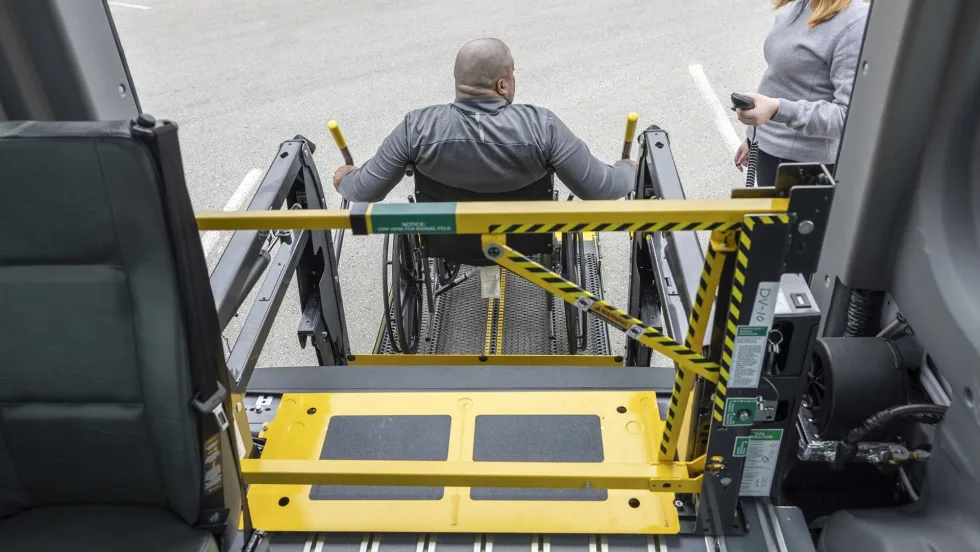
BraunAbility Introduces New Safety Barrier for Wheelchair Lifts
LiftSentinel is designed to add another layer of protection during wheelchair loading and unloading and can be retrofitted to many existing commercial lift installations.
Read More →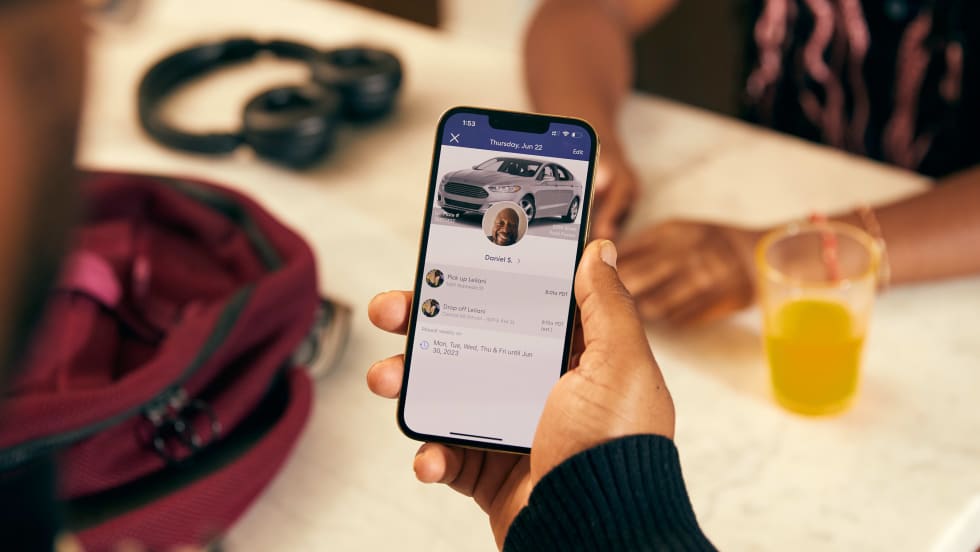
HopSkipDrive Launches New Safety, Driver Consistency Features for 2026-27 School Year
The company’s free ride recording, live ride tracking, and consistent driver assignments aim to improve safety and continuity for diverse student transportation needs.
Read More →
The Most Common Wheelchair Securement Mistakes on School Buses (and How to Fix Them)
Small missteps in wheelchair securement can have serious consequences. Here are 32 tips from experts to reduce risk and increase student safety on the bus.
Read More →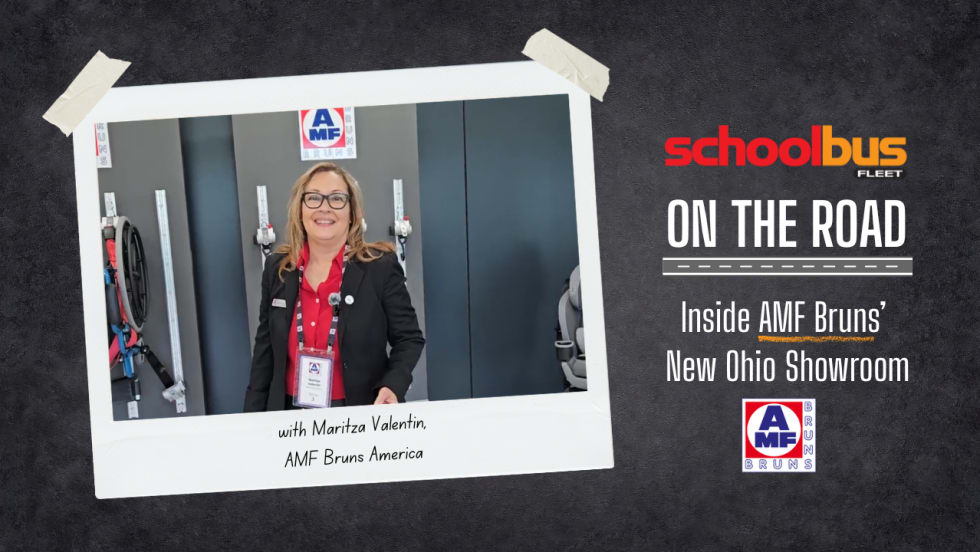
Inside AMF Bruns’ New Showroom: School Bus Securement Solutions Explained
Go inside AMF Bruns America’s new Ohio showroom with Maritza Valentin to see its FutureSafe technology, driver training tools, securement systems, and seating innovations.
Read More →
What AMF Bruns’ New Facility Means for Customers [Video]
Inside AMF Bruns’ new Stow, Ohio, operations: See how expanded space and innovation will enhance customer support and operations.
Read More →
AMF Bruns Expands in Ohio, Investing in Growth and Community
With expanded production space, local investment, and a growing workforce, AMF Bruns is scaling its U.S. presence. Here’s an exclusive first look inside the new Stow, Ohio, HQ.
Read More →
Inside AMF Bruns of America’s New Ohio Manufacturing Facility [Photos]
Take a behind-the-scenes look at AMF Bruns of America’s new 41,000-square-foot Stow, Ohio, headquarters, featuring advanced manufacturing, expanded space, and future-ready mobility solutions.
Read More →
First Student Boosts Student Support in Wichita & Texas
First Student and Wichita Public Schools are using behavioral support strategies to improve student ride experiences, while a separate initiative expands access to after-school programs through a bus donation.
Read More →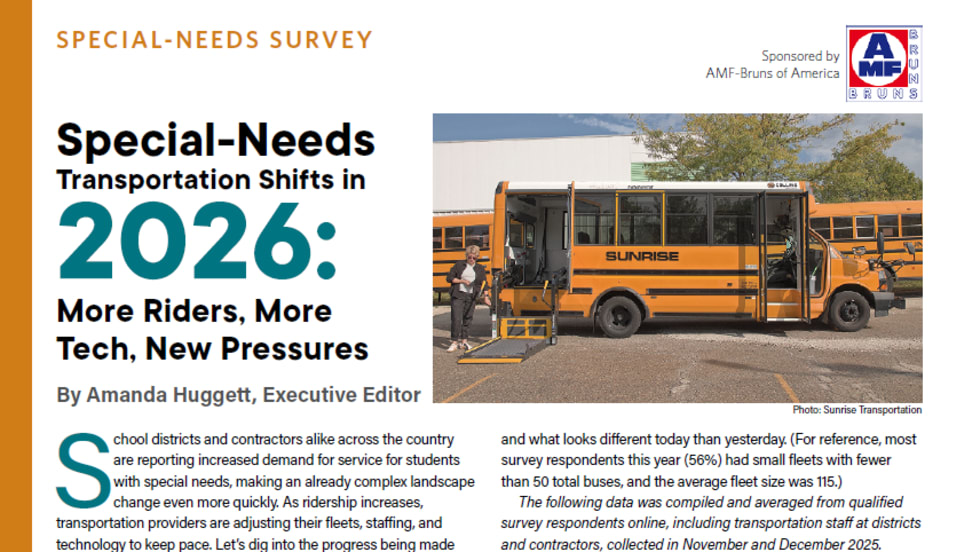
2026 Special-Needs Transportation Survey
What’s changing in special-needs transportation? This year, student transportation operators report a rising need, easing driver shortages, growing tech adoption, and evolving challenges. Sponsored by AMF Bruns of America.
Read More →
The Lived-Experience Gap in Mobility Tech: An Expert Take on Safe Student Transportation
Brianna Pauwee, a product application specialist at AMF Bruns of America and a wheelchair user, drops in to The Route to share practical securement and training insights, plus the story behind the new “Beyond Mobility” podcast. The Route is sponsored by IC Bus.
Read More →