




School boards on busing challenges, successes
In this roundtable, board members from four school districts share insight on the struggle to maintain school bus services in the face of funding shortfalls.

©iStockphoto.com/Nancy Brammer
In our previous roundtables this year, four transportation directors shared their perspectives on pressing issues in the school bus industry.
After talking with those directors, SBF Executive Editor Thomas McMahon posed transportation-related questions to a board member from each of their school districts.
A common thread running through the board members' responses is the struggle to maintain school bus services in the face of funding shortfalls. They also discuss parents' feedback on and perceptions of their district's transportation program.
The roundtable participants are:
● Martha Fluor, trustee for Newport-Mesa Unified School District in Costa Mesa, Calif., and president of the California School Boards Association.
● Rick Kimball, board chair for Salem-Keizer Public Schools in Salem, Ore.
● Tom McJury, vice president of the school board for Fairport (N.Y.) Central School District.
● Liisa Reid, school board chair for Greater Albany (Ore.) Public Schools.
If you missed the roundtable discussion with the transportation directors, go here for part one and here for part two.

Rick Kimball, board chair for Salem-Keizer Public Schools in Salem, Ore.
SBF: What do you see as the top issue for your district's transportation program right now, and what is the board doing to address it?
TOM MCJURY: The top issue is the cost. We're suffering significant revenue cuts from our state. We've chartered Peter [Lawrence, Fairport's director of transportation] with looking for any efficiencies or economies of scale that he can attack to try to save money. So that's the big thing.
We just voted to implement full-day kindergarten, so we have a transportation savings there of between $70,000 and $80,000 a year, which is very positive.
Peter just does such an efficient job of all the routing and everything else. Everything is going really smoothly. I feel fortunate that we don't have any other major issues to deal with.
MARTHA FLUOR: The challenge this year for California's school districts as well as across the U.S. is for transportation to continue to be provided at no or low cost to our families. With many of California's 1,000 districts located in rural and remote communities, the simple act of getting to and from school is daunting. Many of our districts and their transportation staff go the extra mile to ensure a safe route to school.
Given the tough economic times, school districts are being forced to make very difficult decisions regarding this transportation. In some instances, this may mean the consolidation of routes, passing the increased costs to parents or the elimination of home-to-school transportation altogether. Board members and district staff must work to develop efficient and effective transportation policies and regulations that continue to meet the needs of our students as well as maintain the fiscal soundness of the district.
Our challenge, and the transportation department's challenge, is to continue to increase our support for learning while facing continued economic challenges.
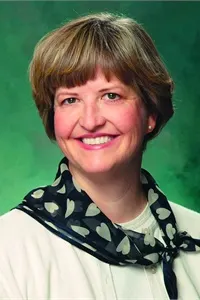
Liisa Reid, school board chair for Greater Albany (Ore.) Public Schools.
RICK KIMBALL: There are two main issues facing our district for transportation: The first is the uncertainties surrounding fuel costs. The second issue is how to deliver similar levels of service during this unprecedented economic crisis. The superintendent has asked the transportation department to review bell times for potential savings, stop major purchases such as bus and computer hardware replacements, and limit spending to the base essentials required for home-to-school transportation.
Additionally, our district has adopted a quality assurance model for the delivery of our services, and we are proud of our attainment of ISO 9001 certification. At an exit interview following a recent ISO certification audit, our transportation department in particular received high praise from the auditor.
What do you hear from parents about the transportation program?
LIISA REID: The top two things that we hear from parents are concerns about the safety of their children on the bus and concerns about the time spent on the bus. There is a third concern that we hear from community members, which is why the buses are not full.
The board views student safety as our top concern, and most recently we have asked the transportation department to investigate cost-effective methods for ensuring students, particularly young students, are dropped off at the correct stops. Other dimensions of safety are driver safety and behavior issues on the buses. While the last two have not risen to board-level concerns in recent memory, the board does support driver training, safety equipment on buses and is aware of efforts to address behavior issues through extending behavior programs from the school day to the bus ride.
[PAGEBREAK]
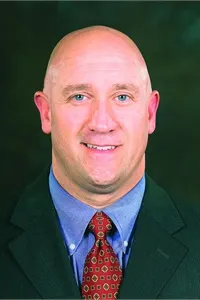
Tom McJury, vice president of the school board for Fairport (N.Y.) Central School District.
Regarding time spent on the bus, the district uses software tools to design efficient routes and revisits these routes annually to minimize bus time for students. These software tools also help to ensure the maximum efficiency of our routes, which helps to address the community concern that the buses are not full. We must also explain that since buses collect students and bring them to a location, or return them, they are essentially at some stage of filling up or emptying out during the route, and they essentially travel empty to the beginning or the end of the route.
The district is obligated to size our routes to accommodate all potential riders. It is not like the airlines, which can overbook and then bump some riders. When all the riders do not show up, the buses will carry lighter loads.
KIMBALL: The parents in our district seem pleased with the transportation service they are receiving — particularly parents of special-needs students, who seem most appreciative of the relationship they have with their drivers.
FLUOR: For many of our parents, we provide an essential service to assure their students can get to school ready to learn. For some of the younger students and students with disabilities, our drivers actively participate in the educational process. Parents are grateful for the interest our drivers have in the well-being and safety of our students. This kindness and compassion is always evident from the first hello in the morning to the last good-bye in the afternoon. This caring and concern sets the tone for our students' success at school each and every day.
MCJURY: We get an occasional, "I don't want my child to walk this far to get on the bus." Or one of the parochial school parents will say, "My child is on the bus too long." We get occasional comments like that, but generally speaking, no news is good news.
The flip side of that is, we have a very close-knit community, yet it fascinates me that people send their children out to the bus stop every morning and have someone bring their children to school and home 180 days a year, and they don't even know their name. I always view the drivers as some of the most unheralded employees in the district. Sometimes even the kids don't know their names. I feel a lot of our drivers make the effort with the kids. Sometimes they wear a strange hat or something like that, just to give the kids a little character.
There is the occasional pop-up of a bullying incident or something like that, but certainly nothing out of the ordinary.
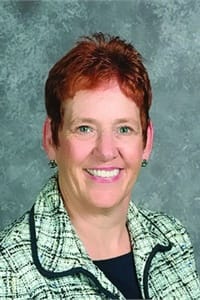
Martha Fluor, trustee for Newport-Mesa Unified School District in Costa Mesa, Calif., and president of the California School Boards Association.
We've got bell time discussions going on. We've had parents come to the board meetings and request that we flip our bus times around - the high schools go earlier and then our elementary kids go later. For example, my daughter, who's in 10th grade, gets on the bus at 6:40, but when she was in elementary school, she got on at 8:30. So there's parents saying, "We'd like to flip those around." But they don't comprehend the transportation impacts to that. They don't even realize how many miles our buses go. You start to talk to a parent and tell them how many miles our buses go and how many kids get transported, and it's staggering to them.
Also, a couple times a month, we get a nice letter or e-mail from a parent to the superintendent. The superintendent is great about getting it to Peter and celebrating it with the driver.
How much are you or other board members communicating with the transportation director?
MCJURY: We receive Peter's "Transportation Bulletin" newsletter every month. And once every year, we do a visit to transportation. We go through and talk to some of the drivers, talk to some of the mechanics, and just ask them if there's anything we should be aware of or any concerns they have. And then Peter is at pretty much all of our board meetings, which is great. We have a public comments section, and if something pops up, he's right there.
More Management

How to Build a Better Driver Training Program
Ready to boost up your school bus instructor training? Here’s how to pick the right talent and improve recruitment, retention, and safety.
Read More →
CALSTART and Forth Combine to Form Catalyst Mobility
The new name represents a renewed vision for the nonprofit focused on advancing clean, equitable, and affordable transportation solutions that move people and goods.
Read More →
What Makes a Great School Bus Driver Trainer?
Choosing the right school bus driver trainer takes more than experience. Learn six keys to selecting and developing trainers and evaluating program effectiveness.
Read More →


School Bus Contractors Expand Through New Deals, Acquisitions & Partnerships
STA's Canadian division acquires Ontario-based G&L Stevenson Transport while Durham School Services adds a new district contract in California, First Student adds a New Jersey contract, and Minnesota Coaches acquires Halo Transportation.
Read More →
Logan Bus Company Rolls Out AI Phone System for NYC School Bus Families
A summer pilot found that AI agents could handle most routine calls, freeing up time for customer service staff to focus on emergencies and complex family concerns.
Read More →
From Intent to Impact: What I Learned About Leadership from TAPT
A Texas transportation supervisor shares lessons on self-awareness, accountability, managing stress and building trust — and why investing in leadership development matters at every stage of your career.
Read More →
NAPT Names 2026 Award Recipients, Hall of Fame Inductee
Who earned national recognition for their work in student transportation? This year, NAPT named five recipients of its 2026 awards for service, safety, and leadership, plus its newest Hall of Famer.
Read More →
2026 State of Student Transportation Report
Driver shortages. Rising costs. Growing safety expectations. More data, but not enough time to act on it. The 2026 State of Student Transportation Report reveals what transportation leaders say is putting the most pressure on their operations—and where they’re investing next. See how your priorities compare.
Read More →
How to De-Escalate an Angry Person: 5 Steps for Handling Workplace Conflict
What makes emotions run high, and how should you handle an angry colleague or parent? Follow these steps for staying calm, listening, showing empathy, and resolving conflict.
Read More →
What Readiness Looks Like This School Year
Learn about the challenges shaping the 2026–2027 school year, from persistent driver shortages and budget pressure to technology and readiness gaps. See how school districts are responding and adapting in Zonar’s 2026 Back-to-School Readiness Report.
Read More →