




Keeping the Yellow Bus Running: Part 2
In the second half of this roundtable discussion, four transportation directors consider ways to ensure the industry’s continued success, from succession planning to performance measurements to sharing services.

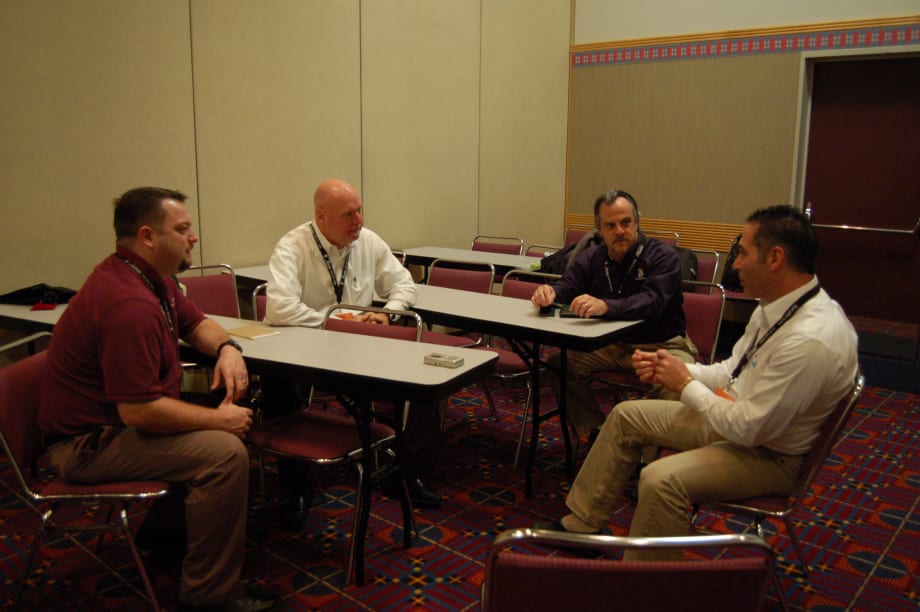
Directors (from left) Chris Ellison, Michael Shields, Pete Meslin and Peter Lawrence continue their discussion of issues facing the industry.
In our February issue, four prominent transportation directors discussed key issues facing the school bus industry.
The talk took place at the most recent National Association for Pupil Transportation (NAPT) Summit and was moderated by SBF Executive Editor Thomas McMahon.
Here, in the second half of their conversation, the directors delve into ways to ensure the industry’s continued success, such as building up the next generation of leaders and developing consistent performance measurements.
The roundtable participants are:
• Peter Lawrence, director of transportation at Fairport (N.Y.) Central School District
• Pete Meslin, director of transportation at Newport-Mesa Unifi ed School District in Costa Mesa, Calif.
• Michael Shields, director of transportation at Salem-Keizer Public Schools in Salem, Ore.
• Chris Ellison, director of transportation at Greater Albany (Ore.) Public Schools and president of the Oregon Pupil Transportation Association (OPTA)
If you missed the first half of the discussion, see pg. 32 in the February 2011 issue or go here.
SBF: What are some other key issues that the school bus industry is dealing with?
MICHAEL SHIELDS: We’ve got to look at changing our image, and we need to do that by examining how we are perceived and presenting ourselves in a different light.
Our district, when I arrived, was perceived as the bus company. We really weren’t part of the school district. Now, when we go out into the schools and do our interviews with principals and office managers, our staff tells our story. We make a relational connection with that school. We’re after the same type of person internally that they want — our value systems are shared. The bus driver that’s interviewing understands that this is about kids — this isn’t necessarily about buses. What that does when we go to administrator meetings is we’re received warmly and openly.
The other thing we have to look at is performance measures. All of the districts represented here manage pretty soundly. But we have peers out there that we need to figure out ways to offer non-threatened peer reviews to, where we say, “Here are the tips and tricks. Here’s how we do it. How can we reach out our hand to you? Can we offer co-op or regional services?” Maybe they’re a small district, and they can’t do the training. Well, if I charge them XYZ, I can add another .5 FTE [full-time equivalent] to my driver trainer pool. Or maybe a full FTE, and I can do three other districts. They don’t have to have a driver trainer now, and I get the benefit, and they get the benefit, of us providing the state-mandated classes and the refresher courses. We have to start thinking about sharing services.
Pete Meslin is director of transportation at Newport-Mesa Unified School District in Costa Mesa, Calif.
PETE MESLIN: That’s a very tough nut to crack. We’ve been trying in our district for the last four or five years to build partnerships with other local districts. There are huge efficiencies to be had if, for example, we’re taking a student to a nonpublic school 30 miles away. Why don’t we pick up students from other schools and school districts that are going there as well? This type of process is very difficult to implement, because transportation people tend to have a mindset like, “I don’t do it, I’m not in control, something’s going to go wrong, and I have no ability to fix it.” So I agree with you completely — we have to change that whole way of thinking.
CHRIS ELLISON: One thing we’ve started with OPTA is a dialogue with other districts. OPTA sponsors a roundtable forum every other month, with dinner provided. We have a host location and a predetermined topic. We’ve had 20 to 25 people from probably six or seven nearby districts. It’s a best-practices type of thing. People glean ideas off of each other and take them back to their operation. We’re looking at that as a resounding success. That dialogue has been presented, and it’s a chance to network and get to know your neighbor.
SHIELDS: One of the things that I find: I’ve been in a number of districts in my career, and all of them have faced different challenges. In one district, the fishing and logging industry was down, so they were closing schools. It was a matter of survival. Another district I was in doubled in size, and it was a matter of keeping up. Interestingly enough, for both, expectations exceeded resources.
When we’re not performing well in the eyes of the education folks, what happens is they call for a study. Then they come in and look at the leadership and the management. But generally what I find is that the expectations have exceeded the resources that are available and the willingness to make adaptations and the types of school bell times that are necessary to provide some cost reductions. The thing that we have to do is rethink how we do business.
Also, we need to start growing our own. The PDS [Professional Development Series] program that NAPT puts on is a great thing. We need to drive that down regionally or by state.
[PAGEBREAK]
Peter Lawrence is director of transportation at Fairport (N.Y.) Central School District.
PETER LAWRENCE: One thing we’ve talked about at NAPT over the years, with key performance indicators, is getting some consistent measurements. If we’re going to have key performance indicators, we need to be speaking the same language. That’s something that we’re really looking at as an industry. When I do my cost per mile, that includes all of my 32 budget codes, department operational costs and the building costs. So that covers salaries, office and garage. Some people look at my cost per mile and say, “You charge that much?” Well, that’s what it is.
MESLIN: We need to publish some standards.
LAWRENCE: And it should come through NAPT.
SHIELDS: At one district’s shop, all they did was charge labor. So I said, “Well what about the coveralls? What about the nuts and bolts? What about your nonproductive time: your vacation and your breaks and training?” So your shop rate doubles or triples, because those are costs you have.
We provide services to about nine other Oregon departments of education, community colleges, a number of small school districts and the community Head Start. So those are other areas where, as service providers, we need to start thinking outside the box and saying, “Hey, we can do these things for you. You don’t have to send them to a private shop.”
MESLIN: We have a similar situation where we have a shop with mechanics with a great deal of expertise and we have economy of scale. So the local community college district can hire their own mechanics to work on their four buses, or they can bring them to us. They’ve chosen our shop.
LAWRENCE: One of my neighbors ended up losing a mechanic position due to budget cuts. They looked at their coverage, and they had to expand. So they go to about 9 o’clock at night, with two people in early. The beauty of that is if a bus doesn’t start or something deadlines, you can take another bus, because all of the buses are there. Nothing’s tied up for service. So from a safety standpoint, drivers get their regular bus that they’re used to. They’re happier, and you don’t have the confusion — “I couldn’t find that switch.” Although, they should know that, as we encourage them to familiarize themselves with the substitute buses.
Michael Shields is director of transportation at Salem-Keizer Public Schools in Salem, Ore.
SHIELDS: Times are tough. But if we had those baselines — it takes this many hours to maintain this type of bus; you need this many people to do that safely — so that if we look at making those cuts, then we’re saying, “So what numbers of vehicles do we put out of service?” Or, “What vehicles don’t we work on?” But what we do is we put ourselves at risk — “we” being, generally, the industry. We take those chances. But we have to be generous in our understanding. The fiscal folks aren’t doing that, because they’re being mean. But if they had the information to see that if you’re going to cut this situation, then we’re going to have to extend our brake life or our safety inspections — they would say, “Oh, gosh, we don’t want to do that.” OK, where else are you going to look? Either we reduce our number of miles traveled, or you’re going to take this risk, because this is what it takes to adequately do that job. But we don’t have those standards.
Any other topics you want to discuss?
MESLIN: One thing that’s not related to what we’ve been talking about is succession. I think every business has two jobs: serve your customers and create your replacement. We as an industry are aging, and our challenge is for the next generation. Who’s going to take my place? Are the new people as interested in creating standards, in working on partnerships, in sharing expertise? Is that generation’s set of values the same as ours, with regard to serving kids first? We don’t know. It’s increasingly difficult to find people that bleed yellow.
[PAGEBREAK]
LAWRENCE: It’s really incumbent on us to make sure that we have the policies and the procedures. Years ago, it was OK to just say, “Do you know anything about transportation? Hop in and fly by the seat of your pants.” It was very informal.
We’ve always had five mechanics. If Joe retires, well, we hire another one. We should be running like a business. People aren’t beating the doors down to join this industry, so it’s even more important that we get this stuff set up. So if someone comes in who doesn’t have a transportation background, they can look and say, “Oh, this is the procedures manual, this is the background, this is the history.” And unfortunately in our industry, people are so busy that they don’t take the time to write out the policy. One of the things I’m working on is literally a policies and procedures manual. That’s something administrators should strive for, to make sure everything’s there.
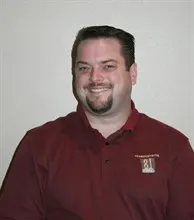
Chris Ellison is director of transportation at Greater Albany (Ore.) Public Schools and president of the Oregon Pupil Transportation Association.
ELLISON: I agree with that somewhat. I’m coming up from a different generation, where I’m relatively new as a director — starting my fifth year. I’ve been in the industry for going on 15 years now. If you would have asked me right out of college, with a business administration degree, if I would be driving a school bus, I would have said, “No — you’re crazy.” But I fell in love with the industry. There are people out there that will bring a new set of ideas, kind of like I did with Greater Albany Public Schools. A lot of them were positive; some of them didn’t fly. You learn and move forward. We’ve got to adapt. We’ve got to grow. We’ve got to listen to up-and comers.
I think it’s absolutely critical that we do find the people that share that passion, that interest. They are out there, and it should be a concern if we don’t find them.
SHIELDS: One of the things that is just paramount in our jobs: We oftentimes view our jobs as being in the trenches, but where we need to be is up the hill. We need to be saying, “What are the needs of this operation? What are the needs of the future facility and people and resources?” And succession planning is one of them. There’s several people that can step in and pick up the pieces of what I do. Not all of them could do all of it right now, but certainly our operation would continue. And so we’ve tried to do that with each position in our operation with the cross training and the sustainability — growing your own, creating an environment where there’s synergy, where people want to learn.
MESLIN: That’s what’s so neat about NAPT’s LED [Leading Every Day] program. It’s focused on raising the next generation of leaders in our industry. When people are in positions of leadership — either by choice or by circumstance — we want them to have the tools they need to do a quality job.
More Management

How to Build a Better Driver Training Program
Ready to boost up your school bus instructor training? Here’s how to pick the right talent and improve recruitment, retention, and safety.
Read More →
CALSTART and Forth Combine to Form Catalyst Mobility
The new name represents a renewed vision for the nonprofit focused on advancing clean, equitable, and affordable transportation solutions that move people and goods.
Read More →
What Makes a Great School Bus Driver Trainer?
Choosing the right school bus driver trainer takes more than experience. Learn six keys to selecting and developing trainers and evaluating program effectiveness.
Read More →


School Bus Contractors Expand Through New Deals, Acquisitions & Partnerships
STA's Canadian division acquires Ontario-based G&L Stevenson Transport while Durham School Services adds a new district contract in California, First Student adds a New Jersey contract, and Minnesota Coaches acquires Halo Transportation.
Read More →
Logan Bus Company Rolls Out AI Phone System for NYC School Bus Families
A summer pilot found that AI agents could handle most routine calls, freeing up time for customer service staff to focus on emergencies and complex family concerns.
Read More →
From Intent to Impact: What I Learned About Leadership from TAPT
A Texas transportation supervisor shares lessons on self-awareness, accountability, managing stress and building trust — and why investing in leadership development matters at every stage of your career.
Read More →
NAPT Names 2026 Award Recipients, Hall of Fame Inductee
Who earned national recognition for their work in student transportation? This year, NAPT named five recipients of its 2026 awards for service, safety, and leadership, plus its newest Hall of Famer.
Read More →
2026 State of Student Transportation Report
Driver shortages. Rising costs. Growing safety expectations. More data, but not enough time to act on it. The 2026 State of Student Transportation Report reveals what transportation leaders say is putting the most pressure on their operations—and where they’re investing next. See how your priorities compare.
Read More →
How to De-Escalate an Angry Person: 5 Steps for Handling Workplace Conflict
What makes emotions run high, and how should you handle an angry colleague or parent? Follow these steps for staying calm, listening, showing empathy, and resolving conflict.
Read More →
What Readiness Looks Like This School Year
Learn about the challenges shaping the 2026–2027 school year, from persistent driver shortages and budget pressure to technology and readiness gaps. See how school districts are responding and adapting in Zonar’s 2026 Back-to-School Readiness Report.
Read More →