




Re-Assessing Route and Stop Safety
According to statistics compiled by the Kansas State Department of Education’s School Bus Safety Education Unit, there were nine loading/unloading fat...
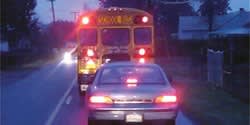
According to statistics compiled by the Kansas State Department of Education’s School Bus Safety Education Unit, there were nine loading/unloading fatalities during the 2003-04 school year. Three of these children were hit by their own bus, and six were struck by a passing vehicle.
While those numbers are relatively low, there are other risks that can come into play with bus stops, such as fights breaking out among students, the potential for abductions and children being injured on the way to or from their stop. Clearly, children are most vulnerable when they’re outside of the bus. Keeping them safe out there is a process that requires continued vigilance and re-evaluation on the part of transportation personnel as well as assistance from parents and other residents.
An eye for danger
Since the drivers are the ones visiting each of their stops every day, they are in a prime position to assess safety.
Ted Finlayson-Schueler, president of Safety Rules!, says that drivers must be trained to re-evaluate their stops every day because of these variable concerns. Finlayson-Schueler recommends that drivers have a “Bus Stop Hazard” form they can submit if they see something that compromises the safety of a stop.
In such a case, the follow-up is critical. A route supervisor or other official should visit the stop with the driver to “review the concern and either make adjustments to the stop or establish a procedure that can be followed to reduce or eliminate the hazard,” Finlayson-Schueler says.
At the Hillsborough County (Fla.) School District, transportation personnel are constantly evaluating routes and stops throughout each school year. Beverly DeMott, the director of transportation, says her department works with the district’s safety office, principals and area directors during these reviews and modifications.
But that’s not all. “In between these annual reviews, we address specific concerns via e-mail and calls from parents, input from school bus drivers and e-mail and calls from other citizens,” DeMott says. Route coordinators also review route and stop safety during district funding periods in October, February and June.
What to look for
Visibility for the bus driver and other motorists is one of the most crucial aspects of the bus stop. Features such as signs, foliage, construction and snow banks can restrict vision. And, of course, these things will change.
Transportation consultant John Farr says that a view of 500 feet in either direction along the road is desirable so that motorists can clearly see bus lights in advance.
While hilly or curved areas can be problematic, they’re not always avoidable. Hillsborough County’s Website lists Florida state guidelines that deal with such concerns in positioning stops. The recommendations call for stops on hills to be placed on the upgrade and to avoid the crest of the hill.
Additionally, the guidelines state that stops should not be in a lane for right turns, acceleration or bicycles and should be at least 200 feet from an intersection.
Finlayson-Schueler says that one of the most common mistakes is placing a stop at an intersection when it could just as easily have been placed mid-block. “Intersections are where traffic accidents happen, so stopping buses there and having children waiting, loading and unloading there is putting them in harm’s way,” he says.
Some potential risks are subtler than others. For instance, Farr points out that areas with a lot of rocks should be avoided. “We do not need to encourage the next Randy Johnson who may be bored while waiting for the bus,” he says.
{+PAGEBREAK+} Safety with software
While routing software can help school bus operations save time and money, the technology still needs to leave room for judgment on the part of the experts. Antonio Civitella, president and CEO of Schenectady, N.Y.-based Transfinder, refers to this as “the human factor.”
“Our system is not designed in a way that you press a magical button and all the routes get created by what the computer thinks,” Civitella says. The software lets the end-user make key decisions related to safety.
In order for the computer to pinpoint the best stop on a road, the user has to enter information such as the speed limit and the location of any major obstructions to visibility, such as a large tree that causes a blind curve. And, of course, some of these factors will change. “If the owner decides to cut that tree down next fall, all of a sudden it’s not a blind curve anymore,” Civitella says. Because of these extra cautionary steps, he says it’s crucial that routers know the area well.
DeMott concurs: “You have to have a human being responsible for reviewing the location of school bus stops. A transportation department cannot allow a computer to do it alone.”
Places to avoid
Some spots along routes may pose hazards because of the existing road features. Areas such as cul-de-sacs, dead ends and narrow streets not only make it more difficult to maneuver the bus, but they can introduce danger by limiting a driver’s visibility and even forcing them to back the bus.
Many operations avoid these types of places as a rule. Terence Turley, the transportation safety foreman at Lower Merion School District in Ardmore, Pa., says that district drivers do not enter cul-de-sacs or dead-end streets. “Generally, bus routes should be established to avoid unnecessary turns, turnarounds or other deviation from a straight-line route,” Turley says.
Other important considerations are the types of people and businesses that reside in the area. While some states have laws on how far bus stops must be from the addresses of registered sex offenders, such a measure can be put into place at local operations even if it’s not mandated.
Information on sex offenders can often be obtained from law enforcement or justice departments. In California, for instance, the Office of the Attorney General’s Website at www.meganslaw.ca.gov can be searched by county to provide maps of sex offenders’ addresses.
Civitella of Transfinder says that some school bus operators have used the company’s mapping system to overlay sex-offender locations and prevent stops from being placed nearby.
In late January, a Texas state representative initiated legislation that would keep school bus stops a minimum of 1,000 feet away from the homes of registered sex offenders. The state has a searchable registry available at http://records.txdps.state.tx.us.
Of course, there are plenty of other locations that would be best to steer stops clear of. Earlier this year, a father in Carmel, N.Y., complained that his 6- and 9-year-old daughters were being dropped off in front of Giggles, an adult entertainment store.
{+PAGEBREAK+} Standing together
The stop environment must be analyzed in terms of who the students are, how many of them there are and what the spot is like where they wait.
DeMott says that the more children at a stop, the greater the chances that they will break the rules for safe waiting. But in some cases, such as large apartment complexes that only have one entrance, it’s not feasible to limit the number of students at a stop.
“What is the ‘magic number’? It depends on the students, the area of town and the location of a specific stop,” DeMott says. The department generally tries to add a bus stop when an existing one approaches 20 students. Then, the group can be split into two stops of 10.
Joyce Crow, the transportation supervisor at Placentia-Yorba Linda (Calif.) Unified School District, says stop capacity should vary by location, depending on how much suitable waiting room is available. Students need to be able to keep a safe distance from traffic and from the bus when it approaches.
The mix of students is another key. “Consideration should also be given to the number of students based on age and behavior — especially with middle school students — or any community dynamic, such as gang turf,” Crow says.
Parents’ part
By volunteering to wait at bus stops for the morning and afternoon runs, parents can have a multiplying effect on safety.
According to James Kraemer, director of 2safeschools.org and a veteran school bus driver, one of the most important-yet-overlooked factors is whether stops include adult supervision.
“Children under 9 years old especially need supervision,” says Kraemer. “Kids in this age group have a very limited concept about the dangers present at bus stops and are easily distracted.”
In the case of older students left on their own, fighting and other reckless behavior are concerns that can be softened with the presence of adults.
Finlayson-Schueler says that parents can be taught proper waiting and loading procedures and help reinforce them with their children. By doing so, he says, they can become “an integral part of a district’s bus safety program.”
DeMott says that parental supervision at the stops is increasingly critical because of factors such as child abductions, reckless drivers and drug concerns. “The day has now arrived when a parent must set priorities,” DeMott says. “What is more important — work or the child’s safety at a bus stop?”
This school year, Hillsborough County began requiring that 5-year-olds be met by an adult at their bus stop. Otherwise, they are returned to school. DeMott says that the rule has always applied to 3- and 4-year-olds.
Feedback can help
While it might not be possible to keep everyone happy, input from parents and other residents can help in identifying potential dangers. After all, these people live there and should know the area as well as anyone.
At Hillsborough County, those who live near bus stops often report troublesome behavior, such as children running in the street, vandalizing property or leaving trash. The transportation department then sends parents a letter explaining the problem and that the stop will be moved if they receive another complaint.
Communication with residents can help to avoid conflicts. Farr says that in his years in pupil transportation management, he has learned that once an ideal stop location is found, it’s wise to ask those who live there before making the change.
“It takes a special resident to watch out for the children, tolerate some shenanigans and open their porches and garages to the children when it rains,” Farr says. “If a homeowner agrees to a stop by their home, I give them my card and encourage them to call if there are any problems.”
More Safety

What Happens When a School Bus Catches Fire — and What Can Help
School bus fires are rare but can be devastating. Learn how advances in fire suppression and asset protection help fleets detect fires earlier, reduce damage, and improve safety.
Read More →
Geotab Launches Tool to Help Fleets Investigate Road Incidents
Geotab Investigations combines telematics data, video, documents, and other evidence to help fleets reconstruct incidents, resolve claims, and determine what happened.
Read More →
Doing More With Less: How Transportation Directors Can Prioritize Safety Amid Budget Uncertainty
With diesel prices soaring and nearly one-third of transportation directors expecting budget cuts, maintaining student safety has never been more challenging. Download this guide to learn how leading districts are prioritizing risk, funding critical safety technology, and building stronger budget cases with data.
Read More →
How To Build a More Secure School Bus Yard During and After Hours
As thefts and overnight security threats continue, school transportation leaders are combining stronger operational practices with AI-enabled surveillance to better protect buses, facilities, and staff.
Read More →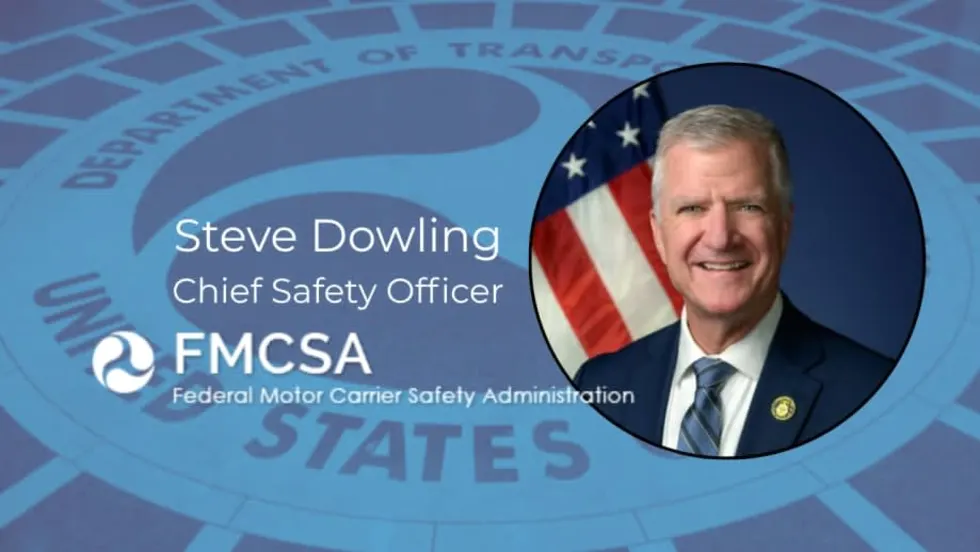
FMCSA Names New Chief Safety Officer: What School Bus Operators Should Know
Steve Dowling is set to lead the federal agency's efforts to advance commercial motor vehicle safety and reduce crashes, fatalities, and injuries on the nation's roadways.
Read More →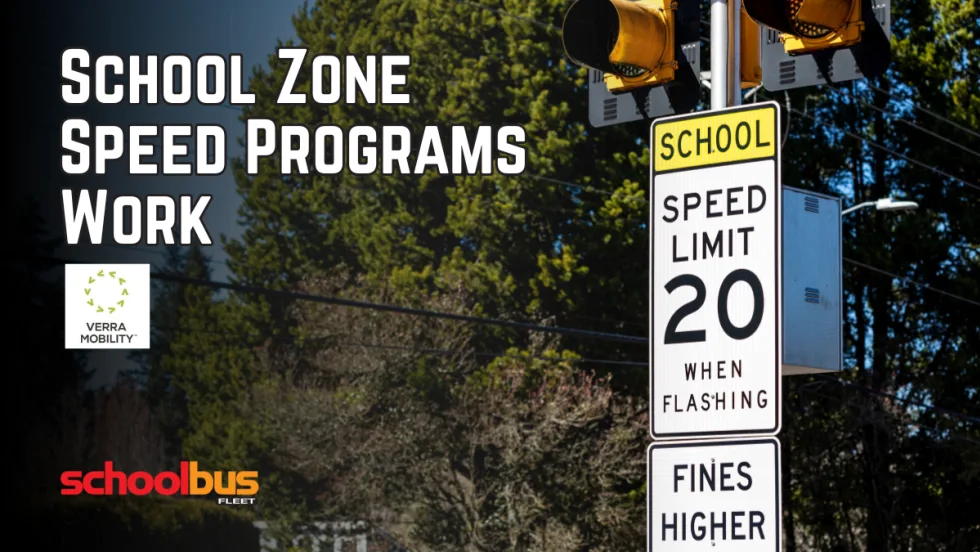
New Study Finds School Zone Speed Safety Cameras Cut Speeding Violations 97%
A Florida university's research demonstrates that Verra Mobility's automated enforcement changes driver behavior and significantly improves school zone safety.
Read More →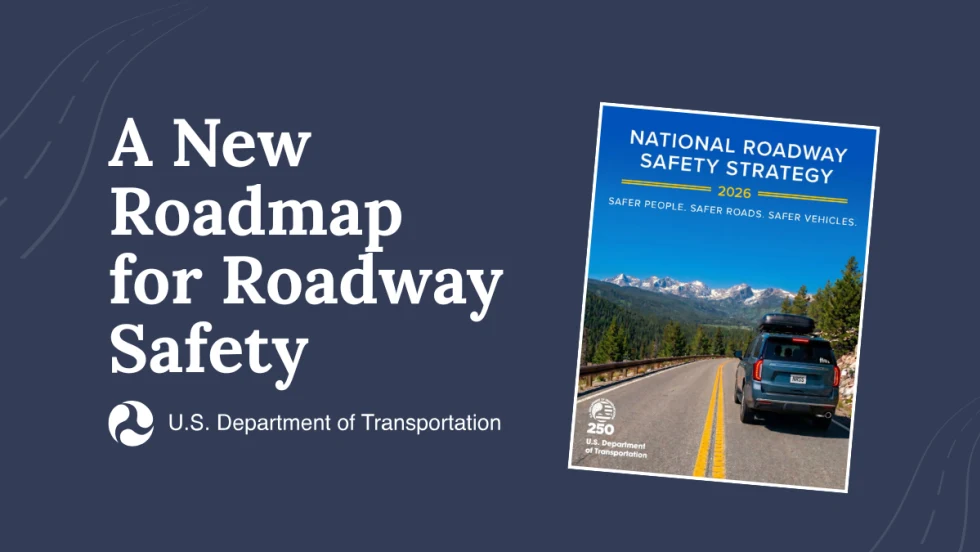
What Changed in DOT’s New National Roadway Safety Strategy?
The federal agency's new plan shifts its focus to safer people, roads and vehicles, with a new three-pronged approach instead of five. One outlined action even addresses a key industry concern around illegal school bus passing.
Read More →
Are Autonomous Vehicles Ready to Safely Navigate School Bus Stops?
NHTSA is accelerating autonomous vehicle deployment through new safety standards and commercial approvals. See why school transportation leaders are watching.
Read More →
NFL Star Lomas Brown Kicks Off New Illegal School Bus Passing PSA
Just in time for the back-to-school season, the former Detroit Lions offensive tackle took time to record a video encouraging motorists to slow down around school buses.
Read More →
How Two Texas Districts Built Award-Winning Safety Programs
Learn how Prosper ISD and Rockwall ISD earned National Safety Council honors through hands-on training, safety culture, and strategies that reduced transportation incidents.
Read More →