




Q&A: Rising Fuel, Bus Prices are Key Challenges
International's Michael Cancelliere says school bus operators need to examine idling practices and routing efficiency to minimize the impact of high fuel prices. Meanwhile, he predicts a 5 to 8 percent increase in volume of bus sales this year.


After almost two years at the helm, Michael Cancelliere, vice president and general manager of International Truck and Engine Corp.’s Bus Vehicle Center, maintains a strongly positive take on school transportation.
A former vice president of North American truck sales at International, Cancelliere has embraced the school transportation community and taken a leadership role in facilitating bimonthly meetings among the presidents of the industry’s three major associations.
But he sees a steady stream of challenges facing the industry: the rising price of fuel and school bus construction materials, the need for continuing education of technicians in advanced technology and a lack of state and federal funding.
SBF Editor Steve Hirano recently sat with Cancelliere at his office at International’s headquarters in Warrenville, Ill., to discuss a broad range of school transportation issues.
SBF: What’s the top priority for school bus buyers right now?
MICHAEL CANCELLIERE: There are a couple of different ways to answer that. “Top priority” might vary depending on who you ask. If it’s a business official, his top priority is seeking the highest and best overall value for what they’re purchasing. If it’s the maintenance department, they want a vehicle that’s easy to service and that they’re familiar with and they know that for the 10, 12, 15 years that they’re going to keep it that they’ll get outstanding parts and service support after the sale. If you’re the transportation director, of course, you’re looking to keep your fleet as new and current as you can and your emphasis is operating the safest vehicles on the road. Ultimately, all of these concerns are important.
Many of our customers are challenged to manage escalating operating costs within the confines of a fixed budget. There’s nothing particularly new about that, but what is new is that fuel costs are a very common concern. It’s on the minds of all of our customers. So are the new EPA regulations. Customers are thinking about diesel particulate filters, life expectancy, maintenance costs, fuel economy related to ultra low sulfur diesel. They want to know how all of this is going to impact their operation.
There was a story in the newspaper recently about a school district that closed down for two days to reduce its fuel costs.
That’s a very extreme measure. School districts can do other things to mitigate the fuel situation. Making more money available for the operation of school buses in regard to fuel costs would solve a lot of problems, while recognizing that there’s always competing concerns for funding. When you think about operational changes that can be implemented to address this situation, a few examples come to mind. One, idling, which can deteriorate your fuel economy. Put another way, good idling practices can improve your fuel economy. Idling practices could affect fuel economy by as much as 10 percent. This ties into drivers and driver training. You can talk about engines and fuel economy and the price of fuel all day long, but that’s only half the equation. The other half of the equation is the driver. People need to take a systems approach.
Typically, we talk about the driver from the standpoint of safety, and that’s a given, but the driver is also important in how he or she operates that vehicle — not just the speed of the vehicle, but the idling as well. Some additional training could be important to help reduce idling.
Also, devices exist that can provide transportation directors with reports on the idling of each bus. That’s one of the features of our AWARE telematics package. One of the other things that customers could take a look at is alternative routing. Maybe instead of picking up at every corner, you group a few stops. It reduces the number of stops you have to make and the adverse effect that has on fuel economy. They should be looking at the overall picture, too, to determine if they have the most efficient routing out there to serve their customers and meet their own needs. Additionally, having good maintenance practices in regard to tire pressure can help improve fuel economy.
Customers are being forced to make more choices in other areas of their operation to deal with the fuel costs. For example, do they repave the parking lot or use that money to supplement the fuel deficit?
Our research suggests that bus sales were essentially flat for the 2005 sales year (up 1 percent from Nov. 1, 2004, to Oct. 31, 2005). How do you think the 2006 sales year will end up? Do you think there will be a lot of pre-buying ahead of 2007?
We see the industry slightly up in 2006, maybe 5 to 8 percent over 2005. There is some pre-buying taking place in a few larger fleets, whether they’re private contractors or school districts. But most customers don’t have the opportunity to pre-buy. The money comes when the money comes. Some states are looking to give their constituents funding to buy buses in 2006. States such as Georgia, South Carolina and California are currently discussing bond proposals or other special funds earmarked for school bus purchases. This may coincide with buying ahead of the 2007 emissions changes as opposed to being driven by it.
The other side of this is that some fleets are holding off buying new buses until the 2007-compliant engines are in production. Many school bus customers are looking forward to having newer, cleaner diesel engines in their fleets, and while they recognize the cost implications, they do like the positive contributions these engines will make to the environment.
[PAGEBREAK]
Do you have much of a backlog of orders? If so, are both plants working close to capacity?
We have a healthy backlog of orders right now. Our business is up significantly on a year-over-year basis. Both plants are operating at capacity, and we’re considering measures to increase the daily build rate as required to meet the needs of our dealers and customers. We expect 2006 to be a very good year. Continued success and acceptance of our new CE and BE products have contributed to what’s making 2006 a big year for us.
Beyond the additional cost that they bear, how do you think the 2007 engines are going to affect end-users? How much help will they receive from your dealers in regard to the learning curve of operating 2007 engines?
In addition to the anticipated price increase of $5,000 to $6,000, we expect customers to align with other operational changes related to meeting the 2007 emission levels. No. 1, the ultra low sulfur diesel [ULSD] is expected to cost about 5 to 10 cents more per gallon, so fuel costs will likely go up for our customers.
Note that the petroleum companies are adding lubricants to ULSD to allow pre-2007 engines to run on it. We heard in some industry workshops that customers are concerned about how the pre-2007 buses in their fleet will perform with ULSD. The new engines will also use low-ash oil to extend service intervals. We expect oil change intervals for our engines to remain the same. And, of course, the diesel particulate filter will require periodic cleaning. We expect no issues with the new aftertreatment equipment as long as customers do not use non-ULSD fuel in the new engines. Finally, I think it’s important to note that we’ve been producing Green Diesel Technology with the fundamental technology of EGR (exhaust gas recirculation) to achieve lower emissions for the past five years.
Is the school bus market becoming more competitive? How is that affecting margins?
The forces of supply and demand are well at work in our industry. As we look to the future, we see a fairly stable market on the horizon. The school bus industry does not have these wild swings and fluctuations as the truck industry. Nonetheless, bus manufacturers continue to have more capacity than the marketplace demands, and to remain competitive and viable over the long term, manufacturers must have scale, quality and distributor outlets that can meet school bus customer demands after the sale.
Do you expect bus prices to continue to spiral upward?
Rising commodity prices continue to adversely impact us as well as the rest of the industry. This is particularly critical because 70 to 80 percent of the cost of a bus is in the materials. If this was an industry that had high margins to begin with, the OEMs could absorb some of these increases. But that’s not the case.
It’s a very competitive business, with about 70 percent of the buses procured through school district bids and the other 30 percent sold to private contractors. So we must continue to improve our efficiencies to offset whatever costs we can, but in the last few years, the increases are coming at a greater pace than the savings are.
Outside of that, healthcare costs and salaries continue to increase each year as well. As a result, customers should expect to see school bus prices continue to increase. Compared to any other passenger transportation option, whether it’s Mom in an eight-passenger SUV for $50,000 or a 40-passenger city bus for $400,000, one can make a case that a school bus delivers the highest value and the greatest safety.
Is IC Corp. planning any major design changes in the BE, CE, RE or FE?
As you know, both of our BE and CE models are very new, and we believe they’re on the leading edge. We do have plans in place to further invest in our FE and RE models to meet specific needs of our customers. These changes will be implemented over time starting in 2007.
How are sales of the BE 200 faring?
We are pleased. Sales growth is slightly ahead of forecast. In fact, we project this model to account for nearly 20 percent of the Type A/B small bus market in this, its first full year of production. Customers like the commonality with their large bus models as well as the one-stop shopping and overall durability of the BE 200 vs. the typical cutaway bus. Drivers are the biggest fans of the BE!
What in particular do they like about it?
They like its visibility. They like the maneuverability. They like the entry-egress to the passenger compartment. They like the 78-inch headroom. They like the dash and the steering wheel, which can be equipped with controls for the power doors and eight-way warning light system. How long do you think it will be before a hybrid propulsion school bus is ready for the market? Will pricing be a major hurdle?
We’ve already announced the first HEV [hybrid electric vehicle] for the school bus industry. A major customer will be taking delivery soon. We’re very excited about the potential of this technology. The frequent stops that school buses make are a great fit for a hybrid system, which captures and makes use of regenerative braking energy. Hybrid technology is not free, of course. Prices will be high until the volume grows enough to lower costs. To overcome this cost hurdle, we are working with industry associations to help get federal legislation and funds available to make them more affordable.
What kind of interest are you seeing in your telematics package?
Interest in the AWARE telematics package for the school bus industry has far exceeded our expectations. Customers really connect with the ability that AWARE provides for real-time monitoring of the safety, location, diagnostics and performance of the school bus. The importance of knowing where a school bus is at all times continues to increase. This also fits with the work led by NAPT [National Association for Pupil Transportation], NASDPTS [National Association of State Directors of Pupil Transportation Services] and NSTA [National School Transportation Association] on advanced safety legislation. While customers are interested in the safety aspects, such as the ability to know where their buses are at all times, the maintenance aspects and the efficiencies gained through reduced idling and performance diagnostics are also important. AWARE makes sense for today and the future. We are working on ways to package the upfront costs and monthly fees to make this technology available to more customers.
[PAGEBREAK]
What is the monthly fee?
It varies by fleet size, but it’s generally $30 to $35 per month.
Has IC Corp. made any manufacturing improvements over the past year or so? And have you found ways to reduce manufacturing costs?
Quality, quality, quality. We continue to make advances in the quality of the buses we build, and all of our key quality metrics are validating the effort that we have put into achieving higher quality.
We have gained significant efficiencies at both our plants [in Conway, Ark., and Tulsa, Okla.], resulting in better quality product. We attribute these gains to the leadership of Ed Hartung at the Conway plant and Grant Pick at the Tulsa plant, who along with their teams have made process improvements and are focused on the right areas.
At both of our plants, hourly employees’ incentives are tied into CARE scores, which is a quality metric. The benefits of quality not only reduce our manufacturing costs — fewer hours to build the bus, less rework, lower warranty costs, less in-transit breakdown — it also provides our customers with more uptime, as well as reducing the prep time for our dealers. So our customers win, our dealers win and our employees win with continued improvements in quality.
We attribute a lot of these quality improvements to what we call our IPV [in-process validation] stations. Throughout our plants we have stations for the body line, the chassis line and the bump track. Our No. 1 thrust is building it right the first time. Beyond that, we’ll have a final in-house IPV station where we will go through every single bus in detail to make sure that the quality levels are achieved on the line. If we miss something on the line, we make sure that it goes back to that part of the line and is fixed before it gets into the hands of the dealer and the customer.
Then we’ll put it on the dynomometer to test the engine and test the electrical connections, and then we’ll select a certain number of buses to do a CARE audit. We’ll go through 10 pages of a checklist to make sure the vehicle meets our standards and our dealers’ and customers’ standards.
There’s a tremendous amount of attention paid to improving quality. Beyond the metrics, we continue to get anecdotal evidence from our dealers that the amount of prep time has been cut down to a fraction of what it used to be.
In addition to that, we’re also implementing design changes to help reduce the number of hours it takes to build a bus. There’s a lot of different schools of thought on technology. When we designed our new CE, we took an approach that we’re proud of that’s referred to more as evolutionary rather than revolutionary. That was based on feedback from our customers who have to live with the product for 10 to 15 years. That’s the path we continue down to meet the needs of our customers.
Do you think the school district procurement practices for school buses should be improved? Is there too much reliance on lowest-qualified bid?
For the most part, customers do a good job of spec’ing buses out to meet their individual needs. Most customers do not buy off the lowest bid. They do take many other factors into consideration, such as quality, responsiveness after the sale, driver acceptance, technician acceptance, timeliness of delivery and past experience.
We are fortunate to have the largest and best dealer network in the industry, and our customers place a value on that as well.
While there are some states that truly are lowest bid, that is by far the exception. The vast majority of states look at all of the elements of the cost of ownership and operation and expect the winning OEM to be competitive. I think it’s an efficient process and, for the most part, provides flexibility to make the right business decision based on more than just price.
The customers care about quality, which can create a dichotomy. A customer might want the highest-quality bus at the cheapest price. But those two things don’t always go together.
Are you still working with the three national industry associations? Are you seeing much progress in the partnership?
Absolutely. And we highly value the effort that the associations have devoted to the cause. In fact, we’ve taken our goal of speaking with one voice to the next level by recently inviting the other two large-bus manufacturers to join, which has been a nice addition to the group.
The passion and work ethic of the leaders of the three associations continues to impress me and is part of what makes the chemistry great. From developing a shared vision for the industry, we’re working together on projects like School Bus Watch and School Bus Safety Week and presenting a united voice to lawmakers on Capitol Hill. We’ve definitely made significant progress.
One of the most recent efforts has been to evaluate the merit of a comprehensive public relations plan to help this industry tell its amazing story of safety and security to legislators, school administrators and parents across America.
This will help to create awareness of the importance of school buses and ensure that additional funding becomes available to help this industry.
What’s being done at the federal level to help school bus operators with their funding challenges?
As you know, the FTA [Federal Transit Administration] has billions of dollars a year in subsidies available, and when you look at the role that the school bus plays and its safety record, you would certainly think it would qualify as a vehicle or industry that would be worthy of federal support.
What’s the greatest challenge facing the industry right now?
I’m not sure there’s any one great challenge; I think there are a number of challenges. Certainly, the increase in fuel prices and bus prices, balanced against our customers’ desires to provide excellent service to parents and children while operating under a tight budget, is a huge challenge for our customers.
Just as they have to reduce idle time to improve fuel economy or adjust their overall routing strategies to improve productivity as we discussed earlier, we’ve got to make those same improvements as an OEM. When fewer yellow buses are on the road or fewer children are riding a school bus to school, nobody wins. We are committed to finding solutions that allow our customers and dealers to win well into the future. Certainly, additional funding for school buses is part of the solution as well, whether it is at the state or federal level. Funding is required to not only purchase buses but also for our customers to maintain, safely operate and provide service. Conversely, any unfunded mandates, no matter how well intentioned, do not serve the industry well. We continually fight against these.
Our customers are also faced with the challenge of staying current with technology changes. Think about engines, braking, vehicle emissions and multiplexing. Multiplexing is great for diagnostics. For example, we now have 40 percent fewer wires in our instrument panel thanks to multiplexing. What used to take two hours to diagnose can now be done in 10 minutes, provided technicians are current in how to diagnose these systems. We offer workshops throughout the year to our customers so they can enjoy the benefits of multiplexing.
More Management
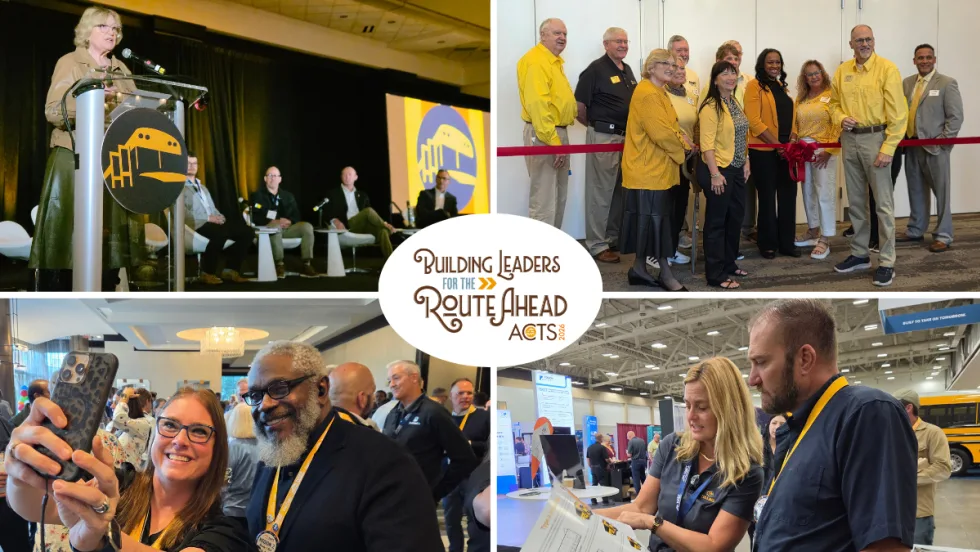
Inside NAPT ACTS 2026: Highlights from Louisville
From federal updates and student behavior strategies to new school bus technology and industry awards, see highlights from NAPT ACTS 2026 in Louisville.
Read More →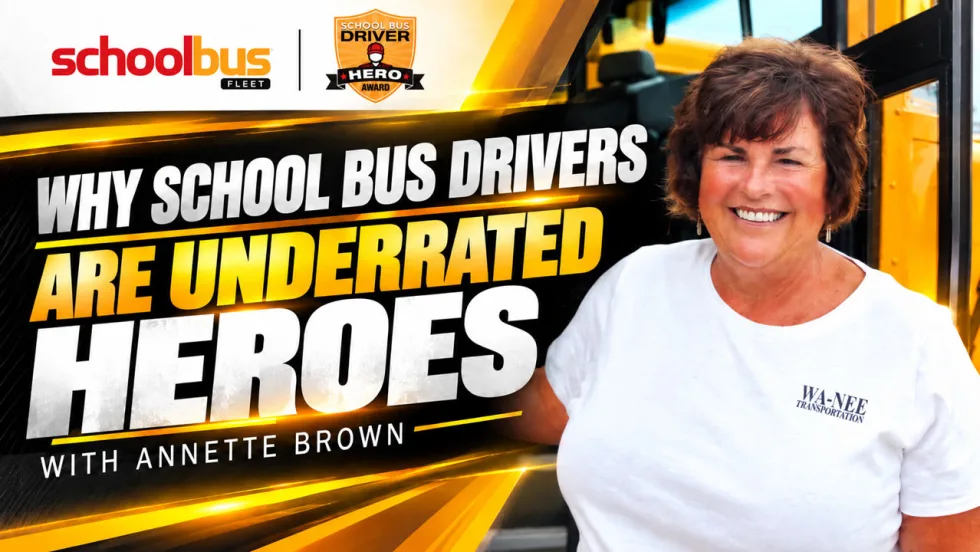
Meet the 2025 School Bus Driver Hero Winner: Annette Brown
We caught up with Wa-Nee Community Schools' Annette Brown on site at SBFX, where she was named the 2026 School Bus Driver Hero Award winner. Hear about her reaction, what she loves most about being a school bus driver, and more!
Read More →
Predictability Is Like Ketchup (According to 6-Year-Olds)
To students, a different school bus can feel like a full-blown crisis. One driver reflects on why familiar routines, showing up on time, and being reliably boring matter more than we think.
Read More →
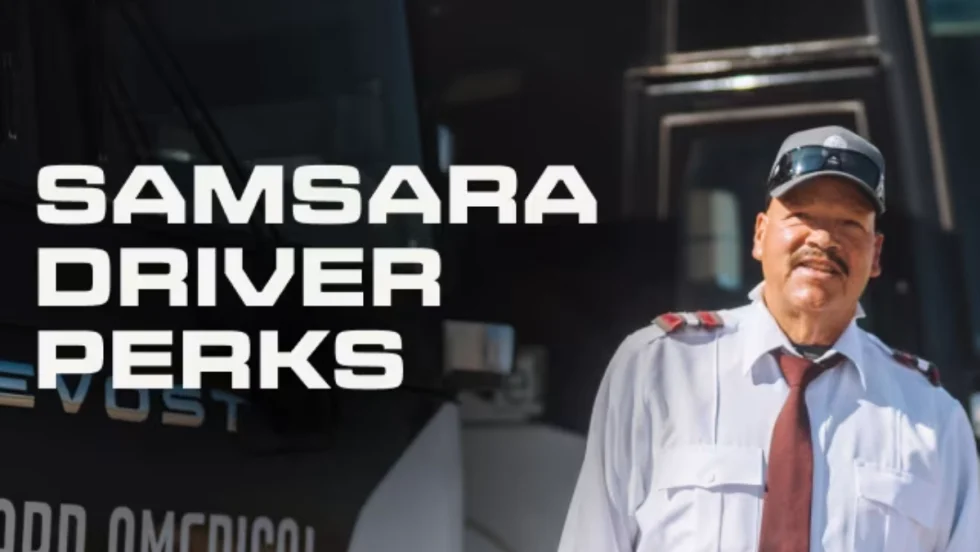
Samsara Launches Free Driver Rewards Program
The new Driver Perks program gives eligible professional drivers access to discounts and offers without adding a cost for participating fleets.
Read More →
How Tax-Exempt Municipal Leases Can Help Finance School Buses
Let’s explore school bus financing options, including municipal leases, vendor payable accounts, and balloon payments, and how they can help stretch fleet budgets.
Read More →
Nominate Rising School Transportation Pros Under 40!
We’re searching for the next generation of leaders making an impact across the K-12 student transportation industry to recognize as SBF’s 2027 Trailblazers. Nominations are open now!
Read More →
Changing Lanes: BusWhere, EverDriven, InterMotive, Summit School Services, Switzer-Carty & Thomas Built Buses
Check out who's been hired, promoted, and appointed to leadership positions at various school transportation suppliers, contractors, and manufacturers.
Read More →
The Most Expensive Thing You Do Before Selling a School Bus: Wait
When should you sell an aging school bus? Learn how maintenance, mileage, corrosion, specifications, and timing can affect resale value long before the auction.
Read More →
American Student Transportation Partners Acquires AJ Myers and Sons
A new deal brings a 75-year Pennsylvania student transportation provider into one of the nation’s largest private school bus contracting groups.
Read More →
What I Brought Home From SBFX: Relationships, Leadership, and Preparing What's Next
Who could lead your transportation operation tomorrow if you couldn't? Bernando Brown explores succession planning, mentorship, and preparing emerging leaders to step up.
Read More →