




Program coordinator brings nurses, transporters together
Janice Gentz, staff and program coordinator at the Center for Handicapped Children Inc. in Chautaugua, N.Y., recently spoke about special-needs transp...

Janice Gentz, staff and program coordinator at the Center for Handicapped Children Inc. in Chautaugua, N.Y., recently spoke about special-needs transportation at a meeting of the Nurses of Children with Developmental Disabilities (NCDD) Committee. We asked her some questions about her presentation and about her experience with student transportation at the Center for Handicapped Children. The 40 children who attend the center have multiple disabilities and range in age from birth to 21 years. Gentz is also former chair of the Safe Transportation Committee of Western New York and a member of the Erie County Safe Transportation Advisory Council.
SCHOOL BUS FLEET: What was your goal in speaking to this group of school nurses at the NCDD meeting?
Janice Gentz: My goal was to increase awareness. I think a lot of times we take care of our children very well here in school, and then we send them out the door and trust that they’re ok. The more that I find out, the more scared I become that that’s not the case. It’s also just trust — that children are in good hands when you put them on the bus. My purpose was to help these nurses become more aware of what our students need on the vehicle, and to advocate for them. I want to facilitate communication between the people who are transporting and the parents, to help them be aware of the needs out there for transportation.
SBF: What is the biggest challenge for healthcare professionals when it comes to transporting students with special needs?
Gentz: Being assured of safety. In our area, when a child requires a nurse on a bus, the decision is made by that child’s physician. As school staff or school nurses, we don’t have the authority to make that call. So we always go back to that child’s physician and explain, “You know the students’ medical needs. You tell us what their needs are. Can they be safely transported on a school bus without supervision other than the aide? If not, then what do they need?” A lot of our physicians will write a prescription that indicates that the child needs a nurse on the bus. We try to encourage people to be a little more specific and indicate whether it can be an EMT, an LPN or an RN. Does that nurse need to be trained in any specific area? [They need] to say, “An RN trained in trach care, suctioning, First Aid, CPR, etc.” Most of our physicians are just writing, “Nurse on the bus.” Another tricky part that has come up with that prescription from the physician is if you have four children in the vehicle that need a nurse, can you have only one nurse? Shared nursing is controversial. In our area, the transporter typically contracts with a nursing agency. The nursing agency staffs those bus runs. The advantage in doing that is that if the nurse calls in sick, the nursing agency has backup people. Now, some school districts that do their own transportation have hired their own nurses. Usually, we request that they specify that there be backup nurses trained on each child. That way, if a nurse calls in, you don’t start with a new nurse that doesn’t know anything about the child. Some of our families have also indicated on their ID that any new nurse would require a two-hour orientation with the family before riding the vehicle.
SBF: What are some of the main concerns addressed at the meetings of the Safe Transportation Committee of Western New York and the Erie County Safe Transportation Advisory Council?
Gentz: From the transporter perspective, the biggest, loudest issue that we have discussed for years is that they [the transporters] do not get the medical information they need. We have had, as an example, a child in our area who was traveling home. The school staff put him on the bus at the end of the day, and the child had a nosebleed. The bus driver and an aide handled it and called it into the terminal. The terminal thought it was under control — no problem. By the time they got the child home, he was blue and almost comatose. It turns out that the child was a hemophiliac. The transporters didn’t know that. The parents hadn’t told them. The school hadn’t told them. That child could have died.
SBF: How can communication be improved to prevent these kinds of incidents?
Gentz: One of the things our committee has done [to address this issue] is we have a student identification/information form that we are trying to get everyone in our area to use. With all of our students riding in wheelchairs, we have parents fill out that form and put the child’s picture on it. We laminate it and attach it with notebook rings on the back of the wheelchair. It has the physician’s name and phone number, emergency contacts, some basic information about the child and his or her disability. There was an accident in this area a long time ago, where both the driver and the aide were rendered unconscious. EMTs arriving on the scene had no way of assessing the level of responses — how much was related to the child’s original disability and how much was related to the accident. My personal goal is to facilitate communication between family, transporter and school provider.
SBF: Does this push to share information bring up confidentiality issues?
Gentz: Yes, confidentiality issues and responsibility issues. The nursing staff in school sometimes feel like, “Wait a minute, that’s not my job to tell the bus driver everything about the child.” Other school personnel are reluctant to share information because if they share that a child has seizures, for example, they don’t want to create an anxiety level where the bus driver or the aide doesn’t feel comfortable transferring the child or is afraid of the child. We try to put the responsibility on the parents, but some families are more empowered to share information than others, and some don’t even have adequate information themselves. My feeling is that if parents can let the transporter know three important things about their child, that’s three more things than they knew last year. If that means that the child will be a little safer, then why aren’t we all doing that?
More Special Needs Transportation
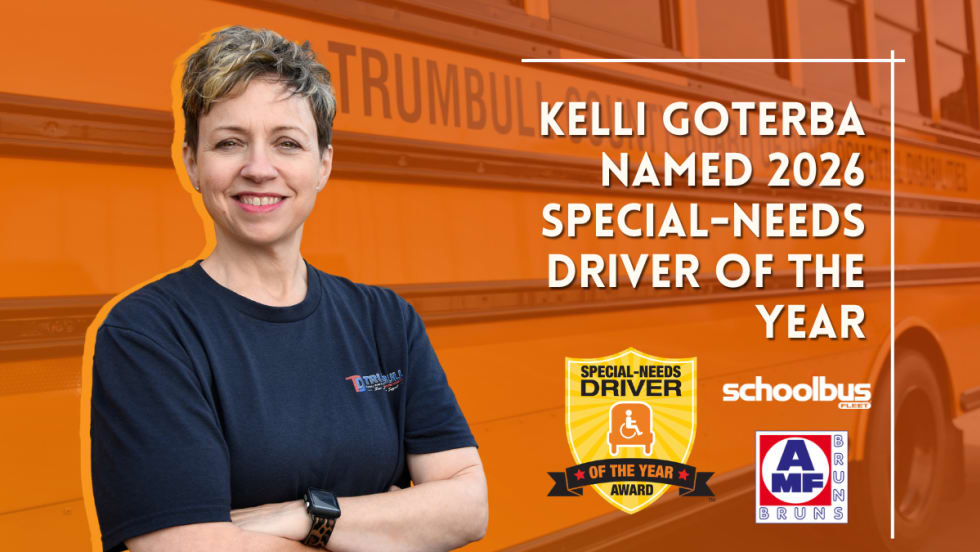
Kelli Goterba Named 2026 Special-Needs School Bus Driver of the Year
Through building trust with students and strengthening her transportation team, Goterba exemplifies the impact special-needs drivers can make.
Read More →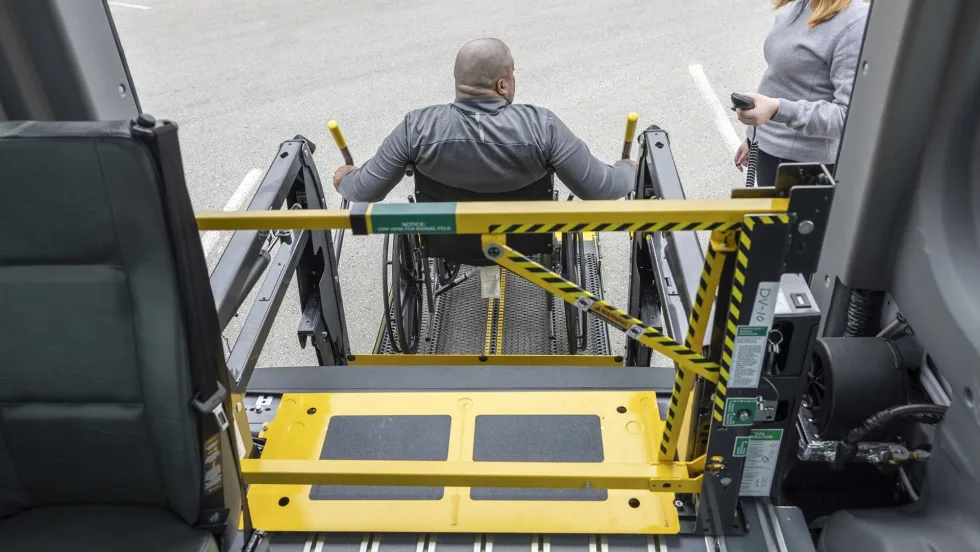
BraunAbility Introduces New Safety Barrier for Wheelchair Lifts
LiftSentinel is designed to add another layer of protection during wheelchair loading and unloading and can be retrofitted to many existing commercial lift installations.
Read More →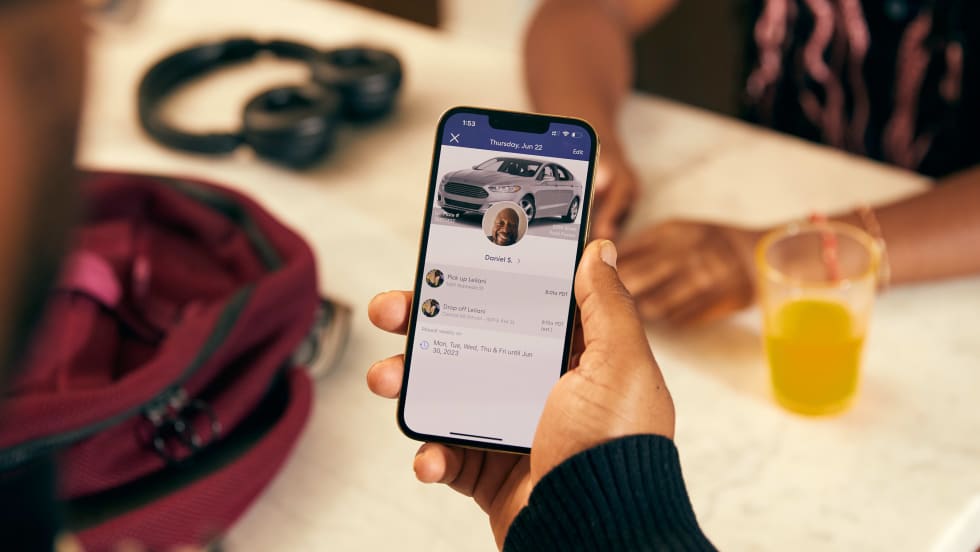
HopSkipDrive Launches New Safety, Driver Consistency Features for 2026-27 School Year
The company’s free ride recording, live ride tracking, and consistent driver assignments aim to improve safety and continuity for diverse student transportation needs.
Read More →
The Most Common Wheelchair Securement Mistakes on School Buses (and How to Fix Them)
Small missteps in wheelchair securement can have serious consequences. Here are 32 tips from experts to reduce risk and increase student safety on the bus.
Read More →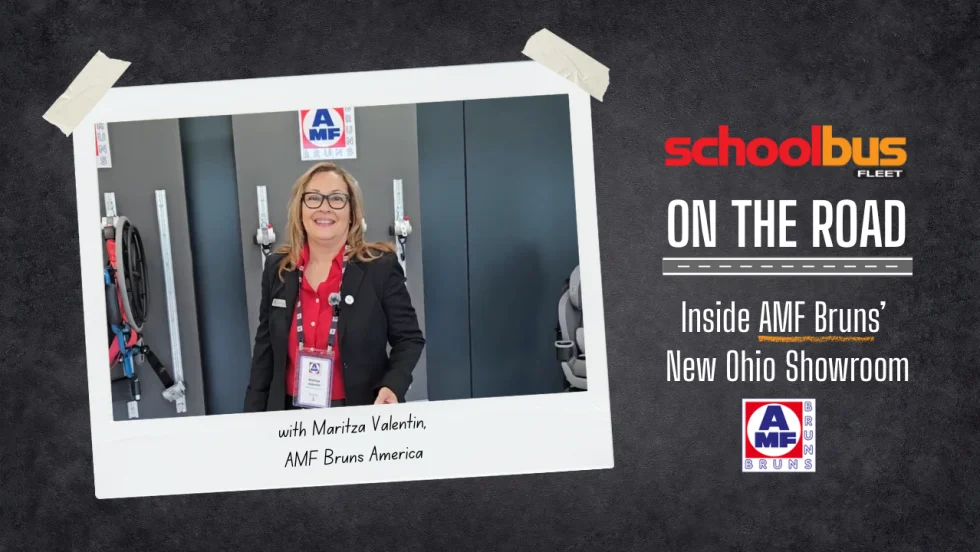
Inside AMF Bruns’ New Showroom: School Bus Securement Solutions Explained
Go inside AMF Bruns America’s new Ohio showroom with Maritza Valentin to see its FutureSafe technology, driver training tools, securement systems, and seating innovations.
Read More →
What AMF Bruns’ New Facility Means for Customers [Video]
Inside AMF Bruns’ new Stow, Ohio, operations: See how expanded space and innovation will enhance customer support and operations.
Read More →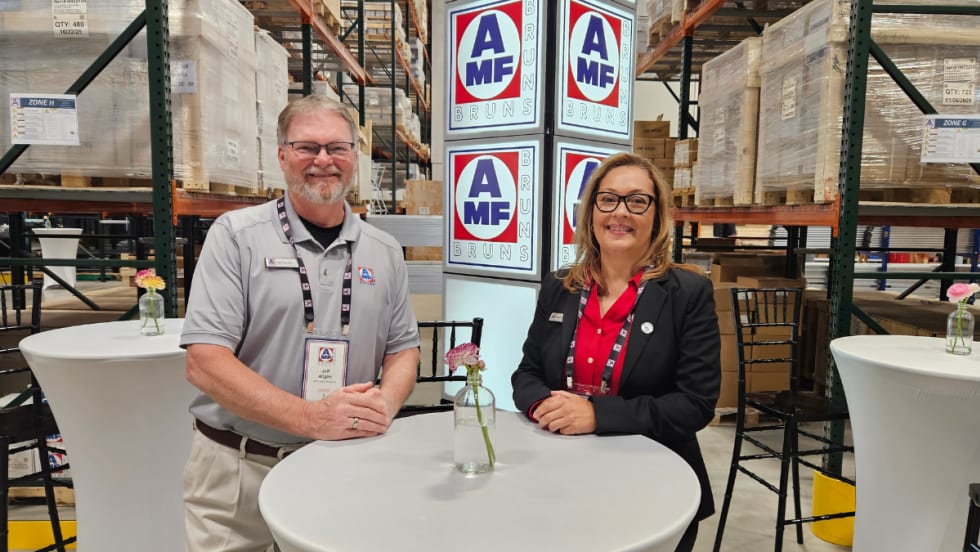
AMF Bruns Expands in Ohio, Investing in Growth and Community
With expanded production space, local investment, and a growing workforce, AMF Bruns is scaling its U.S. presence. Here’s an exclusive first look inside the new Stow, Ohio, HQ.
Read More →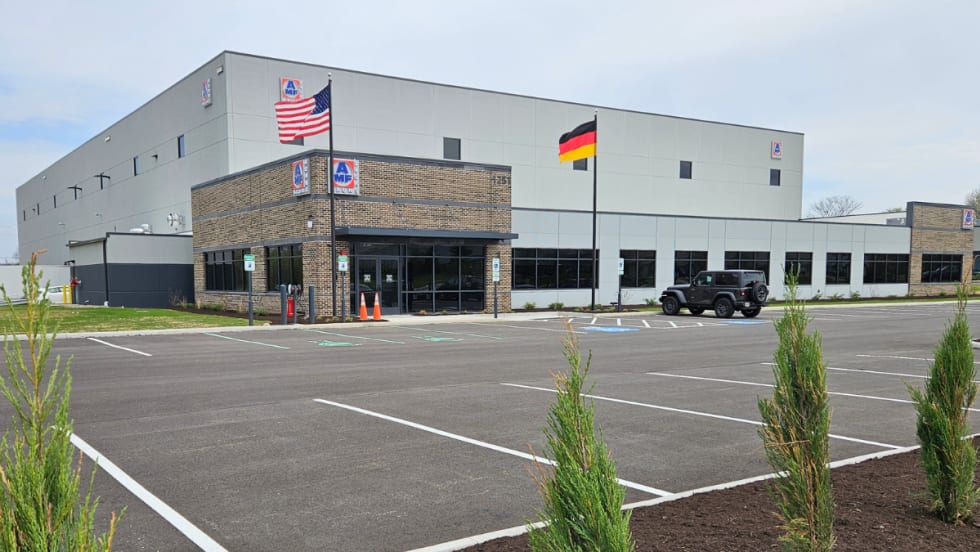
Inside AMF Bruns of America’s New Ohio Manufacturing Facility [Photos]
Take a behind-the-scenes look at AMF Bruns of America’s new 41,000-square-foot Stow, Ohio, headquarters, featuring advanced manufacturing, expanded space, and future-ready mobility solutions.
Read More →
First Student Boosts Student Support in Wichita & Texas
First Student and Wichita Public Schools are using behavioral support strategies to improve student ride experiences, while a separate initiative expands access to after-school programs through a bus donation.
Read More →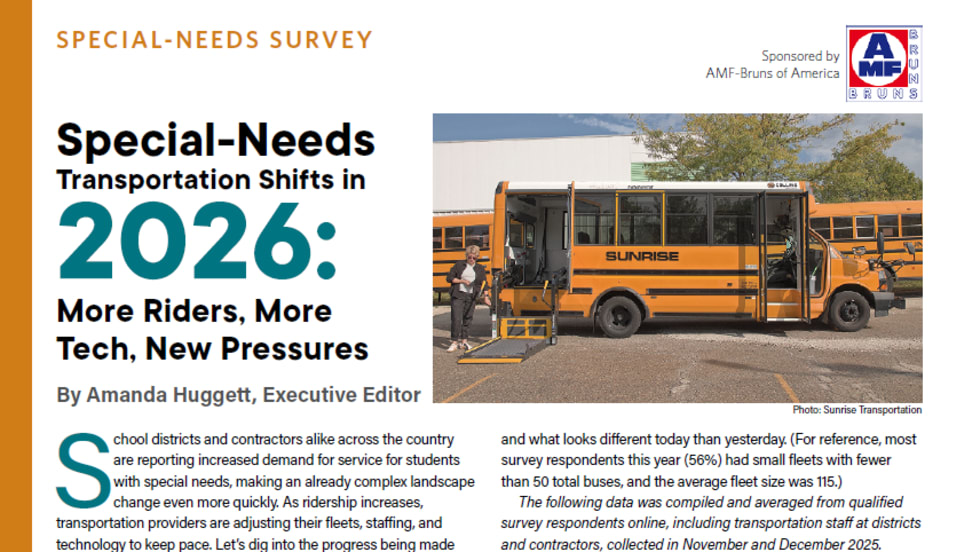
2026 Special-Needs Transportation Survey
What’s changing in special-needs transportation? This year, student transportation operators report a rising need, easing driver shortages, growing tech adoption, and evolving challenges. Sponsored by AMF Bruns of America.
Read More →