




Planning and Training Increase School Bus Security
Pupil transporters discuss the policies and procedures they have established at their operations to keep students and staff members safe. They also share the training resources they utilize, including state associations, First Observer and courses offered by FEMA.

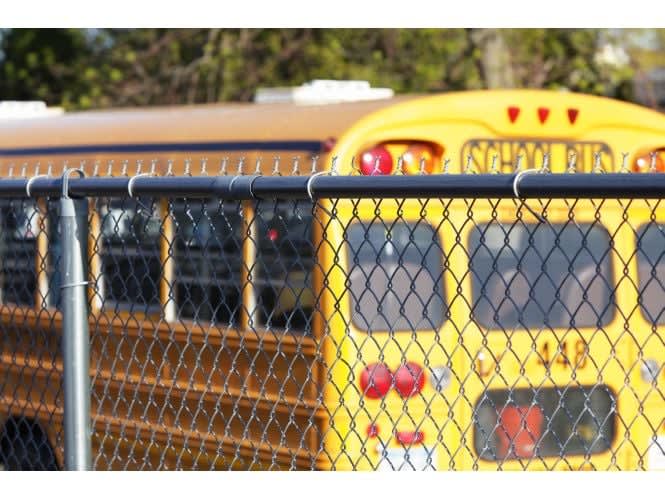
Preparing for incidents that could put students' and employees' safety and security in jeopardy is something that everyone at a school bus operation should participate in so that they can effectively respond. Establishing an emergency plan and bus inspection procedures and covering security issues during training sessions are equally important components of the preparation process.
Lionel Pinn, director of transportation for Centralia/Chehalis Pupil Transportation Cooperative in Centralia, Wash., says he has implemented the "code nine system," which he reviews with his staff during the operation's summer training session. He also has monthly meetings for the bus drivers, during which he leaves time for discussions about security.
Drivers use the code nine system to notify the dispatcher if there is a serious situation involving a student or parent. The driver adds No. 9 to the route (i.e., route No. 5 would become route No. 59 or 95), and the office staff then calls 911.
Moreover, Pinn feels that the industry should put more focus on security training.
"I'd like to see some collaboration with local law enforcement — police and SWAT teams — and have them teach in the classroom or do a live demonstration out on the bus," he says.
Comprehensive efforts to bolster facility, bus and student security
While the transportation staff at Reynolds School District, Fairview, Ore., has not participated in security training sessions with local police or SWAT teams, Transportation Supervisor Kathy Houck has organized an agreement with the five cities within the district's boundaries to increase security at her operation's facility.
She says officials from the cities' police departments come to the lot throughout the day and night to fuel their vehicles. Their presence is designed to dissuade people from breaking into the facility.
When the district's buses are parked at the department's fenced facility, the under-storage areas are locked to make tampering more difficult.
"The drivers check them during their pre-trip inspections to make sure they don't see anything suspicious. If they see suspicious devices, they notify us immediately so that we can contact 911," Houck says.
Reynolds School District's transportation department also has an emergency plan that it shares with all of the district's schools. The plan addresses such issues as where students will be taken and where buses will be parked. The drivers receive an annual review of this information.
Bus drivers at Hanover County Public Schools in Ashland, Va., have been instructed to check under the hood of their bus and under the vehicle itself during their morning pre-trip inspections. If they notice something suspicious, they are required to tell the facility's communications staff, who will then contact fire, EMS and the sheriff's office as necessary.
Transportation Director Michael Ashby adds that all of the districts schools, as well as all of the county's EMS facilities, fire departments and some churches are safe houses.
"If there was a situation — say a bomb threat — the drivers have a place where they can go to park the buses and evacuate the students," he says.
New Mexico operations communicate with first responders
In 2004, the New Mexico Public Education Department's School Transportation Bureau in Santa Fe unveiled the state's School Bus Driver Security Training Program.
Carlos Santiago, New Mexico's transportation director, says that all existing school bus drivers, school bus attendants, activity vehicle drivers and transportation staff members received the training as part of their in-service instruction before the end of 2004.
"All pre-service certification classes include the training, so everyone trained since 2004 has benefitted from the program," he adds, saying that pupil transportation professionals have reported activities across the state which previously might have gone unreported.
"An additional benefit has been the opening of dialogue and communication within local communities," he says. "In many areas, transportation teams have invited first responders to participate in training activities. During one practice, SWAT team members were shocked at the challenges of taking control of a school bus during a mock situation. Everyone involved in these drills has come away with a better understanding of the other participants' responsibilities."
Santiago offers several suggestions for developing a security training program based on the approach that was used for New Mexico's program:
∙ Participants need to receive enough useful information that they will automatically buy into the program. New Mexico's training program includes 15 modules that start with a description of why the training is important, not only for the employees and the students they transport, but because of the impact a security breach will have on communities in the state.
∙ Make certain that the program will be understood by all trainees. "We wanted a program that would provide usable information for employees from all walks of life, not just individuals with some form of military or security background," Santiago says. "Not only did we want this program to train our transportation staff, we wanted to use the program as a tool to get our school districts and bus contractors communicating with the first responders in their areas."
∙ Make sure that you can adapt the training so that it will be relevant to the community or communities where it is being presented.
[PAGEBREAK]

Employees at Centralia/Chehalis Pupil Transportation Cooperative discuss security issues during their summer training session.
Statewide and national training resources
In addition to reviewing her operation's emergency plan and procedures with her drivers, Houck often sends them to classes offered by the Oregon Pupil Transportation Association during its summer workshop, where they can learn about the programs that other districts have implemented.
Employees at The Trans Group LLC in Spring Valley, N.Y., receive a substantial amount of security training.
James Rogan, director of safety and training, says drivers are instructed on proper techniques for conducting a sweep of their bus in conjunction with their daily pre- and post-trip inspections, and on procedures for reporting and documenting anything that they find.
Moreover, within the first year of service, drivers are enrolled in the First Observer program. The program is taught in tandem with the required New York State Education Department's basic training course for school bus drivers.
"We are in the process of having all safety staff members complete training with FEMA's Emergency Management Institute in the National Incident Management System's Communications and Information Management and Incident Command System components," Rogan adds.
The Trans Group is also planning to host a focus group session conducted by Rutgers University.
"The university is developing a school bus driver training program on communicating security concerns to students," Rogan says. "We look forward to incorporating this curriculum into our security training program once it has been completed."
School Bus First Observer focuses on anti-terrorist awareness
A nationwide security training program is available to pupil transporters at no cost: School Bus First Observer.
The program features an anti-terrorist awareness training curriculum that focuses on the unique features of school bus transportation. Topics covered include morning checks of school buses and an equipment inspection, as well as taking note of suspicious activity at scheduled stops, and protective actions to employ in the event that a bus driver notices such activity.
The curriculum was developed by HMS Co. in Alexandria, Va. Charles Hall, First Observer program manager and president of HMS Co., says that there are several training mediums available in the First Observer program:
End User Training: Typically referred to as "classroom training," end user training allows an organization to bring all of its employees or end users together for instruction. The minimum number of people required to schedule this type of training is 20.
Train-the-Trainer (TTT) Training: These sessions are designed to certify training personnel to conduct First Observer training. TTT training is available for states, state associations, contractor associations and other groups.
"People interested in participating in these sessions should have at least one year of experience providing instruction and be recommended by their respective organizations," Hall explains. "A minimum 12 people are required to schedule First Observer TTT sessions."
Hall also notes that TTT sessions are conducted by First Observer master trainers in a classroom or webcasting environment.
Web-Based Training: This training medium consists of a PowerPoint presentation with video inserts that participants can access at their leisure. Upon completion, the trainee will be prompted to answer a few short review questions. A First Observer card and certifi cate can be printed after the questions have been satisfactorily completed.
Hall says that anyone can enroll in the School Bus First Observer program by calling (888) 217-5902. Visit www.firstobserver.com for additional information.
More Safety

How to Build a Better School Bus Driver Training Program
Is it time to strengthen your driver training? Here’s how to pick the right talent and improve recruitment, retention, and safety. This video is brought to you by IC Bus.
Read More →
Recent School Bus Accidents Leave 2 Dead, 2 Injured
Four school bus crashes in Florida, Illinois, and Georgia highlight risks in transportation lots, at bus stops, and during student loading and unloading.
Read More →
When Every Second Matters, Clarity Keeps Routes Moving
From routine delays to urgent incidents, strong communication practices help drivers, dispatchers, schools, and families respond with confidence.
Read More →

What Happens When a School Bus Catches Fire — and What Can Help
School bus fires are rare but can be devastating. Learn how advances in fire suppression and asset protection help fleets detect fires earlier, reduce damage, and improve safety.
Read More →
Geotab Launches Tool to Help Fleets Investigate Road Incidents
Geotab Investigations combines telematics data, video, documents, and other evidence to help fleets reconstruct incidents, resolve claims, and determine what happened.
Read More →
Texas Sixth Grader Wins 2026 National School Bus Safety Poster Contest
Sai Darshana Yekolu of Moseley Middle School in Prosper, Texas, was named the newest winner for her artwork, bringing the theme of “Safe Rides, Everyday Heroes” to life.
Read More →
Doing More With Less: How Transportation Directors Can Prioritize Safety Amid Budget Uncertainty
With diesel prices soaring and nearly one-third of transportation directors expecting budget cuts, maintaining student safety has never been more challenging. Download this guide to learn how leading districts are prioritizing risk, funding critical safety technology, and building stronger budget cases with data.
Read More →
Walton County Schools Adds Gatekeeper Stop-Arm Enforcement System
The Florida district will deploy Gatekeeper’s updated Student Protector technology, which now incorporates AI to improve video evidence.
Read More →
How To Build a More Secure School Bus Yard During and After Hours
As thefts and overnight security threats continue, school transportation leaders are combining stronger operational practices with AI-enabled surveillance to better protect buses, facilities, and staff.
Read More →
FMCSA Names New Chief Safety Officer: What School Bus Operators Should Know
Steve Dowling is set to lead the federal agency's efforts to advance commercial motor vehicle safety and reduce crashes, fatalities, and injuries on the nation's roadways.
Read More →