




Perspectives on Innovation: 50 Years of Change
Although school buses haven’t changed radically in appearance since 1956, the past five decades have brought about tremendous operational and regulatory changes. Here, several of these changes are discussed by the most knowledgeable and respected people in the industry.
Improvements in Driver Training
By Ted Finlayson-Schueler
Special Report 222, published in 1989 by the Transportation Research Board, identified pupil safety training as the most cost-effective way to reduce student fatalities. I’m not sure why they didn’t consider school bus driver training as a potential source of fatality reduction, but history suggests that it is perhaps the most important factor in improving school bus safety.
Severe school bus accidents in the late 1960s and early ‘70s prompted the federal government and the newly formed National Highway Traffic Safety Administration (NHTSA) to look at school buses and their operation. The most widely discussed outcomes of this attention are federal motor vehicle safety standards and Standard 17, known now in a kinder and gentler era as Guideline 17.
The event that seems to receive less attention, but may have had the biggest impact, was the 1974 dissemination of a school bus driver training curriculum that was introduced to representatives of state education agencies in a series of NHTSA workshops across the country.
These events introduced a curriculum for 40 hours of school bus driver training and guidelines for preparing instructors. To give credit where credit is due, my understanding is that the curriculum was one that had been largely developed by the state of Iowa. These workshops and the new curriculum came with the promise of federal dollars to implement the curriculum within each state. This package deal — money plus program — led many states to create required driver training programs for the first time. In my state of New York, state training curricula and instructor training had existed since at least the 1940s but had always been recommended, not required.
This new program, introduced in the environment of these severe crashes, coincided with another new undertaking, the Kansas Department of Transportation’s National School Bus Loading and Unloading Survey in 1970. This survey, now under the Kansas Department of Education, has tracked loading-zone fatalities for 35 years. The surveys of the early 1970s showed as many as 75 pupil loading-zone fatalities in one year, a number that now seems to have stabilized at 10 to 12 fatalities a year. The radical 85 percent drop in fatalities mirrors the adaptation of this new curriculum in many states — the survey and the accidents provided the motivation and the curriculum provided the means.
Focus on PowerPoint
Driver training happens in many different ways in different states. In some places, employees of a state agency provide all the training. In other states, employees in local operations are prepared to be the trainers. In all of these settings, new technologies are making changes in how training is delivered. PowerPoint has become ubiquitous and allows overheads, TV/VCR and flipcharts to be combined in one slick package. A decent laptop and projector can be purchased for $1,500, where once the projector alone was $4,000 to $6,000.
Oklahoma developed online training to serve the remote districts on the panhandle. A New York State regional educational cooperative — the Washington-Saratoga-Warren-Hamilton-Essex BOCES — is using video conferencing with simultaneous locations across an area that includes Hamilton County, where population density is 3.1 people per square mile.
Anyone who has endured a PowerPoint presentation where the presenter read his presentation off the screen with his back to the audience knows that technology does not guarantee or even automatically suggest good instruction. The technology can keep the focus in the front of the room and limit vital group interaction and small group activities. As presentation technology, online education, distance learning, video-conferencing and other new modes of instruction are introduced, they must be examined to be sure that the key component of driver training — the heartfelt commitment of the instructor to student safety — is not lost. We know that 90 percent of an instructor’s message is nonverbal. In school bus driver training, the nonverbal message has been and must remain, “Keep kids safe.”
Flexibility is key
As we review new ways of teaching and learning, we must remain flexible and consider all the options, ascertaining whether the new models accomplish the original goals of our driver-training programs. Driver education, along with improvements in bus design and well-planned student training, has made the loading-zone tragedies of the 1970s ancient history. The lives of hundreds of children have been saved. We must not resist change out of fear, but we also should not embrace technology simply to keep up with the fashion.
Ted Finlayson-Schueler is president of Safety Rules!, a consulting firum that specializes in school bus safety. He can be reached at SchoolBusTed@safetyrules.net.
Federal Impact on Special-Needs Transportation
By Peggy Burns
Over the past 50 years, the impact of federal law — the Individuals with Disabilities Education Act (IDEA, formerly the Education for All Handicapped Children Act of 1975 [EAHCA]), Section 504 of the Rehabilitation Act of 1973 (Section 504), and, most recently, No Child Left Behind (NCLB) — has been sometimes indirect, sometimes dramatic and focused, and occasionally subtle and complicated.
The background
Originally, the provision of school transportation was a local issue. Transportation was not provided for even very young children who had to walk long distances to school. In fact, for the first 30 years of the 20th century, many state statutes exempted children who lived more than 2 miles from school from compulsory attendance laws rather than transport them. Special treatment for disabled students was generally not a consideration.
The quality of education itself was not addressed by the feds until 1958, with passage of the National Defense Education Act. Education of students with disabilities (let alone their transportation)? That would have to wait. Before passage of the EAHCA, more than half of disabled children were routinely excluded from school altogether.
Meaningful change
While it is true that Section 504 and the IDEA provided the foundation for inclusion of students with special needs in our schools, and ultimately on our buses, true change was the product of judicial and agency decisions interpreting those laws. A snapshot of innovations in special-needs transportation through the lens of federal laws involves several themes:
Individualized decision making.
An “equal playing field” for disabled students.
The intersection of transportation and student achievement.
Individualized decision making. Throughout its revisions and amendments, the intent of the IDEA was case-by-case determination of the needs of each disabled child. The issues of provision of transportation at all for disabled students, as well as the method, pick-up and drop-off points, equipment and personnel considerations are to be determined with reference to individual student needs. While Section 504 requires that students with disabilities be treated fairly as a group, both that law and the IDEA mandate that “group-think” be rejected when it comes to the “whethers” and “hows” of special-needs transportation. A key innovation produced by recent decisions by courts and hearing officers is the recognition that not all students with disabilities must be transported in the same way.
Equal playing field. Federal legislation has underscored that when transportation is available to non-disabled students, it must also be provided to students with disabilities, and in ways that do not stigmatize or separate. This is a significant innovation. Watch for increasing concern and potential impact because of data from a recent federal report that K-12 special-needs transportation accounts for nearly 28 percent of total school transportation expenditures.
The road to learning. With the advent of increased focus of accountability, perennial issues like length of ride and stop location are evaluated under the twin lenses of fairness and the impact of the student’s needs on educational achievement. The intersection between transportation and student achievement for all students, but particularly for students with disabilities, may be the greatest innovation brought about by federal law. 2006 IDEA Regulations, recent cases decided under Section 504, both flavored by NCLB’s insistence on results over process, will continue this new direction. Requests for transportation for students with disabilities will be analyzed with respect to the impact of the requested transportation on progress towards student goals as defined in individualized education programs and Section 504 accommodation plans. If transportation, or the lack of transportation, is a barrier to learning, change must be made. If transportation, however provided, does not negatively impact student learning, it may not have to be changed. While that is an oversimplification, it is an abiding theme in newer decisions.
Peggy Burns is president of Education Compliance Group Inc. in Lafayette, Colo. She recently released a new driver training video called “Steering Clear of Liability: Training for School Bus Drivers.” For more information about the video, call (888) 604-6141 or send an e-mail to ecginc@qwest.net.
[PAGEBREAK]
Development of the Transit Wheelchair
By Roseann Schwaderer
I began writing about pupil transportation in the early 1980s, and, by 1990, it was evident that the need for information on how to safely transport students with disabilities — especially those who were wheelchair users — was vital and should no longer be denied. Concerned transporters had been writing letters to wheelchair manufacturers seeking help, but their appeals were being ignored.
These transporters had questions and concerns about the integrity of the wheelchair as a seat in a vehicle; the best ways to secure wheelchairs on the school bus (bungee cords and home-made straps were common at that time); and whether students should be transferred to the bus seat or remain seated in the wheelchair during transport. Lifts were not so common on yellow buses then, so students were being hand-carried onto the bus, which was also a concern.
Shredding the evidence
In 1991, I was preparing the program for the inaugural National Conference on Transporting Students with Disabilities. Determining that one of the most important contributions the conference could make was to bring a representative of the wheelchair industry to speak, I appealed to Jim Thaler, a vice president at Invacare Corp. He reluctantly agreed to come. During the opening general session of the conference, Mr. Thaler blatantly and honestly told the assembled 300-plus pupil transporters that when he received letters or fax inquiries about wheelchairs on yellow buses, he “shredded” them. He admitted that he did not want to acknowledge that any issues existed. But after listening to concerns expressed during that session, he agreed to begin a dialogue with the pupil transportation industry.The exchange of ideas that day in March 1992 led to formation of the Subcommittee on Wheelchairs and Transportation (SOWHAT), formed within the ANSI/RESNA Wheelchair Standards Committee. Pupil transportation providers volunteered initial funding for the work of SOWHAT, which was undertaken at the University of Michigan Transportation Research Institute (UMTRI) under the leadership of Lawrence W. Schneider and at the University of Pittsburgh under the direction of Douglas A. Hobson. The goal was to establish a standard for design and performance requirements and associated test methods for wheelchairs used as seats in motor vehicles.
WC 19 standards adopted
In May 2000, the voluntary standard known as ANSI/RESNA WC 19 became effective.The WC 19 transit wheelchair standards, which are voluntary, require that a wheelchair provide four easily accessible securement points on the wheelchair frame, and that the wheelchair be dynamically tested in a simulated 30 mph frontal- impact test while secured by a surrogate four-point, strap-type wheelchair tiedown system. Most wheelchair companies have been designing, redesigning and testing their wheelchair models to comply with ANSI/RESNA WC 19 requirements, although, arguably, marketing efforts have been less than full-throttle.
Meanwhile, a host of concerns about liability issues remains, and standard-development efforts are addressing additional safety issues.
There are many individuals inside and outside of UMTRI and the Pittsburgh facility who deserve credit for their role in the development of safer school bus transportation for students who are wheelchair users. But special appreciation should go out to the following representatives of the pupil transportation sector for being there all along the way:
Lyle Stephens, owner of Special Transportation Inc., whose 1989 petition to the Department of Transportation and subsequent 1993 lawsuit, Debra Simms and Lyle Stephens v. National Highway Traffic Safety Administration brought the issue of crashworthiness standards to the forefront. In 1991, Stephens entered into a transaction with Kellie Dean, leading to the creation of Dean Transportation. Significant funding for the SOWHAT work was provided by Dean Transportation.
Michael W. Wagner, then of Alpha School Bus Co., spearheaded fundraising for SOWHAT and participated actively in the committee’s work.
Susan Englert Shutrump, an occupational therapist in Trumbull County, Ohio, who pressed early on to ensure that seat inserts and other modifications to the wheelchair be considered in the transit wheelchair standard development.
Physical therapist Bette S. Cotzin and occupational therapist Judith A. Marks of Washtenaw (Mich.) Intermediate School District for their early work on placing colored markers on wheelchair securement points and their publication, School Bus Transportation of Students in Wheelchairs: A Manual of Procedures and Practices Used by the Washtenaw Intermediate School District for Providing Effective Wheelchair Securement.
Peter J. Grandolfo, who served on advisory committees to SOWHAT and the Rehabilitation Engineering Research Center on Wheelchair Transportation Safety until his death on Jan. 22, 2006.
Frank Curran of Concord (N.H.) Public Schools, who was one of the writers of the letters that were shredded and who, like many others, did not let up in working for safer transportation for students who are wheelchair users.
Roseann Schwaderer, president of Edupro Group, sponsors and chairs the National Conference on Transporting Students With Disabilities and Preschoolers. With Peggy Burns, she publishes Legal Routes, a bimonthly report on pupil transportation law and compliance. She can be reached at www.eduprogroup.com and myroadmap@legalroutes.com.
Legislation Leads to Standards for Safer Buses
By Pete Baxter
School bus passenger safety is directly connected to two things: one, the quality and training of the school bus driver; and, two, the construction and equipment standards of the school bus. It is the latter that is the focus of this commentary.
As school transportation vehicles evolved from school hacks — wagons pulled by true horsepower to a school bus designed specifically for children, it became evident that construction and equipment standards were necessary for consistent building of the vehicle.
School bus equipment and construction standards initially were developed by the school transportation community through the National Congress on School Transportation, beginning in 1939 and held every five years thereafter. Then, in the latter part of the 20th century, legislative and regulatory actions by state and federal governments strove to ensure school buses provided the safest means of school transportation for children.
Congress gets involved
The safety of children has long been a concern of all levels of government, and the safety of children riding a school bus is no exception. At the national level, the first major emphasis on school bus safety resulted when Congress passed the School Bus Safety Amendments of 1974, which amended the National Traffic and Motor Vehicle Safety Act of 1966. The congressional hearings, which led to the School Bus Safety Amendments, were very clear — Congress believed that school bus transportation should be held to the highest level of safety. As a result, to this day school buses are built to a higher level of safety performance than all other motor vehicles.The 1974 amendments mandated the National Highway Traffic Safety Administration (NHTSA) to issue Federal Motor Vehicle Safety Standards (FMVSS) for school buses that covered the following aspects of performance:
Emergency exits
Interior protection for occupants
Floor strength
Seating systems
Crashworthiness of body and frame (including protection against rollover hazards)
Vehicle operating systems
Windows and windshields
Fuel systems
Congress did not tell NHTSA what FMVSS to issue; it merely mandated that safety administration issue standards address safety concerns in a number of areas. After completing extensive research and several notices of proposed rulemaking and public comment, NHTSA issued a comprehensive set of FMVSS that went into effect on April 1, 1977. These included three new FMVSS that were unique to school buses and amendments to four existing FMVSS to create unique requirements for school buses.
FMVSS and school buses
The three FMVSS unique to school buses were:
No. 220, School Bus Rollover Protection. This standard specifies minimum strength requirements for school bus roofs to reduce the likelihood of roof collapse in a rollover.
No. 221, School Bus Body Joint Strength. This standard specifies minimum strength requirements for body panel joints to improve the structural integrity of the passenger compartment.
No. 222, School Bus Passenger Seating and Crash Protection. This standard specifies seating, restraining barrier and impact-zone requirements for school buses.
The four FMVSS that have unique requirements for school buses were:
No. 105, Hydraulic Brake System. This standard requires school buses with hydraulic brakes to stop in shorter distances.
No. 111, Rearview Mirrors. This standard added requirements for school bus cross-view mirrors.
No. 217, Bus Emergency Exits and Window Retention and Release. This standard specifies means of readily accessible emergency egress.
No. 301, Fuel System Integrity. This standard specifies requirements for the integrity and security of the entire fuel system.
It is important to note that National School Bus Yellow (NSBY) is not an FMVSS, although many people believe it is. School bus yellow was adopted by the first National Conference on School Transportation (as it was then called) in 1939 and was already an industry-wide standard in use by the states for decades. The lack of an FMVSS does not mean the federal government has not expressed an opinion on school bus color. In NHTSA’s Highway Safety Program Guideline 17, it recommends school buses be painted NSBY and goes so far as to suggest that any school bus that is converted for purposes other than transporting children to and from school and school-related activities be painted a different color.
Because our industry moves 24 million students twice each school day during peak traffic times in every community regardless of its population, school bus crashes are an inevitable risk. Most every crash is reported by the media in some form or manner. However, when we look past the visual of the wrecked school bus, do we realize that nearly all of the students are either uninjured or suffer only minor injuries? This is the “value added” of the April 1, 1977, standards.
Pete Baxter is the school traffic division director for the Indiana Department of Education and the general conference chair for the 2010 National Congress on School Transportation. He is also a former president of the National Association of State Directors of Pupil Transportation Services and the National Association for Pupil Transportation.
[PAGEBREAK]
What I’ve Seen in My 50 Years
By George Horne
I may be the only contributor to this section who has experienced most of the innovations, having had my first experiences with school buses more than 50 years ago. You will learn from some outstanding experts the details of developments that have contributed to the unprecedented records of safety and service about which we proudly boast. With less detail to specifics, let me share some developments that I have experienced during my association with school buses and with student transportation, in general.
Pete Baxter has addressed construction “standards.” What I recall as major developments in school bus design and construction — besides federal motor vehicle safety standards — likely will seem strange to younger readers. The trucking industry may have provided the catalyst for some improvements, especially as they relate to school bus chassis. Development of war materiels and space vehicles has resulted in many improvements in metal, fabrics, fastening devices and parts manufacturing. We should give credit where credit is due!
A long, short list
But putting that aside, here is a short list of improvements I have experienced: moving the starter from the floorboard to the dashboard; automatic transmissions; padded seats (bottoms and backs); sealed beam headlights, halogen lights and light-emitting diodes; clearance lights; power steering (and, therefore, smaller steering wheels), tinted windshields and windows; single-pane windshields; airbrakes; power-assisted brakes, antilock brake systems; air conditioning; tubeless tires; diesel engines; fuels (unleaded gasoline, green diesel, liquefied natural gas, ethanol, liquefied petroleum gas, etc.); compartmentalized seating; safety restraints for drivers and for occupants; wheelchair securement devices (attached to sidewalls until late in the 1980s when wheelchair placement changed to a forward orientation); roof-top ventilators/escape hatches; emergency windows; alarms (backing, emergency exit, post-trip inspection, etc.); “coolant/antifreeze” instead of just antifreeze; fire-retardant seat fabrics; synthetic seat padding; video surveillance equipment; computerized operational links and diagnosis terminals; maintenance-free batteries; lighted white-on-red octagonal stop arms (replacing flags and trapezoidal red-on-white stop signs); crossing control arms; under-body storage compartments (hopefully replacing exterior above-roof and interior top-mounted storage compartments); emergency reflective triangles replacing flares; fire extinguishers; body fluid cleanup kits; cell phones and other communication devices; GPSs. Wow! Let me stop and allow you to add to the list!Ted Finlayson-Schueler has described innovations in training, but let me put in my “two cents worth.” In the mid-1970s, NHTSA developed (or caused to be developed) some good school bus driver training manuals, which helped to standardize training throughout the industry. As needs arose to incorporate additional topics, state departments of education and/or motor vehicles responded with modifications to their respective syllabuses. Besides pre-commercial driver’s licensing training and defensive driving techniques, among the many topics with added emphasis have been cultural diversity, sensitivity training, transporting preschoolers (including Head Start) and children with special needs (including wheelchair and other occupant securement procedures), dealing with behavior problems, terrorism, interpersonal relationships, communication and dealing with aggressive drivers and road rage.
For training presentations, blackboards were replaced by green boards and then by white boards and flip charts; 16-millimeter films were replaced by videotapes and DVDs; overhead projectors are being replaced with LCDs. (Isn’t PowerPoint a great presentation tool?!)
Bar must be raised
Our safety record is good, thanks to the evolution of equipment, training and improved performance. Unfortunately, some of the innovations in our industry are the result of human failure: various federal and state statutes, crossing-control devices, backup alarms and post-trip inspection alarms, for example.Changing from a vastly agrarian to an industrialized to a technology-based society has increased the pace and the complexities of daily life. As long as driver distraction and inattention to the details of the daily task of safely transporting our nation’s future to and from school and school-related activities continue to be the major causes of student injuries and fatalities, the next 50 years must see a concerted effort to raise the level of performance of school bus drivers and attendants to all-time highs and to change behaviors of the motoring public at large. Raising expectations and levels of accountability are a must.
George Horne is a school transportation consultant and president of Horne Enterprises in Metairie, La. He can be reached at (504) 456-0141 or chestnut38@aol.com.
Computerized Routing and Scheduling
By Derek Graham
In 1982, I was a graduate student in the Operation Research Program at North Carolina State University. My summer job was to work with a professor looking at options for routing and scheduling school buses using computers. I spent many days with a large paper map measuring distances between stops using a map wheel. The technology we observed and tested was on mainframe computers and, while efficient solutions could be generated, updating and maintenance capabilities were very limited.
In 1981, IBM introduced the first personal computer (PC), which came equipped with 16K of RAM and one or two 160K, 5 1/4-inch floppy diskette drives.
By 1986, computer routing systems began movement from mainframe and mini-computers to PCs. Putting computer-assisted routing on the desktop of any transportation manager transformed the industry. It enabled school districts of any size to expand their capabilities by tapping into this powerful technology.
On pins and needles
Prior to computer-assisted routing systems, the key planning tool for many school districts was the “pin map.” This map was often mounted on a bulletin board so that various colors of push-pins could be placed at student locations and bus stops. String or yarn could then be wrapped around those pins to designate bus routes. I often wondered what would happen if someone brushed up against that map and a few hundred pins were knocked to the floor!When North Carolina installed a computer-assisted routing system in each public school district during a five-year period beginning in 1986, the maps had to be digitized by hand. Student data had to be loaded one school at a time (five diskettes per school!), and maps were generated using a pen plotter. The plotter was fascinating to watch as it drew each road, bus stop and street name character individually.
Now, up-to-date maps are available from local government GIS departments, student data are accessed via networks and inkjet plotters produce beautiful output in minutes rather than hours.
<> Today’s tools save money
Today, local and wide area networks, high-powered PCs and the Internet provide access to routing information across the school district. Districts can use these tools to adjust rapidly to changes or emergencies, develop alternative plans and test them in simulation before putting them into place, savings thousands of dollars.Maps, student locations and bus stop locations are being used not only to develop efficient routes, but to provide essential information for district planning. Expanded uses for these data include improved student safety using global positioning and automated vehicle location — even ridership monitoring using smart cards or RFID (radio frequency identification).
In 1982, we could scarcely conceive of an optimized routing system that could be updated daily, graphically, on desktop computers. Internet resources such Yahoo Maps (shortest-path driving directions) or Google Earth (satellite images) were unheard of.
Just as the technology has advanced amazingly in the past 20 years, it is exciting to think of the ways that graphic and geographic data will be used to support school transportation operations in the next 20 years!
Derek Graham is the section chief of transportation services for North Carolina’s Department of Public Instruction.
More Safety

How to Build a Better School Bus Driver Training Program
Is it time to strengthen your driver training? Here’s how to pick the right talent and improve recruitment, retention, and safety. This video is brought to you by IC Bus.
Read More →
Recent School Bus Accidents Leave 2 Dead, 2 Injured
Four school bus crashes in Florida, Illinois, and Georgia highlight risks in transportation lots, at bus stops, and during student loading and unloading.
Read More →
When Every Second Matters, Clarity Keeps Routes Moving
From routine delays to urgent incidents, strong communication practices help drivers, dispatchers, schools, and families respond with confidence.
Read More →

What Happens When a School Bus Catches Fire — and What Can Help
School bus fires are rare but can be devastating. Learn how advances in fire suppression and asset protection help fleets detect fires earlier, reduce damage, and improve safety.
Read More →
Geotab Launches Tool to Help Fleets Investigate Road Incidents
Geotab Investigations combines telematics data, video, documents, and other evidence to help fleets reconstruct incidents, resolve claims, and determine what happened.
Read More →
Texas Sixth Grader Wins 2026 National School Bus Safety Poster Contest
Sai Darshana Yekolu of Moseley Middle School in Prosper, Texas, was named the newest winner for her artwork, bringing the theme of “Safe Rides, Everyday Heroes” to life.
Read More →
Doing More With Less: How Transportation Directors Can Prioritize Safety Amid Budget Uncertainty
With diesel prices soaring and nearly one-third of transportation directors expecting budget cuts, maintaining student safety has never been more challenging. Download this guide to learn how leading districts are prioritizing risk, funding critical safety technology, and building stronger budget cases with data.
Read More →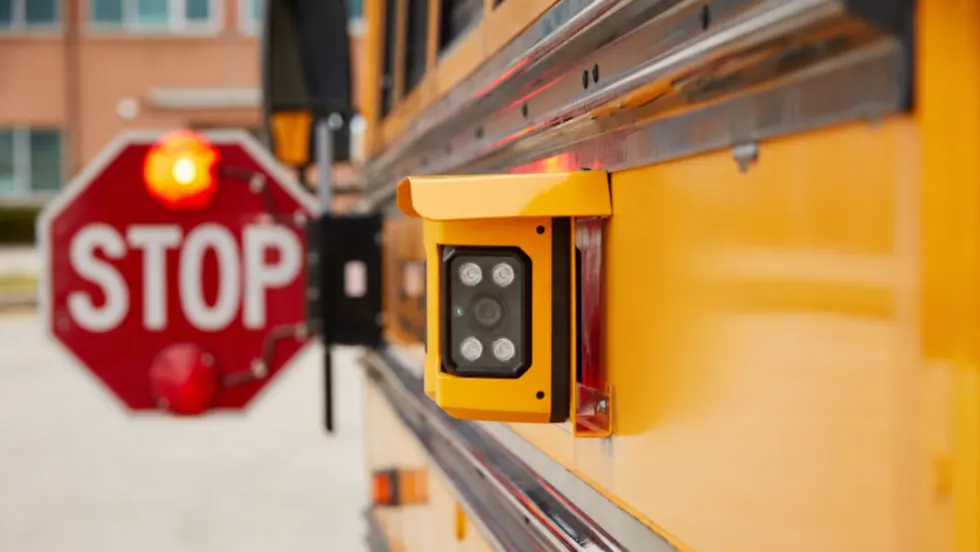
Walton County Schools Adds Gatekeeper Stop-Arm Enforcement System
The Florida district will deploy Gatekeeper’s updated Student Protector technology, which now incorporates AI to improve video evidence.
Read More →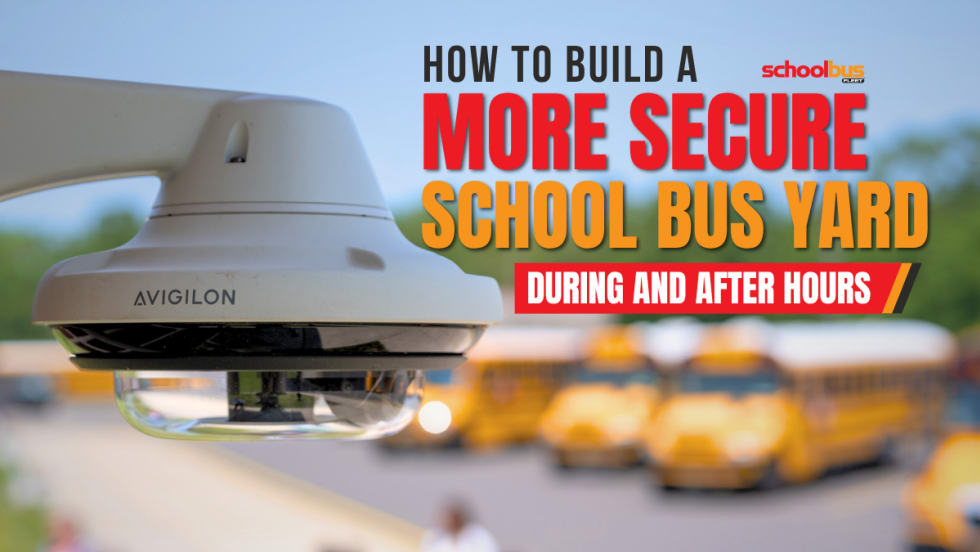
How To Build a More Secure School Bus Yard During and After Hours
As thefts and overnight security threats continue, school transportation leaders are combining stronger operational practices with AI-enabled surveillance to better protect buses, facilities, and staff.
Read More →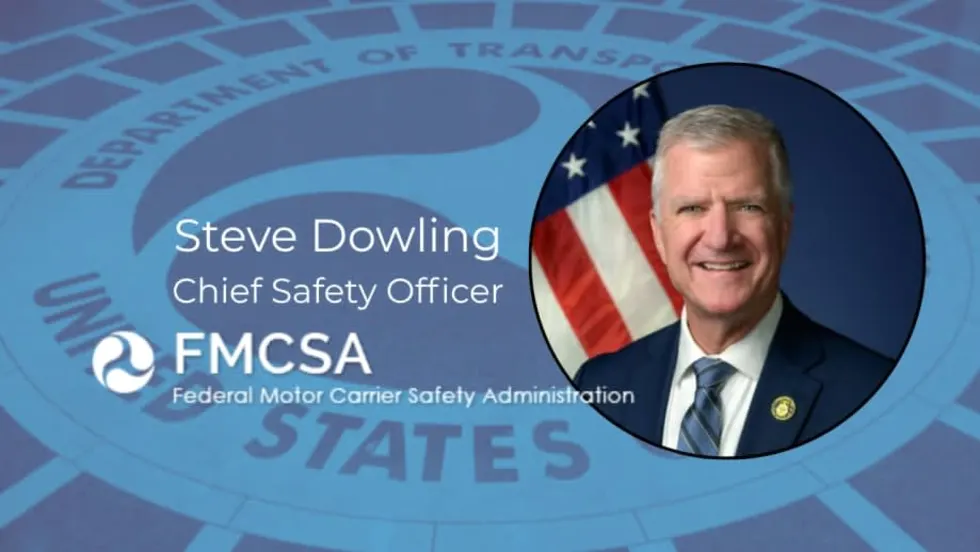
FMCSA Names New Chief Safety Officer: What School Bus Operators Should Know
Steve Dowling is set to lead the federal agency's efforts to advance commercial motor vehicle safety and reduce crashes, fatalities, and injuries on the nation's roadways.
Read More →