




Performance Standards Aid Turnaround in D.C.
Washington, D.C., is home to a unique school system, which is to be expected, as D.C. is the home of the federal government and one of the largest met...

Washington, D.C., is home to a unique school system, which is to be expected, as D.C. is the home of the federal government and one of the largest metropolitan areas in the U.S.
The U.S. Congress established the City of Washington under a municipal government in 1802. In 1804, the city council passed an act to establish a board of trustees of public schools. At the first meeting of the board of trustees in 1805, then U.S. President Thomas Jefferson was elected to be the first president of the Board of Trustees of public schools in Washington.
Today, District of Columbia Public Schools (DCPS) is administered by the Office of the Mayor, a measure proposed by D.C. Mayor Adrian Fenty. Previous to the 2007-08 school year, the district had been governed by the D.C. Board of Education. For the fiscal year 2009, Chancellor Michelle Reed has proposed a budget of $773 million and announced measures targeted to support the 60 schools not currently meeting requirements for yearly progress.
The transportation department is also a reflection of this unique school district. Only the district’s 4,000 special-needs students are eligible for transportation, while regular-ed students mostly walk, ride with parents or use public transportation to get to school.
Special-needs students are transported door-to-door to 227 schools and other institutions on routes limited to a 60-minute ride time within the city and a 90-minute ride time to locations outside D.C.
The department boasts a staff of 1,650 drivers and attendants as well as 50 office and garage staff members.
Federal government involvement
The transportation department is currently managed under a federal court mandate. The mandate was initiated after parents of DCPS students brought suit against the district in the 1990s over transportation issues, Director of Operations Keith Pettigrew explains.
Transportation Director David Gilmore was appointed in 2003 by a federal judge to rehabilitate the department and return it to the city, with a period of observation and monitoring to follow. Gilmore brought Pettigrew to the school district from his post as an attorney for the Federal Housing Administration, where the two had directed a similar rehabilitation. Fleet Manager Howard Schultz, also on loan to the district during its transformation, has 50 years of experience in transportation with the federal government.
Under court oversight, the receivership will be in place until the city has developed the capacity to take control of the agency again. “There’s really no timetable,” Pettigrew says. “The city has to develop the capacity to take the function back and perform at a level that the plaintiffs, meaning the parents, [and] the court expect.”
Pettigrew says the department’s performance has improved every year and that administrators are in discussions with the city to plan the transition to municipal control.
Building a solid foundation
In terms of rehabilitating the agency, Pettigrew says the basic infrastructure of the operation needed to be rebuilt when they first arrived, requiring the implementation of weekly staff meetings and standard operating procedures. “Things like that that were just nonexistent when we arrived,” he says. “Employees weren’t getting their checks, or the checks were wrong, and obviously that affects their morale and their ability to want to perform, and that affects the children, ultimately.”
When the receivership began five years ago, driver absenteeism was at 22 percent and the on-time delivery rate of students to school was at 35 percent, Pettigrew reports. Today, absenteeism is at 6 percent, and on-time delivery has reached 95 percent, he says.
He credits the improvements to the implementation of pay increases based on performance standards for employees, or performance incentive compensation. Drivers get credit for reduced accident rates, on-time arrivals and safety, and that translates into an annual bonus. As a result, Pettigrew says, service has improved, the accident rate has decreased and salaries for school bus drivers at DCPS are now better than those of surrounding districts, helping to increase driver retention.
The department also hosts a “CDL Academy,” providing training in-house for bus aides with clean driving and criminal records who want to become drivers. Student behavior management training is also provided on an annual basis. “We do it to refresh drivers and attendants on all the various disabilities and some of the things they can do in certain crisis situations,” Pettigrew says.
Routing challenges
Pettigrew calls routing “the straw that stirs the drink.” With constantly changing enrollment, as well as the challenges presented in providing door-to-door service, transportation must keep close track of routing changes. Over 6,000 changes were made in the last school year alone, and additional staff has been hired just to manage routing. “We added two administrative positions over the past year to help with quality assurance, particularly ride-time compliance,” Pettigrew says.
The routing process begins with the school system identifying the special-needs children who qualify for transportation. The schools then forward contact information for qualifying students to the transportation department, which applies its due diligence process to verify addresses, Pettigrew explains. “A lot of [the students] are foster kids, so they move around a lot,” he says. Staff members call the parents or guardians designated for each student to confirm his or her address and whether any special equipment is required for transportation aboard the school bus.
Next, Pettigrew says, routes are planned based on student addresses and matching them to the schools or other sites they attend. “We try to do it as efficiently as possible,” Pettigrew says. “It gets a little tricky sometimes, because we transport kids as far as Stafford, Va., and all the way to the other side of Baltimore.”
“Students get added almost every day, and it’s like a domino effect,” he says. “You may have a perfect route set up and then either a kid comes off or another kid comes on, and then it may knock the ride out of ride-time compliance.”
Although they try to avoid it, the transportation department sometimes plans a one-student route. “That’s not very efficient, because it costs about $100,000 [per year] to put a bus out on the road,” Pettigrew says, “so you want to try and get as many kids on the bus as possible. But unfortunately, because of the kids and their placements and where they need to go for their rehabilitation, we can’t help it.”
Going forward
As part of their mandate, Gilmore and Pettigrew are charged with providing recommendations for the district’s transportation management going forward. “The recommendations are going to be based on the standards we set for ourselves here currently,” Pettigrew explains.
The recommendations will serve as the baseline for monitoring the program during a set period after administrative control is returned to the city. “It’s pretty straightforward stuff: getting the kids on time, people coming to work every day, employees being paid on time,” he says.
One item Pettigrew says he hopes to include in their recommendations for the district is the development of environmentally-friendly practices at the department, such as the purchase of hybrid vehicles. In that vein, DCPS received a grant in April from the EPA to retrofit 22 buses with diesel particulate filters. As soon as the funds are released, Pettigrew says he expects the retrofits to be installed, which will reduce emissions, thus helping to improve air quality and students’ respiratory health.
Improvements that enhance transportation for students and parents are the top priority at the department, and such efforts have been producing solid results. Pettigrew says the department receives letters from parents who are grateful that their children are finally getting to school on time. “The fact that the parents are happy, that’s always a good thing, because the kids are first and foremost,” Pettigrew says. He is pleased to have seen growth and development at the department, particularly among the staff — “it’s been pretty satisfying for us,” he says.
More Management
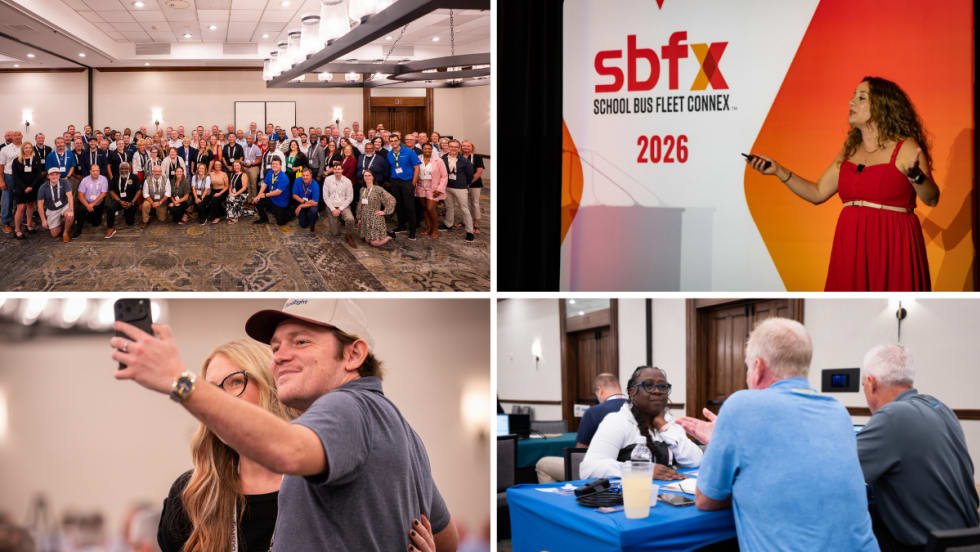
Inside School Bus Fleet ConneX 2026: Industry Leaders Connect in Scottsdale [Photos]
See highlights from SBFX 2026 in Arizona, where school bus operators and suppliers gathered for meetings, education, networking, awards, and more.
Read More →
School Transportation’s Biggest Pressures and Opportunities: SBFX Attendees Weigh In
School bus operators point to rising costs, staffing, and vehicle prices as immediate pressures while identifying technology, training, and routing as opportunities for growth.
Read More →
STA Acquires Sunrise Transportation
Student Transportation of America expands in Illinois and Connecticut through Sunrise's fleet of nearly 1,000 vehicles.
Read More →

EPA Opens $180M DERA Funding Round for Diesel Upgrades
The 2026 Diesel Emissions Reduction Act program seeks applications from eligible organizations to accelerate the retirement of legacy diesel vehicles.
Read More →
HopSkipDrive’s CareEngine Targets the ‘Exceptions’ in Student Transportation
The new platform works alongside districts’ existing transportation management systems to coordinate specialized rides, automate last-minute changes, and turn ride data into operational improvements.
Read More →
The Right Ride for Every Student: Navigating the New Student Transportation Ecosystem
How should districts blend school buses with small-vehicle transportation and other options? EverDriven CEO Mitch Bowling discusses safety, costs, partnerships, and strategy.
Read More →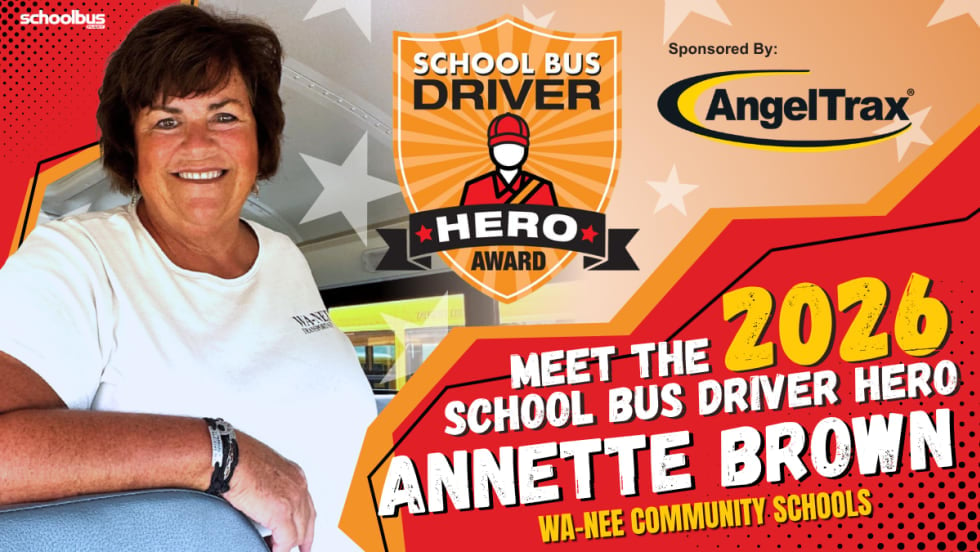
Annette Brown Always Takes the Extra Time: Meet Our 2026 School Bus Driver Hero
For more than 30 years, the Wa-Nee Community Schools driver has treated students like family, combining safety, compassion, and servant leadership to make a lasting difference on and beyond the school bus.
Read More →
How to Build a Better Driver Training Program
Ready to boost up your school bus instructor training? Here’s how to pick the right talent and improve recruitment, retention, and safety.
Read More →
CALSTART and Forth Combine to Form Catalyst Mobility
The new name represents a renewed vision for the nonprofit focused on advancing clean, equitable, and affordable transportation solutions that move people and goods.
Read More →
What Makes a Great School Bus Driver Trainer?
Choosing the right school bus driver trainer takes more than experience. Learn six keys to selecting and developing trainers and evaluating program effectiveness.
Read More →