




NHTSA issues proposal on seat belts, seat backs
WASHINGTON, D.C. — The National Highway Traffic Safety Administration (NHTSA) unveiled in November its highly anticipated proposal on school bus passe...

WASHINGTON, D.C. — The National Highway Traffic Safety Administration (NHTSA) unveiled in November its highly anticipated proposal on school bus passenger crash protection.
The Notice of Proposed Rulemaking’s (NPRM) key components are:
proposing to require lap-shoulder (or three-point) belts instead of only lap belts in small school buses (GVWR of 10,000 pounds or less),
leaving up to states or local authorities whether to install seat belts on large school buses (more than 10,000 pounds), while providing guidance on such installation,
and proposing that the minimum seat back height be raised from 20 to 24 inches on all new school buses.
Additionally, the NPRM proposes requiring all school buses with seat bottom cushions that are designed to flip up, typically for easy cleaning, to have a self-latching mechanism. The proposal also recommends that pupil transporters determine whether installing lap-shoulder belt systems would reduce the number of children they could transport.
“If children were diverted to other means of transport to school, such as transport by smaller, private vehicles, walking or biking, the belts on the buses could result in an overall disbenefit to pupil transportation safety due to the children displaced from the large school buses having to find less safe modes of transportation,” the proposal says.
While school bus seats equipped with lap-shoulder belts have had the potential to reduce bus capacity, manufacturers recently introduced new standard-size seats that can secure three children in lap-shoulder belts, which could eliminate the potential for capacity loss.
The lap-shoulder belt requirement for new small buses would start three years after the rule takes effect. The 24-inch seat back requirement for all new school buses would start a year after the rule takes effect.
Before announcing the NPRM, U.S. Transportation Secretary Mary Peters rode with children in a school bus equipped with lap-shoulder belts to an elementary school near Raleigh, N.C. At a press conference, she explained the intentions of the NPRM.
“Our proposed rule would make children safer, put parents at ease and give communities a clearer picture of how to protect students,” Peters said.
The higher seat backs, Peters added, would better protect bus passengers by helping to keep older kids and adults from being thrown over seats in a crash.
The lap-shoulder belt requirement for small buses was conceived primarily because they are more prone to roll over than are large buses.
Still, Peters noted that school buses are the safest form of motor vehicle transportation, with a fatality rate nearly six times lower than passenger vehicles.
Peters said that the government would allow school districts to use federal highway safety funds to cover the additional cost of equipping buses with seat belts. That point caused concern for at least one group: the Governors Highway Safety Association (GHSA).
While the GHSA welcomed the proposals for enhancing school bus safety, the group said it was worried that use of the highway safety funds for seat belts on buses would be detrimental to other safety needs, such as programs to reduce drunken driving and to increase occupant protection for the general population. In its statement, GHSA urged Peters to advocate new funding for school bus safety equipment with Congress.
Meanwhile, NAPT was less welcoming of NHTSA’s proposal. The association said in a statement that it was “extremely disappointed with the agency’s NPRM. Instead of the clarity and direction states, parents and the school bus industry sought and expected, the NPRM adds equivocation and uncertainty to the discussion.”
Much of the NPRM is based on a research program that the agency developed to determine the real-world effectiveness of FMVSS 222 requirements for school bus passenger crash protection. The program included dozens of crash tests with dummies of various sizes using different restraint strategies.
Also taken into consideration was information gathered during a public meeting on school bus safety that NHTSA held in July.
Public comments on the proposed regulations will be accepted until Jan. 22. The proposal is available to view at www.nhtsa.gov.
More Safety

Doing More With Less: How Transportation Directors Can Prioritize Safety Amid Budget Uncertainty
With diesel prices soaring and nearly one-third of transportation directors expecting budget cuts, maintaining student safety has never been more challenging. Download this guide to learn how leading districts are prioritizing risk, funding critical safety technology, and building stronger budget cases with data.
Read More →
How To Build a More Secure School Bus Yard During and After Hours
As thefts and overnight security threats continue, school transportation leaders are combining stronger operational practices with AI-enabled surveillance to better protect buses, facilities, and staff.
Read More →
FMCSA Names New Chief Safety Officer: What School Bus Operators Should Know
Steve Dowling is set to lead the federal agency's efforts to advance commercial motor vehicle safety and reduce crashes, fatalities, and injuries on the nation's roadways.
Read More →
New Study Finds School Zone Speed Safety Cameras Cut Speeding Violations 97%
A Florida university's research demonstrates that Verra Mobility's automated enforcement changes driver behavior and significantly improves school zone safety.
Read More →
What Changed in DOT’s New National Roadway Safety Strategy?
The federal agency's new plan shifts its focus to safer people, roads and vehicles, with a new three-pronged approach instead of five. One outlined action even addresses a key industry concern around illegal school bus passing.
Read More →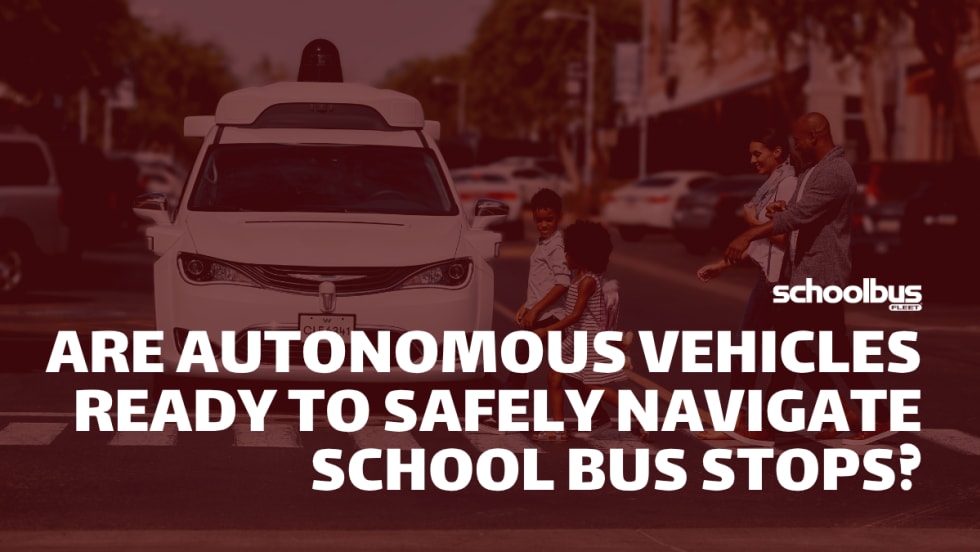
Are Autonomous Vehicles Ready to Safely Navigate School Bus Stops?
NHTSA is accelerating autonomous vehicle deployment through new safety standards and commercial approvals. See why school transportation leaders are watching.
Read More →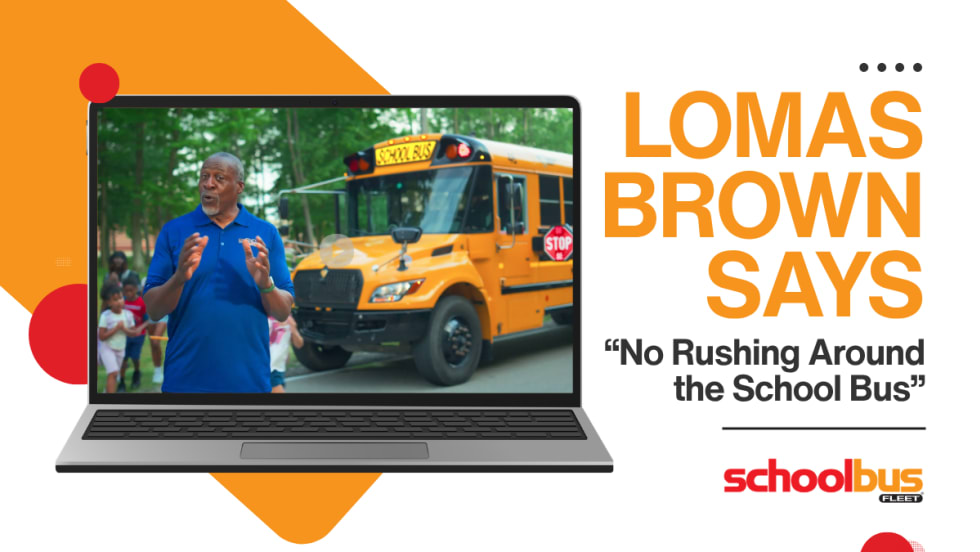
NFL Star Lomas Brown Kicks Off New Illegal School Bus Passing PSA
Just in time for the back-to-school season, the former Detroit Lions offensive tackle took time to record a video encouraging motorists to slow down around school buses.
Read More →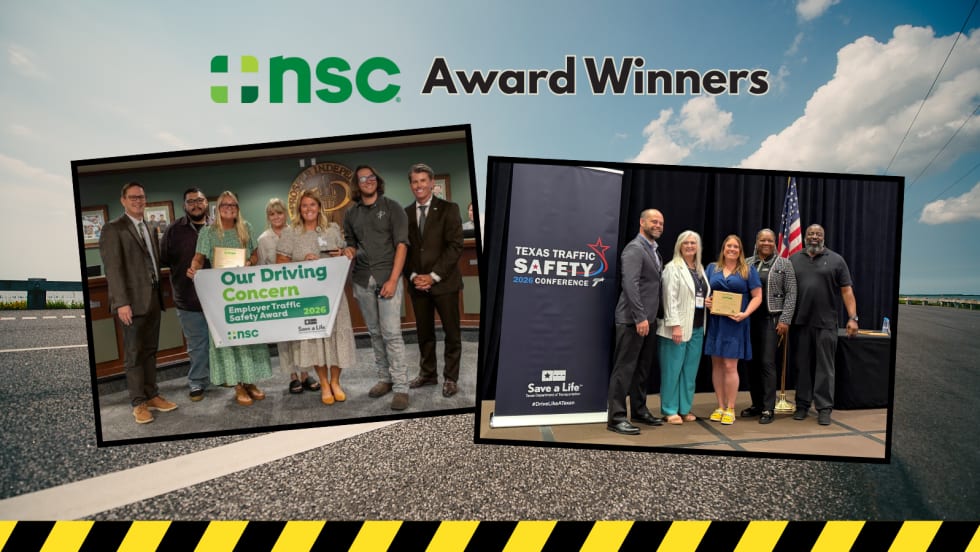
How Two Texas Districts Built Award-Winning Safety Programs
Learn how Prosper ISD and Rockwall ISD earned National Safety Council honors through hands-on training, safety culture, and strategies that reduced transportation incidents.
Read More →
NHTSA Releases 10-Year Review of Fatal School Bus Crashes
The latest federal analysis reinforces the safety of school buses while identifying where school-age pedestrians and other motorists remain most at risk.
Read More →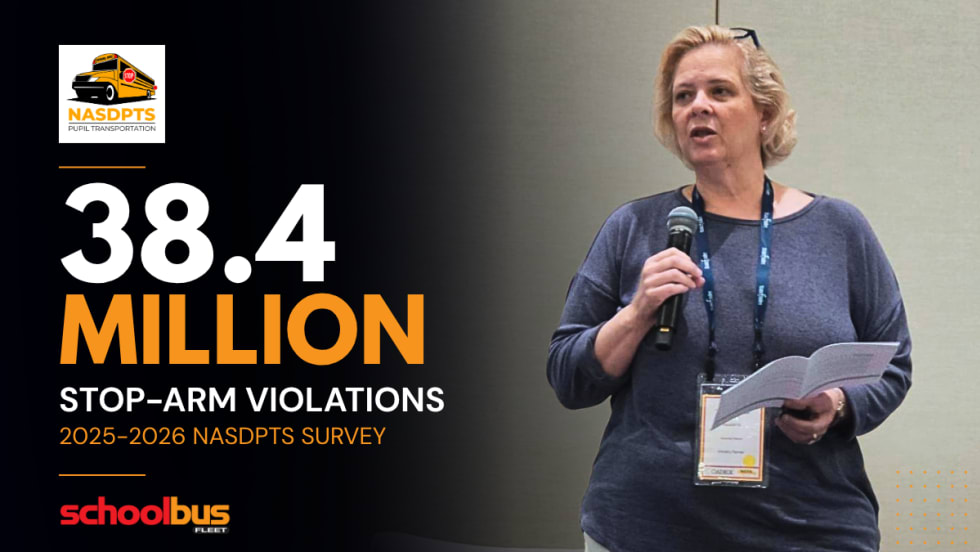
2026 NASDPTS Survey: Data Shows Further Reduction of Illegal Passing
New data is in! School bus stop-arm passings are down to 38.4 million violations per year, about a 2.3% decrease from last school year — but passings on the right side of the bus are higher than ever.
Read More →