




News from the World of Pupil Transportation
International unveils Tulsa facility TULSA, Okla. -- A B-24 bomber plant built in the 1940s is now churning out school buses. In early June,...

International unveils Tulsa facility
TULSA, Okla. -- A B-24 bomber plant built in the 1940s is now churning out school buses. In early June, Chicago-based International Truck and Engine Corp. celebrated the conversion of the abandoned aircraft plant into a state-of-the-art school bus manufacturing facility.
Once in full production later this summer, the Tulsa bus manufacturing facility is expected to produce 30 International IC (Integrated Conventional) school buses per day. The plant is 4,000 feet long with more than 1 million square feet under roof.
International officials said the company has invested nearly $50 million in equipment and facilities, with the main objective of creating a capable, repeatable process. Some developments include new roll form equipment for side sheets, floor panels, seat rails, rub rails and bow spaces, floor welder, sill welder, robotic seat frame welder, nomadically controlled nut runners and frame squaring for the chassis. In addition, the plant boasts a state-of-the-art painting system that features radiant wall paint curing with turbulation and robotic painting of hoods and dash and toe.
Hourly workers at the Tulsa plant undergo a minimum of 40 hours of training, called the "assimilation process." The goal, according to company officials, is to help workers understand the school bus business, rather than just introduce them to a new work environment. There will be approximately 10,000 total instructional hours for the operating year. It's expected that the plant will eventually employ 650 to 700 people.
The site, which is being leased for one dollar per year as part of an incentive package offered by city officials, will allow International to expand its capacity and bring chassis and conventional body construction under one roof.
Ruling prohibits purchase of diesel buses in L.A.
DIAMOND BAR, Calif. -- Ending a contentious debate over school bus emissions in Southern California, the South Coast Air Quality Management District (SCAQMD) board has unanimously approved a plan that will require that transit-style buses purchased by public and private school bus operators (with 15 or more buses) be powered by alternative fuels such as natural gas, propane or electricity.
On April 20, the SCAQMD board voted 12-0 in favor of Rule 1195, which seeks to gradually shift the fueling technology of school buses in the area. The decision closely follows rules approved last year that mandate alternative-fuel transit buses, trash trucks and street sweepers. The rule applies to school bus operators in four counties in Southern California. Approximately 9,000 buses are operated in the counties, including more than 2,500 at Los Angeles Unified School District.
Under the rule, fleet operators must buy non-diesel buses when adding new buses to their fleet, or re-power bus engines to run on alternative fuels when adding pre-owned buses. Rule 1195 applies different restrictions on conventional school buses because they are not available with alternative-fuel engines.
The SCAQMD board made its ruling after hearing dozens of passionate testimonials from both supporters and opponents of the bill, including bus drivers, students, teachers, fleet managers, doctors and environmental health specialists. The two sides firmly opposed each other on issues such as fuel prices, parts costs, tax breaks, health risks and child safety.
Summing up the magnitude of this controversial subject, SCAQMD Chairman William A. Burke stated, "I have listened to more testimony from this meeting than probably any other issue in my seven years on this board."
Gail Ruderman Feuer, senior attorney for the Natural Resources Defense Council (NRDC), praised the board's decision. "Moving to cleaner, non-diesel buses is a big deal to kids' health, and there is a broad base of scientific support for what the board did," she said. The NRDC feels the ruling is consistent with its controversial MATES-II study, which stated that 70 percent of the cancer risk in the air is caused by diesel exhaust.
Gretchen Knudsen, manager of the California Public Policy Program for International Truck and Engine Corp., disagreed. She said that the board failed to acknowledge "green diesel" as a cost-effective, clean-air alternative. "It doesn't make much sense that the SCAQMD would not allow schools to choose, especially when there is another option recognized by the California Air Resources Board as a viable technology for clean air and emissions reductions."
Driver in California fatality tests positive for drug use
TWENTYNINE PALMS, Calif. -- The driver of a school bus that struck and killed a 15-year-old boy in early February has tested positive for methamphetamine use, according to a 259-page police investigation report on the accident. The district attorney will likely file felony vehicular manslaughter charges against the driver, according to John Green, California's supervisor of school transportation.
The accident occurred when Brian Burdett exited the bus at his stop and bent down near the vehicle. He was struck as the bus pulled away. Despite hundreds of photos of the accident scene and numerous eyewitness accounts, it was never determined why the boy bent down in front of the bus. According to Green, Brian had a muscular disorder that slowed his movements and caused him to lose balance when he bent over.
Though Brian's muscular disorder would have made it difficult for him to move quickly from the path of the bus, the investigation revealed that the mirror systems, properly used, would have alerted the driver to the boy's presence. "From what the lieutenant said and from what's in the report, there should have been no place on the front of that bus where he [Brian] could have hidden from the driver if she had simply been looking in the mirrors," said Green.
The driver, 36-year-old Irene Haley, was put on administrative leave following the accident and has since been terminated by Laidlaw Education Services, which runs transportation for the Morongo Unified School District.
For more on Brian, read his mother's Guest Editorial in this issue
California tackles low ridership, loading zone safety
MONTEREY, Calif. -- On the heels of its "Stop in the Name of Love" campaign to curb illegal passing of school buses, the California Association for School Transportation Officials (CASTO) has launched "Ride Smart California," a campaign aimed at spreading the word about school bus safety. The initiative was unveiled at CASTO's annual conference.
"Our goal is to raise the ridership to at least the national average," said Doug Snyder, CASTO past president. California has the lowest ridership rate in the nation.
Stickers bearing the "Ride Smart California" slogan were distributed at the conference as a means of introducing the campaign. According to Snyder, CASTO's public relations committee hopes to launch the campaign full-force in August. The campaign will involve distributing stickers to schools and parent-teacher associations, preparing informational materials for the mainstream media and providing a Website with a searching database of FARSS data. Snider says the ridesmart.org Web domain has already been reserved.
Loading safety
California is the only state that requires school bus drivers to exit the bus and escort students (up to the eighth grade) across the street. Many California operators attribute the state's low student fatality rate in the loading zone to this regulation.
Earlier this year, a ninth-grader in 29 Palms, Calif., was hit and killed by his own school bus. Why? This is the question Karen Alexander of the California Department of Education asked attendees at her workshop on loading and unloading. Attendees answered readily, "Because he was not escorted." Alexander agreed.
She added, however, that there were other elements at play, such as driver distraction. (It has since been determined that the driver in that accident was under the influence of methamphetamines and that she did not properly use her mirrors. See breaking news story in this issue.)
Shortly following the 29 Palms incident, another student was struck in the loading zone, this time by a passing vehicle. "That's why we're reviewing the law and making sure you know how to teach the procedure," Alexander said.
Attendees said they have difficulty with parents who insist on escorting their children across the street after the bus drops them off. Alexander said it is the school's responsibility to cross the student, and the school will be held liable for a student injury, even if the parent has insisted on taking responsibility. Options for dealing with this conflict included writing letters to parents citing the code and refusing transportation if parents will not comply with regulations.
Connecticut Girl Scouts earn school bus safety patches
NEWINGTON, Conn. -- Girl Scouts in the Connecticut Trails Council (CTTC) will begin earning patches for school bus safety this September as part of an initiative sponsored by the Safety Council of the Connecticut School Transportation Association (COSTA).
"Whatever we can do to make students more aware of their responsibility for their own safety is going to make our job easier," said Robin Leeds, executive director of COSTA.
To earn the patch, Girl Scouts must learn about the danger zone, how to complete a school bus emergency evacuation, how to deter bullies, and more. They must also interview a school bus driver.
Lucy Collins, the Safety Council member who spearheaded the campaign, anticipates that its effects will be far-reaching. "The hope is that if you can get a lot of kids to learn about what's dangerous and what is safe, they can promote it to each other," she said.
As a former Girl Scout troop leader, Collins knew how to get the ball rolling. She contacted the CTTC and was greeted warmly. "Safety was becoming a problem in the state. People were being killed by buses, especially children," explained Dr. Beatrice Ndu Okwu, director of programs for the CTTC, where Girl Scouts are also involved in promoting railroad-crossing safety.
Because COSTA aimed to create a patch, rather than a badge, which must be passed by the national office of Girl Scouts of America, the organization only had to gain approval from the CTTC. "The councils are free to give out any patch that they want as long as it is based on a particular theme pertaining to the goals of the council set for the year," explained Okwu.
Although procedures to introduce a patch may vary, Collins recommends contacting the program director for the local Girl Scout council to get a patch started in your area. "It would be wonderful if people would start putting it [the School Bus Safety Patch] in councils where they live. We could even get it across the country," she said.
-- By Andrea Stover
Study finds exhaust at safe levels
LORTON, Va. -- A new study concludes that diesel emissions on school buses fall below detectable limits. Conducted by Fairfax County School District (FCSD), the study checked for the presence of elemental carbon, a substance that comprises the majority of diesel exhaust. No significant amount of the chemical was detected in any of the 12 buses tested.
The vehicles used in the study represented a cross-section of the 1,428 Fairfax County school buses. They varied in model year, chassis, size, engine placement and capacity in order to represent the diverse conditions drivers and children are exposed to. The buses were monitored without student passengers during a 90-minute run.
"We followed protocols that have been set up by NIOSH (National Institute for Occupational Safety and Health). We used set industrial hygiene practices to calibrate our equipment. These standards have been set by NIOSH to monitor all sorts of contaminants," explained Douglass O'Neill, registered environmental health specialist for the FCSD, which collected the samples. Datachem Laboratories, an independent agency in Salt Lake City, analyzed the samples and documented the results.
The study challenges findings published earlier this year by the Natural Resources Defense Council (NRDC), which indicated diesel school buses expose children to carcinogenic conditions. Although the NRDC study captivated national media and rattled the fears of parents and school officials, many questioned its accuracy.
"We wanted some assurance from a scientific standpoint to appease our own and our community's lingering concerns," remarked C. Timothy Parker, assistant director of transportation services for the Fairfax County school district.
Results reported in the new study are also similar to conclusions made by Greg Sirianni, industrial hygienist at Jonathan Borak & Co. in New Haven, Conn. Sirianni said that, like Fairfax County, he has found a "lack of any appreciable elemental carbon aboard school buses." He adds, "Our results were not even remotely similar to the questionable results obtained by the authors of that [NRDC] study."
Charles Lapin, Ph.D. and diplomat of the American Board of Toxicology, said that Fairfax County has produced the best bus study to date. "I feel the more thorough Fairfax County study completely refutes conclusions made by the very limited NRDC study," he said.
-- By Andrea Stover
National speech contest unveiled
ALBANY, N.Y. -- The National Association for Pupil Transportation (NAPT) and the National Association of State Directors of Pupil Transportation Services (NASDPTS) are launching a National School Bus Safety Speech Contest, open to all students in grades nine through 12. The contest requires students to research, write and deliver a four- to six-minute presentation about school buses and other forms of school transportation.
"By challenging teenagers to speak out on the subject, we hope they will all come away with a better understanding of transportation safety issues that affect their lives," said Pete Baxter, president of NASDPTS. "They'll also develop public speaking skills that will help in college and their future careers."
Inspired by Oklahoma's state competition, the national event is designed to spread the message in the high school community that school buses are the safest means of transportation.
"Riding in a yellow school bus may not be the 'cool' thing to do in high school, but it's the safest way to go. Teens need to hear the facts from other teens," said NAPT President Bob Pape.
After competing in local and regional events, finalists will advance to next year's inaugural national competition, which will be held during the NAPT and NASDPTS conferences in Greensboro, N.C. in November 2002. School bus manufacturer Corbeil has already signed on as a sponsor of the national competition.
Driver collapses, student drives bus to safety
WOODSTOCK, Ontario -- A high school student grabbed the wheel of his school bus and guided it to the side of the road when the driver passed out en route to Queen's University in Kingston, Ontario.
According to The Canadian Press, more than 40 high school students were onboard the bus when the driver, Wilfred Mansfield, 70, collapsed.
Ben Germuska, 17, took control of the vehicle after it hit a cement pole and was heading into oncoming traffic. He guided it through a traffic light and across a busy intersection to safety.
After Germuska pulled the bus to the side of the road, a passerby performed CPR on Mansfield until paramedics arrived. Despite their efforts, Mansfield was pronounced dead at the hospital.
Ontario limits transportation funding
TORONTO -- The Ontario Ministry of Education recently announced that the province's student transportation budget will not increase in the 2001-2002 school year, despite extensive requests for more funding. The ministry halted spending on school transportation programs at $581 million.
The allotted funds are the equivalent of about $100 per enrolled student. There is also a special grant that can be used in any way a particular school board decides, but it may be unrealistic to expect that many districts will use it on school bus operations.
The Ontario School Bus Association (OSBA) implored the provincial government to adopt a different financial policy. It asked that certain funds be strictly allocated for transportation purposes, with no possibility of being redirected toward other expenses. The OSBA also requested the approval of an increase in total transportation funds. Both suggestions were turned down.
School boards and transportation personnel had hoped for a budget increase to compensate for rising fuel costs, inferior driver wages and the growing pressure to maintain adequate service levels.
More Management

5 Questions: How CharterUP Brought a Marketplace to Student Transportation
What does it take to bring a transportation marketplace into K-12? Hear firsthand what CharterUP has learned about the unique needs of schools and bus operators.
Read More →
EverDriven Expands TripCentral Transportation Management Platform to All Partner Districts
The platform provides school districts with real-time trip tracking, student transportation scheduling tools, and pickup and drop-off management capabilities.
Read More →
6 School Transportation Trends to Watch: 2026 District Survey Results
School bus buying is up, fuel choices are shifting, and driver shortages persist. This and more in the latest K-12 public school survey, plus the largest fleets in the U.S.
Read More →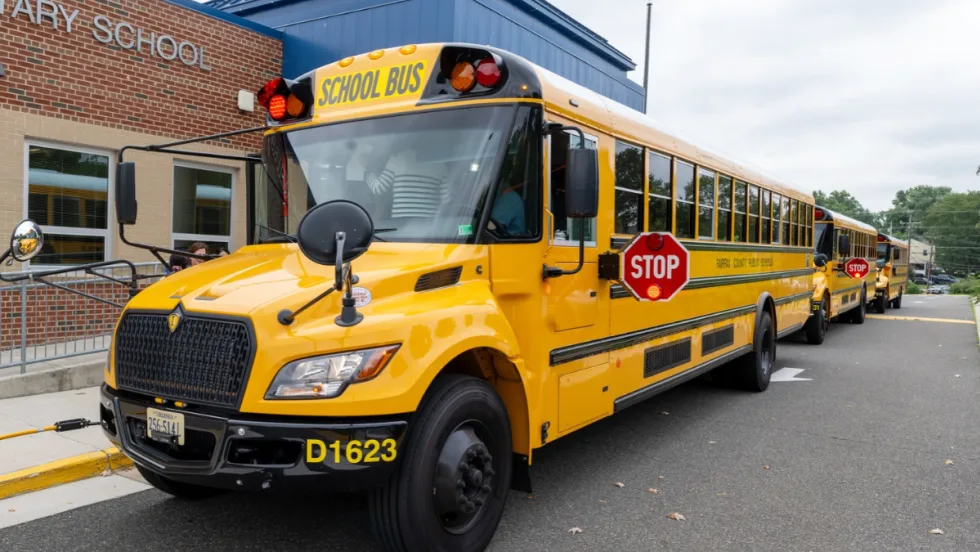
The 100 Largest School Bus Fleets in America: 2026 Rankings
Which public K-12 school districts are the largest in the nation in terms of bus fleet size? Here are the new standings of the top 100 district fleets.
Read More →
EverDriven Launches Route Consolidation Calculator to Estimate Diesel Savings
As diesel prices hit record highs, the largest alternative transportation provider says a 10% route consolidation could save a 120-route district more than $78,000 a year in fuel alone.
Read More →
Zum Secures Continued Financing Support for School Bus Expansion
Generate Private Credit has financed approximately $75 million in school bus deployments across three states, supporting more than 500 buses as Zum expands across the county.
Read More →
Beyond Discipline: A Different Approach to Student Behavior on the Bus
After implementing a dean of students program in Oregon, North Clackamas is seeing positive improvements. Here’s how it worked. The Route is brought to you by IC Bus.
Read More →
A Dean of Transportation's Different Approach to Student Behavior on the School Bus
After implementing a dean of students program in Oregon, North Clackamas is seeing positive improvements on the bus. Here’s how it worked.
Read More →
Inside NAPT ACTS 2026: Highlights from Louisville
From federal updates and student behavior strategies to new school bus technology and industry awards, see highlights from NAPT ACTS 2026 in Louisville.
Read More →
Meet the 2026 School Bus Driver Hero Winner: Annette Brown
We caught up with Wa-Nee Community Schools' Annette Brown on site at SBFX, where she was named the 2026 School Bus Driver Hero Award winner. Hear about her reaction, what she loves most about being a school bus driver, and more!
Read More →