





Stop and Read: The Evolution of Seat Belt Laws on U.S. School Buses
New Standards for School Bus Seat Belts
In October, the remaining provisions of NHTSA's final rule on school bus occupant protection go into effect. Here, seat belt manufacturers discuss the changes.
July 12, 2011
Image: Canva
4 min to read
Three years ago, the federal government issued several new requirements related to school bus occupant protection.
Two of the key provisions in the final rule, from the National Highway Traffic Safety Administration (NHTSA), went into effect in 2009. One required that all new school buses be equipped with 24-inch-high seat backs, which was a 4-inch increase on the height previously mandated. The other requirement starting in 2009 was for self-latching seat bottom cushions on new school buses.
The other two key provisions of the final rule are set to go into effect on Oct. 21 of this year. One will require school buses weighing 10,000 pounds or less to have lap-shoulder belts. The other sets new standards for the testing and design of school bus seat belt systems to ensure the strength of the anchorages and the compatibility of the seat with compartmentalization (the passive protection provided by school bus seating compartments).
In advance of the new standards, school bus seat belt manufacturers have made improvements to their products, and they say that the result of the rules will be increased safety for students.
Rigorous testing of seat belts
One component of the school bus seat belt standards is quasi-static testing.
"In a nutshell, it's loading the back of the school bus seat as though an unrestrained child has gone forward and hit the seat, and at the same time pulling the seat forward" to simulate a restrained child, explains Robert Knapp, executive vice president of the C.E. White Co.
Knapp says that while C.E. White's belted seat has met that test for many years, the company has redesigned theseat. It's now narrower — taking up the same amount of space as a seat without belts — and is 20 pounds lighter than it used to be. Also, the same seat frame can be used with belts or without belts, in which case belts can be added later if needed.
Charlie Vits, market development manager for IMMI's SafeGuard brand, says that the SafeGuard seats already achieve the levels of occupant protection that the new standards are based on. But the company has taken the opportunity to develop its new SafeGuard XChange seat.
"Beyond meeting performance and design requirements, the design has been changed so that a SafeGuard base seat can be easily converted to a lapshoulder belt or integrated child seat configuration," Vits explains.
Brandon Marriott, general manager of SynTec Seating Solutions, says that NHTSA's final rule, in particular the quasi-static testing, "is forcing a balance between seat belt load and compartmentalization, which is very important. You don't want to expose children who aren't wearing their seat belts to additional risk."
SynTec manufactures M2K brand seats, which Marriott says were "designed for these tests from the beginning."
Another new testing requirement, for FMVSS 210, is to pull all seat belts on a seat at the same time. Prior to the October 2011 provision going into effect, certification only requires pulling the seat belts sequentially.
The simultaneous pull "makes for a more complicated test setup," Marriott notes, "and requires more expensive equipment."
Ensuring safety aboard school buses
Although the seat belt manufacturers say that their products already met the new performance requirements, they agree that NHTSA's final rule enhances the protection of school bus passengers and that the testing standards are important.
"It absolutely increases safety," Marriott says. "This is something that the industry itself should be very proud of — it's advancing school bus technology."
Vits notes that "from an industry perspective, we now have a standard that ensures a level of performance and thus safety from all lap-shoulder belt seats."
Knapp says that one of the most important aspects of the new ruling is that "it allowed us to keep the seats narrower at the top, which is very important for emergency egress. That's the part that pleases me the most about it."
Belts in small buses
While seat belt manufacturers say that the new requirement for lap-shoulder belts (instead of just lap belts) on school buses weighing 10,000 pounds or less is a move in the right direction, some say it should have gone further.
"We applaud NHTSA that they took this step towards bringing lapshoulder belts to school buses," Vits says. "However, the requirement is for school buses with a GVWR of 10,000 pounds or less. This represents a very small portion of new school buses sold each year."
Vits says that most Type A school buses are over 10,000 pounds, so they don't fall under the mandate. "Yet these buses have similar crash characteristics as the lower-weight Type A buses," he notes. "All children riding Type A buses have the same need for the enhanced occupant protection that lap-shoulder belts afford."
Knapp offers a similar assessment.
"I would like to have seen the requirement go up to 14,000 pounds," he says. "I feel that they should have brought it up to cover all the Type As and Bs."
While this issue was raised in comments to NHTSA in the proposal stage of the rulemaking, the agency said that it was beyond the scope of the final rule.
Subscribe to Our Newsletter
More Safety
School's Back. Here's What Happened to Traffic, Speeding & Distraction
What happens to traffic when school resumes? New data analysis examines changes in distracted driving, congestion, and speeding around schools.
Read More →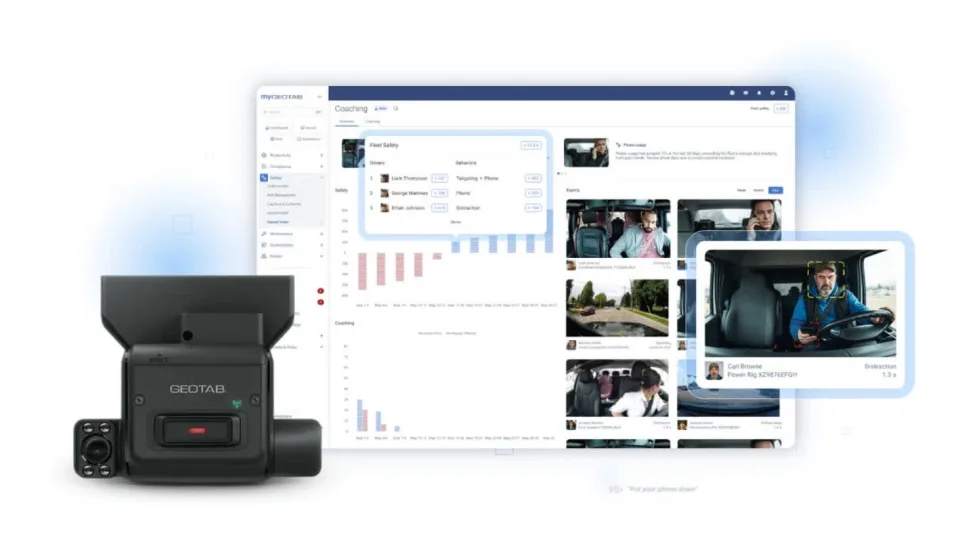
Geotab Expands Fleet Safety Tools With Video Coaching, Risk Insights
New safety and video capabilities aim to help fleet managers assess risk, support drivers, and take targeted action through video coaching, red-light violation detection, and more.
Read More →
How to Build a Better School Bus Driver Training Program
Is it time to strengthen your driver training? Here’s how to pick the right talent and improve recruitment, retention, and safety. This video is brought to you by IC Bus.
Read More →

Recent School Bus Accidents Leave 2 Dead, 2 Injured
Four school bus crashes in Florida, Illinois, and Georgia highlight risks in transportation lots, at bus stops, and during student loading and unloading.
Read More →
Sponsored•September 8, 2026
When Every Second Matters, Clarity Keeps Routes Moving
From routine delays to urgent incidents, strong communication practices help drivers, dispatchers, schools, and families respond with confidence.
Read More →
What Happens When a School Bus Catches Fire — and What Can Help
School bus fires are rare but can be devastating. Learn how advances in fire suppression and asset protection help fleets detect fires earlier, reduce damage, and improve safety.
Read More →
Geotab Launches Tool to Help Fleets Investigate Road Incidents
Geotab Investigations combines telematics data, video, documents, and other evidence to help fleets reconstruct incidents, resolve claims, and determine what happened.
Read More →
Texas Sixth Grader Wins 2026 National School Bus Safety Poster Contest
Sai Darshana Yekolu of Moseley Middle School in Prosper, Texas, was named the newest winner for her artwork, bringing the theme of “Safe Rides, Everyday Heroes” to life.
Read More →
Sponsored•August 27, 2026
Doing More With Less: How Transportation Directors Can Prioritize Safety Amid Budget Uncertainty
With diesel prices soaring and nearly one-third of transportation directors expecting budget cuts, maintaining student safety has never been more challenging. Download this guide to learn how leading districts are prioritizing risk, funding critical safety technology, and building stronger budget cases with data.
Read More →
Walton County Schools Adds Gatekeeper Stop-Arm Enforcement System
The Florida district will deploy Gatekeeper’s updated Student Protector technology, which now incorporates AI to improve video evidence.
Read More →