

Navigating NCLB: The Latest on How the Law Impacts Pupil Transportation
Greater flexibility for states, school districts and schools —this is partly what President Bush had in mind when he signed into law the education ref...
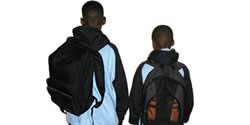
Greater flexibility for states, school districts and schools —this is partly what President Bush had in mind when he signed into law the education reform act called No Child Left Behind (NCLB). The act, which took effect in January 2002, intends to overhaul the nation’s educational system by holding individual schools and districts accountable for ensuring that students meet state testing standards in mathematics and reading.
A primary aspect of NCLB is the Choice program. Essentially, students attending under-performing schools have the option of transferring to higher-performing schools. For school transportation, this is where the problems starts.
Deep impact
The concerns that have plagued most transportation operations across the U.S. for years still exist; departments are still under-funded, short of drivers and in need of new equipment. NCLB, which reauthorizes other programs such as the McKinney-Vento Homeless Assistance Act, exacerbates these preexisting issues. Such is the case with some Florida operations, where transporting a number of homeless students to their original schools tightens budgets even more.
The population or number of homeless children isn’t necessarily the problem, suggests Charlie Hood, state director of pupil transportation for Florida. “Provisions that allow a student to continue to be transported to his or her school of origin are the problem,” he says. “From a transportation perspective, that can be a really big impact.”
The best example, Hood says, is of the child who resides in one county but must be transported to a school district in another county. This type of situation is particularly taxing because it equates to creating a special route to carry a single student on an almost empty bus miles across town and back. Problems intensify when multiple situations like this exist.
At Brevard County Public Schools in Cocoa, Fla., where Mike Connors is the transportation service director, NCLB transforms a typical driver shortage situation into something gargantuan in size. At the district, substitute and standby drivers are used to transport a relatively small number of NCLB students. But the subsequent shuffle drains its bank of available subs and creates shortages at critical times during the school year. The only consolation, says Connors, is when NCLB students are transported with a load of traditional students as opposed to running four buses with three or fewer students aboard. {+PAGEBREAK+} Special treatment
Transporting special-needs students under the provisions of NCLB can be a challenge as well, says Kathy Houck, transportation coordinator at Reynolds School District #7 in Fairview, Ore. There, the district offsets manpower shortages by using taxis to transport special-needs children.
Houck says NCLB’s impact on her district has been mild to moderate because her operation carries students to schools within the district as opposed to outside. Although personnel numbers are still low — hence the need for taxis — transporting about 15 special-needs students a day required Houck to hire additional drivers. But the problems persist.
Reynolds uses a fleet of 100 buses to transport approximately 7,000 students daily. There is turnover with many of the special-needs and homeless students at the district, which causes the length of time they’re with the district to vary greatly. Houck uses taxis when she knows students will be with the district for a month or less and buses for all others.
A separate department handles placement and transportation for the homeless students; therefore, Houck doesn’t see all the requests for service or the related costs. She gets more involved when the students’ arrangements are long-term and when they travel longer distances.
Rita Mastropietro, transportation supervisor with the Ringwood (N.J.) Board of Education, remembers a time when special-education supervisors were in control and decided where children attended schools in conjunction with other supervisors countywide. Now she says things are out of control, partly because of NCLB. Hinting at indiscriminate or arbitrary choices, she says children are going to schools all over the place, wherever their parents want them to go.
Mastropietro runs a fleet of 34 vehicles in her mostly rural district, which transports approximately 3,000 students per day; 10 of the vehicles are 16- to 25-passenger vans and the rest are 54-passenger buses. Because of NCLB, she finds that her drivers are transporting special-needs students some 200 miles one way from New Jersey to New York.
“I don’t think the legislators really understand the whole problem in pupil transportation,” Mastropietro says.
Growth matters
Mastropietro describes NCLB’s impact on her program as moderate to severe, due mostly to its impact on her operation’s budget. She’s also critical of the increased number of miles her drivers clock each year transporting students to other districts.
Mastropietro purchased a van for her special-needs students four years ago. The van now has 134,000 miles and has been sidelined as a spare. Some of the miles on Mastropietro’s vehicles are due to the strange geography of Ringwood, which has only two roads leading out of town. {+PAGEBREAK+} “It can take 20 to 25 minutes to get to a highway in Ringwood,” says Mastropietro. That number increases to an average of 45 minutes when you factor in picking up students. “You’re talking two to two-and-a-half hours on a school bus,” she says. To maximize the efficiency of the routing, Ringwood districts use an application called Software Advantage.
Robert Morris, transportation director at Denver Public Schools, also uses routing software to keep track of NCLB students. “What’s hard for us is changing the coding through our system to identify which kids are NCLB and which aren’t,” he says.
Morris controls about 485 bus routes using a coding system from a program called School Administration Systems Interface. He also uses Education Planning Solutions’ Smartr ... for Schools Transportation Module, a powerful stand-alone software system composed of a Geographic Information System.
The district, which had 304 NCLB students last year and 371 this year, is large enough to support a routing department run by a manager and seven or eight assistants. “We’re probably 200 square miles here,” Morris says. The district has annexed several smaller areas and now has areas where it crosses other districts to get to parts of its own.
Challenges ahead
David Peterson, transportation analyst at St. Paul (Minn.) Public Schools, a mostly urban district that transports 46,000 students daily with a fleet of 370 buses, foresees NCLB having a major impact on some rural or smaller districts where there’s only one or two schools.
Currently, at St. Paul Public Schools, transporting the homeless is a problem and has been for the past two years.
“We’ve added $250,000 for homelessness transportation,” Peterson says. “That’s an unfunded federal mandate. It comes out of our transportation budget, which is $23 million.”
Some districts are struggling to pinpoint the specific financial impact of NCLB on their operations, says Florida’s Hood. The challenge, he says, is figuring out how to document, verify and create a standard methodology for determining the impact of that particular transportation cost. “It can be a pretty daunting task if the district doesn’t already have an accounting program that does those kinds of calculations on an individual student’s or a group’s transportation needs,” Hood says.
Reynolds’ Houck applauds the notion of NCLB, but is concerned about funding to accompany the act, which she says puts the hardship on schools.
“I don’t know if we’re hurting some of the schools we’re supposed to be helping,” Houck says. “Money goes to transport children out of that school, but what about those children who are left behind? Is there money left to build programs that bring these children up to standard?”
Budget shortfalls will continue to plague districts across America and, as the economy improves, operations can also expect driver recruitment/retention problems to worsen.
As for NCLB’s impact on transportation, the future is bleak for some outfits and hopeful for others.
Charlie Hood sums it up best. “From an administrative point of view, transporters are pretty good at figuring out how to get the job done almost no matter what,” he says. “They’ll get the kids to the programs.”
More Safety
North Carolina Student Killed While Boarding School Bus, Two Die in Utah Bus Crash
A Southern Nash High School student died after being struck by a pickup truck while approaching her school bus. In a separate incident, two people were killed after crashing into a school bus in Utah.
Read More →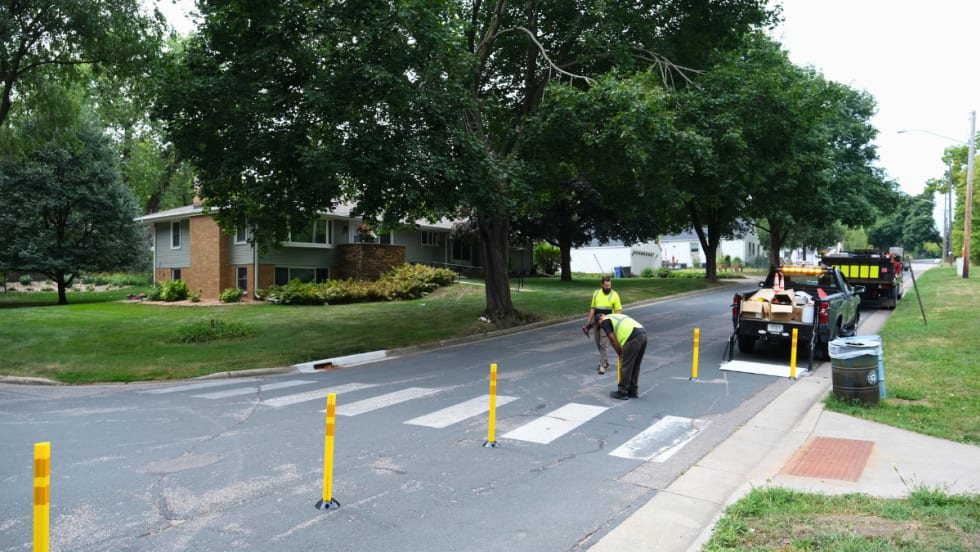
Minneapolis School Zone Pilot Cuts Speeding 41% with Low-Cost Street Design Changes
In a pilot project in Minnesota, two school-area intersections had low-cost, temporary road and traffic flow improvements made to measure the impact on roadway and student safety. Here's what they found.
Read More →
Sitestream, Safety Vision Partner with Connecticut City to Launch School Bus Stop-Arm Camera Program
The new enforcement initiative combines camera technology and violation management software to document illegal school bus passing, encourage driver compliance, and enhance student safety.
Read More →
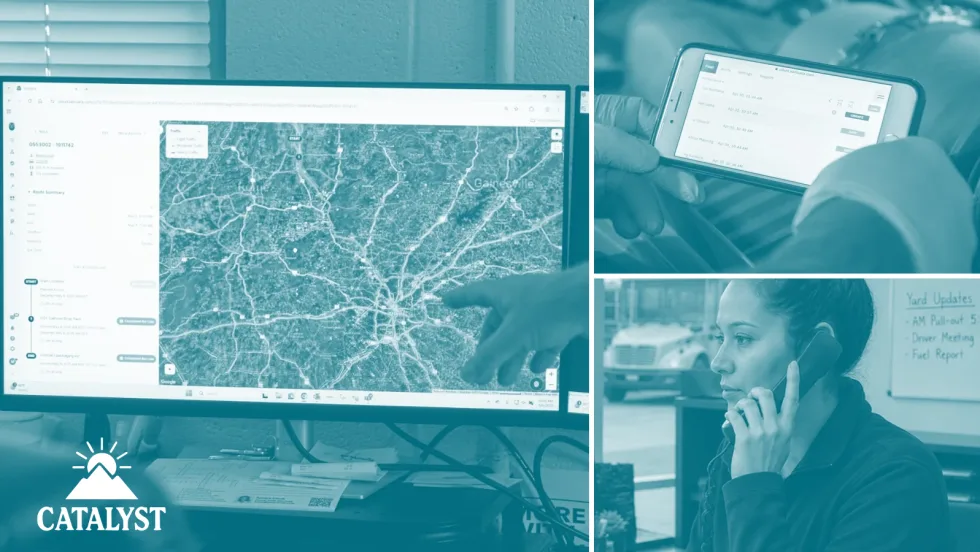
From Reactive to Proactive: Making Every Ride Visible
Smart technology only delivers its full value when it works together. See how Catalyst connects proven industry platforms to move student transportation from reactive to proactive.
Read More →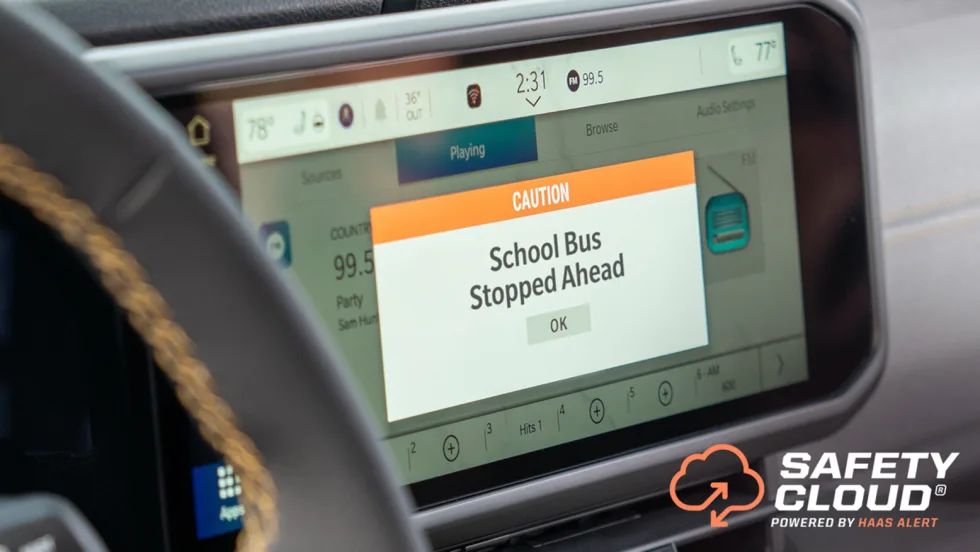
HAAS Alert’s Safety Cloud Warns Motorists of Stopped School Buses
Through a transponder or Samsara connection, the product lets school bus fleets send advance warnings to approaching drivers through in-vehicle alerts.
Read More →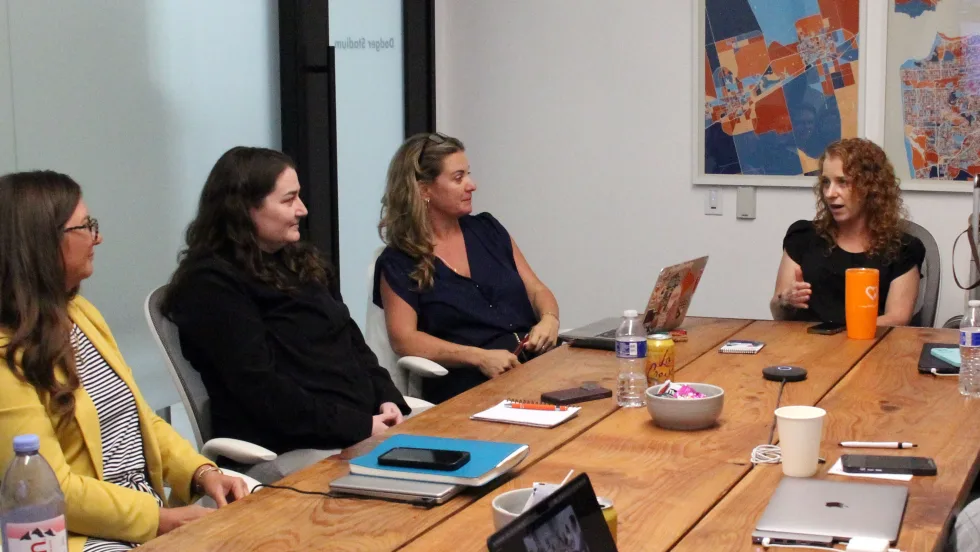
HopSkipDrive Reports Progress on Safety Advisory Council
More than a year after forming the council, independent safety experts have helped shape new rider-safety features and policy progress, with a new goal to address rider behavior.
Read More →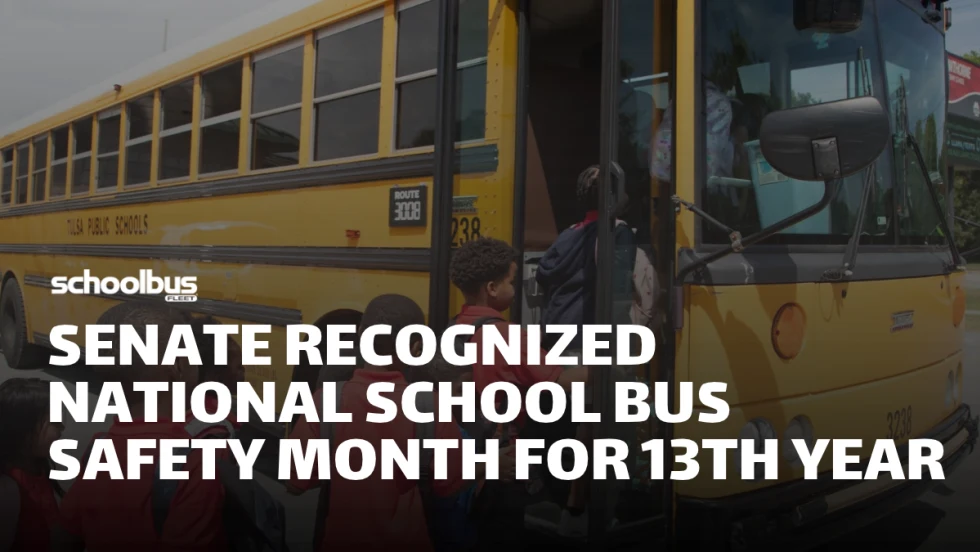
What the 2026 National School Bus Safety Month Resolution Means for Student Transportation
The bipartisan resolution highlights illegal school bus passing, student safety during loading and unloading, and the need for driver training and public education.
Read More →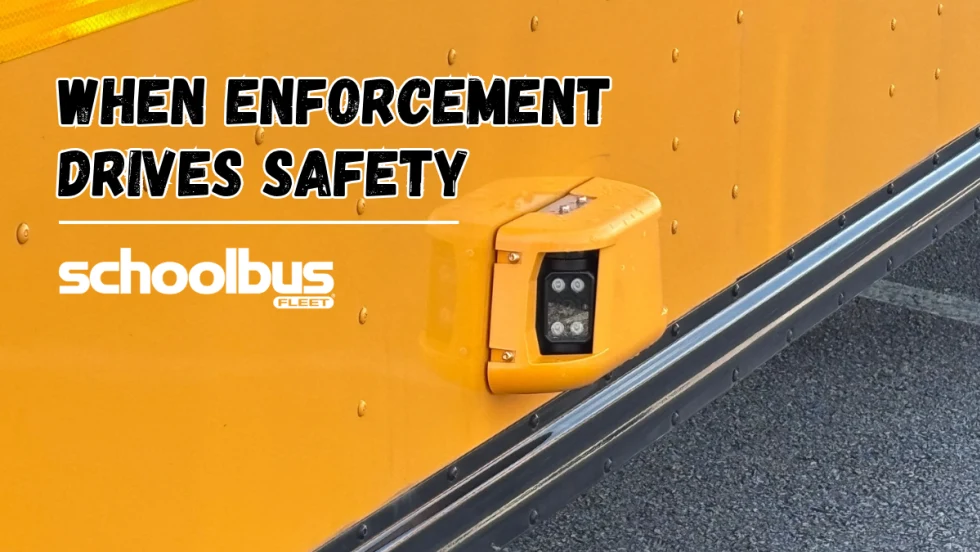
School Bus Stop-Arm Violations Decline 53% Across Verra Mobility Programs
Verra Mobility shares how school bus stop-arm cameras and school zone safety programs are changing driver behavior, reducing violations, and protecting students.
Read More →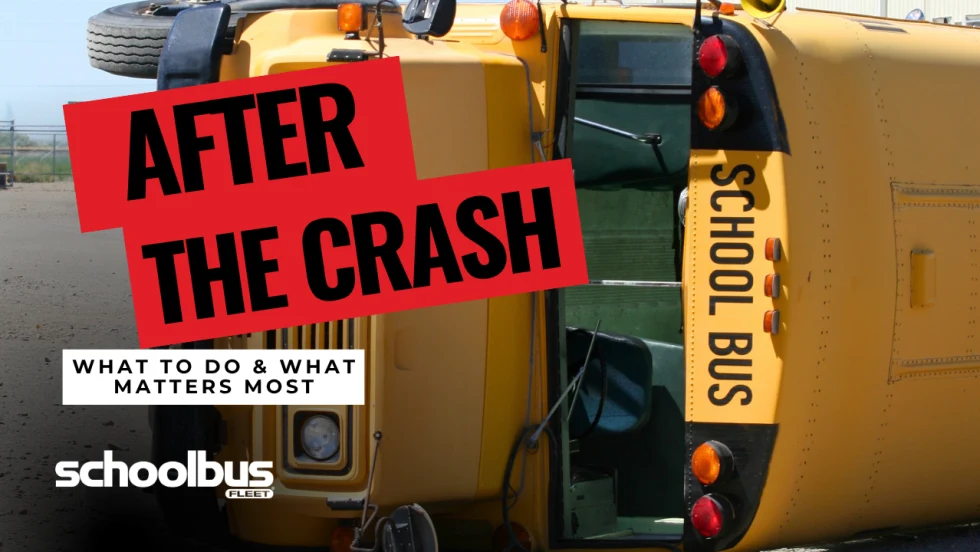
Most Bus Crashes Aren’t Your Fault. Here’s How to Prove It.
A guide for what to do in between a school bus crash and a claim: what to preserve, who to notify, and how to keep the facts available when they matter.
Read More →
National School Bus Safety Week 2026: Tips, Toolkits & Resources to Keep Students Safe
School bus safety takes more than awareness. Explore expert tips, enforcement strategies, and free resources to help protect students on every ride.
Read More →