




NASDPTS Targets Safety, Security at Annual Meeting
State directors tackle key operational issues at Kansas City, Mo., conference. Two new players take over as president and executive director.

The top rungs of the leadership ladder changed hands recently at the National Association of State Directors of Pupil Transportation Services (NASDPTS). The first change took place at the association’s 2006 meeting, held in early November in Kansas City, Mo.
Derek Graham, state pupil transportation director in North Carolina, took over the association’s two-year presidency from Pete Japikse, state director in Ohio. Three weeks later, Bob Riley, formerly transportation director at Palm Beach County (Fla.) School District, was named executive director, filling the vacancy created by Charlie Gauthier’s retirement early last year.
More than 100 people attended the 2006 conference, including 32 state directors, nine other state government representatives, 26 members of the association’s Supplier Council and 20 state association or associate members. Rod McKnight, former state pupil transportation director in Idaho, coordinated the meeting, which lasted the better part of four days and covered a wide range of topics.
Double-edged sword?
As in years past, safety and security topics were well represented on the conference agenda. Tim Arnade, coordinator of the Safe Routes to School program for the Federal Highway Administration, led things off with a discussion of the federal government’s interest in encouraging more children in the U.S. to walk or ride their bikes to school. He presented statistics showing that American children aren’t getting enough exercise. “Today’s children may have a shorter lifespan than their parents,” Arnade said.
The federal government has committed more than $600 million to the Safe Routes program through 2009, Arnade said, with some of the funds directed toward improving sidewalks, adding bicycle parking facilities and launching public awareness campaigns regarding pedestrian and bicycle safety. Another objective, he said, is to reduce traffic congestion around schools and to improve air quality.
Some NASDPTS meeting attendees expressed concern that the Safe Routes program, perhaps unintentionally, might take some children off the school bus, where they’re most protected in their travel to and from school. One state director said he heard a radio station promote National Walk to School Day by urging children “to get off the bus and walk to school.” But Ohio’s Japikse said the program can safely co-exist with school bus transportation imperatives. “We just need to communicate with each other,” he said.
Security training available
On the issue of security, John Green, California’s state pupil transportation director, led a panel discussion about key initiatives to protect children from security threats while they’re being transported in school buses.
A relatively new program that’s being offered is School Transportation Security Awareness (STSA) training, which was developed by Consolidated Safety Services for the Transportation Security Administration (TSA). The training incorporates a DVD that depicts a scenario of a security incident and encourages directed discussion. It also incorporates an online self-study module.
Barry DeRoze of Consolidated Safety Services said the free training promotes security awareness from the standpoint of internal threats, as opposed to School Bus Watch, which focuses on external threats. DeRoze said that as of early November, more than 300 school transportation organizations in 41 states had registered for the training program. For more information, visit www.stsatrain.com.
Dale Potts of the TSA said her agency’s focus has been on distributing the STSA training package. But the TSA also has been conducting needs-assessments of school systems and transportation providers, as well as sharing best practices. She said obtaining funding for these ventures has been “incredibly frustrating.”
In regard to School Bus Watch, Ann Henley of the NSTA said she had gotten “very positive feedback” on the program, which encourages school bus drivers to be aware of unusual activity on the road and to report any instances by calling a toll-free hotline. She said close to 50,000 drivers had been certified by early November. The program has also created $146,000 in revenue for the industry, Henley said.
The 2007 NASDPTS conference will be held in Grand Rapids, Mich., from Oct. 26 to 29. For more info about the association, visit www.nasdpts.org.
More Safety
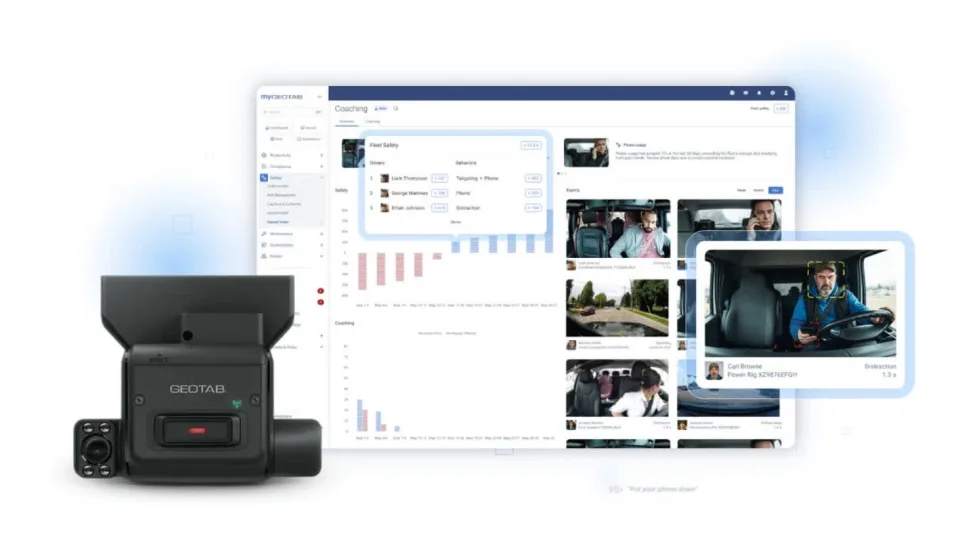
Geotab Expands Fleet Safety Tools With Video Coaching, Risk Insights
New safety and video capabilities aim to help fleet managers assess risk, support drivers, and take targeted action through video coaching, red-light violation detection, and more.
Read More →
How to Build a Better School Bus Driver Training Program
Is it time to strengthen your driver training? Here’s how to pick the right talent and improve recruitment, retention, and safety. This video is brought to you by IC Bus.
Read More →
Recent School Bus Accidents Leave 2 Dead, 2 Injured
Four school bus crashes in Florida, Illinois, and Georgia highlight risks in transportation lots, at bus stops, and during student loading and unloading.
Read More →

When Every Second Matters, Clarity Keeps Routes Moving
From routine delays to urgent incidents, strong communication practices help drivers, dispatchers, schools, and families respond with confidence.
Read More →
What Happens When a School Bus Catches Fire — and What Can Help
School bus fires are rare but can be devastating. Learn how advances in fire suppression and asset protection help fleets detect fires earlier, reduce damage, and improve safety.
Read More →
Geotab Launches Tool to Help Fleets Investigate Road Incidents
Geotab Investigations combines telematics data, video, documents, and other evidence to help fleets reconstruct incidents, resolve claims, and determine what happened.
Read More →
Texas Sixth Grader Wins 2026 National School Bus Safety Poster Contest
Sai Darshana Yekolu of Moseley Middle School in Prosper, Texas, was named the newest winner for her artwork, bringing the theme of “Safe Rides, Everyday Heroes” to life.
Read More →
Doing More With Less: How Transportation Directors Can Prioritize Safety Amid Budget Uncertainty
With diesel prices soaring and nearly one-third of transportation directors expecting budget cuts, maintaining student safety has never been more challenging. Download this guide to learn how leading districts are prioritizing risk, funding critical safety technology, and building stronger budget cases with data.
Read More →
Walton County Schools Adds Gatekeeper Stop-Arm Enforcement System
The Florida district will deploy Gatekeeper’s updated Student Protector technology, which now incorporates AI to improve video evidence.
Read More →
How To Build a More Secure School Bus Yard During and After Hours
As thefts and overnight security threats continue, school transportation leaders are combining stronger operational practices with AI-enabled surveillance to better protect buses, facilities, and staff.
Read More →